


This AP World History: Modern test covers AP World Unit 8: Cold War and Decolonization. Like a classroom assessment, it includes documents to analyze, knowledge questions and a short writing task. To prepare, review the lesson first, then practice with the worksheet.
Time : 55 min
The test has three parts: knowledge (32 points), documents (48 points), and a written argument (20 points). Answer in complete sentences and cite the documents.
Document 1 – Document 1 – Europe in the mid-1950s
Schematic map prepared for this unit with Natural Earth data; borders approximate.
Document 2 – Document 2 – Missile site, Cuba, 1962
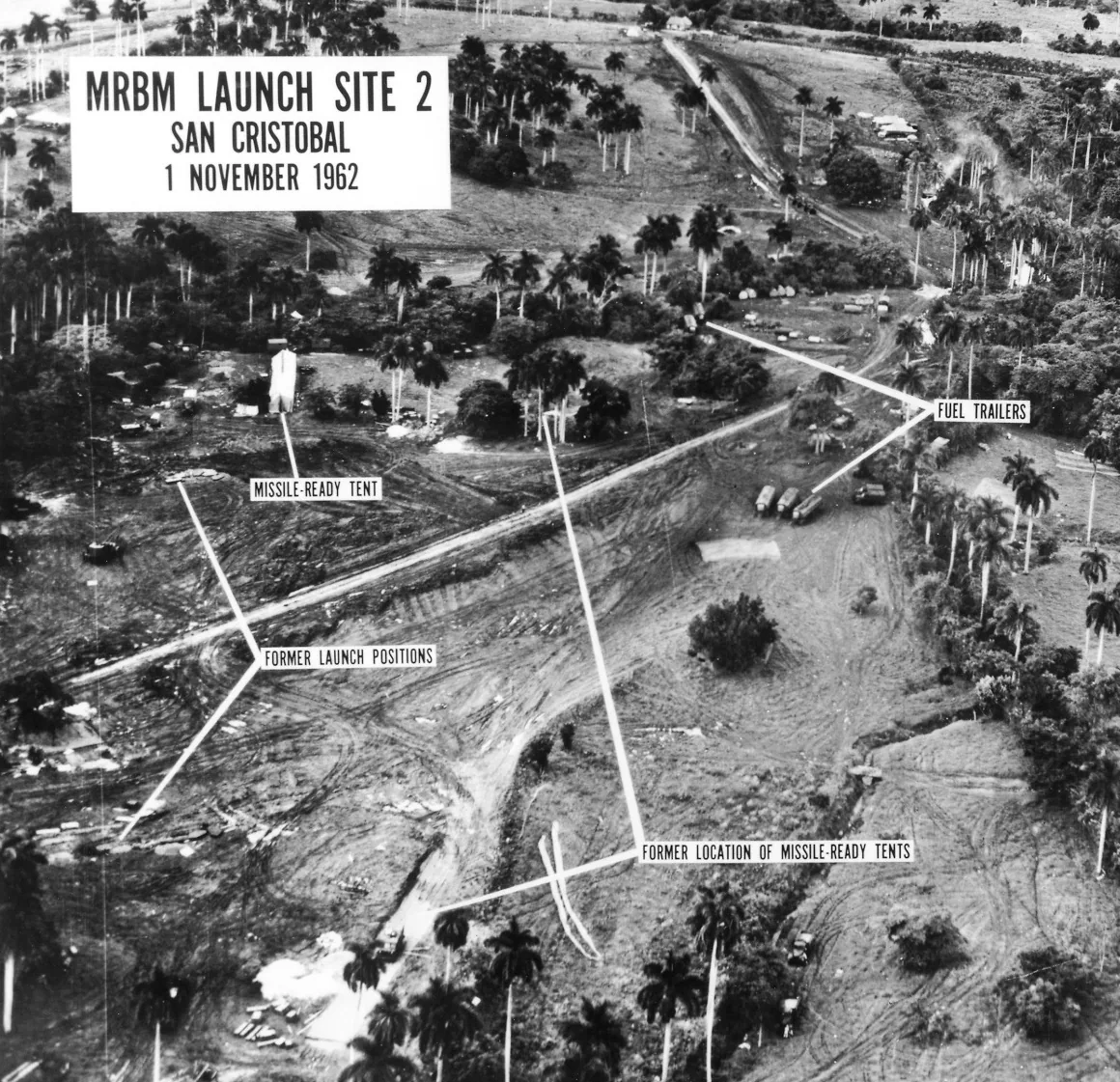
Wikimedia Commons; National Archives.
Document 3 – Document 3 – Eisenhower’s farewell address
We recognize the imperative need for this development. Yet we must not fail to comprehend its grave implications. Our toil, resources and livelihood are all involved; so is the very structure of our society. In the councils of government, we must guard against the acquisition of unwarranted influence, whether sought or unsought, by the military-industrial complex. The potential for the disastrous rise of misplaced power exists and will persist. We must never let the weight of this combination endanger our liberties or democratic processes. We should take nothing for granted. Only an alert and knowledgeable citizenry can compel the proper meshing of the huge industrial and military machinery of defense with our peaceful methods and goals, so that security and liberty may prosper together.
Source: President Dwight D. Eisenhower, farewell address, January 17, 1961; Avalon Project, Yale Law School.
Dwight D. Eisenhower, farewell address, 1961; Avalon Project, Yale Law School.
Document 4 – Document 4 – Key dates
- 1947 Truman Doctrine
- 1949 NATO founded
- 1955 Warsaw Pact and Bandung Conference
- 1961 Berlin Wall built
- 1962 Cuban Missile Crisis
- 1975 Fall of Saigon
Dates as given in standard reference works.
Questions
- Part 1 – Knowledge. Define Cold War, containment, and decolonization. (12 pts)
- Part 1. Name four tools the superpowers used in the Cold War. (10 pts)
- Part 1. Document 1: name three NATO members in blue, three Warsaw Pact states in red, and two neutral states in gray. (10 pts)
- Part 2 – Documents. Document 2: present the photograph, describe what it shows, and explain why it mattered in October 1962. (14 pts)
- Part 2. Document 3: present the text, state Eisenhower’s warning, and explain why it is a surprising warning from a president in the Cold War. (14 pts)
- Part 2. Document 4: calculate the years between NATO and the Warsaw Pact, and between the building of the Berlin Wall and the Cuban Missile Crisis (in years). (8 pts)
- Part 2. Using Documents 1 and 4 and the lesson, explain how Europe was divided between 1947 and 1955. (12 pts)
- Part 3 – Written argument (LEQ). Evaluate the extent to which the Cold War shaped decolonization between 1945 and 1975. (20 pts)


Quick review: flashcards
Tap a card to see the answer.