


This worksheet on AP World Unit 9: Globalization belongs to the AP World History: Modern course. Its questions use primary sources, maps and timelines, and they move from basic recall to short writing tasks. Before you start, review the lesson; afterward, try the true or false quiz.
Exercise 1 : Vocabulary of globalization
Match each term to its definition: (a) glasnost, (b) Green Revolution, (c) free trade, (d) apartheid, (e) sustainable development, (f) transnational terrorism.
- Trade with few barriers between countries.
- Violence by groups that operate across borders to create fear for political goals.
- Soviet policy of openness introduced by Gorbachev.
- Growth that meets present needs without harming future generations.
- South Africa’s system of racial separation and white minority rule.
- Introduction of high-yield crops and fertilizers in the mid-twentieth century.
Exercise 2 : Reagan at the Brandenburg Gate
Document 1 – A president speaks at the Wall
Today I say: As long as this gate is closed, as long as this scar of a wall is permitted to stand, it is not the German question alone that remains open, but the question of freedom for all mankind. […] General Secretary Gorbachev, if you seek peace, if you seek prosperity for the Soviet Union and Eastern Europe, if you seek liberalization: Come here to this gate! Mr. Gorbachev, open this gate! Mr. Gorbachev, tear down this wall!
Source: President Ronald Reagan, remarks at the Brandenburg Gate, West Berlin, June 12, 1987; Ronald Reagan Presidential Library and Museum.
*Liberalization: reform toward more freedom.
- Present the document (author, date, place).
- Identify what Reagan says the closed gate means.
- State what he asks Gorbachev to do.
- Explain why the speech was addressed to both a Berlin audience and the Soviet leader.
- Explain one reason a historian should not conclude that the speech alone caused the fall of the Wall.
Exercise 3 : Reagan on freedom and prosperity
Document 2 – Freedom is the victor
In the 1950’s, Khrushchev predicted: “We will bury you.” But in the West today, we see a free world that has achieved a level of prosperity and well-being unprecedented in all human history. In the Communist world, we see failure, technological backwardness, declining standards of health, even want of the most basic kind-too little food. Even today, the Soviet Union still cannot feed itself. After these four decades, then, there stands before the entire world one great and inescapable conclusion: Freedom leads to prosperity. Freedom replaces the ancient hatreds among the nations with comity and peace. Freedom is the victor.
Source: President Ronald Reagan, remarks at the Brandenburg Gate, West Berlin, June 12, 1987; Ronald Reagan Presidential Library and Museum.
*Comity: friendly relations.
- Present the document (author, date, occasion).
- Identify the contrast Reagan draws between West and East.
- Identify the “one great and inescapable conclusion.”
- Explain what kind of evidence Reagan uses and what kind is missing.
- Explain how a supporter of the Soviet system might have replied.
Exercise 4 : The Universal Declaration of Human Rights
Document 3 – Rights for all
All human beings are born free and equal in dignity and rights. They are endowed with reason and conscience and should act towards one another in a spirit of brotherhood. […] Everyone is entitled to all the rights and freedoms set forth in this Declaration, without distinction of any kind, such as race, colour, sex, language, religion, political or other opinion, national or social origin, property, birth or other status.
Source: Universal Declaration of Human Rights, adopted by the United Nations General Assembly in Paris, December 10, 1948, articles 1 and 2; United Nations.
*Endowed: provided with.
- Present the document (nature, date, body).
- Identify what article 1 says about human beings.
- List four categories named in article 2 in which discrimination is forbidden.
- Explain how the Second World War influenced the Declaration.
- Explain why a declaration is different from a treaty.
Exercise 5 : Rio Declaration
Document 4 – Principles for the environment
Principle 1 Human beings are at the centre of concerns for sustainable development. They are entitled to a healthy and productive life in harmony with nature. […] Principle 7 States shall cooperate in a spirit of global partnership to conserve, protect and restore the health and integrity of the Earth’s ecosystem. In view of the different contributions to global environmental degradation, States have common but differentiated responsibilities.
Source: Rio Declaration on Environment and Development, adopted at the United Nations Conference on Environment and Development, Rio de Janeiro, June 1992; Convention on Biological Diversity.
*Ecosystem: a community of living things and its environment.
- Present the document (nature, date, place).
- Identify what principle 1 puts at the center of sustainable development.
- Explain what principle 7 means by “common but differentiated responsibilities.”
- Explain why developing countries cared about this idea.
- Explain one reason why declarations on the environment have been hard to enforce.
Exercise 6 : Clinton on China and trade
Document 5 – “Liberty will spread by cell phone”
In the new century, liberty will spread by cell phone and cable modem. In the past year, the number of Internet addresses in China has more than quadrupled from 2 million to 9 million. This year, the number is expected to grow to over 20 million. When China joins the WTO, by 2005, it will eliminate tariffs on information technology products, making the tools of communication even cheaper, better, and more widely available.
Source: President William J. Clinton, remarks on China trade at the Paul H. Nitze School of Advanced International Studies, Johns Hopkins University, March 8, 2000; Clinton White House archive.
*Cable modem: a device for internet access.
- Present the document (author, date, occasion).
- Identify the prediction Clinton makes about liberty.
- Describe the facts he gives about the internet in China.
- Explain what he assumes about the link between trade and political change.
- Evaluate one limit of the source: what has happened since to test his prediction?
Exercise 7 : Bush after September 11
Document 6 – An address to Congress
Tonight we are a country awakened to danger and called to defend freedom. Our grief has turned to anger, and anger to resolution. Whether we bring our enemies to justice, or bring justice to our enemies, justice will be done. […] All of America was touched on the evening of the tragedy to see Republicans and Democrats joined together on the steps of this Capitol, singing “God Bless America.”
Source: President George W. Bush, address to a joint session of Congress and the American people, September 20, 2001; White House archive.
- Present the document (author, date, audience).
- Identify the mood Bush describes in the first lines.
- Describe what he says about Americans from both parties.
- Explain how the speech tries to unite the audience.
- Name one question this speech cannot answer.
Exercise 8 : Freedom and prosperity: two presidents
Document 7 – Reagan (1987)
In the 1950’s, Khrushchev predicted: “We will bury you.” But in the West today, we see a free world that has achieved a level of prosperity and well-being unprecedented in all human history. In the Communist world, we see failure, technological backwardness, declining standards of health, even want of the most basic kind-too little food. Even today, the Soviet Union still cannot feed itself. After these four decades, then, there stands before the entire world one great and inescapable conclusion: Freedom leads to prosperity. Freedom replaces the ancient hatreds among the nations with comity and peace. Freedom is the victor.
Source: President Ronald Reagan, remarks at the Brandenburg Gate, West Berlin, June 12, 1987; Ronald Reagan Presidential Library and Museum.
Document 8 – Clinton (2000)
In the new century, liberty will spread by cell phone and cable modem. In the past year, the number of Internet addresses in China has more than quadrupled from 2 million to 9 million. This year, the number is expected to grow to over 20 million. When China joins the WTO, by 2005, it will eliminate tariffs on information technology products, making the tools of communication even cheaper, better, and more widely available.
Source: President William J. Clinton, remarks on China trade at the Paul H. Nitze School of Advanced International Studies, Johns Hopkins University, March 8, 2000; Clinton White House archive.
- Present each document.
- Identify the belief about freedom and economics that they share.
- Identify one difference in their situations.
- Explain how events between 1987 and 2000 shaped each speaker’s hopes.
Exercise 9 : Rights and the environment
Document 9 – UDHR (1948)
All human beings are born free and equal in dignity and rights. They are endowed with reason and conscience and should act towards one another in a spirit of brotherhood. […] Everyone is entitled to all the rights and freedoms set forth in this Declaration, without distinction of any kind, such as race, colour, sex, language, religion, political or other opinion, national or social origin, property, birth or other status.
Source: Universal Declaration of Human Rights, adopted by the United Nations General Assembly in Paris, December 10, 1948, articles 1 and 2; United Nations.
Document 10 – Rio Declaration (1992)
Principle 1 Human beings are at the centre of concerns for sustainable development. They are entitled to a healthy and productive life in harmony with nature. […] Principle 7 States shall cooperate in a spirit of global partnership to conserve, protect and restore the health and integrity of the Earth’s ecosystem. In view of the different contributions to global environmental degradation, States have common but differentiated responsibilities.
Source: Rio Declaration on Environment and Development, adopted at the United Nations Conference on Environment and Development, Rio de Janeiro, June 1992; Convention on Biological Diversity.
- Present each document.
- Identify what both documents place at the center.
- Explain how the Rio text widens the idea of rights and duties.
- Explain one reason both documents are hard to enforce.
Exercise 10 : The Berlin Wall in December 1989
Document 11 – The Wall after the border opened
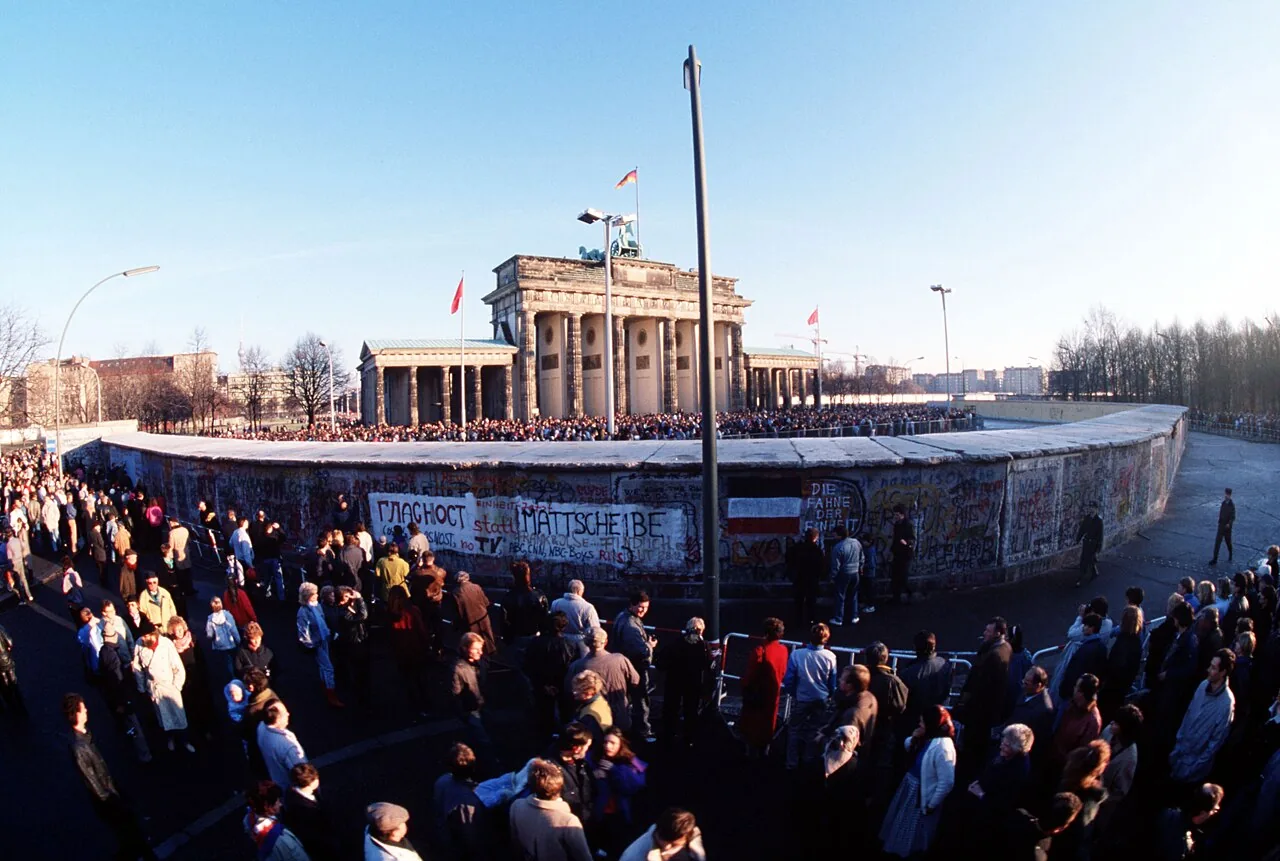
- Present the image (nature, place, date).
- Describe the people and the Wall.
- Explain what had happened a few weeks earlier.
- Explain one limit of the photograph as evidence.
Exercise 11 : Container shipping
Document 12 – A container terminal
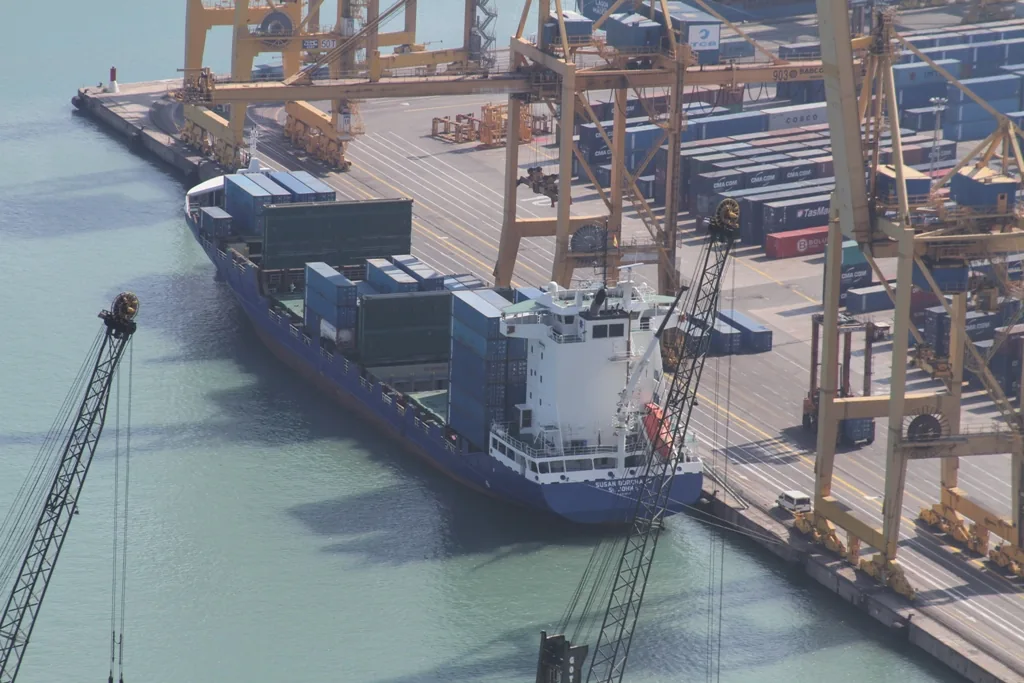
- Present the image (nature, place, date).
- Describe the ship and the equipment.
- Explain how containers changed trade.
- Explain one question the image raises about globalization.
Exercise 12 : Nixon and Mao
Document 13 – A handshake in Beijing
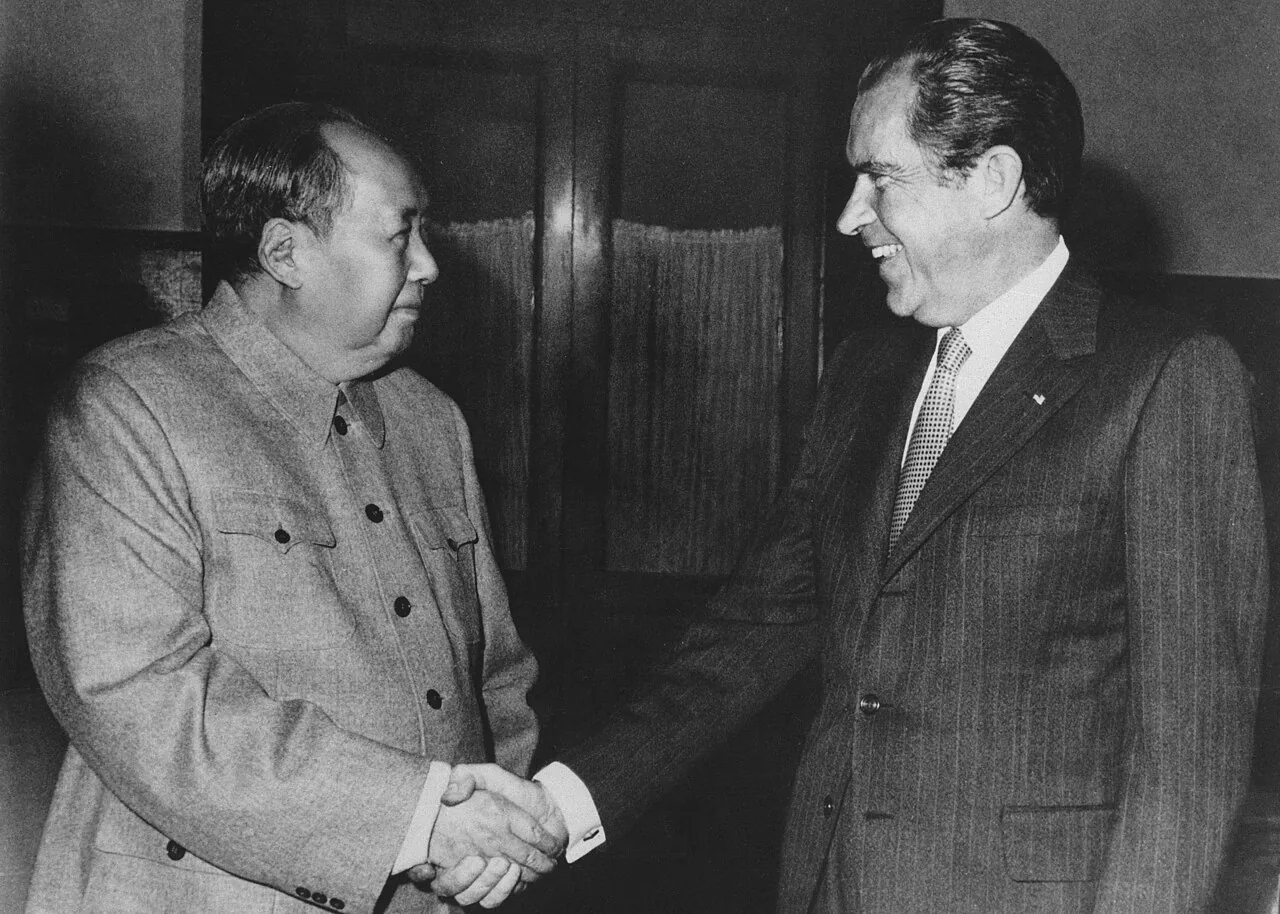
- Present the image (nature, place, date).
- Describe the two men and the gesture.
- Explain why the meeting was surprising for people at the time.
- Explain what the meeting led to in the following decades.
Exercise 13 : Nelson Mandela
Document 14 – A president in 1994
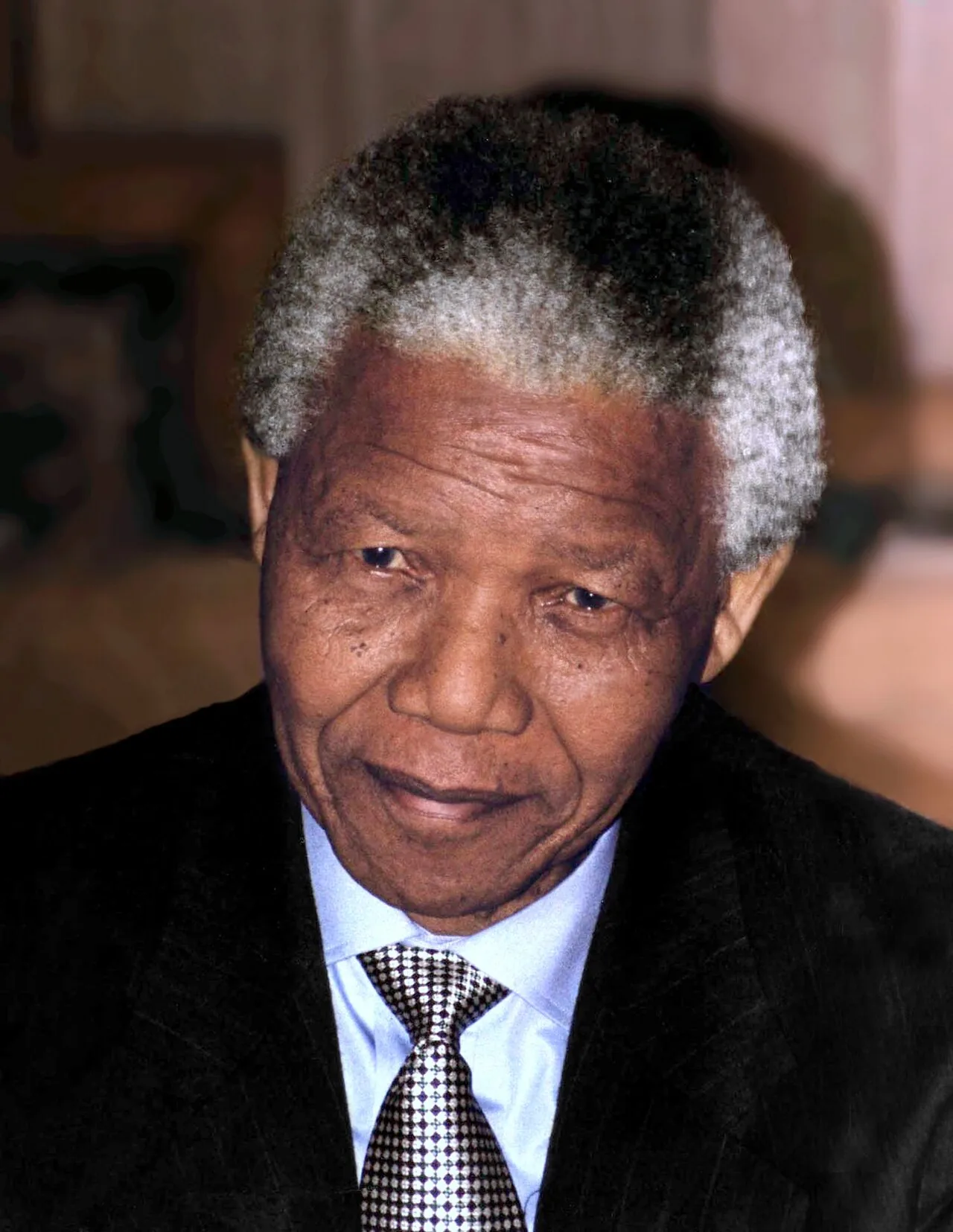
- Present the image (nature, subject, date).
- Describe the portrait.
- Explain why Mandela’s election mattered.
- Explain how the international community contributed to the end of apartheid.
Exercise 14 : The Blue Marble
Document 15 – Earth from space
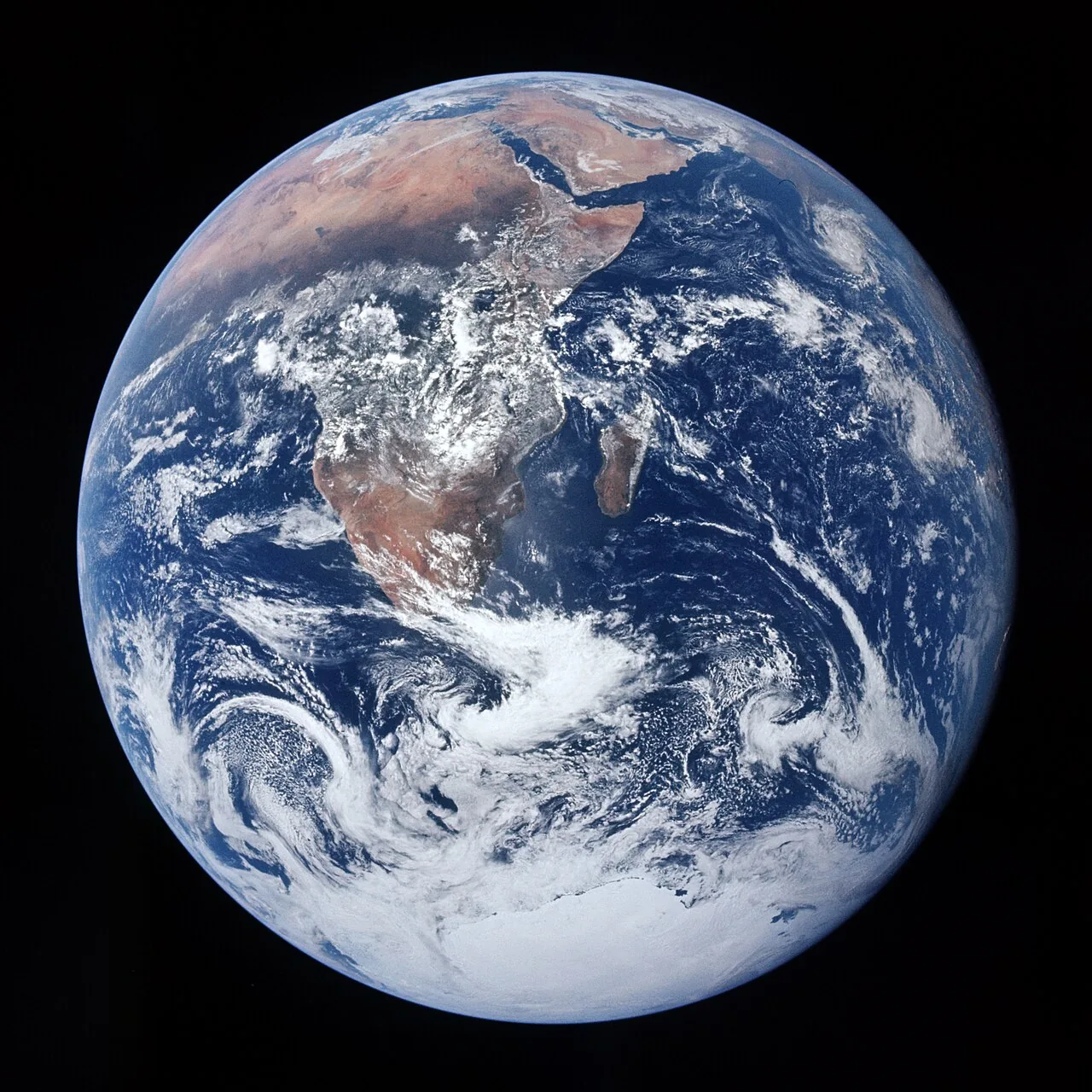
- Present the image (nature, source, date).
- Describe what the photograph shows.
- Explain why this image became a symbol for environmental movements.
- Explain one limit of using a photograph as an argument about environmental policy.
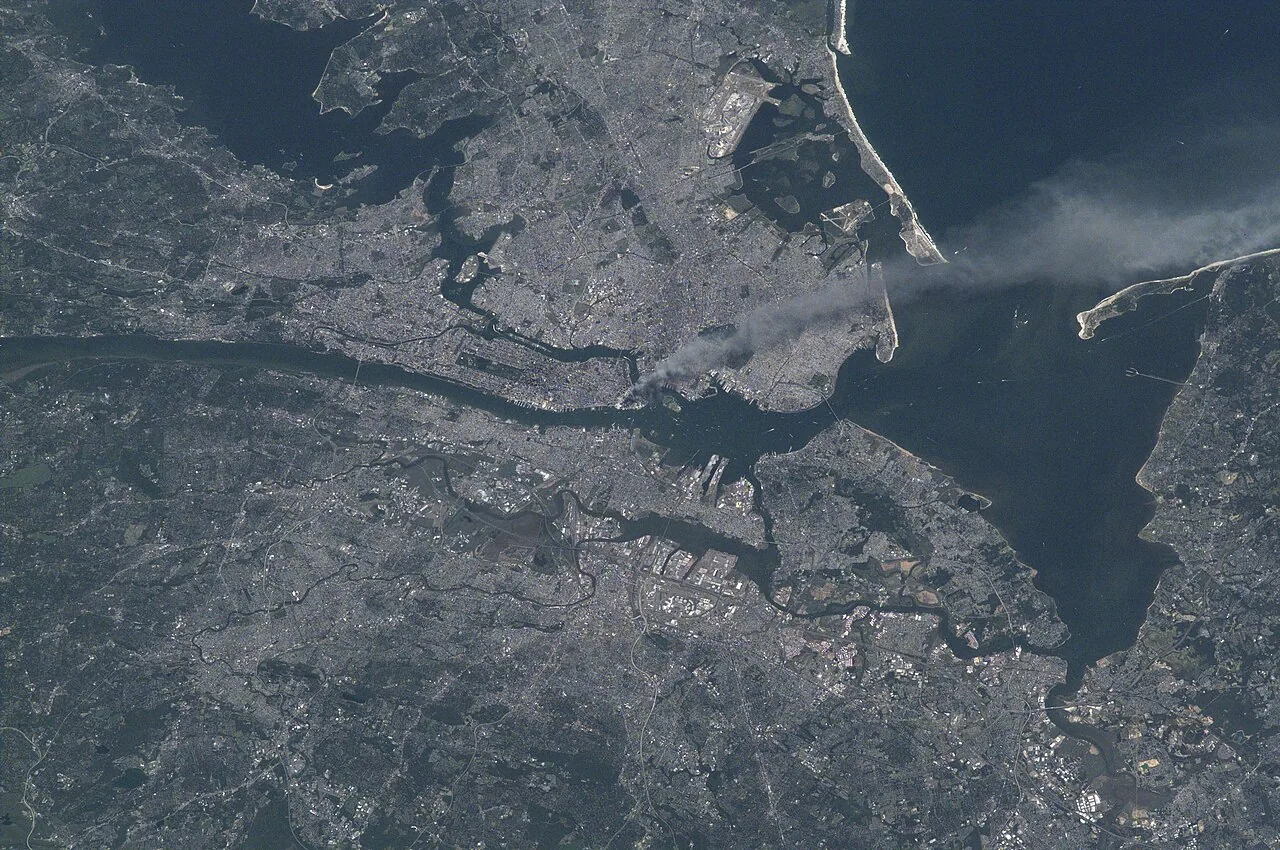
Exercise 15 : Image and text: terrorism and response
Document 16 – The attacks of September 11
Document 17 – President Bush
Tonight we are a country awakened to danger and called to defend freedom. Our grief has turned to anger, and anger to resolution. Whether we bring our enemies to justice, or bring justice to our enemies, justice will be done. […] All of America was touched on the evening of the tragedy to see Republicans and Democrats joined together on the steps of this Capitol, singing “God Bless America.”
Source: President George W. Bush, address to a joint session of Congress and the American people, September 20, 2001; White House archive.
- Present each document.
- Explain what the photograph shows and from where it was taken.
- Explain how the speech responds to the event shown.
- Name one result of the response in the following years.
Exercise 16 : Dates of globalization
Use the table to answer.
| Date | Event |
|---|---|
| Dec. 10, 1948 | Universal Declaration of Human Rights |
| 1956 | First commercial container shipping |
| Feb. 1972 | Nixon visits China |
| Nov. 9, 1989 | Berlin Wall opens |
| Dec. 25, 1991 | Gorbachev resigns; USSR dissolves |
| Sept. 11, 2001 | Terrorist attacks in the United States |
| Dec. 2001 | China joins the WTO |
| 2008 | Global financial crisis |
Dates as given in standard reference works.
- Calculate the number of years between the Declaration of Human Rights and the fall of the Berlin Wall.
- Which two events concern China?
- Which event came first in 2001?
Exercise 17 : Locate the world’s shipping hubs
Use Map 3. The numbers mark six major port cities.
- Identify: 1 Shanghai, 2 Singapore, 3 Rotterdam, 4 Los Angeles, 5 Dubai, 6 New York.
- Which two hubs lie on the route between Asia and Europe via the Suez Canal?
- Which hub is the main gateway to Europe for ocean shipping on this map?
- Explain why ports such as Singapore and Rotterdam became hubs.
Exercise 18 : Locate the end of the Soviet bloc
Use Map 4. The numbers mark six cities.
- Identify: 1 Moscow, 2 Berlin, 3 Kyiv, 4 Tbilisi, 5 Riga, 6 Bishkek.
- Which cities became capitals of independent states in 1991?
- Which city lay in a divided country until 1990?
- Explain why the Baltic states wanted independence.
Exercise 19 : Order the events
Put in order: (a) Tiananmen Square protests crushed, (b) Soviet Union dissolved, (c) Rio Earth Summit, (d) Reagan speaks at the Brandenburg Gate, (e) September 11 attacks, (f) Mandela elected president.
- Write the order with years.
- Which events belong to the end of the Cold War?
- Which events concern the environment or rights?
Exercise 20 : Durations
Calculate: (a) from the opening of the Berlin Wall (1989) to German reunification (1990); (b) from Gorbachev’s rise (1985) to the end of the USSR (1991); (c) from Mandela’s release (1990) to the end of his presidency (1999); (d) from the Rio Declaration (1992) to the Paris Agreement (2015).
Exercise 21 : Guided research: the World Wide Web
Mission: find out how the World Wide Web began.
- Search: Tim Berners-Lee CERN World Wide Web history. Use CERN’s website, an encyclopedia, or a university site.
- Fill in the card: the inventor; the organization; the year of the first proposal; the first website; one way the web changed daily life.
- Explain in two sentences the difference between the internet and the web.
Hint: the internet is a network of computers; the web is a system of linked pages that runs on it.
Exercise 22 : SAQ: the end of the Cold War
Short-answer question.
- Identify ONE reason the Soviet system weakened in the 1980s.
- Identify ONE way that events in 1989 changed Europe.
- Explain ONE way that the end of the Cold War affected the global economy.
Exercise 23 : LEQ: effects of globalization
Prompt. Evaluate the extent to which technological change caused economic globalization in the period 1950 to the present.
- Write a thesis.
- List three pieces of evidence.
- Write a paragraph on a cause other than technology.
Exercise 24 : DBQ practice: views of globalization
Prompt. Evaluate the extent to which the documents show agreement about the benefits of globalization.
Document A
In the new century, liberty will spread by cell phone and cable modem. In the past year, the number of Internet addresses in China has more than quadrupled from 2 million to 9 million. This year, the number is expected to grow to over 20 million. When China joins the WTO, by 2005, it will eliminate tariffs on information technology products, making the tools of communication even cheaper, better, and more widely available.
Source: President William J. Clinton, remarks on China trade at the Paul H. Nitze School of Advanced International Studies, Johns Hopkins University, March 8, 2000; Clinton White House archive.
Document B
Principle 1 Human beings are at the centre of concerns for sustainable development. They are entitled to a healthy and productive life in harmony with nature. […] Principle 7 States shall cooperate in a spirit of global partnership to conserve, protect and restore the health and integrity of the Earth’s ecosystem. In view of the different contributions to global environmental degradation, States have common but differentiated responsibilities.
Source: Rio Declaration on Environment and Development, adopted at the United Nations Conference on Environment and Development, Rio de Janeiro, June 1992; Convention on Biological Diversity.
Document C
All human beings are born free and equal in dignity and rights. They are endowed with reason and conscience and should act towards one another in a spirit of brotherhood. […] Everyone is entitled to all the rights and freedoms set forth in this Declaration, without distinction of any kind, such as race, colour, sex, language, religion, political or other opinion, national or social origin, property, birth or other status.
Source: Universal Declaration of Human Rights, adopted by the United Nations General Assembly in Paris, December 10, 1948, articles 1 and 2; United Nations.
- Write a thesis.
- State the point of view of each document.
- Name one additional document you would want.
Exercise 25 : Stimulus-based multiple choice
Stimulus
Today I say: As long as this gate is closed, as long as this scar of a wall is permitted to stand, it is not the German question alone that remains open, but the question of freedom for all mankind. […] General Secretary Gorbachev, if you seek peace, if you seek prosperity for the Soviet Union and Eastern Europe, if you seek liberalization: Come here to this gate! Mr. Gorbachev, open this gate! Mr. Gorbachev, tear down this wall!
Source: President Ronald Reagan, remarks at the Brandenburg Gate, West Berlin, June 12, 1987; Ronald Reagan Presidential Library and Museum.
*Liberalization: reform toward more freedom.
- The speaker was most directly addressing (A) the Soviet leader (B) the Chinese government (C) the United Nations (D) the Taliban
- The speech was given during (A) the First World War (B) the Cold War (C) the Great Depression (D) the Scramble for Africa
- Which development shows the limit of the speech as a cause of change? (A) The Wall was opened after mass protest in 1989 (B) The Wall was built in 1961 (C) The Soviet Union was formed in 1922 (D) NATO was founded in 1949


Quick review: flashcards
Tap a card to see the answer.