


This worksheet on APUSH Period 9: 1980-Present belongs to the AP US History course. Its questions use primary sources, maps and timelines, and they move from basic recall to short writing tasks. Before you start, review the lesson; afterward, try the true or false quiz.
Exercise 1 : Vocabulary of Period 9
Match each term with its meaning. Then use two of the terms in a sentence.
- Supply-side economics
- Glasnost
- Globalization
- NAFTA
- AUMF
- Patriot Act
- Great Recession
- Polarization
(a) the growing division of the political parties and voters into opposed camps; (b) the 2001 law giving the President authority to use force against those responsible for 9/11; (c) the theory that tax cuts stimulate investment and growth; (d) the Soviet policy of openness introduced by Gorbachev; (e) the economic downturn of 2007-2009 that followed the housing and financial crisis; (f) the growing integration of the world economy; (g) a 1994 trade agreement among the United States, Canada, and Mexico; (h) the 2001 law that expanded the government’s powers of surveillance in the fight against terrorism.
Exercise 2 : Government is the problem?
Document 1 – Reagan’s first inaugural address, 1981
In this present crisis, government is not the solution to our problem; government is the problem. From time to time, we have been tempted to believe that society has become too complex to be managed by self-rule, that government by an elite group is superior to government for, by, and of the people. But if no one among us is capable of governing himself, then who among us has the capacity to govern someone else?
Source: Ronald Reagan, first inaugural address, January 20, 1981; text from the Avalon Project, Yale Law School.
*elite: a small group with power.
- Present the document (nature, author, date, context).
- What does Reagan say about government in this passage?
- What question does he ask about self-government?
- Explain why the words “in this present crisis” matter to the meaning.
- Name two Reagan policies that applied this view.
Exercise 3 : “Tear down this wall”
Document 2 – Reagan at the Brandenburg Gate, 1987
There is one sign the Soviets can make that would be unmistakable, that would advance dramatically the cause of freedom and peace. General Secretary Gorbachev, if you seek peace, if you seek prosperity for the Soviet Union and Eastern Europe, if you seek liberalization: Come here to this gate! Mr. Gorbachev, open this gate! Mr. Gorbachev, tear down this wall!
Source: Ronald Reagan, remarks at the Brandenburg Gate, West Berlin, June 12, 1987; text from the Ronald Reagan Presidential Library.
*liberalization: loosening of state control.
- Present the document (nature, author, date, context).
- What does Reagan say the Soviets could do?
- What does he say about “freedom and security”?
- Explain why historians disagree about the speech’s effect.
- Name two other factors in the end of the Cold War.
Exercise 4 : Two views of the Cold War ending
Document 3 – Reagan, 1987
There is one sign the Soviets can make that would be unmistakable, that would advance dramatically the cause of freedom and peace. General Secretary Gorbachev, if you seek peace, if you seek prosperity for the Soviet Union and Eastern Europe, if you seek liberalization: Come here to this gate! Mr. Gorbachev, open this gate! Mr. Gorbachev, tear down this wall!
Source: Ronald Reagan, remarks at the Brandenburg Gate, West Berlin, June 12, 1987; text from the Ronald Reagan Presidential Library.
Document 4 – The Wall opens, 1989
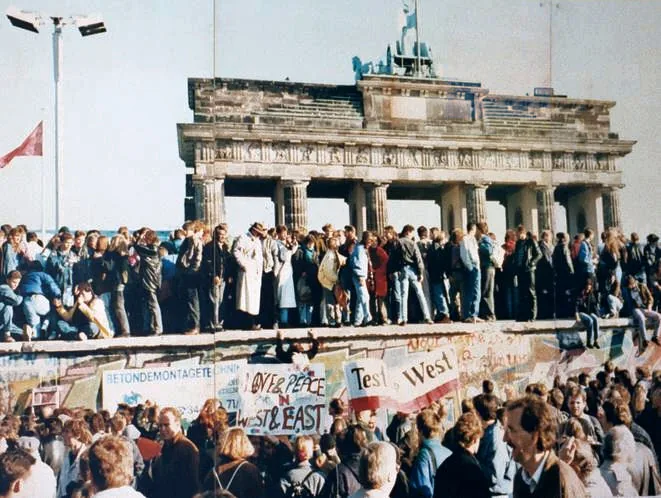
Source: unknown photographer, November 1989, Wikimedia Commons (CC BY-SA 3.0).
- Present each document.
- What does the speech ask for and what does the photograph show?
- Compare the two as evidence of the end of the Cold War: what does each tell us, and what is missing?
- Explain which document is more useful to a historian who studies the causes of the end of the Cold War.
Exercise 5 : The Americans with Disabilities Act
Document 5 – The ADA findings, 1990
(1) physical or mental disabilities in no way diminish a person’s right to fully participate in all aspects of society, yet many people with physical or mental disabilities have been precluded from doing so because of discrimination; […] (2) historically, society has tended to isolate and segregate individuals with disabilities, and, despite some improvements, such forms of discrimination against individuals with disabilities continue to be a serious and pervasive social problem;
Source: Americans with Disabilities Act of 1990, section 12101, findings; text from ADA.gov, U.S. Department of Justice.
*precluded: prevented. *pervasive: spread widely.
- Present the document (nature, author, date, context).
- What problem does the first finding describe?
- How does the second finding describe the history of disabled people?
- Explain how the law belongs to the civil rights tradition.
- Identify one effect of the ADA on public life.
Exercise 6 : Clinton and the size of government
Document 6 – Clinton, State of the Union, 1996
We know big government does not have all the answers. We know there’s not a program for every problem. We have worked to give the American people a smaller, less bureaucratic government in Washington. And we have to give the American people one that lives within its means. The era of big government is over. […] But we cannot go back to the time when our citizens were left to fend for themselves. Instead, we must go forward as one America, one nation working together to meet the challenges we face together. Self-reliance and teamwork are not opposing virtues; we must have both.
Source: William J. Clinton, State of the Union address, January 23, 1996; text from the Clinton White House archives.
*fend: take care of oneself.
- Present the document (nature, author, date, context).
- What does Clinton concede, and what does he refuse to accept?
- Why did a Democratic president say this in 1996? Use the election of 1994.
- Compare the statement with Reagan’s of 1981.
- Name one law of 1996 that reflects the position.
Exercise 7 : After September 11
Document 7 – Bush before Congress, 2001
Americans are asking, why do they hate us? They hate what we see right here in this chamber — a democratically elected government. Their leaders are self-appointed. They hate our freedoms — our freedom of religion, our freedom of speech, our freedom to vote and assemble and disagree with each other. They want to overthrow existing governments in many Muslim countries, such as Egypt, Saudi Arabia, and Jordan. They want to drive Israel out of the Middle East. They want to drive Christians and Jews out of vast regions of Asia and Africa. These terrorists kill not merely to end lives, but to disrupt and end a way of life.
Source: George W. Bush, address to a joint session of Congress and the American people, September 20, 2001; text from the White House archives.
Document 8 – The AUMF, 2001
That the President is authorized to use all necessary and appropriate force against those nations, organizations, or persons he determines planned, authorized, committed, or aided the terrorist attacks that occurred on September 11, 2001, or harbored such organizations or persons, in order to prevent any future acts of international terrorism against the United States by such nations, organizations or persons.
Source: Authorization for Use of Military Force, Public Law 107-40, September 18, 2001, section 2(a); text from the U.S. Government Publishing Office (govinfo.gov).
*authorized: given the legal power to do something.
- Present each document.
- How does Bush describe the enemy and its motives?
- What exactly does the AUMF authorize? Whom and where?
- Compare the two documents: what is the difference between a political statement and a legal text?
- Explain why the AUMF has been the subject of debate.
Exercise 8 : Obama and hope, 2009
Document 9 – Obama’s inaugural address, 2009
Today I say to you that the challenges we face are real. They are serious and they are many. They will not be met easily or in a short span of time. But know this America: They will be met. On this day, we gather because we have chosen hope over fear, unity of purpose over conflict and discord.
Source: Barack Obama, inaugural address, January 20, 2009; text from the Obama White House archives.
- Present the document (nature, author, date, context).
- How does Obama describe the challenges and the way to meet them?
- What choice does he say the country made?
- Compare the speech with Roosevelt’s of 1933.
- Explain two challenges that he faced at the start of his term.
Exercise 9 : Reagan takes the oath
Document 10 – January 20, 1981
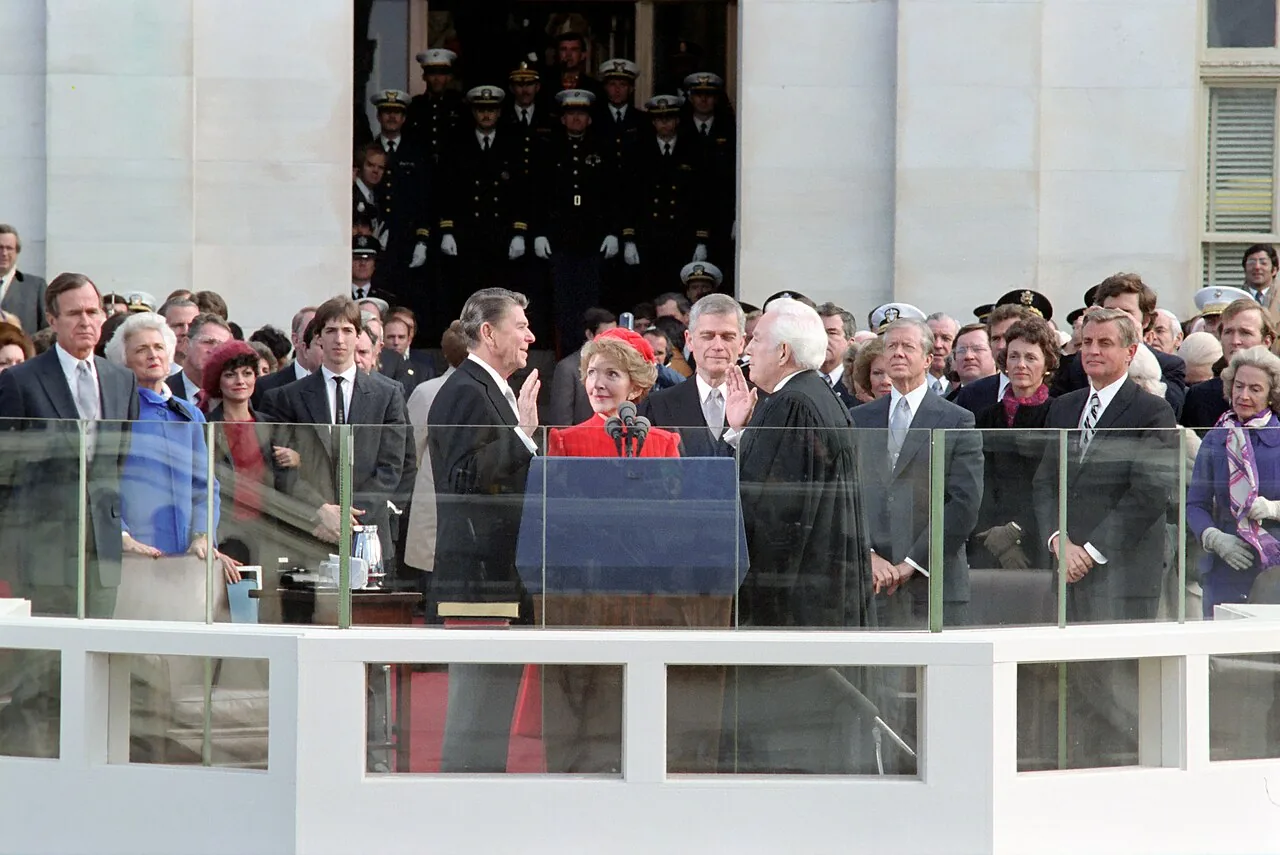
Source: White House Photographic Office, January 20, 1981.
- Present the document (nature, source, date, place).
- Describe the scene.
- Explain the election of 1980 and why it is called a turning point.
- What does the choice of an outdoor ceremony on the west front suggest?
Exercise 10 : Reagan and Gorbachev
Document 11 – Reykjavik, 1986
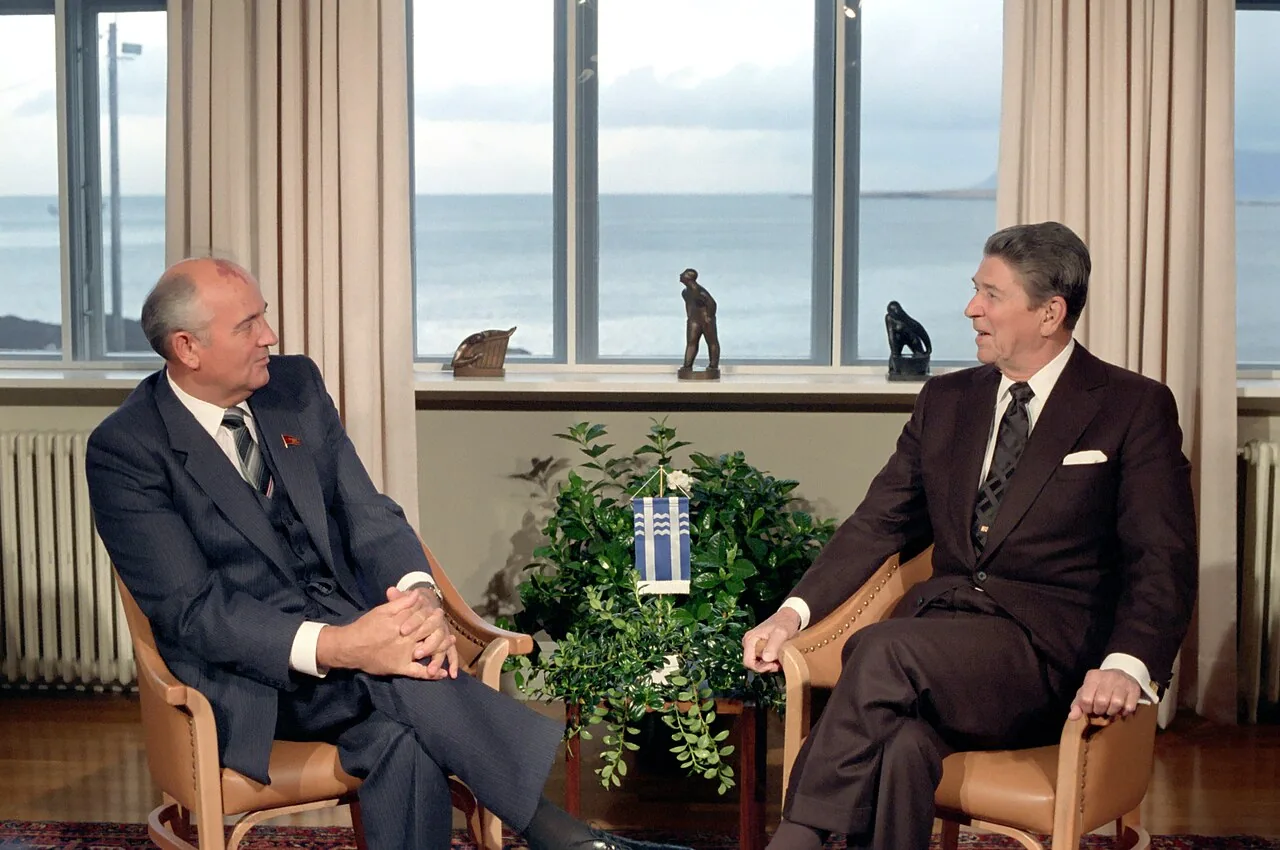
Source: White House Photographic Office, October 1986.
- Present the document (nature, date, place).
- Describe the two men and the setting.
- Why did the Reykjavik summit fail to produce an agreement?
- Explain how the INF Treaty of 1987 followed from these talks.
Exercise 11 : The Challenger disaster
Document 12 – January 28, 1986
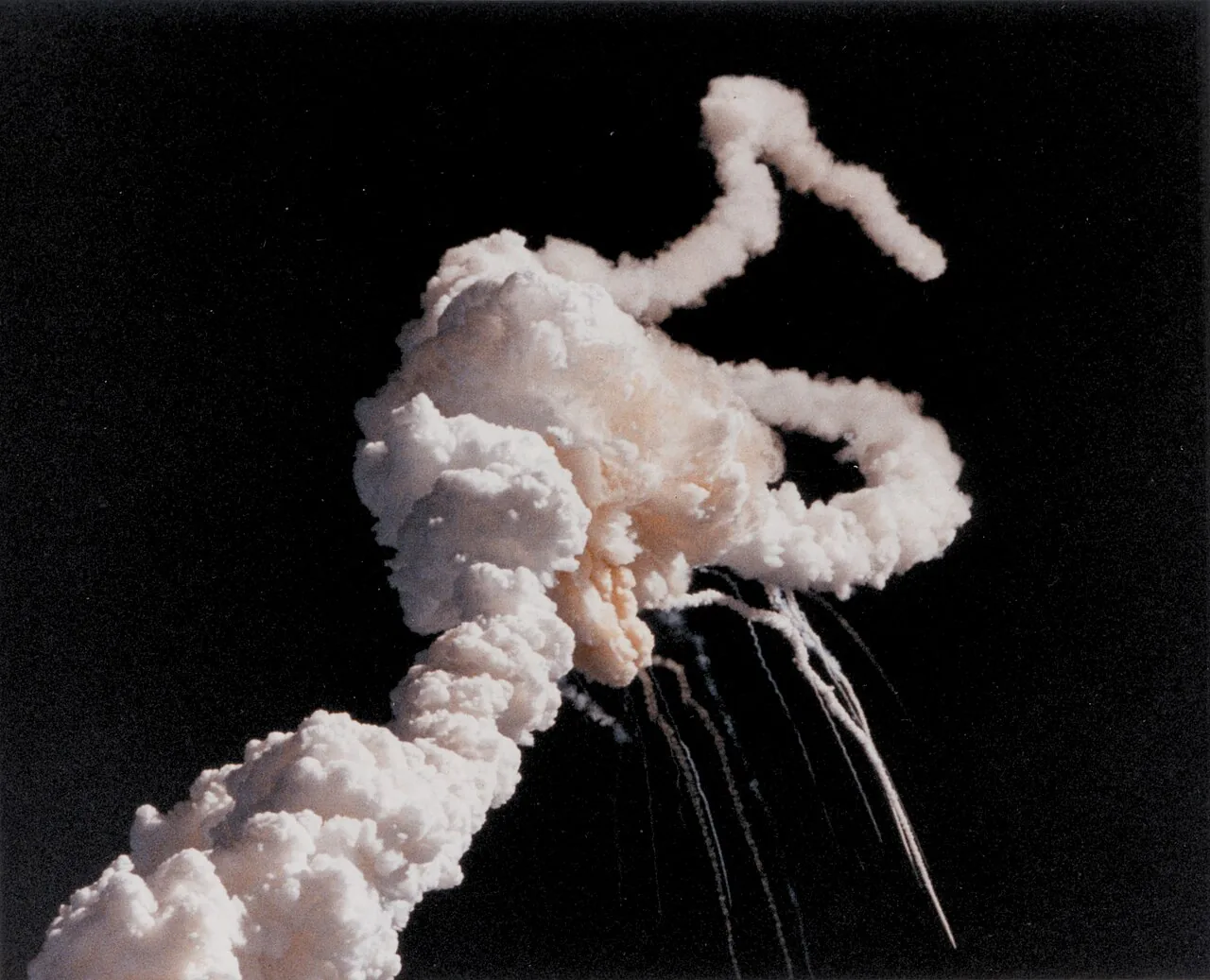
Source: Kennedy Space Center, NASA, 1986.
- Present the document (nature, source, date, place).
- Describe what you see.
- Explain how the disaster was investigated and what was found.
- Explain why the event had a strong effect on public opinion.
Exercise 12 : The Americans with Disabilities Act signed
Document 13 – July 26, 1990
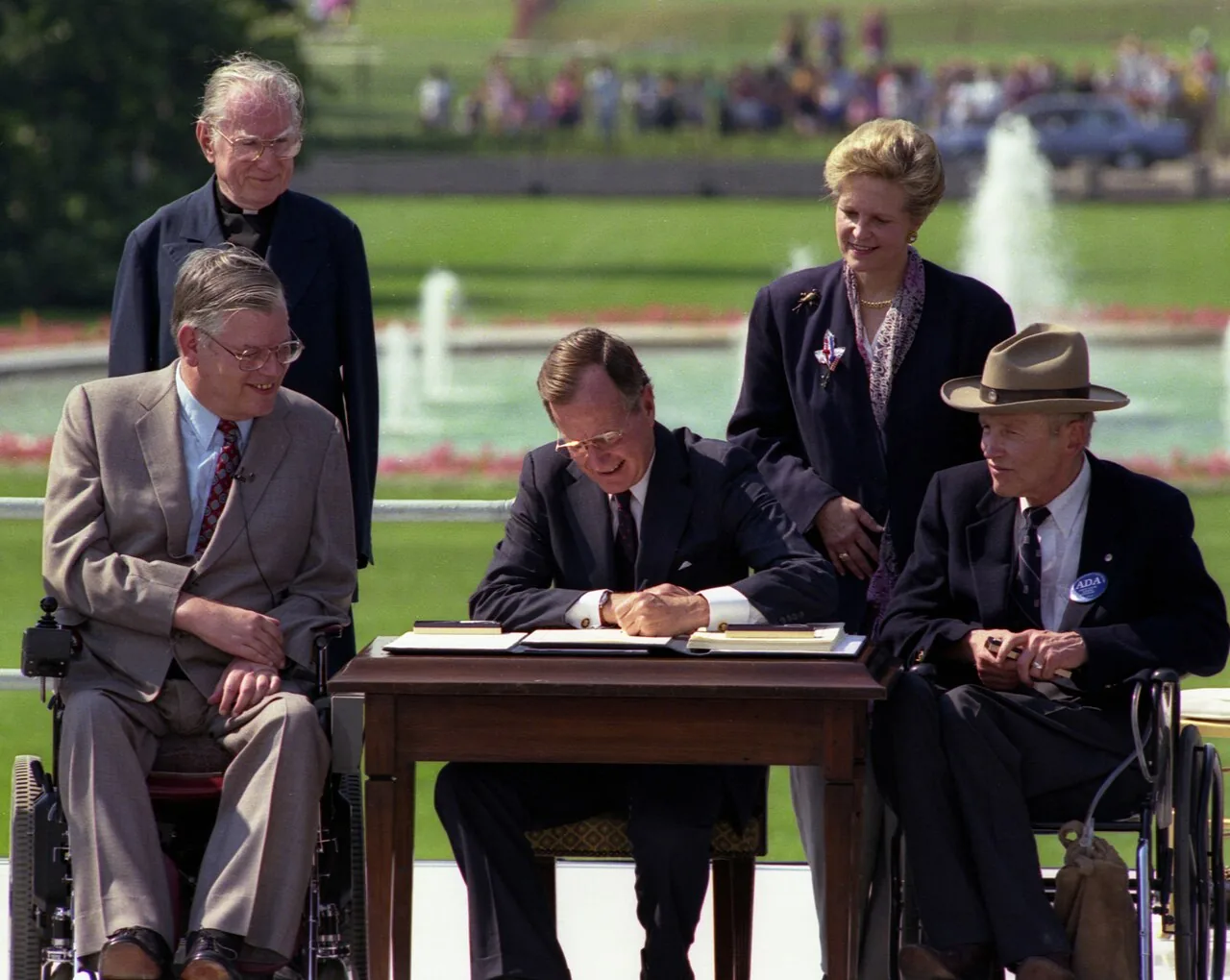
Source: White House photograph, July 26, 1990.
- Present the document (nature, date, place).
- Describe the people and the setting.
- Explain how the disability rights movement won the law.
- Why was it important for the president to sign it in public?
Exercise 13 : September 11, 2001
Document 14 – The ruins, September 14, 2001
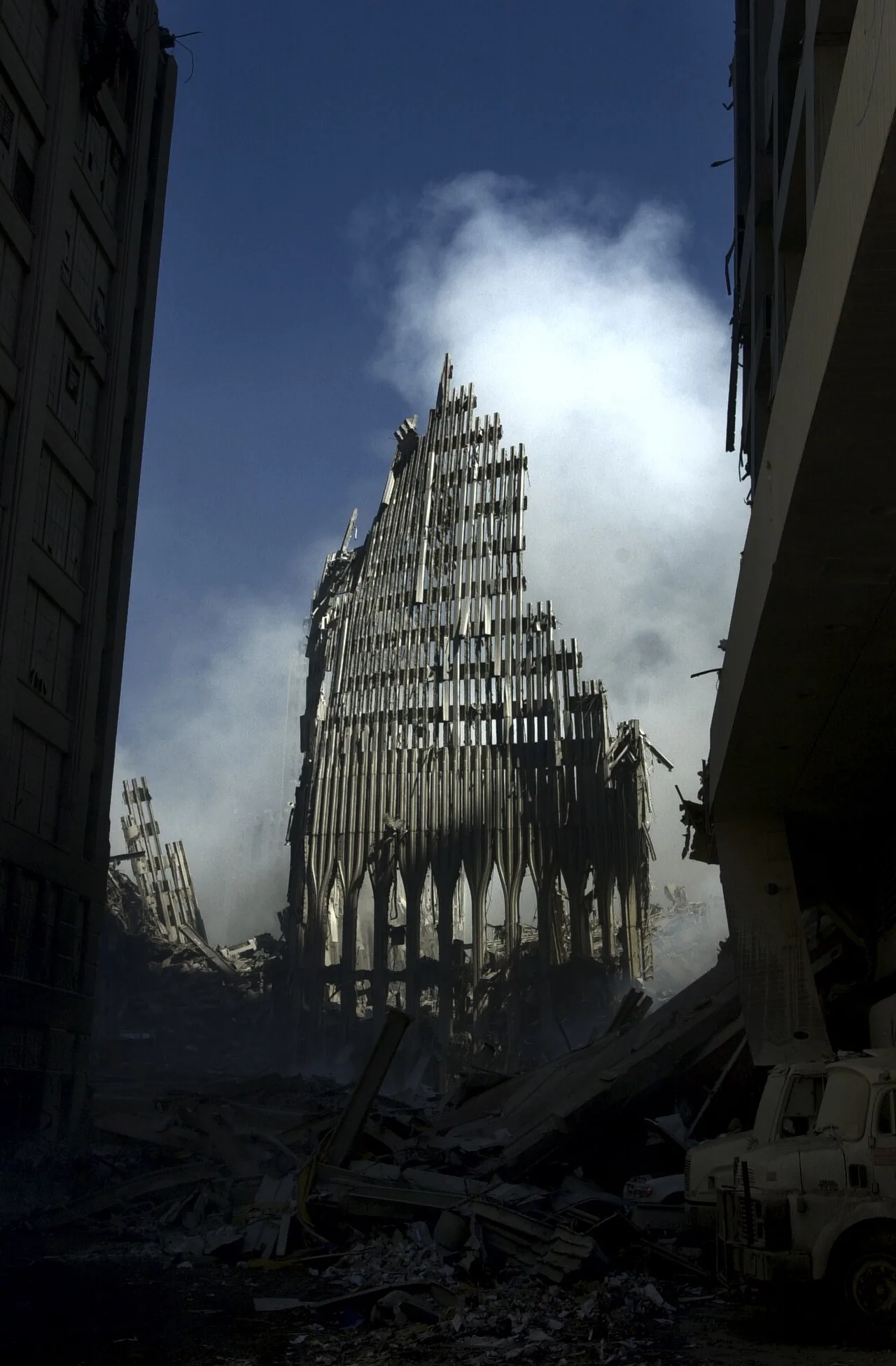
Source: Preston Keres, U.S. Navy, September 14, 2001.
- Present the document (nature, photographer, date, place).
- Describe what the photograph shows.
- Explain what happened on September 11, 2001.
- How might images such as this one influence public opinion and policy?
Exercise 14 : Seen from space
Document 15 – Manhattan, September 11, 2001
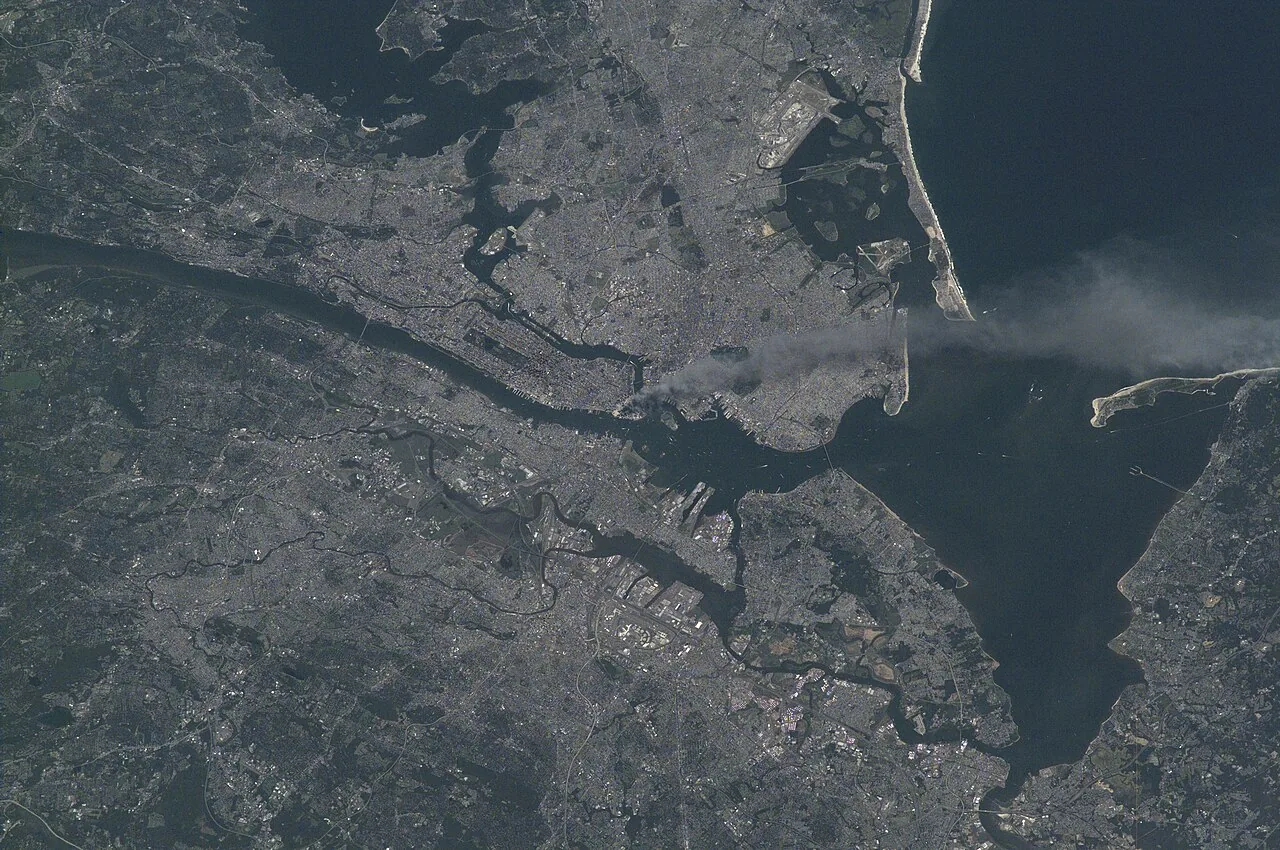
Source: NASA, Expedition 3, September 11, 2001.
- Present the document (nature, source, date, place).
- Describe what the picture shows.
- What does the viewpoint add that a ground-level photograph does not?
- What are the limits of this document as evidence?
Exercise 15 : Hurricane Katrina
Document 16 – New Orleans, August 2005
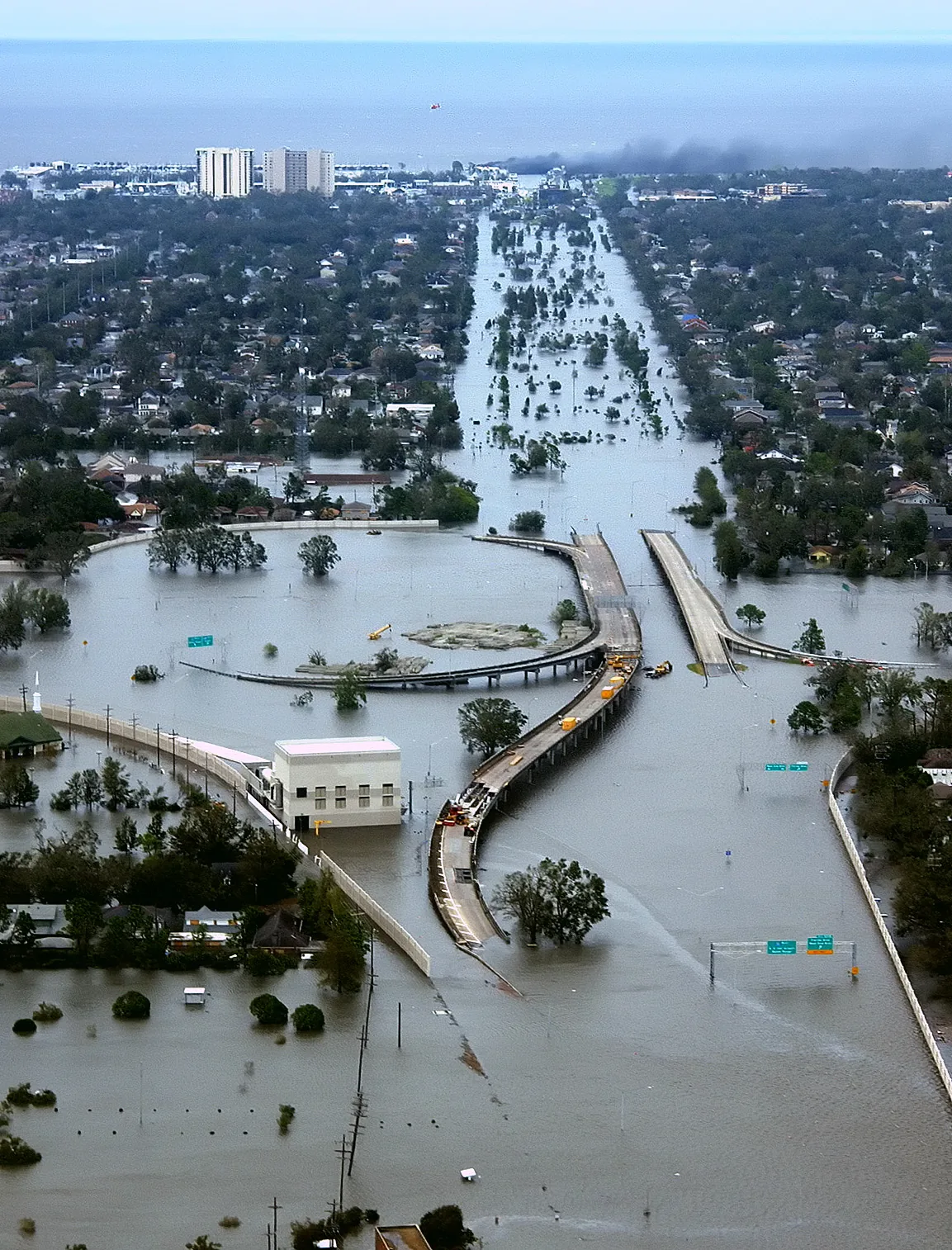
Source: AP photograph by Kyle Niemi, U.S. Coast Guard, 2005.
- Present the document (nature, photographer, date, place).
- Describe the scene.
- Explain two reasons why the disaster was so severe.
- Why did Katrina raise questions about inequality and government?
Exercise 16 : Reading the population table
Document 17 – Population of the United States
| Year | Population |
|---|---|
| 1980 | 226,545,805 |
| 1990 | 248,709,873 |
| 2000 | 281,421,906 |
| 2010 | 308,745,538 |
| 2020 | 331,449,281 |
Source: U.S. Census Bureau, decennial census.
- Calculate the increase in each decade, in millions.
- Which decade shows the largest increase?
- Name one cause of the growth.
- Explain one effect of immigration on the economy or society since 1980.
Exercise 17 : Reading Map 1: the revolutions of 1989
- Which dot marks the city where Solidarity was founded in 1980?
- Which two dots mark the capitals of Czechoslovakia and Poland?
- Which event happened last, 1 or 8?
- Explain how events in Hungary and Leipzig led to the opening of the Berlin Wall.
Exercise 18 : Reading Map 2: the Persian Gulf War
- Which dot marks the country that was invaded in August 1990?
- From which country did the coalition attack, according to the arrows?
- Why did President Bush stop the offensive before Baghdad?
- Explain one lasting effect of the war on American policy in the region.
Exercise 19 : Sequencing 1980-2024
Put the events in chronological order and group them under Cold War, War on Terror, or Economy and Domestic Politics.
- Attacks of September 11
- INF Treaty
- Lehman Brothers collapses
- NAFTA takes effect
- Fall of the Berlin Wall
- Affordable Care Act signed
- Persian Gulf War ground offensive
- U.S. troops leave Afghanistan
Exercise 20 : Durations and turning points
- How many years passed between Reagan’s speech in Berlin (1987) and the dissolution of the Soviet Union (1991)?
- How many years did the American war in Afghanistan last (October 2001 to August 2021)?
- How many months separate Lehman’s collapse (September 2008) from the peak of unemployment (October 2009)?
- Which date do you consider the most important turning point of the period? Defend your choice in two sentences.
Exercise 21 : Guided research: the ADA and disability rights
Mini-inquiry: how did activists win the ADA?
- Search with the keywords Americans with Disabilities Act 1990 history and Capitol Crawl 1990.
- Use reliable sites: ADA.gov, the Library of Congress, the National Archives, and the George H. W. Bush Presidential Library; use Wikipedia only to find sources.
- Fill in a card: the date of signing, the main provisions, two activists or groups, the 1990 Capitol Crawl, and one later amendment.
- Write four sentences: who deserves credit for the law, the movement or the politicians?
Exercise 22 : Short answer: the war on terror (SAQ)
Source – The AUMF, 2001
That the President is authorized to use all necessary and appropriate force against those nations, organizations, or persons he determines planned, authorized, committed, or aided the terrorist attacks that occurred on September 11, 2001, or harbored such organizations or persons, in order to prevent any future acts of international terrorism against the United States by such nations, organizations or persons.
Source: Authorization for Use of Military Force, Public Law 107-40, September 18, 2001, section 2(a); text from the U.S. Government Publishing Office (govinfo.gov).
Answer parts (a), (b), and (c) in complete sentences.
- (a) Identify ONE event that led Congress to pass this resolution.
- (b) Explain ONE way in which the AUMF affected the balance of power between Congress and the President.
- (c) Explain ONE criticism of the war on terror policies made by civil libertarians.
Exercise 23 : Stimulus-based multiple choice
Source – Clinton, 1996
We know big government does not have all the answers. We know there’s not a program for every problem. We have worked to give the American people a smaller, less bureaucratic government in Washington. And we have to give the American people one that lives within its means. The era of big government is over. […] But we cannot go back to the time when our citizens were left to fend for themselves. Instead, we must go forward as one America, one nation working together to meet the challenges we face together. Self-reliance and teamwork are not opposing virtues; we must have both.
Source: William J. Clinton, State of the Union address, January 23, 1996; text from the Clinton White House archives.
Choose the best answer for each question.
- The excerpt most directly reflects the influence of
(A) the Republican victory in the elections of 1994
(B) the end of the Vietnam War
(C) the election of 1932
(D) the passage of the Civil Rights Act - The statement “the era of big government is over” is most similar to a statement by
(A) Franklin Roosevelt in 1933
(B) Ronald Reagan in 1981
(C) Lyndon Johnson in 1964
(D) Woodrow Wilson in 1913 - Which legislation of 1996 best reflects this position?
(A) The Affordable Care Act
(B) The Personal Responsibility and Work Opportunity Reconciliation Act
(C) The Patriot Act
(D) The Americans with Disabilities Act
Exercise 24 : DBQ practice: the war on terror and civil liberties
Prompt: Evaluate the extent to which the attacks of September 11, 2001, changed American foreign policy and the balance between security and liberty.
Document A – Bush, September 20, 2001
Americans are asking, why do they hate us? They hate what we see right here in this chamber — a democratically elected government. Their leaders are self-appointed. They hate our freedoms — our freedom of religion, our freedom of speech, our freedom to vote and assemble and disagree with each other. They want to overthrow existing governments in many Muslim countries, such as Egypt, Saudi Arabia, and Jordan. They want to drive Israel out of the Middle East. They want to drive Christians and Jews out of vast regions of Asia and Africa. These terrorists kill not merely to end lives, but to disrupt and end a way of life.
Source: George W. Bush, address to a joint session of Congress and the American people, September 20, 2001; text from the White House archives.
Document B – The AUMF, September 18, 2001
That the President is authorized to use all necessary and appropriate force against those nations, organizations, or persons he determines planned, authorized, committed, or aided the terrorist attacks that occurred on September 11, 2001, or harbored such organizations or persons, in order to prevent any future acts of international terrorism against the United States by such nations, organizations or persons.
Source: Authorization for Use of Military Force, Public Law 107-40, September 18, 2001, section 2(a); text from the U.S. Government Publishing Office (govinfo.gov).
Document C – The ruins, September 14, 2001
Source: Preston Keres, U.S. Navy, September 14, 2001.
- For each document, write one sentence of sourcing (point of view or purpose and its effect on usefulness).
- Write a thesis with a line of reasoning.
- Give two pieces of outside evidence.
- Write one sentence of complexity.
Exercise 25 : LEQ practice: the conservative turn
Prompt: Evaluate the extent to which the election of Ronald Reagan in 1980 changed the direction of American politics and economic policy.
- Write a thesis.
- List three pieces of evidence, each a specific fact.
- Explain how each piece supports the thesis or shows its limits.
- Add one sentence that shows continuity or complexity.
Exercise 26 : Who is who? People of 1980-present
Identify each person and give one fact about the role he or she played.
- Ronald Reagan
- Mikhail Gorbachev
- George H. W. Bush
- Bill Clinton
- Osama bin Laden
- George W. Bush
- Barack Obama
- Newt Gingrich
Exercise 27 : True or false? Justify
Decide whether each statement is true or false and correct the false ones.
- The Berlin Wall fell in 1989.
- The Soviet Union dissolved in 1991.
- The Americans with Disabilities Act was signed by President Clinton.
- The Persian Gulf War began with an Iraqi invasion of Saudi Arabia.
- The AUMF of 2001 was passed with only one dissenting vote in Congress.
- The Great Recession began with the stock market crash of 1929.


Quick review: flashcards
Tap a card to see the answer.