


This World History Grades 9-10 lesson covers Globalization and the World Today, part of the unit “The modern world.” First, read the full lesson with its primary sources, maps and key terms. Then practice with the worksheet, check yourself with the quiz and get ready with the test.
In December 1972 the crew of Apollo 17, on the way to the Moon, photographed the whole Earth: a blue and white sphere with no borders visible. The image, called the Blue Marble, became a symbol of a world that people increasingly experienced as one. Half a century later the phone in your pocket was assembled from parts made in several countries. A virus that appeared in one city in 2019 reached every continent within months. A decision of a central bank in one capital can change the cost of a loan in another. This is the world of globalization, which is also a world of old rivalries, new conflicts, and unfinished promises.
Guiding question: How has the world become more connected since 1945, and what are the benefits and problems of that interdependence?
1. The world after the Cold War
The end of the Cold War changed the map and the mood. Germany reunified on October 3, 1990, and the Soviet Union dissolved into fifteen independent republics on December 26, 1991. Many in the West spoke of a “new world order” and the triumph of liberal democracy and the market. Reality was more complex. Yugoslavia broke apart in the 1990s in wars in Croatia, Bosnia, and Kosovo that included ethnic cleansing and the Srebrenica genocide of 1995. In 1994 genocide in Rwanda killed hundreds of thousands of Tutsi and moderate Hutu in about a hundred days while the world did not intervene. In South Africa, the end of apartheid in 1994 brought Nelson Mandela to the presidency.
Meanwhile the Communist Party in China, under Deng Xiaoping, began market reforms in 1978 and opened special economic zones to foreign investment. However, it kept one-party rule and crushed the democracy protests at Tiananmen Square in June 1989. India liberalized its economy in 1991. China and India became engines of growth, and China joined the World Trade Organization in December 2001. Reagan’s challenge to “tear down this wall” in 1987, which Chapter 8 discussed, now seemed to belong to a vanished age.
Document 1 – The fall of the Berlin Wall, 1989
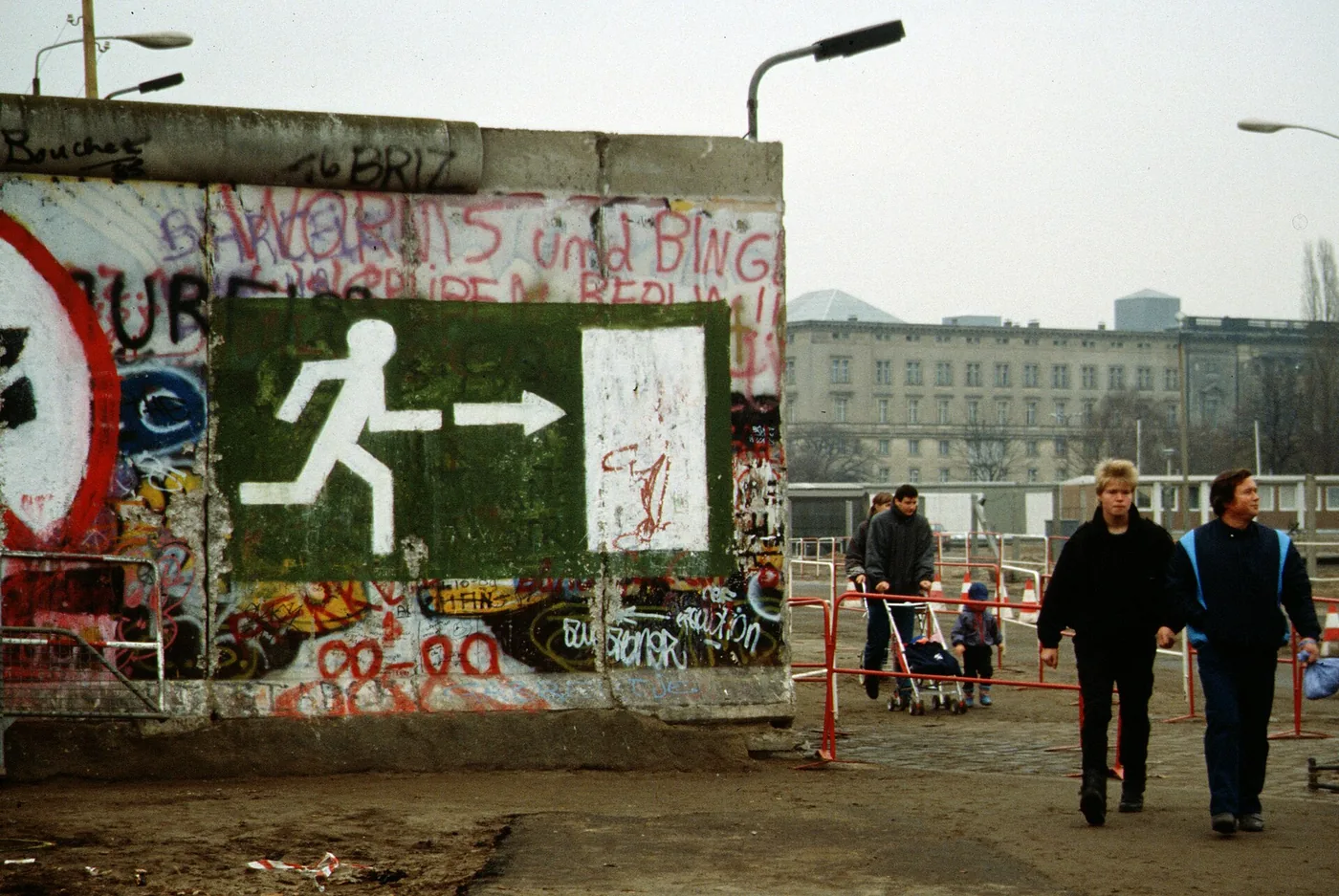
Source: Raphaël Thiémard, photograph, Berlin, 1989; image from Wikimedia Commons, CC BY-SA 2.0.
Commentary. The photograph shows a section of the Wall, which had been built in 1961 to keep East Germans in. Now it is covered with graffiti and pierced by an opening through which ordinary people walk. It is the opposite of the 1961 image in Chapter 8, which shows a crane raising the barrier. Graffiti was possible only on the western face. Its presence on the whole structure shows that the Wall had lost its power. Note what the photograph cannot show: the 28 years of separation and the hundreds who tried to cross.
2. What is globalization?
Definition: Globalization
The growing interconnection of the world’s economies, cultures, and political systems through trade, investment, migration, communication, and technology.
Definition: Interdependence
A situation in which countries or people depend on one another for goods, resources, security, or information, so that events in one place affect others.
Long-distance trade is ancient: the Silk Roads and the Atlantic slave trade connected continents long before 1945. What changed after 1945 was speed, scale, and the number of people involved. Four factors drove the change.
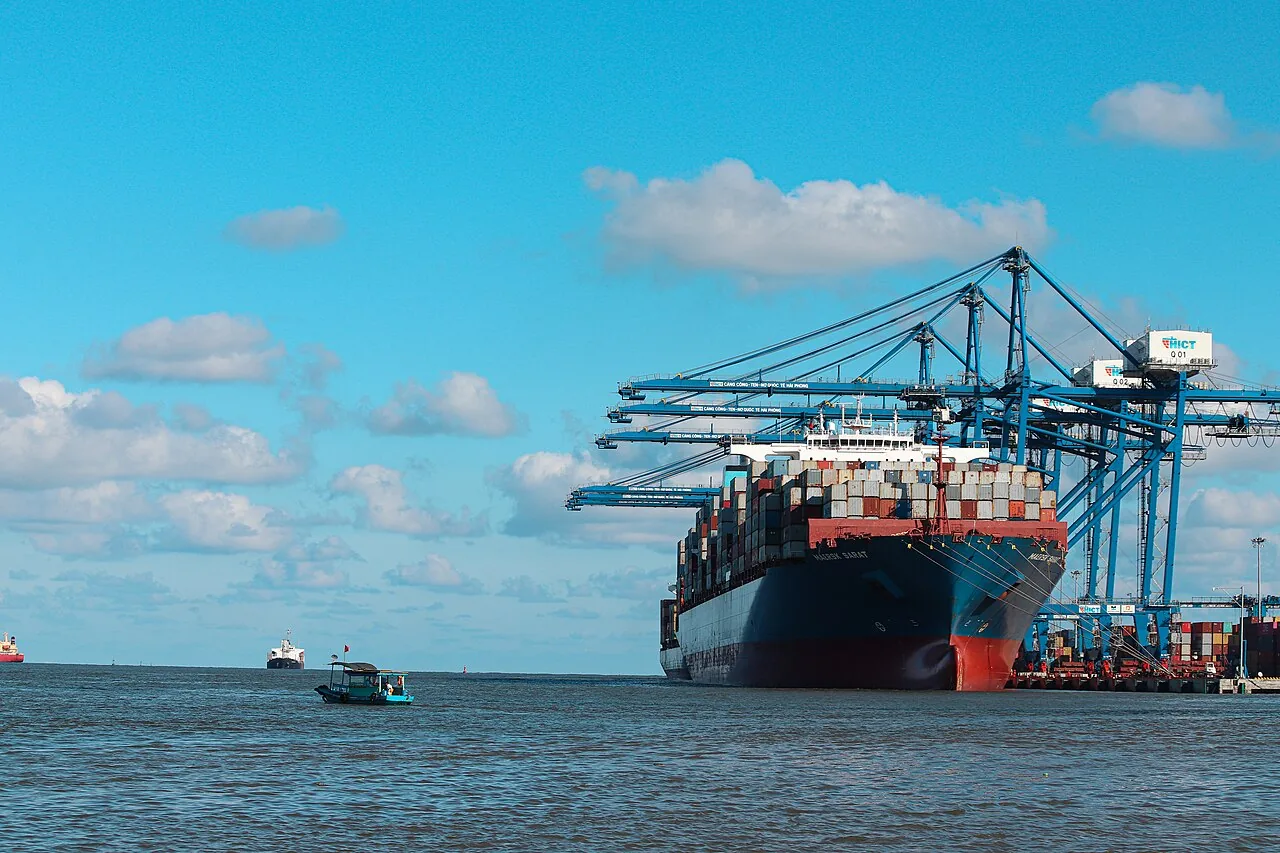
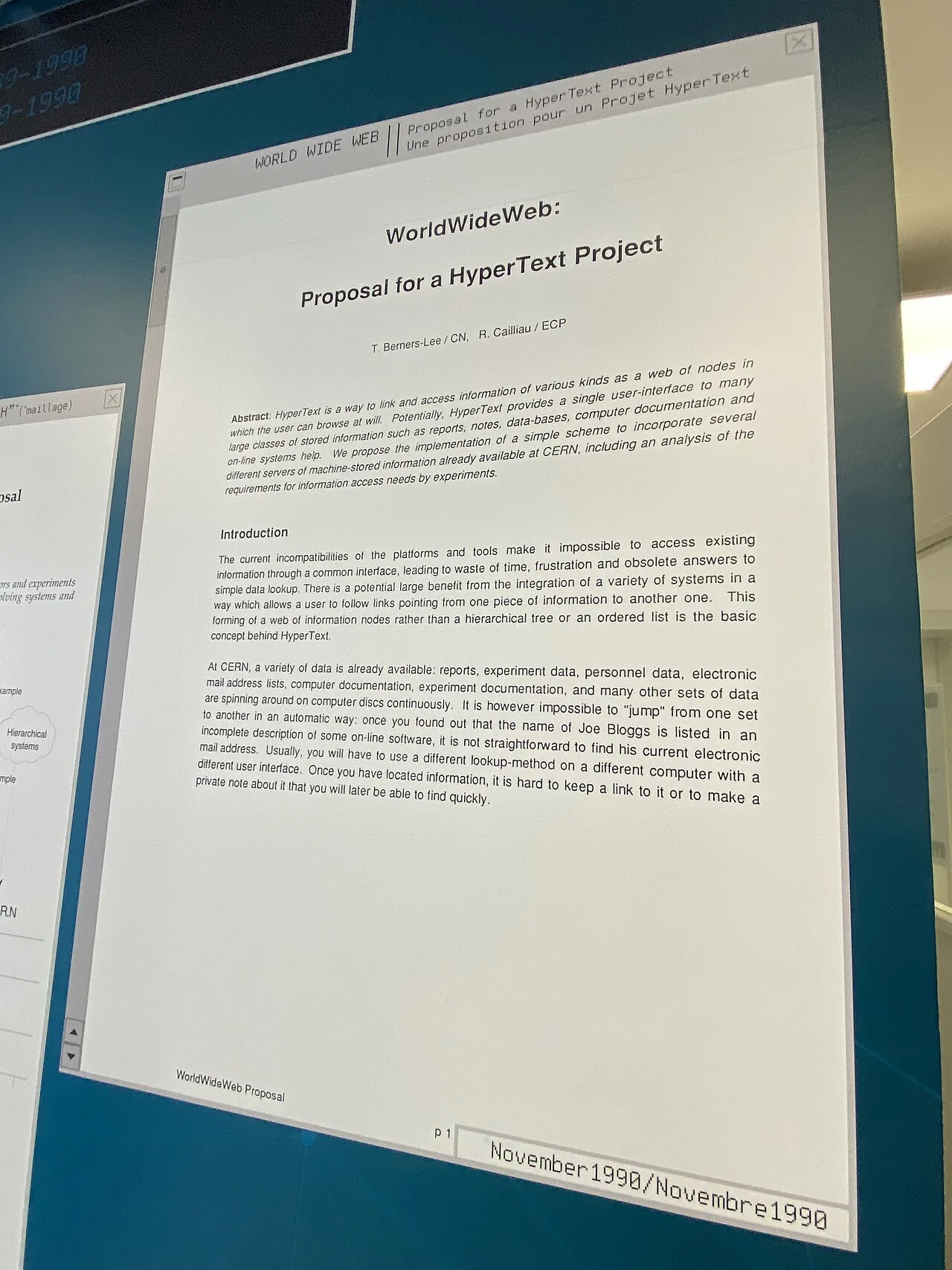
Transport. On April 26, 1956, the businessman Malcom McLean sent 58 truck trailers from Newark to Houston on a converted tanker, the Ideal X. The standard shipping container that followed lowered the cost of moving goods so much that factories could be placed far from customers. Today about 90 percent of non-bulk cargo moves in containers on ships. Communications. In 1989-1990 Tim Berners-Lee, a British scientist at CERN in Switzerland, proposed the World Wide Web, which opened to the public in 1991.
The internet made information, money, and ideas move almost instantly. Trade rules. The General Agreement on Tariffs and Trade (GATT, 1947) lowered tariffs among its members, and in 1995 the World Trade Organization replaced it. Markets and policy. The end of communist economies in Europe, the reforms in China and India, and the policies of many governments opened more of the world to trade and investment.
Benefits and costs
Globalization has produced large benefits and costs. Many economists note that the share of people in extreme poverty fell greatly in the last forty years, much of it in China and East Asia. They also note that goods such as phones, medicines, and clothing became cheaper. Global supply chains created jobs in Vietnam, Bangladesh, and Mexico. But industrial workers in older manufacturing regions, including parts of the United States, lost jobs when factories moved abroad, and inequality within many countries grew.
Factories with poor safety and low pay raised moral questions, such as the collapse of the Rana Plaza garment building in Bangladesh in 2013. Cultural exchange made music, food, and sport global, and critics fear the loss of local traditions. Interdependence also spreads shocks. The financial crisis of 2008 began with a collapse of American mortgage lending and the failure of the Lehman Brothers bank on September 15, 2008. It caused recession around the world. In March 2020 the World Health Organization declared COVID-19 a pandemic.
Document 2 – Truman’s Point Four, 1949
Fourth, we must embark on a bold new program for making the benefits of our scientific advances and industrial progress available for the improvement and growth of underdeveloped areas. More than half the people of the world are living in conditions approaching misery. Their food is inadequate. They are victims of disease. Their economic life is primitive and stagnant. Their poverty is a handicap and a threat both to them and to more prosperous areas. For the first time in history, humanity posesses the knowledge and skill to relieve suffering of these people.
Source: Harry S. Truman, inaugural address, January 20, 1949, the “Point Four” program. Text: Harry S. Truman Library.
Commentary. Truman’s Fourth Point proposes that the United States share its “technical knowledge” with poorer nations. It is an early statement of the idea of development aid. It was linked to the Cold War, since the speech also offered an alternative to communism in poor countries. The phrase “underdeveloped areas” now sounds condescending, and Sukarno’s speech at Bandung (see the exercises) shows the other point of view: that formal independence did not end economic dependence.
3. Building institutions: the UN, human rights, and Europe
The United Nations and human rights
Definition: Human rights
Rights that belong to every person simply because he or she is human, such as the right to life, liberty, and equal treatment, as set out in the Universal Declaration of 1948.
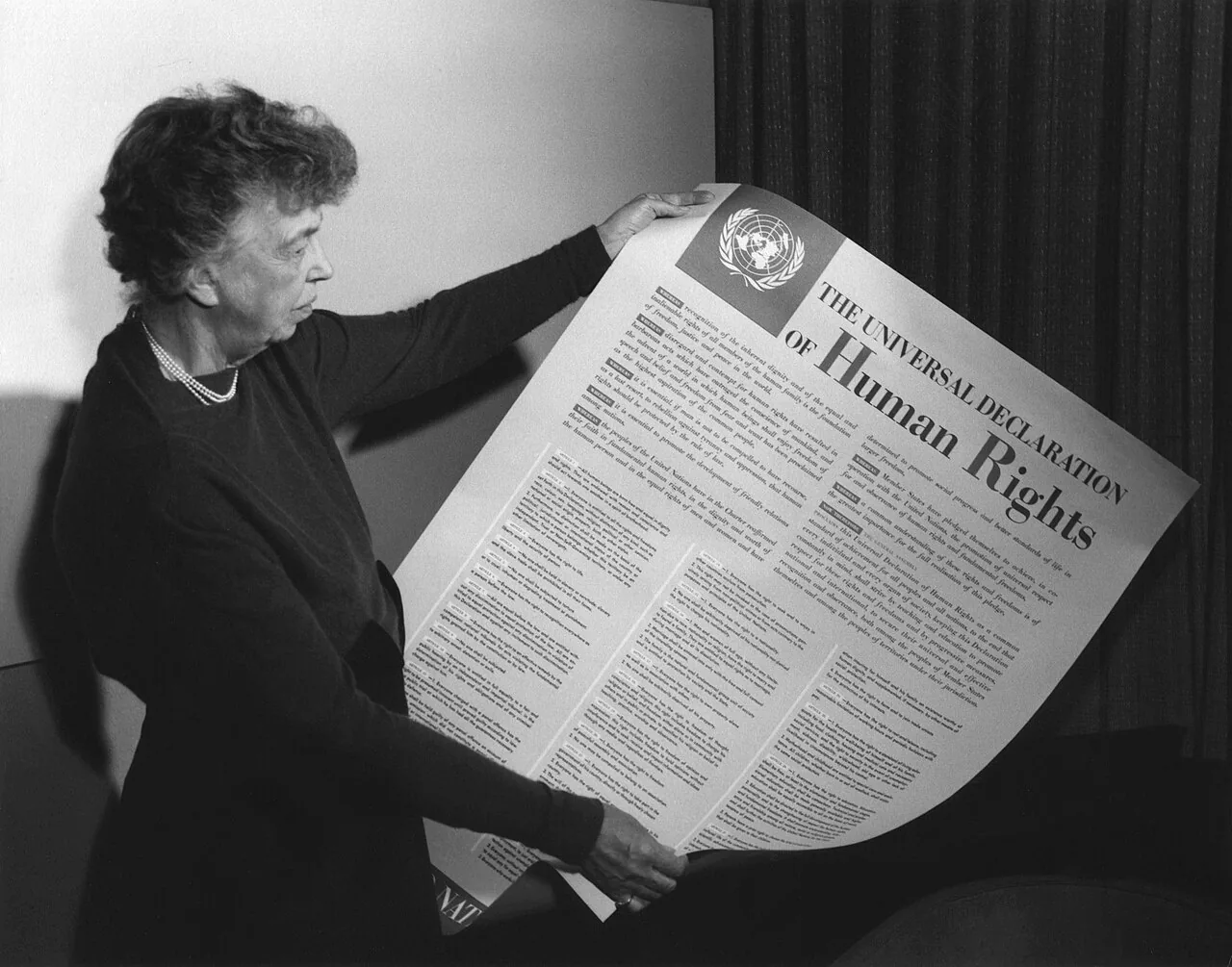
The UN Charter of 1945 opens with the determination “to save succeeding generations from the scourge of war” and to reaffirm “faith in fundamental human rights.” On December 10, 1948, the General Assembly adopted the Universal Declaration of Human Rights by 48 votes to none with 8 abstentions, at a time when the UN had 58 members. A commission chaired by Eleanor Roosevelt had drafted it.
The Declaration is not a treaty, but it became the foundation of later conventions on civil and political rights, on economic and social rights, on racial discrimination, and on the rights of women and children. International courts try individuals accused of genocide and crimes against humanity. One example is the International Criminal Court, created by a treaty of 1998 and operating since 2002. The system is imperfect. States often ignore it, and the Security Council can be blocked by the veto of one of its five permanent members.
Document 3 – Universal Declaration of Human Rights, 1948
All human beings are born free and equal in dignity and rights. They are endowed with reason and conscience and should act towards one another in a spirit of brotherhood. Article 2 Everyone is entitled to all the rights and freedoms set forth in this Declaration, without distinction of any kind, such as race, colour, sex, language, religion, political or other opinion, national or social origin, property, birth or other status. Furthermore, no distinction shall be made on the basis of the political, jurisdictional or international status of the country or territory to which a person belongs, whether it be independent, trust, non-self-governing or under any other limitation of sovereignty. Article 3 Everyone has the right to life, liberty and the security of person.
Source: Universal Declaration of Human Rights, adopted by the UN General Assembly, Paris, December 10, 1948, articles 1-3. Text: Wikisource.
Commentary. The first article states the principle in language close to the 1789 French Declaration studied in Chapter 2: “born free and equal in dignity and rights.” Article 2 goes further than 1789 by listing race, sex, and other grounds of discrimination. It also extends to people in colonies. The drafters came from many countries, including China, Lebanon, Chile, and France, and the Declaration was meant to answer the Holocaust and the war.
The European Union
After two world wars, European leaders sought to make war between France and Germany “materially impossible.” On May 9, 1950, the French foreign minister Robert Schuman proposed to pool French and German coal and steel production under a common authority. Six countries (France, West Germany, Italy, Belgium, the Netherlands, and Luxembourg) created the European Coal and Steel Community in 1951. Then, by the Treaty of Rome of March 25, 1957, they created the European Economic Community.
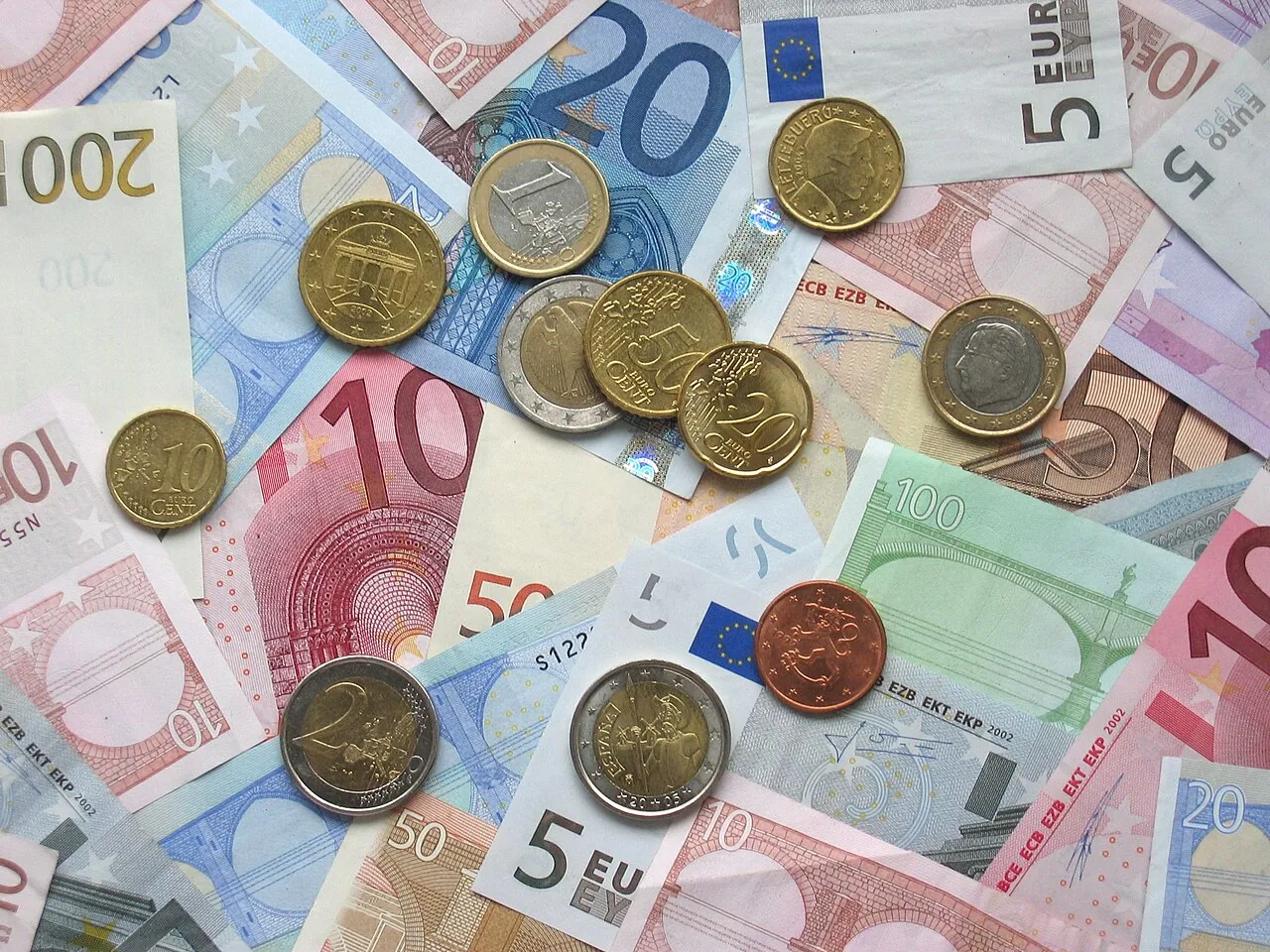
The community grew by waves: Denmark, Ireland, and the United Kingdom in 1973; Greece in 1981; Spain and Portugal in 1986; Austria, Finland, and Sweden in 1995; ten countries in 2004, mostly formerly communist states; Bulgaria and Romania in 2007; and Croatia in 2013. The Maastricht Treaty created the European Union on November 1, 1993. The euro entered circulation in cash form on January 1, 2002 in the countries that adopted it. In 2016 British voters chose to leave. The United Kingdom left the Union on January 31, 2020, leaving 27 members.
Document 4 – Schuman Declaration, 1950
Europe will not be made all at once, or according to a single plan. It will be built through concrete achievements which first create a de facto solidarity. […] The solidarity in production thus established will make it plain that any war between France and Germany becomes not merely unthinkable, but materially impossible.
Source: Robert Schuman, declaration of May 9, 1950, Paris, proposing the pooling of French and German coal and steel production. Text: European Union.
Commentary. Schuman presents a limited, practical step, coal and steel, as the first stage in a larger union. He says Europe will be built through “concrete achievements which first create a de facto solidarity.” The choice of coal and steel is not accidental. These were the materials of weapons, so sharing them removed a cause of war. He also states that the plan is open to other European countries, a promise that was kept in the enlargements.
- October 3, 1990 Germany reunifies
- December 26, 1991 The Soviet Union dissolves
- January 1, 1995 World Trade Organization begins
- November 1, 1993 European Union created (Maastricht Treaty)
- December 2001 China joins the WTO
- January 1, 2002 Euro notes and coins enter circulation
- September 15, 2008 Lehman Brothers collapses, deepening the financial crisis
- December 12, 2015 Paris Agreement on climate change adopted
- March 2020 COVID-19 declared a pandemic
4. Challenges of the twenty-first century
On September 11, 2001, al-Qaeda terrorists hijacked four airplanes and attacked New York and Washington, killing nearly 3,000 people. The United States responded with wars in Afghanistan and Iraq, and terrorism became a defining concern of security policy. Global issues also include climate change: the Paris Agreement, adopted on December 12, 2015, committed countries to keep warming well below 2 degrees Celsius above pre-industrial levels.
Even so, emissions remain a source of dispute between rich and poor states. Migration: wars and poverty pushed millions to move, and the question of refugees divided politics in Europe and America. Nuclear weapons remain a threat, with new nuclear states since the Cold War. Population: the UN estimated that the world reached 8 billion people on November 15, 2022. Rivalries: the rise of China, Russia’s full-scale invasion of Ukraine on February 24, 2022, and political movements that emphasize nation over integration have led some to ask whether globalization has reached its limits.
Document 5 – The proposal for the World Wide Web
Source: Mramoeba, photograph of a display at CERN; image from Wikimedia Commons, CC0.
Commentary. The page shown is the title page of the hypertext proposal. The modest tone and the plain text give no hint of the changes that followed. By making it possible to link documents on any computer, Berners-Lee made the internet usable by ordinary people. CERN placed the web technology in the public domain in 1993. Historians often find that a decision of a few people, taken for practical reasons, has global consequences that no one foresaw.
Historians face a special problem when they study the present: sources are abundant, but there is little distance, and the outcome is unknown. A good way to proceed is to apply the same questions used for earlier periods. Who is the author, what is the date and purpose, what evidence supports the claim, and what is missing. The rest of this chapter’s exercises use documents from 1941 to 1987 as the background of today’s world.
Key takeaways
- Globalization is the growing interconnection of economies, cultures, and politics, driven by transport (the container), communications (the web), trade rules (GATT, WTO), and policy changes.
- It has lifted many people out of poverty and lowered prices, but it has also caused job losses, inequality, environmental damage, and shared shocks such as the 2008 crisis and COVID-19.
- The UN Charter (1945) and the Universal Declaration of Human Rights (1948) created a framework for international cooperation and rights.
- The European Union grew from the six founders of 1957 to 27 members after the United Kingdom left in 2020.
- Today’s world faces climate change, migration, terrorism, nuclear weapons, and great-power rivalry, which must be studied with the same care as the past.

Quick review: flashcards
Tap a card to see the answer.