


This worksheet on Globalization and the World Today belongs to the World History Grades 9-10 course. Its questions use primary sources, maps and timelines, and they move from basic recall to short writing tasks. Before you start, review the lesson; afterward, try the true or false quiz.
Exercise 1 : Vocabulary of the modern world
Match each term with its definition.
- Globalization
- Interdependence
- Tariff
- Supply chain
- Human rights
- European Union
- Pandemic
- Refugee
A. A tax on imported goods. B. The network of firms and countries that make and deliver a product. C. Rights that belong to every person. D. A disease that spreads across many countries. E. A person forced to flee, often across a border, by war or persecution. F. A political and economic union of European states. G. Growing connection of the world’s economies and cultures. H. A condition in which places depend on each other.
Exercise 2 : The Charter of the United Nations
Document 1 – UN Charter, Preamble, 1945
DETERMINED to save succeeding generations from the scourge of war, which twice in our lifetime has brought untold sorrow to mankind, and to reaffirm faith in fundamental human rights, in the dignity and worth of the human person, in the equal rights of men and women and of nations large and small, and to establish conditions under which justice and respect for the obligations arising from treaties and other sources of international law can be maintained, and to promote social progress and better standards of life in larger freedom,
Source: Charter of the United Nations, signed at San Francisco, June 26, 1945, Preamble. Text: Avalon Project, Yale Law School.
- Present the document.
- What do the peoples say they are determined to do first?
- Which rights does the preamble reaffirm?
- What events of the 1930s and 1940s lie behind these words?
Exercise 3 : Born free and equal
Document 2 – UDHR, 1948
All human beings are born free and equal in dignity and rights. They are endowed with reason and conscience and should act towards one another in a spirit of brotherhood. Article 2 Everyone is entitled to all the rights and freedoms set forth in this Declaration, without distinction of any kind, such as race, colour, sex, language, religion, political or other opinion, national or social origin, property, birth or other status. Furthermore, no distinction shall be made on the basis of the political, jurisdictional or international status of the country or territory to which a person belongs, whether it be independent, trust, non-self-governing or under any other limitation of sovereignty. Article 3 Everyone has the right to life, liberty and the security of person.
Source: Universal Declaration of Human Rights, adopted by the UN General Assembly, Paris, December 10, 1948, articles 1-3. Text: Wikisource.
- Present the document.
- What does article 1 say about people at birth?
- List five grounds of discrimination named in article 2.
- How does article 2 extend rights to people living in colonies?
Exercise 4 : Eleanor Roosevelt and the Declaration
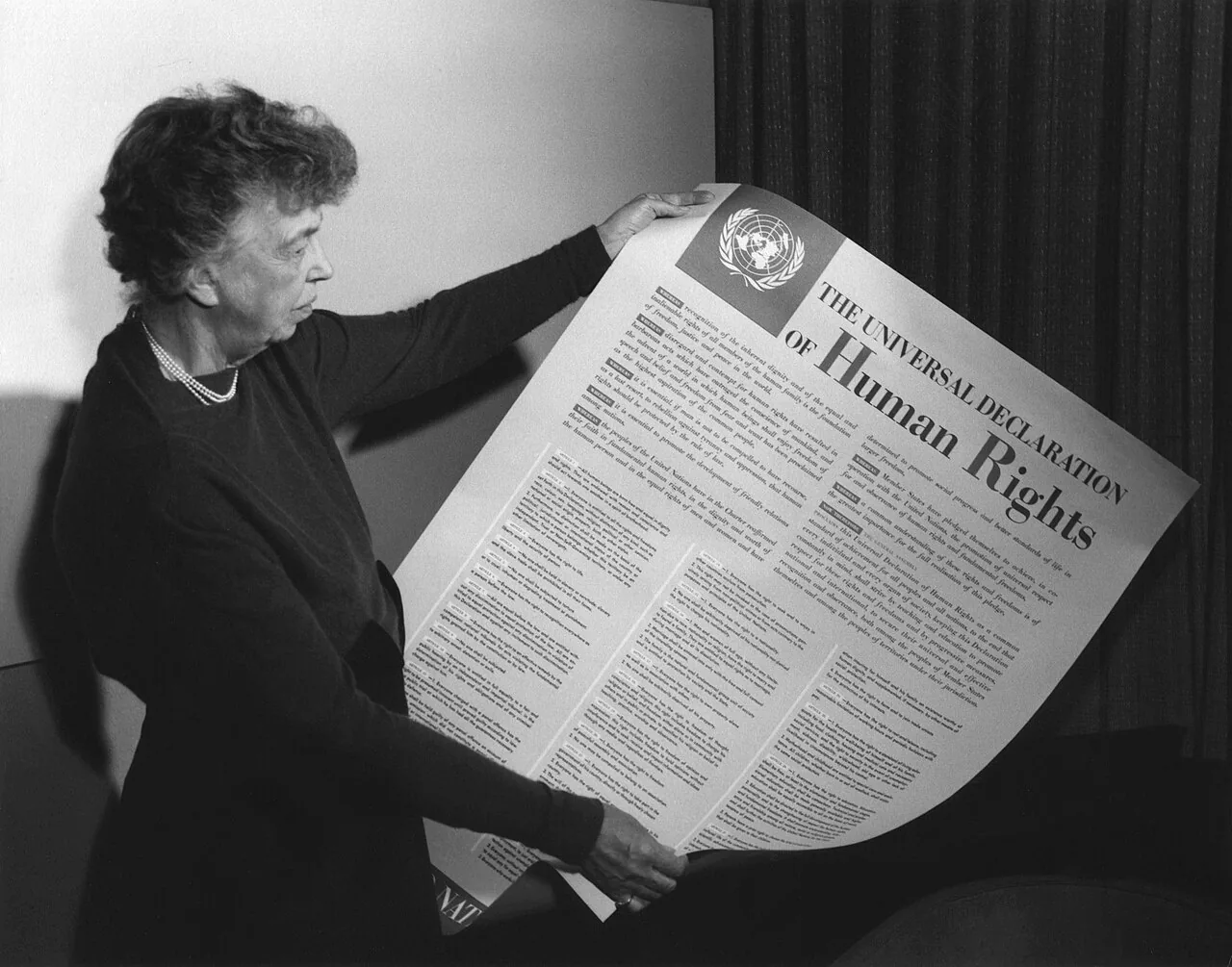
- Present the image.
- Describe what you see.
- Why was Eleanor Roosevelt an important figure in the drafting?
- What was the vote at the General Assembly?
Exercise 5 : Two preambles: war and rights
Document 3 – UN Charter, 1945
DETERMINED to save succeeding generations from the scourge of war, which twice in our lifetime has brought untold sorrow to mankind, and to reaffirm faith in fundamental human rights, in the dignity and worth of the human person, in the equal rights of men and women and of nations large and small, and to establish conditions under which justice and respect for the obligations arising from treaties and other sources of international law can be maintained, and to promote social progress and better standards of life in larger freedom,
Source: Charter of the United Nations, signed at San Francisco, June 26, 1945, Preamble. Text: Avalon Project, Yale Law School.
Document 4 – UDHR, 1948
All human beings are born free and equal in dignity and rights. They are endowed with reason and conscience and should act towards one another in a spirit of brotherhood. Article 2 Everyone is entitled to all the rights and freedoms set forth in this Declaration, without distinction of any kind, such as race, colour, sex, language, religion, political or other opinion, national or social origin, property, birth or other status. Furthermore, no distinction shall be made on the basis of the political, jurisdictional or international status of the country or territory to which a person belongs, whether it be independent, trust, non-self-governing or under any other limitation of sovereignty. Article 3 Everyone has the right to life, liberty and the security of person.
Source: Universal Declaration of Human Rights, adopted by the UN General Assembly, Paris, December 10, 1948, articles 1-3. Text: Wikisource.
- Present each document.
- What do both documents say about human dignity?
- Compare their purposes: which one aims to prevent war and which to define rights?
- Explain why the Declaration was adopted three years after the Charter.
Exercise 6 : A container ship
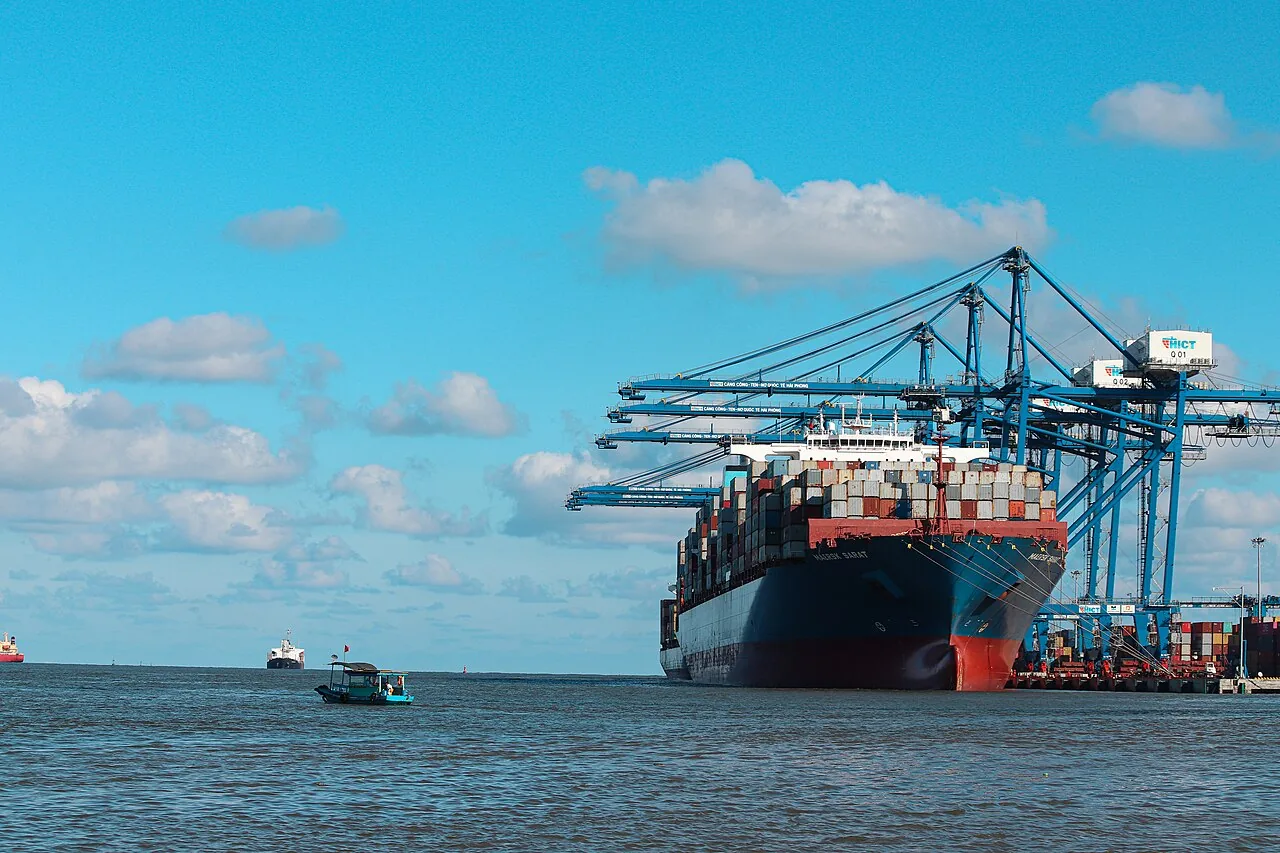
- Present the image.
- Describe what you see.
- Explain how the container changed world trade.
- Name two groups that gained and two that lost from cheaper shipping.
Exercise 7 : Reading numbers: the growth of the European Union
| Year | Member states |
|---|---|
| 1957 (founders) | 6 |
| 1973 | 9 |
| 1981 | 10 |
| 1986 | 12 |
| 1995 | 15 |
| 2004 | 25 |
| 2007 | 27 |
| 2013 | 28 |
| 2020 (after the UK left) | 27 |
Source: European Union, history of enlargement; the 2020 count is confirmed by the EU’s own description of 27 member states.
- Which year saw the largest increase? How many states joined?
- How many members did the Union gain between 1957 and 2013?
- Explain why the number fell in 2020.
- What happened in 2004 and why does the lesson mention formerly communist states?
Exercise 8 : The Schuman Declaration
Document 5 – Schuman, 1950
Europe will not be made all at once, or according to a single plan. It will be built through concrete achievements which first create a de facto solidarity. […] The solidarity in production thus established will make it plain that any war between France and Germany becomes not merely unthinkable, but materially impossible.
Source: Robert Schuman, declaration of May 9, 1950, Paris, proposing the pooling of French and German coal and steel production. Text: European Union.
- Present the document.
- Which two countries does Schuman want to unite in production?
- Why does he choose coal and steel?
- What does “de facto solidarity” mean?
Exercise 9 : Two views of development
Document 6 – Truman, 1949
Fourth, we must embark on a bold new program for making the benefits of our scientific advances and industrial progress available for the improvement and growth of underdeveloped areas. More than half the people of the world are living in conditions approaching misery. Their food is inadequate. They are victims of disease. Their economic life is primitive and stagnant. Their poverty is a handicap and a threat both to them and to more prosperous areas. For the first time in history, humanity posesses the knowledge and skill to relieve suffering of these people.
Source: Harry S. Truman, inaugural address, January 20, 1949, the “Point Four” program. Text: Harry S. Truman Library.
Document 7 – Sukarno, 1955
How can we say it is dead, so long as vast areas of Asia and Africa are unfree. And, I beg of you do not think of colonialism only in the classic form which we of Indonesia, and our brothers in different parts of Asia and Africa, knew. Colonialism has also its modern dress, in the form of economic control, intellectual control, actual physical control by a small but alien community within a nation. It is a skilful and determined enemy, and it appears in many guises. It does not give up its loot easily. Wherever, whenever and however it appears, colonialism is an evil thing, and one which must be eradicated from the earth.
Source: Sukarno, opening address to the Asian-African Conference, Bandung, April 18, 1955 (excerpts). Text: Internet Modern History Sourcebook, Fordham University.
- Present each document.
- What does Truman propose for “underdeveloped areas”?
- What does Sukarno say colonialism looks like “in its modern dress”?
- Compare the two views of the relation between rich and poor countries.
- Which document better explains the later idea of neocolonialism? Justify.
Exercise 10 : The Marshall Plan and Point Four
Document 8 – Marshall, 1947
Our policy is directed not against any country or doctrine but against hunger, poverty, desperation, and chaos. Its purpose should be the revival of a working economy in the world so as to permit the emergence of political and social conditions in which free institutions can exist.
Source: George C. Marshall, address at Harvard University, June 5, 1947. Text: Wikisource.
Document 9 – Truman, 1949
Fourth, we must embark on a bold new program for making the benefits of our scientific advances and industrial progress available for the improvement and growth of underdeveloped areas. More than half the people of the world are living in conditions approaching misery. Their food is inadequate. They are victims of disease. Their economic life is primitive and stagnant. Their poverty is a handicap and a threat both to them and to more prosperous areas. For the first time in history, humanity posesses the knowledge and skill to relieve suffering of these people.
Source: Harry S. Truman, inaugural address, January 20, 1949, the “Point Four” program. Text: Harry S. Truman Library.
- Present each document.
- What problem does each address?
- What do the two programs have in common?
- How do they show the link between aid and the Cold War?
Exercise 11 : From the Wall to the web
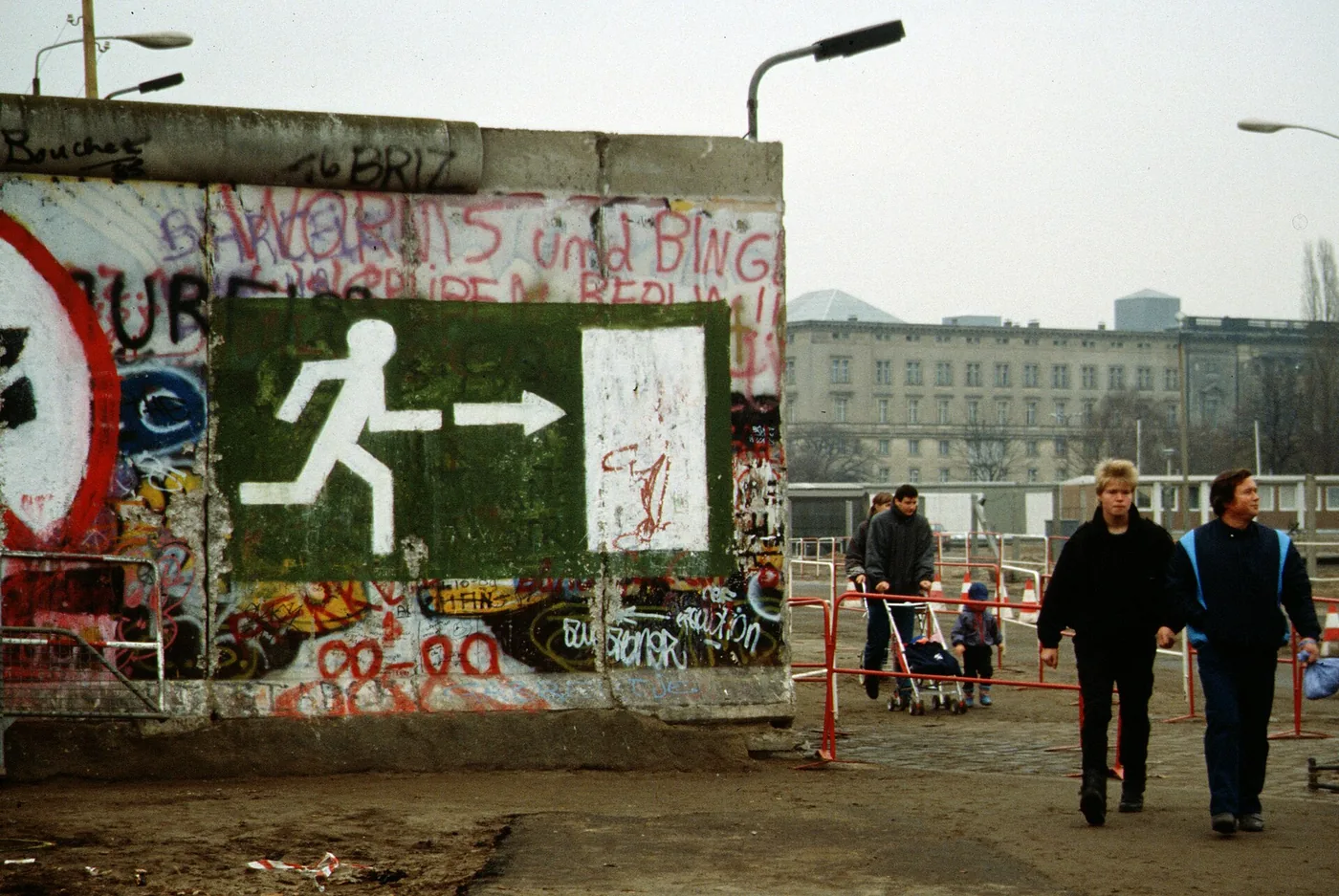
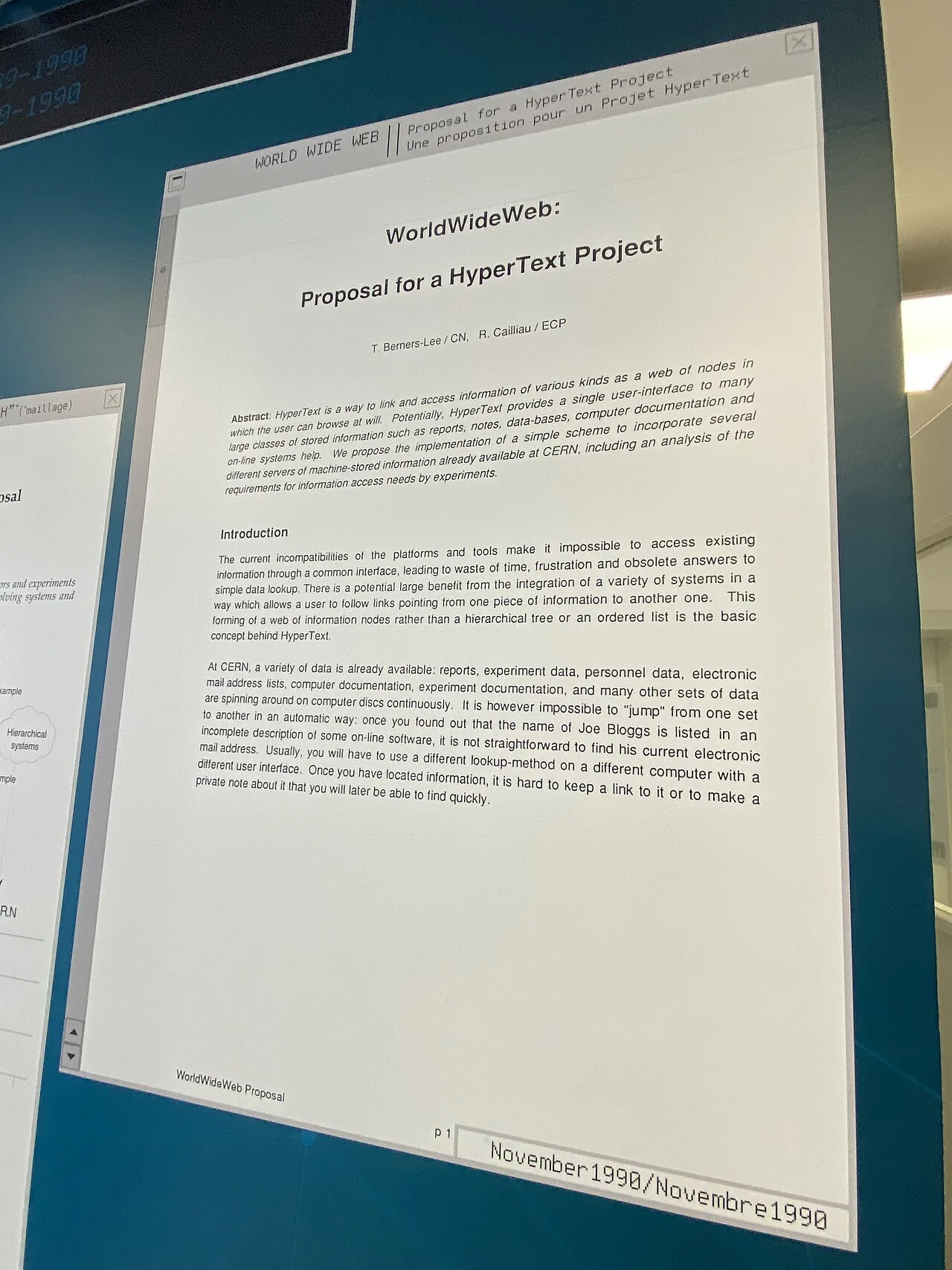
- Present each image.
- What does each show about the late 1980s?
- How might they be linked?
- What sources would you add to explain the period?
Exercise 12 : Reagan and the Wall
Document 10 – Reagan, 1987
General Secretary Gorbachev, if you seek peace, if you seek prosperity for the Soviet Union and Eastern Europe, if you seek liberalization: Come here to this gate. Mr. Gorbachev, open this gate. Mr. Gorbachev — Mr. Gorbachev, tear down this wall!
Source: Ronald Reagan, remarks at the Brandenburg Gate, West Berlin, June 12, 1987. Transcript: American Rhetoric.
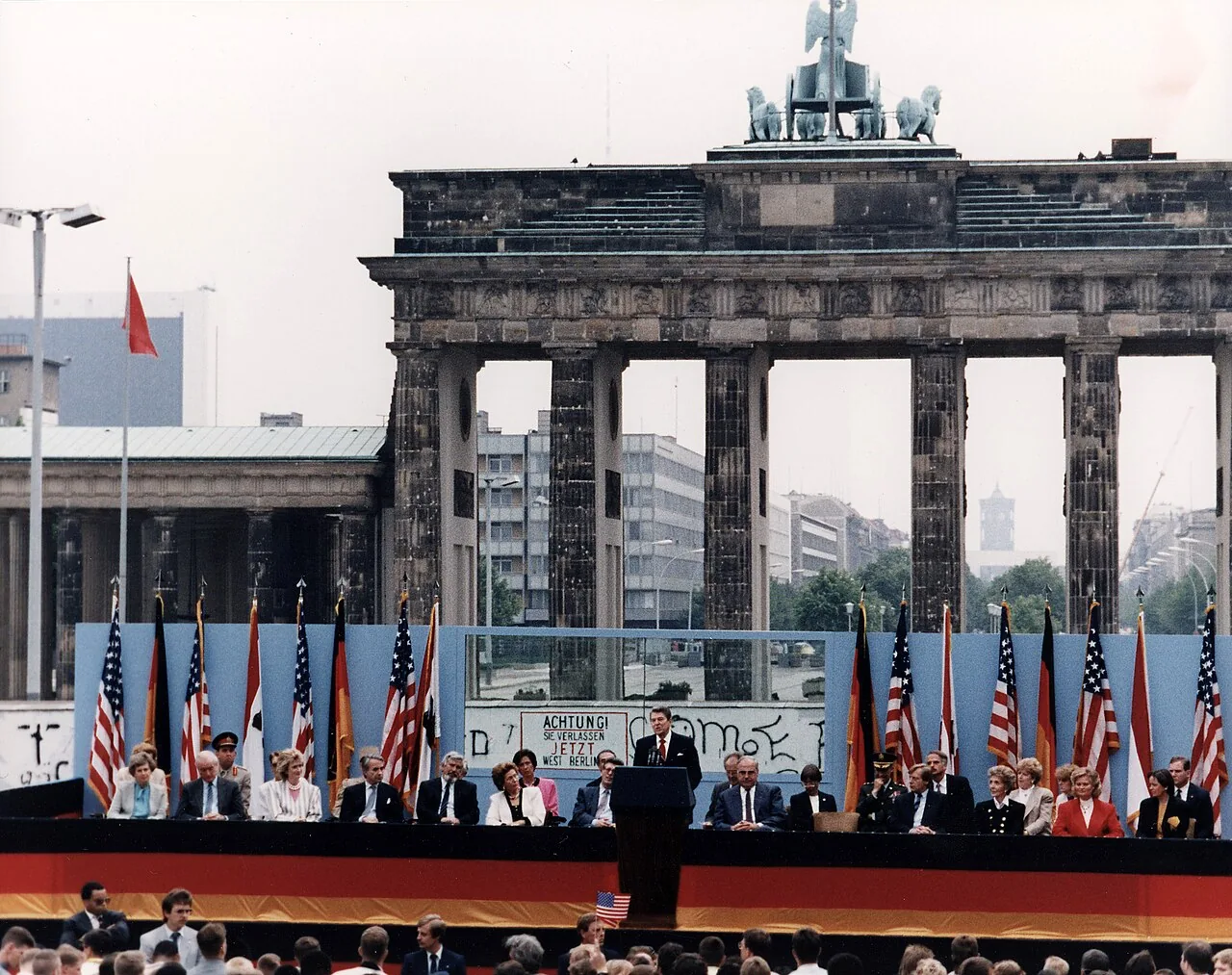
- Present the document and the photograph.
- What does Reagan ask Gorbachev to do?
- Which two conditions does he give for what Gorbachev seeks?
- How should a historian judge the link between this speech and the events of 1989?
Exercise 13 : Locate trade routes
Points: 1 Shanghai, 2 Singapore, 3 Rotterdam, 4 Los Angeles, 5 Busan, 6 Dubai, 7 Santos, 8 Durban, 9 New York, 10 Panama Canal, 11 Suez Canal.
- Which numbers are canals? Which two oceans does each connect or shorten the passage between?
- Which numbers are in Asia?
- Explain why straits and canals are called “choke points” of world trade.
Exercise 14 : Europe in waves
Points: 1 Brussels, 2 Rome, 3 Berlin, 4 London, 5 Warsaw.
- Which numbers are capitals of founding members in 1957? Of members from 2004?
- Which number is the capital of a former member?
- Look at the colors: what pattern do the enlargements follow?
Exercise 15 : Order the events
Put the events in order.
- Euro cash introduced
- Schuman Declaration
- Treaty of Rome
- China joins the WTO
- Germany reunifies
- Paris Agreement
- UDHR adopted
- First container voyage by Ideal X
Exercise 16 : Durations
- How many years separate the Schuman Declaration (1950) from the Maastricht Treaty’s entry into force (1993)?
- How many years between the Universal Declaration (1948) and the Paris Agreement (2015)?
- How many years did the United Kingdom belong to the European Union (1973-2020)?
Exercise 17 : Guided research: container shipping or an international organization
Mini-inquiry. Choose one: the shipping container, the World Trade Organization, or the World Health Organization. Keywords: history founding date purpose members. Reliable sites: the organization’s own website, the Library of Congress (loc.gov), the National Archives (archives.gov), a university library database. Fill in the sheet:
- Name and date of founding or invention.
- Its purpose.
- One benefit and one criticism.
- A source you used and who published it.
Exercise 18 : CER paragraph: does globalization help or hurt?
Write a Claim-Evidence-Reasoning paragraph (6-8 sentences): To what extent has globalization been beneficial? Use two pieces of evidence from the lesson.
Use both benefits and costs, then give a judgment.
Exercise 19 : SAQ: the European Union
(a) Identify one reason European leaders created the Coal and Steel Community in 1951. (b) Identify one way the Union changed after 1990. (c) Explain one challenge to European integration.
Exercise 20 : True or false? Justify
- The Universal Declaration of Human Rights is a binding treaty.
- The European Union began with coal and steel.
- The World Wide Web and the internet are the same thing.
- The United Kingdom is still a member of the European Union.
Exercise 21 : Causes and consequences
Sort into cause or consequence of globalization: (1) the shipping container, (2) cheaper consumer goods, (3) the World Wide Web, (4) job losses in some industrial regions, (5) the end of the Cold War.


Quick review: flashcards
Tap a card to see the answer.