


This worksheet on Decolonization and Independence Movements belongs to the World History Grades 9-10 course. Its questions use primary sources, maps and timelines, and they move from basic recall to short writing tasks. Before you start, review the lesson; afterward, try the true or false quiz.
Exercise 1 : Vocabulary of decolonization
Match each term with its definition.
- Colony
- Self-determination
- Satyagraha
- Partition
- Non-alignment
- Neocolonialism
- Apartheid
- Mandate
A. Division of a territory into separate states. B. Nonviolent resistance in Gandhi’s movement. C. A territory ruled by an outside power. D. Refusal to join either Cold War bloc. E. The right of a people to decide its own government. F. Control of a country by economic or other indirect means. G. South Africa’s legal system of racial segregation. H. A territory entrusted to a European power by the League of Nations or UN.
Exercise 2 : The promise of the Atlantic Charter
Document 1 – Atlantic Charter, 1941
Third, they respect the right of all peoples to choose the form of government under which they will live; and they wish to see sovereign rights and self government restored to those who have been forcibly deprived of them;
Source: Atlantic Charter, joint declaration of Franklin D. Roosevelt and Winston Churchill, August 14, 1941 (point 3). Text: Avalon Project, Yale Law School.
- Present the document.
- What two things does the third point promise?
- How could an Indian nationalist use these words against Britain?
- Why did Churchill say they did not apply to the British Empire?
Exercise 3 : A tryst with destiny
Document 2 – Nehru, 1947
Long years ago we made a tryst with destiny, and now the time comes when we shall redeem our pledge, not wholly or in full measure, but very substantially. At the stroke of the midnight hour, when the world sleeps, India will awake to life and freedom. A moment comes, which comes but rarely in history, when we step out from the old to the new, when an age ends, and when the soul of a nation, long supressed, finds utterance. […] The service of India means the service of the millions who suffer. It means the ending of poverty and ignorance and disease and inequality of opportunity. The ambition of the greatest man of our generation has been to wipe every tear from every eye.
Source: Jawaharlal Nehru, “A Tryst with Destiny,” speech to the Constituent Assembly of India, New Delhi, midnight of August 14-15, 1947. Text: Internet Modern History Sourcebook, Fordham University.
- Present the document (author, date, place, audience).
- What moment does Nehru describe?
- How does he define the work that remains?
- What can a historian learn from this text about the leaders’ hopes, and what does it leave out?
Exercise 4 : Gandhi and the Salt March
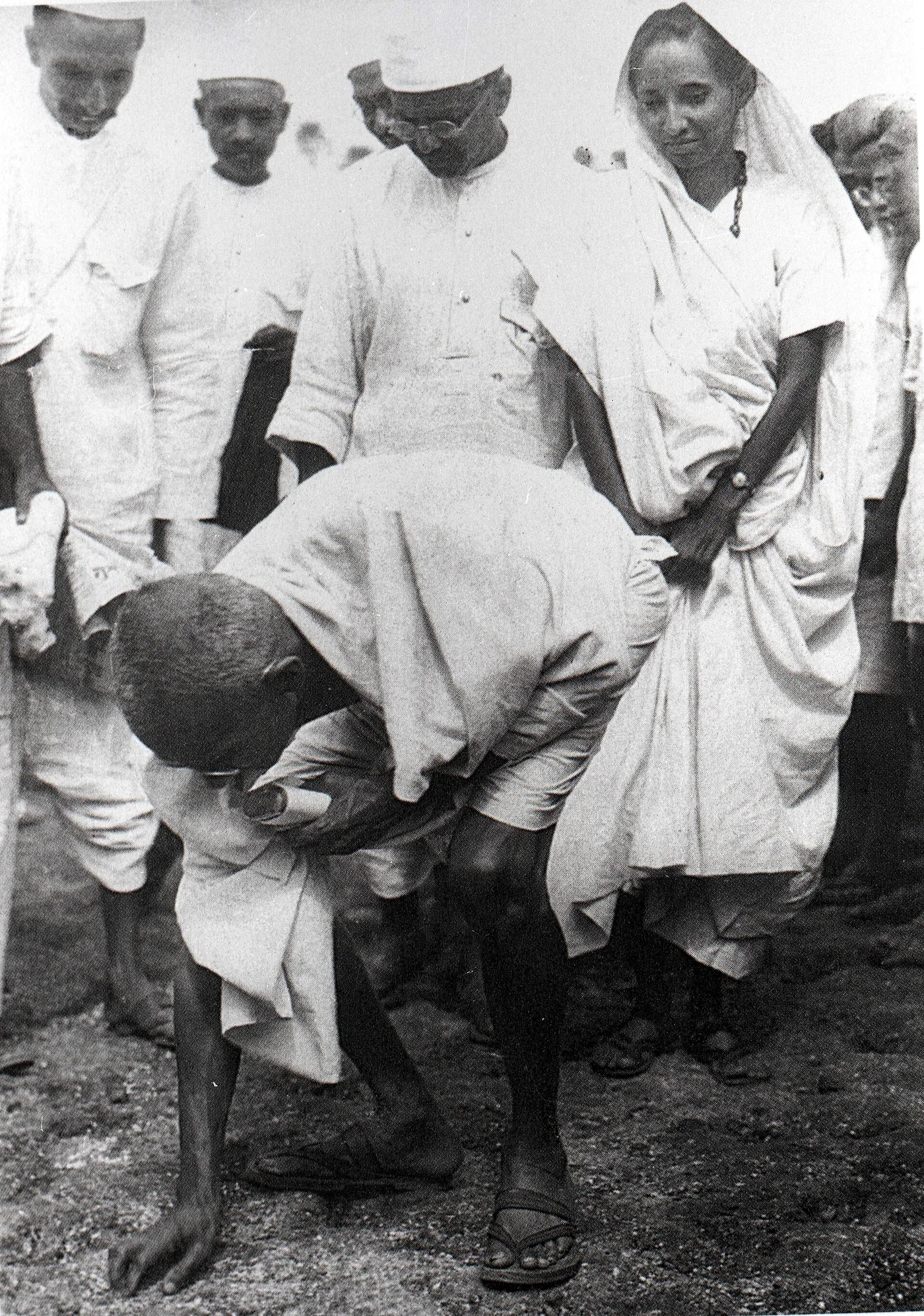
- Present the image.
- Describe what you see.
- Why did Gandhi choose salt as a symbol?
- Why is a photograph useful to a movement based on nonviolence?
Exercise 5 : Two leaders of India
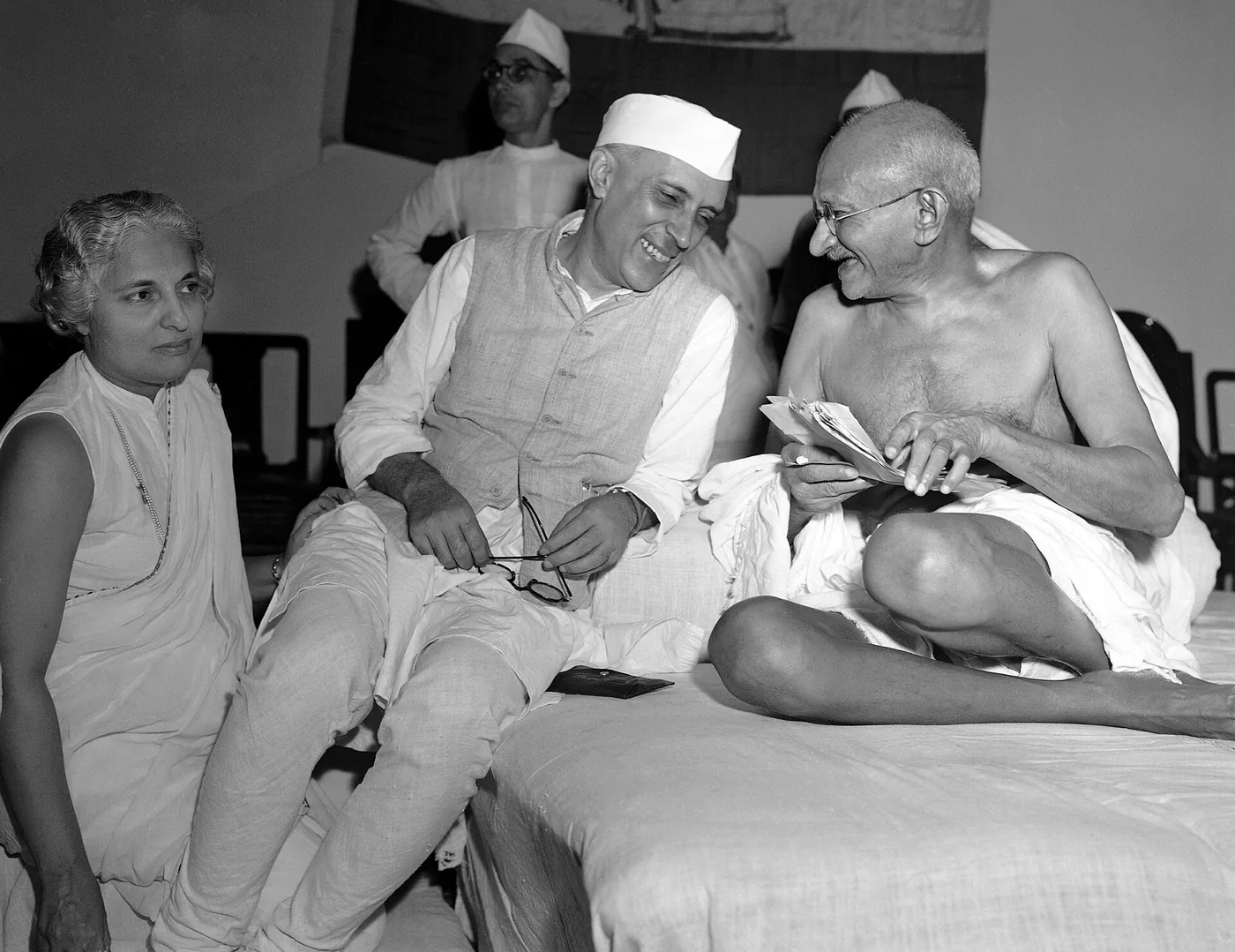
- Present the image.
- Describe the two men and the atmosphere.
- What did they agree and disagree about?
- What happened to each of them in the next two years?
Exercise 6 : Partition
Points: 1 Delhi, 2 Lahore, 3 Amritsar, 4 Karachi, 5 Calcutta, 6 Dhaka, 7 Sabarmati, 8 Dandi, 9 Bombay.
- Identify the numbered cities that became capitals or major cities of Pakistan or East Pakistan.
- Which two numbers mark the beginning and end of the Salt March?
- Explain why the border through Punjab and Bengal caused mass movements of people.
Exercise 7 : The partition in a photograph
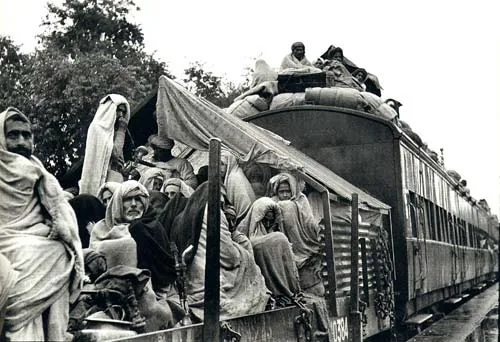
- Present the image.
- Describe what you see.
- Why were trains central in the story of partition?
- What estimate do historians give for the number displaced?
Exercise 8 : Ho Chi Minh and the American Declaration
Document 3 – Vietnamese Declaration of Independence, 1945
“All men are created equal. They are endowed by their Creator with certain inalienable rights; among these are Life, Liberty, and the pursuit of Happiness.” This immortal statement was made in the Declaration of Independence of the United States of America in 1776. In a broader sense, this means: All the peoples on the earth are equal from birth, all the peoples have a right to live, to be happy and free. The Declaration of the French Revolution made in 1791 on the Rights of Man and the Citizen also states: “All men are born free and with equal rights, and must always remain free and have equal rights.” Those are undeniable truths. Nevertheless, for more than eighty years, the French imperialists, abusing the standard of Liberty, Equality, and Fraternity, have violated our Fatherland and oppressed our fellowcitizens. They have acted contrary to the ideals of humanity and justice.
Source: Vietnamese Declaration of Independence, proclaimed by Ho Chi Minh, Hanoi, September 2, 1945. Text: Internet Modern History Sourcebook, Fordham University.
- Present the document.
- Which two earlier declarations does it quote?
- What does Ho Chi Minh accuse the French of doing?
- Why might he have begun with an American text?
Exercise 9 : Dien Bien Phu
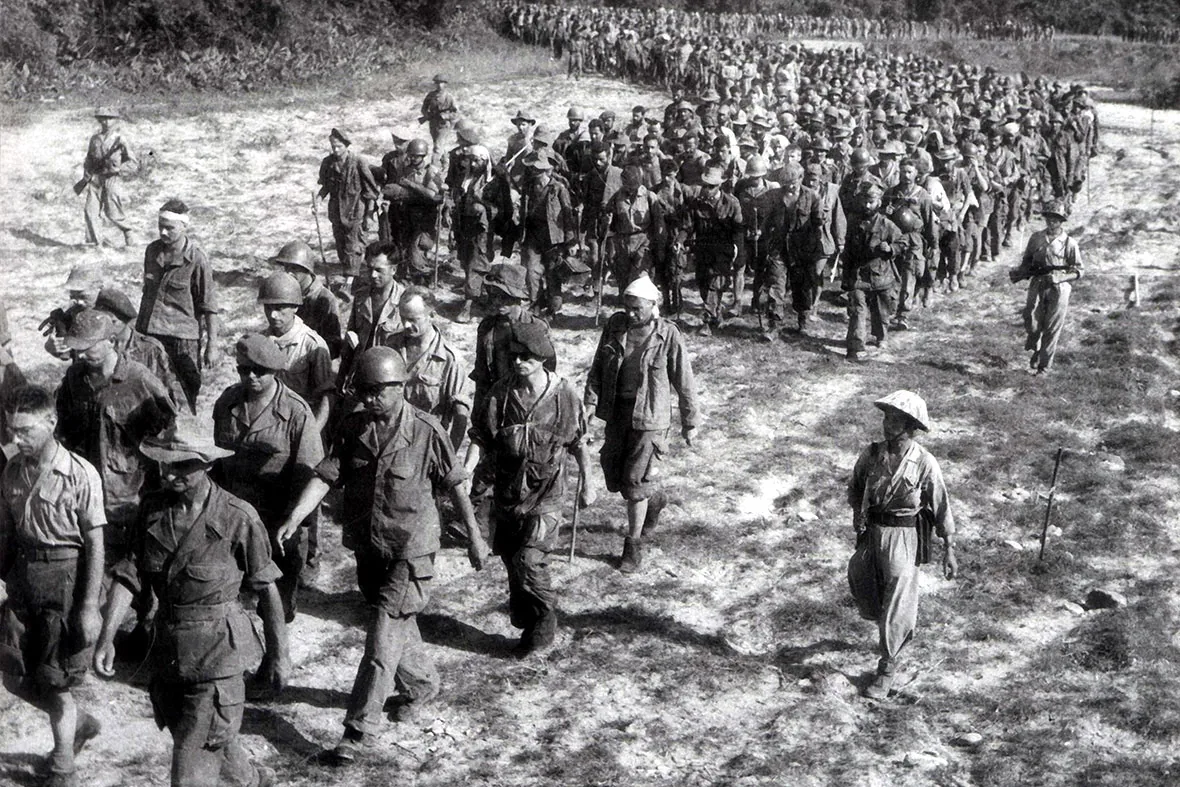
- Present the image.
- Describe the scene.
- Why did Dien Bien Phu change French policy?
- What did the Geneva Conference decide about Vietnam?
Exercise 10 : Geneva and the promise of elections
Document 4 – Geneva Declaration, 1954
The Conference declares that, so far as Viet-Nam is concerned, the settlement of political problems, effected on the basis of respect for the principles of independence, unity, and territorial integrity, shall permit the Vietnamese people to enjoy the fundamental freedoms, guaranteed by democratic institutions established as a result of free general elections by secret ballot. In order to insure that sufficient progress in the restoration of peace has been made, and that all the necessary conditions obtain for free expression of the national will, general elections shall be held in July 1956, under the supervision of an international commission composed of representatives of the member states of the International Supervisory Commission referred to in the agreement on the cessation of hostilities. Consultations will be held on this subject between the competent representative authorities of the two zones from April 20, 1955, onwards.
Source: Final Declaration of the Geneva Conference on Indochina, July 21, 1954, point 7. Text: Internet Modern History Sourcebook, Fordham University.
Document 5 – Ho Chi Minh, 1945
“All men are created equal. They are endowed by their Creator with certain inalienable rights; among these are Life, Liberty, and the pursuit of Happiness.” This immortal statement was made in the Declaration of Independence of the United States of America in 1776. In a broader sense, this means: All the peoples on the earth are equal from birth, all the peoples have a right to live, to be happy and free. The Declaration of the French Revolution made in 1791 on the Rights of Man and the Citizen also states: “All men are born free and with equal rights, and must always remain free and have equal rights.” Those are undeniable truths. Nevertheless, for more than eighty years, the French imperialists, abusing the standard of Liberty, Equality, and Fraternity, have violated our Fatherland and oppressed our fellowcitizens. They have acted contrary to the ideals of humanity and justice.
Source: Vietnamese Declaration of Independence, proclaimed by Ho Chi Minh, Hanoi, September 2, 1945. Text: Internet Modern History Sourcebook, Fordham University.
- Present each document.
- What does the Geneva text promise for 1956?
- Compare what each document says about the unity of Vietnam.
- Why were the 1956 elections never held?
Exercise 11 : Bandung: two voices
Document 6 – Sukarno, 1955
How can we say it is dead, so long as vast areas of Asia and Africa are unfree. And, I beg of you do not think of colonialism only in the classic form which we of Indonesia, and our brothers in different parts of Asia and Africa, knew. Colonialism has also its modern dress, in the form of economic control, intellectual control, actual physical control by a small but alien community within a nation. It is a skilful and determined enemy, and it appears in many guises. It does not give up its loot easily. Wherever, whenever and however it appears, colonialism is an evil thing, and one which must be eradicated from the earth.
Source: Sukarno, opening address to the Asian-African Conference, Bandung, April 18, 1955 (excerpts). Text: Internet Modern History Sourcebook, Fordham University.
Document 7 – Nehru, 1955
I belong to neither and I propose to belong to neither whatever happens in the world. If we have to stand alone, we will stand by ourselves, whatever happens […] We do not agree with the communist teachings, we do not agree with the anti-communist teachings, because they are both based on wrong principles.
Source: Jawaharlal Nehru, speech to the Political Committee of the Bandung Conference, April 1955 (excerpts). Text: Internet Modern History Sourcebook, Fordham University.
- Present each document.
- What does Sukarno mean by the “modern dress” of colonialism?
- What position does Nehru take toward the blocs?
- Compare their aims and say what they share.
Exercise 12 : The Bandung delegates
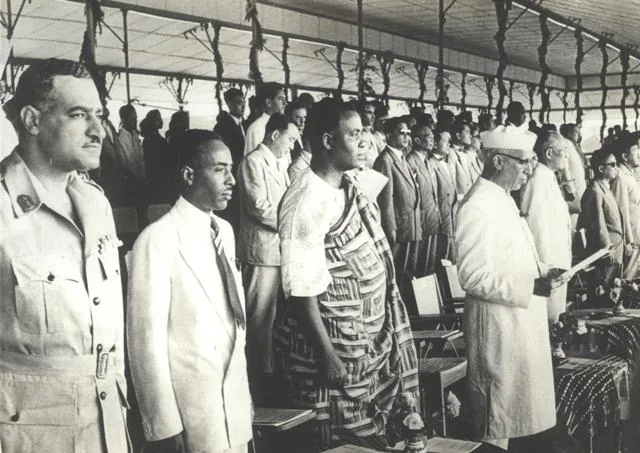
- Present the image.
- Describe what you see.
- Why was it significant that the conference excluded the great powers?
- Name two sponsors of the conference.
Exercise 13 : De Gaulle and Algeria
Document 8 – De Gaulle, 1958
What must be achieved is the basic transformation of this country, so brave, so alive, but also so full of difficulties and suffering. This means that it is necessary for the living conditions of each man and woman to improve from day to day. This means that, for the benefit of the inhabitants, the resources of the earth and the ability of the elites must be brought to light and developed. This means that children must be taught. This means that all Algeria must have her share in what modern civilization can and must bring to men in terms of well-being and dignity.
Source: Charles de Gaulle, speech at Constantine, Algeria, October 3, 1958 (extract). Text: Internet Modern History Sourcebook, Fordham University.
- Present the document.
- What reforms does he promise?
- What does he not promise?
- Explain why the plan did not prevent the war from continuing.
Exercise 14 : Resolution 1514
Document 9 – UN Resolution 1514, 1960
The subjection of peoples to alien subjugation, domination and exploitation constitutes a denial of fundamental human rights, is contrary to the Charter of the United Nations and is an impediment to the promotion of world peace and co-operation. […] All peoples have the right of self-determination; by virtue of that right they freely determine their political status and freely pursue their economic, social and cultural development. […] Inadequacy of political, economic, social or educational preparedness should never serve as a pretext for delaying independence.
Source: United Nations General Assembly Resolution 1514 (XV), Declaration on the Granting of Independence to Colonial Countries and Peoples, December 14, 1960 (points 1-3). Text: Wikisource.
- Present the document.
- How does the resolution describe colonial rule?
- What does it say about readiness for independence?
- Who abstained from the vote, according to the lesson?
Exercise 15 : Ghana, 1957
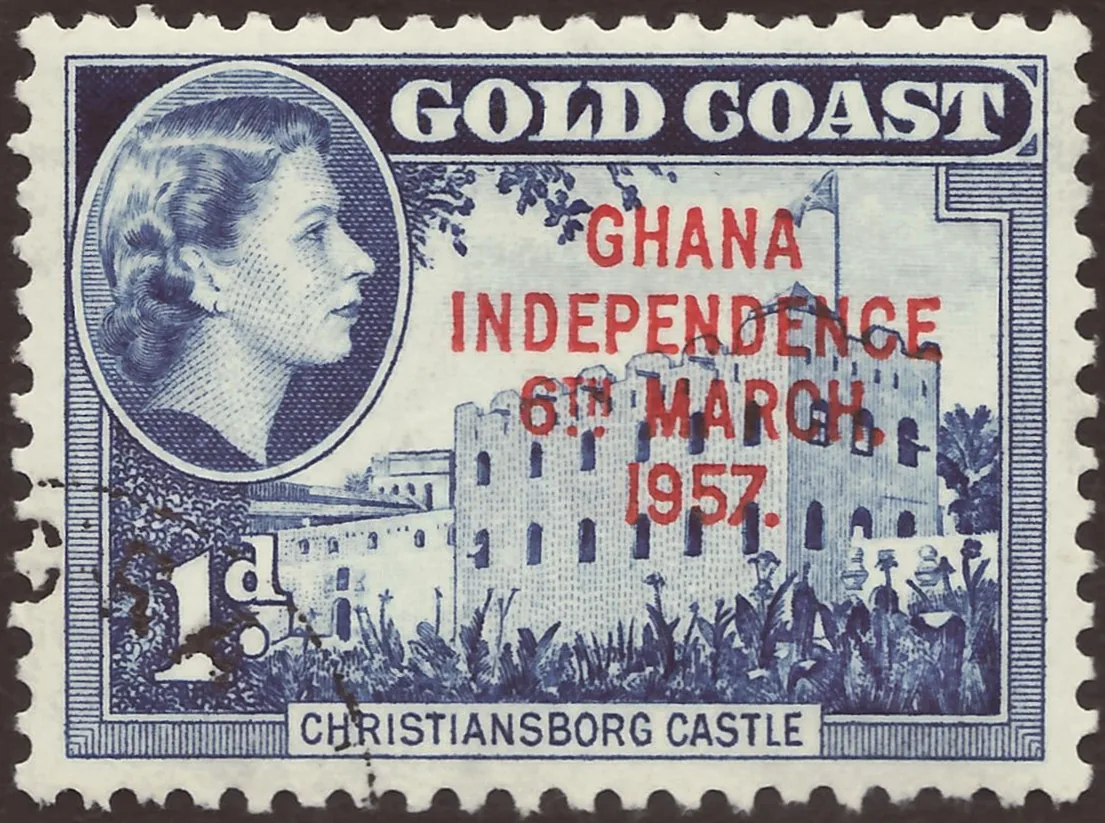
- Present the document.
- What does it show and say?
- Why did the first sub-Saharan independence matter?
- What was the colony called before independence?
Exercise 16 : Reading numbers: the growth of the United Nations
| Year | Member states of the United Nations |
|---|---|
| 1945 | 51 |
| 1960 | 99 |
| 1990 | 159 |
| 2011 | 193 |
Source: United Nations, “Growth in United Nations membership.”
- By how many states did membership grow between 1945 and 1960? Calculate.
- What share of the 2011 total had joined by 1945 (approximately)?
- Explain how decolonization accounts for the increase between 1945 and 1960.
- What other event added states between 1990 and 2011?
Exercise 17 : Independence by decade
Points: 1 Delhi, 2 Jakarta, 3 Hanoi, 4 Accra, 5 Algiers, 6 Nairobi, 7 Kinshasa.
- In which decade did the countries of Delhi (1), Jakarta (2), and Accra (4) become independent?
- Which numbers are in countries independent in the 1960s?
- What pattern does the map show about Asia and Africa?
Exercise 18 : Order the events
Put in chronological order.
- Bandung Conference
- Independence of India
- Independence of Ghana
- Salt March
- Independence of Algeria
- Dien Bien Phu
- UN Resolution 1514
- Namibia independent
Exercise 19 : Durations
- How many years passed between the Salt March (1930) and independence (1947)?
- How many years separate the Bandung Conference (1955) from Resolution 1514 (1960)?
- How long did the Algerian War last (1954-1962)?
Exercise 20 : Guided research: a country’s independence
Mini-inquiry. Choose one country (for example Ghana, Kenya, Algeria, or Indonesia). Keywords: independence date leader colonial power. Reliable sites: the Library of Congress country studies (loc.gov), the National Archives of the United Kingdom, the United Nations (un.org), your school library databases. Fill in the sheet:
- Name of the country before independence and the colonial power.
- Date of independence and the first leader.
- Was independence won through negotiation, war, or both?
- One problem the country faced in its first years.
Exercise 21 : CER paragraph: nonviolence and armed struggle
Write a Claim-Evidence-Reasoning paragraph (6-8 sentences): Did independence come mostly through nonviolence or through armed struggle? Use two examples and one document.
India versus Vietnam or Algeria.
Exercise 22 : SAQ: causes of decolonization
(a) Identify one way World War II weakened the European empires. (b) Identify one idea used by colonized peoples to demand independence. (c) Explain one way the Cold War affected decolonization.
Exercise 23 : True or false? Justify
- Gandhi was in Delhi on the night of independence.
- Ghana was the first sub-Saharan African country to become independent from European rule.
- All of Vietnam held elections in 1956.
- The Bandung Conference included the United States and the Soviet Union.
Exercise 24 : Causes and consequences
Sort into cause or consequence of decolonization: (1) Japanese conquest of Southeast Asia, (2) the Non-Aligned Movement, (3) the exhaustion of Britain and France after 1945, (4) the growth of UN membership, (5) nationalist movements such as the Indian National Congress.


Quick review: flashcards
Tap a card to see the answer.