


This Grade 7 Medieval and Early Modern World test covers Medieval Japan. Like a classroom assessment, it includes documents to analyze, knowledge questions and a short writing task. To prepare, review the lesson first, then practice with the worksheet.
Time : 50 min
The test has three parts: knowledge (32 points), documents (48 points), and a written argument (20 points). Answer in complete sentences and cite the documents.
Document 1 – The Mongol invasions of Japan
Schematic map prepared for this unit; routes simplified.
Document 2 – A samurai faces the invaders
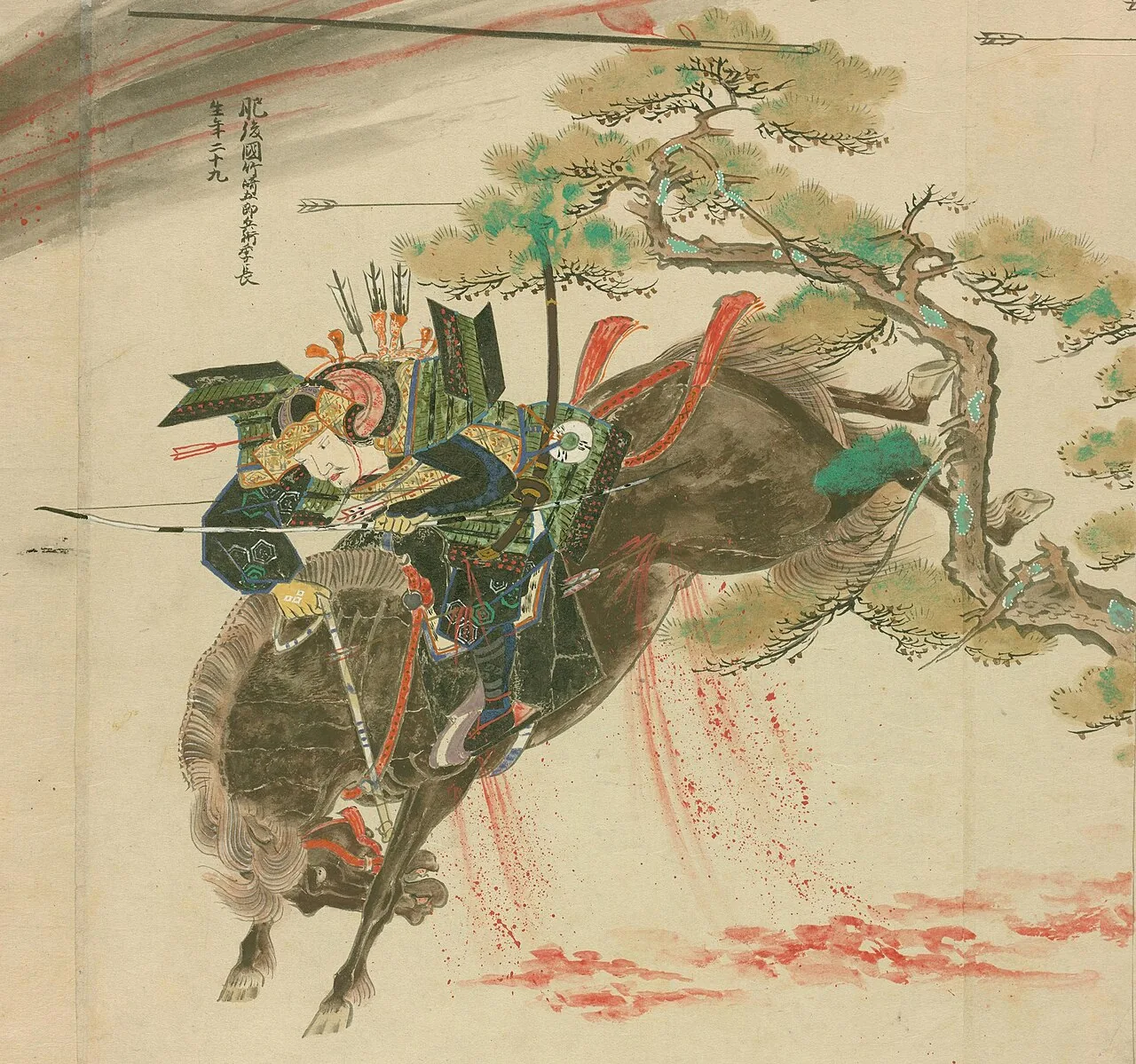
Wikimedia Commons; Museum of the Imperial Collections, Tokyo.
Document 3 – The end of the Taira
And thus comforting him, and binding his long hair up in his dove coloured robe, blinded with tears the child-Sovereign put his beautiful little hands together and turned first to the east to say farewell to the deity of Ise and to Sho-Hachimangu, and then to the west and repeated the Nembutsu, after which the Nii-Dono, holding him tightly in her arms and saying consolingly “In the depths of the Ocean we have a Capital” sank with him at last beneath the waves.
Source: The Tale of the Heike, the death of Emperor Antoku at Dan-no-ura (1185), 13th century, translated by A. L. Sadler, Transactions of the Asiatic Society of Japan, vol. 49, part 1 (Tokyo, 1921). Text checked at archive.org/details/TheHeikeMonogatari.
*Nii-Dono: the Lady Nii, grandmother of the child emperor. *Nembutsu: a Buddhist prayer to Amida Buddha. *Ise: the great Shinto shrine. *Sho-Hachimangu: Hachiman, the god of war.
Sadler translation, 1921, <em>Transactions of the Asiatic Society of Japan</em>.
Document 4 – Key dates
- 794 The capital moves to Heian-kyo (Kyoto).
- 1185 The Minamoto defeat the Taira at Dan-no-ura.
- 1192 Yoritomo becomes shogun.
- 1274 First Mongol invasion.
- 1281 Second Mongol invasion.
- 1333 The Kamakura shogunate falls.
- 1603 Tokugawa Ieyasu becomes shogun.
Dates as given in standard reference works such as the Cambridge History of Japan.
Questions
- Part 1 – Knowledge. Define samurai, shogun, and regent. (12 pts)
- Part 1. Document 1: name the island that was the target of the invasions, the Korean port where the first fleet left, and the color of the route of the first invasion. (12 pts)
- Part 1. Name two cultural achievements of the Heian court and explain one of them. (8 pts)
- Part 2 – Documents. Document 2: present the document, describe what you see, and explain why a samurai would pay for such a painting. (14 pts)
- Part 2. Document 3: present the document, say what happens to the child emperor, and explain what it shows about the beliefs of the time. (14 pts)
- Part 2. Document 4: calculate how many years passed between 794 and 1185, between 1185 and 1281, and between 1281 and 1333. (10 pts)
- Part 2. Using Document 1, Document 4, and the lesson, explain two reasons why the Mongols failed in Japan. (10 pts)
- Part 3 – Written argument. How did the rise of the warriors and the Mongol invasions change the way Japan was governed? Write a paragraph or two with a claim, at least two pieces of evidence from the documents or the lesson, and your reasoning. (20 pts)


Quick review: flashcards
Tap a card to see the answer.