


This Grade 6 Ancient Civilizations test covers Ancient Greece. Like a classroom assessment, it includes documents to analyze, knowledge questions and a short writing task. To prepare, review the lesson first, then practice with the worksheet.
Time : 50 min
The test has three parts: knowledge (32 points), documents (48 points), and a written argument (20 points). Answer in complete sentences and cite the documents.
Document 1 – Map of ancient Greece
Schematic map prepared for this unit.
Document 2 – A reconstructed trireme
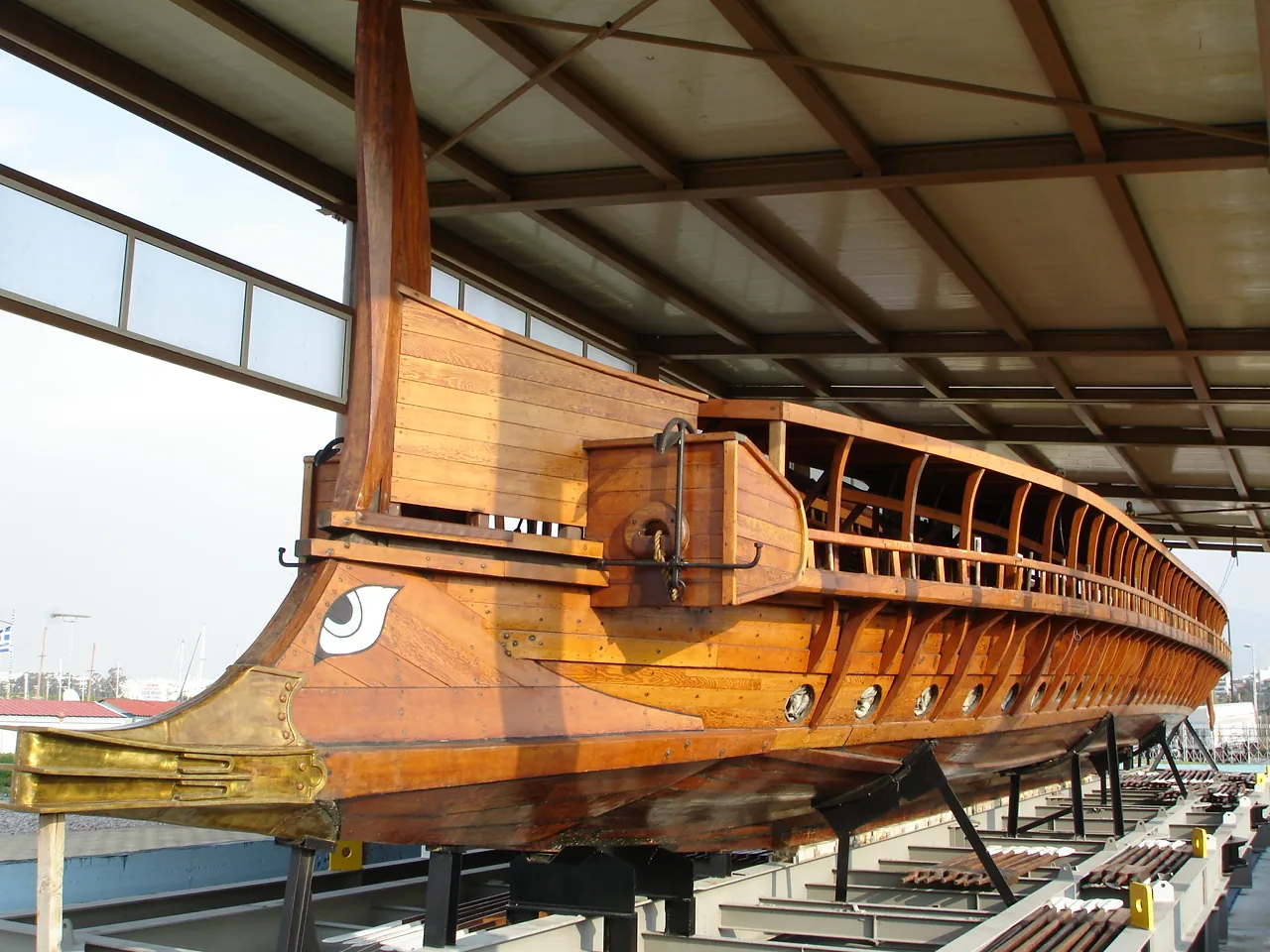
Wikimedia Commons; Olympias, built 1985-1987, Greece.
Document 3 – Spartan education
as soon as they were seven years old they were to be enrolled in certain companies and classes, where they all lived under the same order and discipline, doing their exercises and taking their play together. Of these, he who showed the most conduct and courage was made captain; they had their eyes always upon him, obeyed his orders, and underwent patiently whatsoever punishment he inflicted; so that the whole course of their education was one continued exercise of a ready and perfect obedience. The old men, too, were spectators of their performances, and often raised quarrels and disputes among them, to have a good opportunity of finding out their different characters, and of seeing which would be valiant, which a coward, when they should come to more dangerous encounters.
*enrolled: entered on a list. *valiant: brave. *unguents: oils or ointments.
Plutarch, Life of Lycurgus, about 100 CE (translation by John Dryden, revised by Arthur Hugh Clough, 1859).
Document 4 – Battles of the Persian Wars
| Battle | Year | Main Greek leader | Result |
|---|---|---|---|
| Marathon | 490 BCE | Miltiades (Athens) | Greek victory |
| Thermopylae | 480 BCE | Leonidas (Sparta) | Persian victory; Greek force destroyed |
| Salamis | 480 BCE | Themistocles (Athens) | Greek naval victory |
| Plataea | 479 BCE | Pausanias (Sparta) | Greek victory |
Dates and leaders as given in standard reference works such as The Oxford Classical Dictionary; table prepared for this unit.
Questions
- Part 1 – Knowledge. Define polis, democracy, and oligarchy. (12 pts)
- Part 1. Document 1: locate Athens, Sparta, Marathon, and Thermopylae on the map, name the sea east of the Greek mainland, and name the peninsula on which Sparta lies. (12 pts)
- Part 1. Explain how the geography of Greece encouraged the growth of independent city-states. (8 pts)
- Part 2 – Documents. Document 2: present the document, describe what you see, and explain the role of triremes in the battle of Salamis. (14 pts)
- Part 2. Document 3: present the document, say what Spartan boys learned, and explain why Sparta trained its boys this way. Why should a historian be careful with this text? (14 pts)
- Part 2. Document 4: calculate the time between Marathon and Plataea, and name the two cities that supplied the Greek leaders. (10 pts)
- Part 2. Using Document 3 and the lesson, compare how Sparta and Athens treated their citizens and their enslaved or dependent populations. (10 pts)
- Part 3 – Written argument. How were Athens and Sparta different, and what did they have in common? Write a paragraph or two with a claim, at least two pieces of evidence from the documents or the lesson, and your reasoning. (20 pts)


Quick review: flashcards
Tap a card to see the answer.