


This worksheet on Ancient Rome: from Republic to Empire belongs to the Grade 6 Ancient Civilizations course. Its questions use primary sources, maps and timelines, and they move from basic recall to short writing tasks. Before you start, review the lesson; afterward, try the true or false quiz.
Exercise 1 : Vocabulary of Rome
Define each word, then use it in a sentence.
- republic
- consul
- senate
- plebeian
- tribune
- legion
- province
Hint: use the definition boxes and the lesson.
Exercise 2 : A mixed constitution
Document 1 – Polybius describes the Roman government
For if one fixed one’s eyes on the power of the consuls, the constitution seemed completely monarchical and royal; if on that of the senate it seemed again to be aristocratic; and when one looked at the power of the masses, it seemed clearly to be a democracy.
Source: Polybius, Histories, Book VI, chapter 11, about 150 BCE (translation by W. R. Paton, Loeb Classical Library, 1923).
*monarchical: ruled by a king or single ruler. *aristocratic: ruled by a noble few. *democracy: rule by the people.
- Present the document (nature, author, date, context).
- What three kinds of government does Polybius say the Roman constitution seemed to contain?
- Which Roman institution matches each one?
- Why would a mixed constitution be stable, in Polybius’s view?
- Polybius was a Greek who lived in Rome. Why might an outsider’s opinion be useful to a historian?
Exercise 3 : The speech of Tiberius Gracchus
Document 2 – The soldiers have no land
“The wild beasts that roam over Italy,” he would say, “have every one of them a cave or lair to lurk in; but the men who fight and die for Italy enjoy the common air and light, indeed, but nothing else; houseless and homeless they wander about with their wives and children. And it is with lying lips that their imperators exhort the soldiers in their battles to defend sepulchres and shrines from the enemy; for not a man of them has an hereditary altar, not one of all these many Romans an ancestral tomb, but they fight and die to support others in wealth and luxury, and though they are styled masters of the world, they have not a single clod of earth that is their own.”
Source: Plutarch, Life of Tiberius Gracchus, chapter 9 (translation by Bernadotte Perrin, 1921).
*imperators: generals. *sepulchres: tombs. *clod: lump of earth.
- Present the document.
- What comparison does Tiberius make between wild animals and Roman soldiers?
- What does he say the generals tell their soldiers, and why is that unfair?
- What problem does the speech describe, and what solution did Tiberius propose?
- Why does a historian need to ask who wrote the words and when?
Exercise 4 : Crossing the Rubicon
Document 3 – Caesar at the Rubicon
Then, overtaking his cohorts at the river Rubicon, which was the boundary of his province, he paused for a while, and realising what a step he was taking, he turned to those about him and said: “Even yet we may draw back; but once cross yon little bridge, and the whole issue is with the sword.” […] Take we the course which the signs of the gods and the false dealing of our foes point out. The die is cast,” said he.
Source: Suetonius, Life of Julius Caesar, chapters 31-32, about 120 CE (translation by J. C. Rolfe, Loeb Classical Library, 1914).
*cohorts: groups of soldiers. *Rubicon: a small river that marked the border of Caesar’s province. *the die is cast: the decision cannot be reversed.
- Present the document. How long after Caesar did Suetonius write?
- Where does Caesar stop, and why is that place important?
- What does Caesar say about the choice he faces?
- What does the phrase “the whole issue is with the sword” mean?
- Why was crossing the Rubicon with an army against Roman law?
Exercise 5 : From brick to marble
Document 4 – Augustus rebuilds Rome
Since the city was not adorned as the dignity of the empire demanded, and was exposed to flood and fire, he so beautified it that he could justly boast that he had found it built of brick and left it in marble. He made it safe too for the future, so far as human foresight could provide for this.
Source: Suetonius, Life of Augustus, chapter 28, about 120 CE (translation by J. C. Rolfe, Loeb Classical Library, 1914).
*dignity of the empire: the importance of the empire. *beautified: made beautiful.
- Present the document.
- What problems did the city have, according to Suetonius?
- What did Augustus say he found and what did he leave?
- What does this tell you about how an emperor could win support?
- Whose point of view does the quotation express? Suggest one reason to be careful.
Exercise 6 : Augustus on wars and pardon
Document 5 – Deeds of the Divine Augustus
Wars, both civil and foreign, I undertook throughout the world, on sea and land, and when victorious I spared all citizens who sued for pardon. The foreign nations which could with safety be pardoned I preferred to save rather than to destroy.
Source: Augustus, Res Gestae Divi Augusti, chapter 3 (translation by Frederick W. Shipley, 1924).
*sued for pardon: asked for mercy.
- Present the document. Who wrote it, and where was it displayed?
- What does Augustus say he did to citizens who asked for pardon?
- How does he describe his treatment of foreign nations?
- Why would an emperor wish to be remembered as merciful?
- What is the main problem with using an emperor’s own account as evidence?
Exercise 7 : How Augustus gained power
Document 6 – Tacitus on the rise of Augustus
When after the destruction of Brutus and Cassius there was no longer any army of the Commonwealth, when Pompeius was crushed in Sicily, and when, with Lepidus pushed aside and Antonius slain, even the Julian faction had only Caesar left to lead it, then, dropping the title of triumvir, and giving out that he was a Consul, and was satisfied with a tribune’s authority for the protection of the people, Augustus won over the soldiers with gifts, the populace with cheap corn, and all men with the sweets of repose, and so grew greater by degrees, while he concentrated in himself the functions of the Senate, the magistrates, and the laws.
Source: Tacitus, Annals, Book I, chapter 2, about 116 CE (translation by A. J. Church and W. J. Brodribb, 1876).
*triumvir: one of three men who shared power. *tribune’s authority: the powers of a tribune. *Pompeius, Lepidus, Antonius: rivals of Octavian.
- Present the document. Tacitus wrote about 100 years after the death of Augustus; why does this matter?
- List three groups whose support Augustus won, and what he gave each.
- What titles did he claim to be satisfied with?
- What does Tacitus mean by saying that he “concentrated in himself the functions of the Senate, the magistrates, and the laws”?
- What is Tacitus’s opinion of Augustus? Find a phrase that shows it.
Exercise 8 : Republic and Empire
Document 1A – The Republic according to Polybius
For if one fixed one’s eyes on the power of the consuls, the constitution seemed completely monarchical and royal; if on that of the senate it seemed again to be aristocratic; and when one looked at the power of the masses, it seemed clearly to be a democracy.
Source: Polybius, Histories, Book VI, chapter 11 (translation by W. R. Paton, 1923).
Document 1B – The beginning of the Empire according to Tacitus
When after the destruction of Brutus and Cassius there was no longer any army of the Commonwealth, when Pompeius was crushed in Sicily, and when, with Lepidus pushed aside and Antonius slain, even the Julian faction had only Caesar left to lead it, then, dropping the title of triumvir, and giving out that he was a Consul, and was satisfied with a tribune’s authority for the protection of the people, Augustus won over the soldiers with gifts, the populace with cheap corn, and all men with the sweets of repose, and so grew greater by degrees, while he concentrated in himself the functions of the Senate, the magistrates, and the laws.
Source: Tacitus, Annals, Book I, chapter 2 (translation by A. J. Church and W. J. Brodribb, 1876).
- Present each document.
- Who held power according to each document?
- What happened to the Senate and the magistrates between the two periods?
- Which author sounds more favorable to the government he describes? Give evidence.
- What is the main change that the two documents show?
Exercise 9 : Two voices on Augustus
Document 2A – Augustus on himself
In my sixth and seventh consulships, when I had extinguished the flames of civil war, after receiving by universal consent the absolute control of affairs, I transferred the republic from my own control to the will of the senate and the Roman people. For this service on my part I was given the title of Augustus by decree of the senate, and the doorposts of my house were covered with laurels by public act, and a civic crown was fixed above my door, and a golden shield was placed in the Curia Julia whose inscription testified that the senate and the Roman people gave me this in recognition of my valour, my clemency, my justice, and my piety. After that time I took precedence of all in rank, but of power I possessed no more than those who were my colleagues in any magistracy.
Source: Augustus, Res Gestae, chapter 34 (translation by Frederick W. Shipley, 1924).
Document 2B – Tacitus on Augustus
When after the destruction of Brutus and Cassius there was no longer any army of the Commonwealth, when Pompeius was crushed in Sicily, and when, with Lepidus pushed aside and Antonius slain, even the Julian faction had only Caesar left to lead it, then, dropping the title of triumvir, and giving out that he was a Consul, and was satisfied with a tribune’s authority for the protection of the people, Augustus won over the soldiers with gifts, the populace with cheap corn, and all men with the sweets of repose, and so grew greater by degrees, while he concentrated in himself the functions of the Senate, the magistrates, and the laws.
Source: Tacitus, Annals, Book I, chapter 2 (translation by A. J. Church and W. J. Brodribb, 1876).
- Present each document and say who wrote it.
- What does Augustus claim in 2A about the republic and about his power?
- What does Tacitus say in 2B about how Augustus gained power?
- Find one difference in the two accounts.
- Explain which account a historian should trust more, and what to do about it.
Exercise 10 : A portrait of Caesar
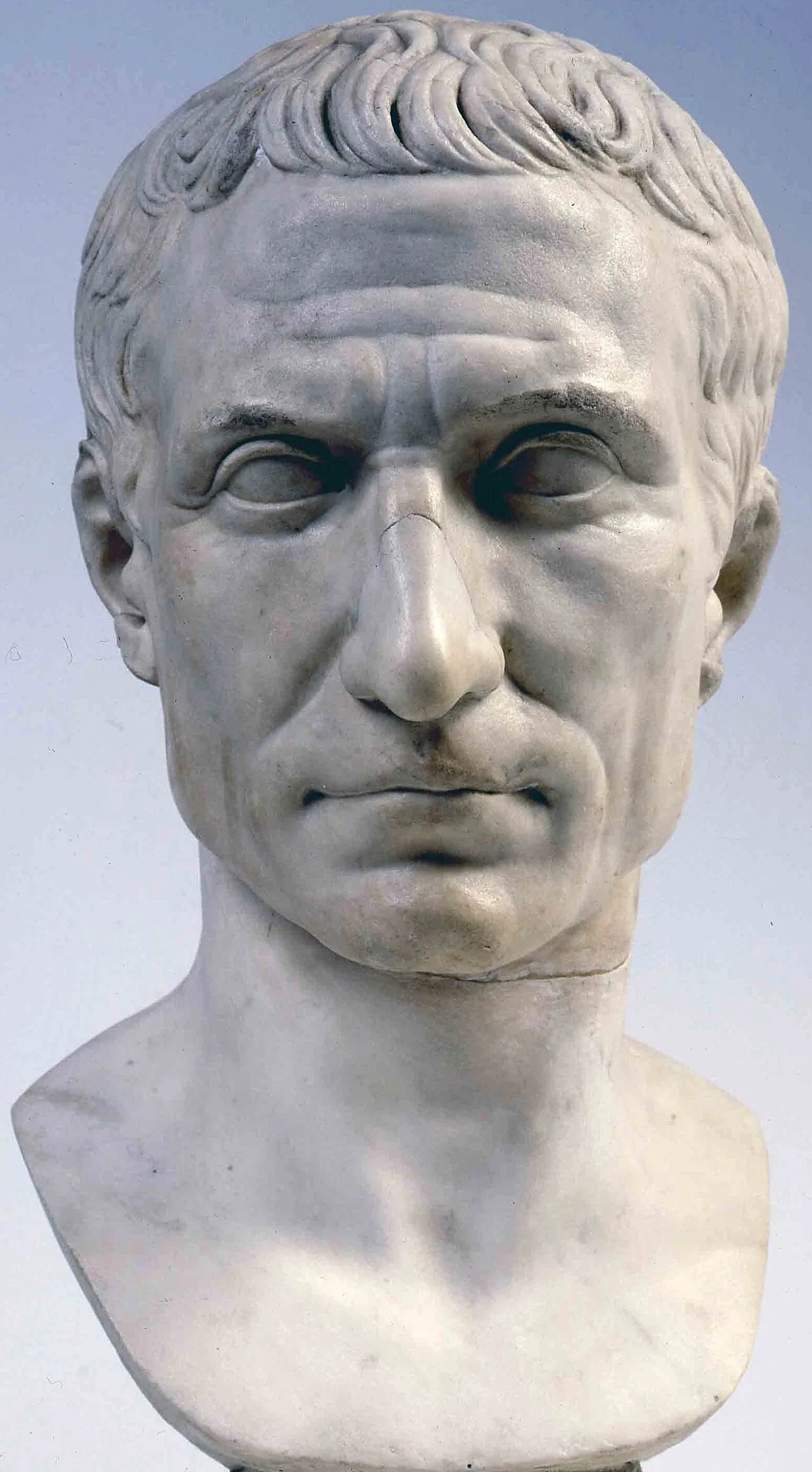
- Present the document (nature, date, place).
- Describe the portrait. How does the sculptor show age and character?
- Why was this bust made after his death, not during his life?
- What does it show about how Romans wanted to remember Caesar?
- How does this type of portrait differ from an idealized Greek statue?
Exercise 11 : The she-wolf of Rome
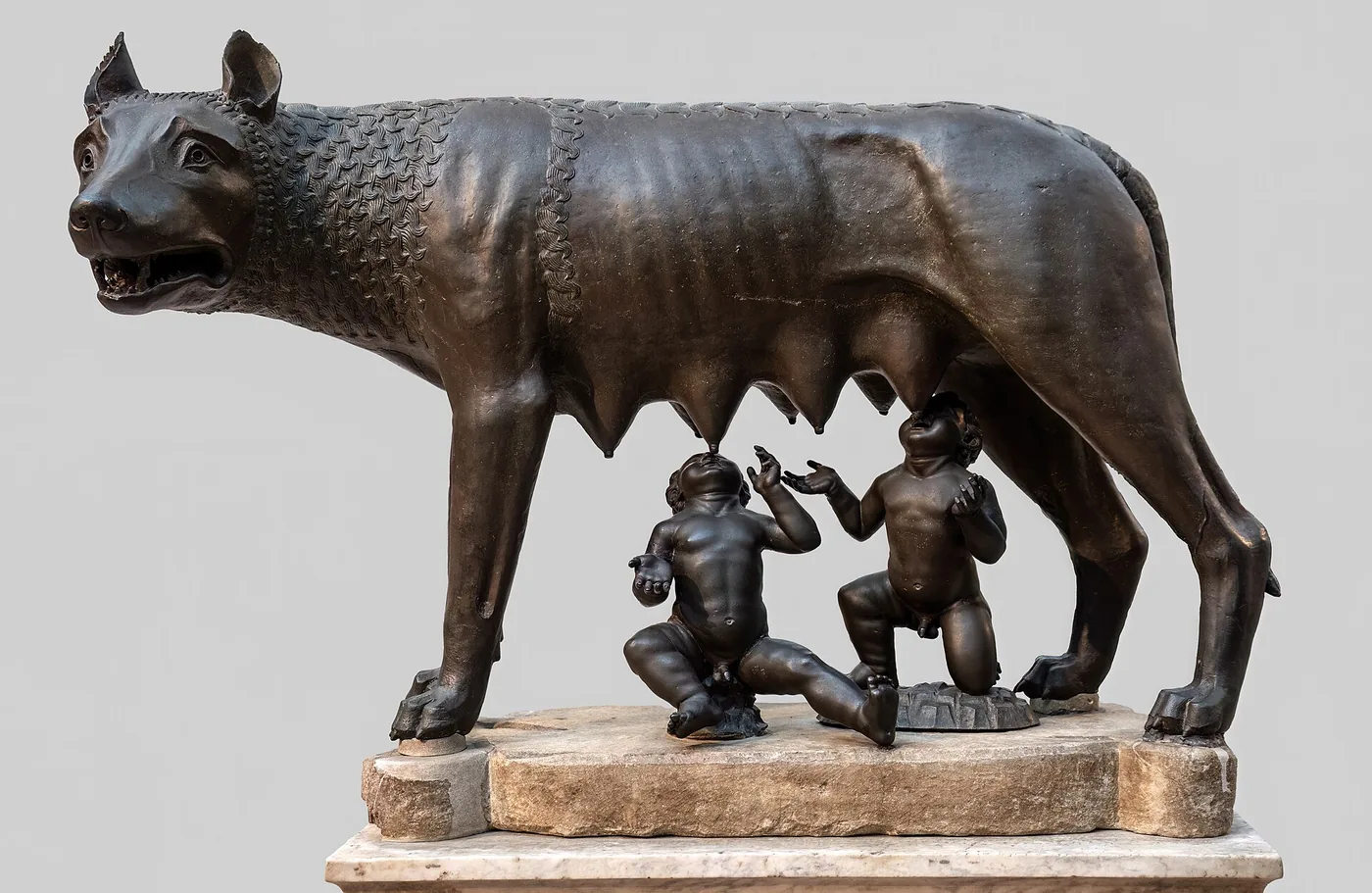
- Present the document (nature, date, place).
- Describe the statue. Who are the small figures?
- Which legend does it illustrate?
- Why is this a symbol of Rome, even though the wolf is probably medieval?
- What is the difference between a legend and a document from the time?
Exercise 12 : The Colosseum
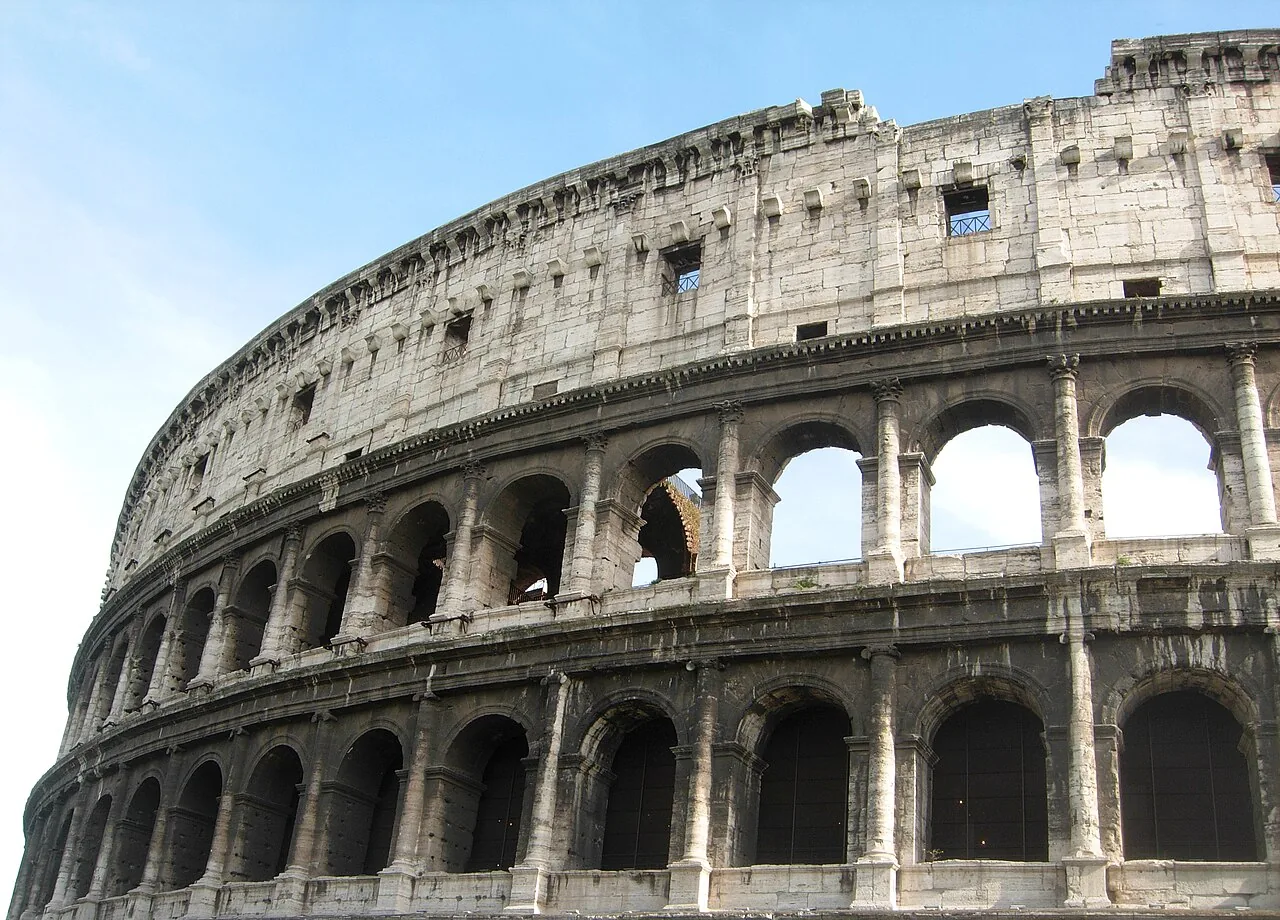
- Present the document (nature, date, place).
- Describe the architecture. What shapes and levels can you see?
- What took place inside?
- What Roman inventions made the building possible?
- Why did emperors pay for games like these?
Exercise 13 : The Pantheon
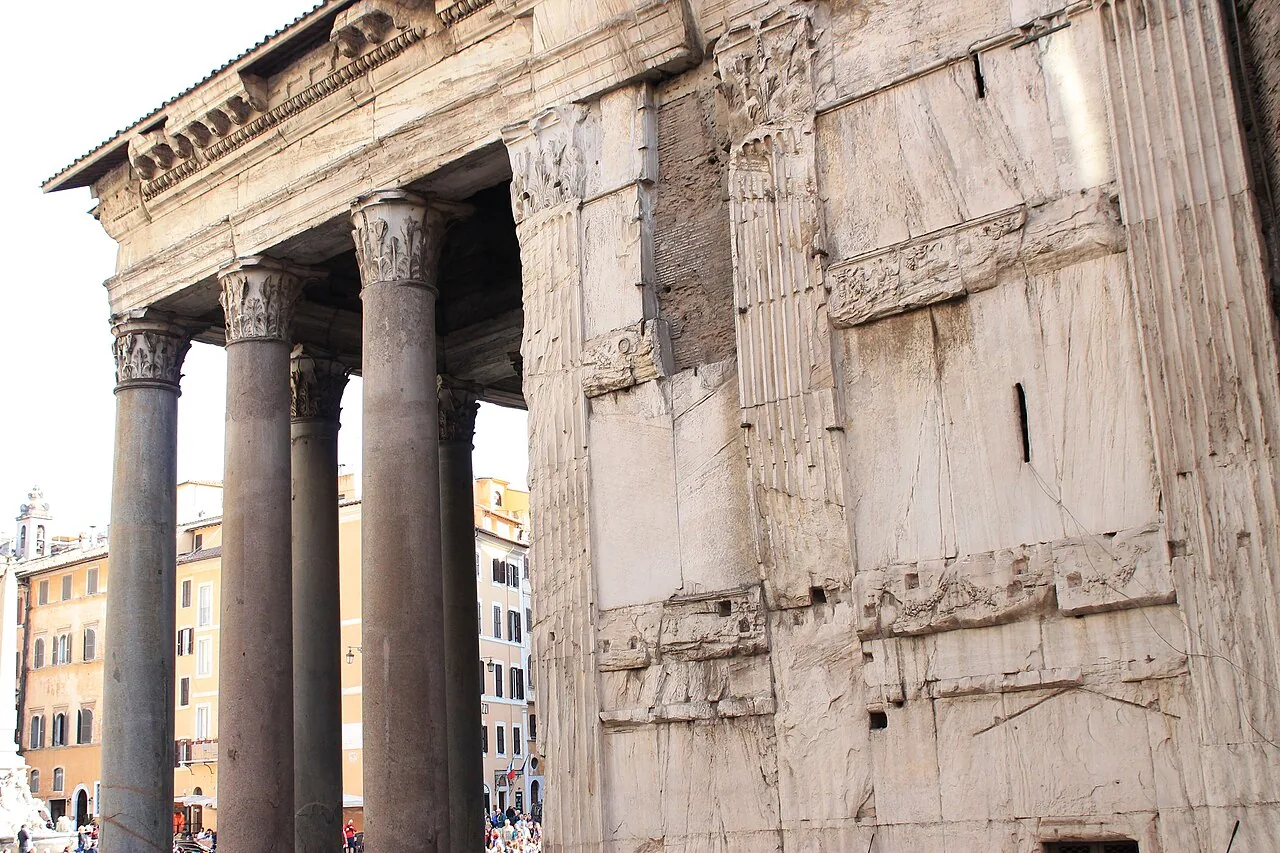
- Present the document (nature, date, place).
- Describe what you see. Which part of the building is shown?
- The Pantheon was a temple. To whom was it dedicated, according to the name?
- What shows the Greek influence on Roman architecture?
- What does this building tell you about the wealth of the empire under Hadrian?
Exercise 14 : The Pont du Gard
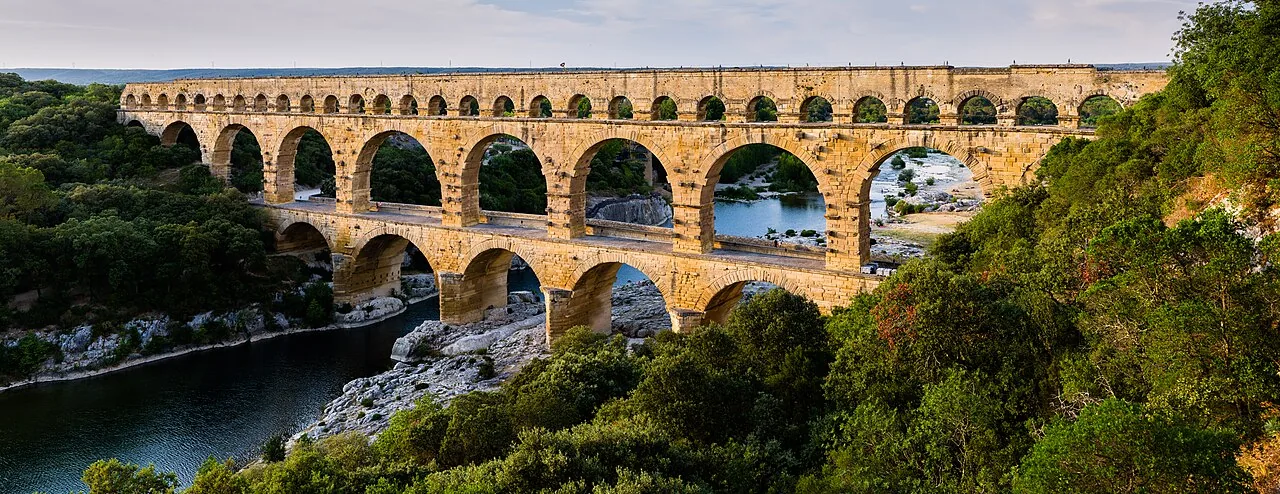
- Present the document (nature, date, place).
- Describe the structure. How many levels of arches do you see?
- What was its purpose?
- Why is it located in southern France and not in Italy?
- What does it show about Roman engineering and about Roman provinces?
Exercise 15 : The Punic Wars by the numbers
Document 1 – Rome and Carthage
| War | Dates | Famous event | Result |
|---|---|---|---|
| First Punic War | 264-241 BCE | Rome builds a fleet | Rome wins Sicily |
| Second Punic War | 218-201 BCE | Hannibal crosses the Alps; Cannae (216); Zama (202) | Rome wins; Carthage loses its empire |
| Third Punic War | 149-146 BCE | Siege of Carthage | Rome destroys Carthage |
Source: Dates as given in standard reference works such as The Oxford Classical Dictionary; table prepared for this unit.
- How many years did the First Punic War last?
- How many years passed between Cannae and Zama?
- How many years of war were there in total (add the three wars)?
- How long did it take Rome, from the start of the First Punic War to the destruction of Carthage?
Exercise 16 : Locate sites in Italy and Africa
- Match the numbers to these names: Cannae, Capua, Carthage, Ravenna, Rome, Syracuse, Zama.
- Which sea lies between Italy and Africa?
- Why was Sicily important to both Rome and Carthage?
- Why was Italy’s position in the middle of the Mediterranean an advantage for Rome?
Hint: Carthage lies on the coast of North Africa, in modern Tunisia.
Exercise 17 : The Roman Empire about 117 CE
- Match the numbers to these names: Alexandria, Antioch, Byzantium, Carthage, Jerusalem, Lutetia (Paris), Rome.
- Name three provinces on the map, using their Latin names.
- Which sea lay at the center of the empire? What did the Romans call it?
- Why did the empire’s borders follow rivers and deserts in many places?
Exercise 18 : Order the events
Put these events in order from the oldest to the most recent.
- Octavian receives the title Augustus.
- Hannibal is defeated at Zama.
- The Colosseum is opened.
- Rome destroys Carthage.
- Caesar crosses the Rubicon.
- The plebeians secede from Rome.
- Tiberius Gracchus is killed.
Exercise 19 : How long between events?
Calculate each time span. Remember that years BCE count down toward zero.
- From the start of the Republic (509 BCE) to the Twelve Tables (about 450 BCE).
- From Caesar’s crossing of the Rubicon (49 BCE) to the title of Augustus (27 BCE).
- From Augustus (27 BCE) to the death of Marcus Aurelius and the end of the Pax Romana (180 CE).
- From the opening of the Colosseum (80 CE) to 2026.
Exercise 20 : Guided research: Pompeii
Find out what Pompeii shows about everyday life in the Roman Empire. Use at least two reliable sites, such as the official Pompeii archaeological park, the British Museum, the Metropolitan Museum of Art, or Britannica. Suggested keywords: Pompeii archaeological park, Vesuvius 79 CE Pompeii British Museum, Roman house Pompeii.
- When and how was Pompeii destroyed?
- What kinds of buildings and objects have been found?
- What do they show about daily life?
- Which websites did you use, and why do you trust them?
Hint: compare two sources; if they differ, note it.
Exercise 21 : CER paragraph: did Augustus end the Republic?
Write a Claim, Evidence, Reasoning paragraph that answers: Did Augustus restore the Republic or end it?
- Claim: state your position.
- Evidence: use at least two details from the documents or the lesson.
- Reasoning: explain how the evidence supports your claim.
Hint: compare what Augustus says in the Res Gestae with what Tacitus says.
Exercise 22 : SAQ: Rome conquers the Mediterranean
Answer in complete sentences.
- Identify two reasons why the Roman army was so successful.
- Explain one effect of the Punic Wars on Rome.
- Explain one problem that conquest created for small farmers.
Exercise 23 : True or false? Justify
Decide whether each statement is true or false, and justify your answer.
- The Romans had a king throughout the Republic.
- The Twelve Tables were Rome’s first written laws.
- Julius Caesar became the first emperor.
- The Pax Romana was a time without any war.
Exercise 24 : Causes and consequences: the end of the Republic
Complete the chain and explain each link.
- Cause: Rome conquers the Mediterranean. Effect: ______.
- Effect on the army: ______.
- Effect on politics: ______.
- Later consequence: ______.


Quick review: flashcards
Tap a card to see the answer.