


This worksheet on AP World Unit 3: Land-Based Empires belongs to the AP World History: Modern course. Its questions use primary sources, maps and timelines, and they move from basic recall to short writing tasks. Before you start, review the lesson; afterward, try the true or false quiz.
Exercise 1 : Key terms
Match each term to its definition: (a) devshirme, (b) janissary, (c) mansabdar, (d) Qizilbash, (e) queue, (f) tsar.
- A Mughal official who held a rank tied to a number of cavalry.
- A Manchu-imposed hairstyle for Chinese men.
- Safavid Turkish warriors, “red heads.”
- The levy of Christian boys for Ottoman service.
- An Ottoman infantry soldier trained in the sultan’s service.
- The title taken by Ivan IV in 1547.
Exercise 2 : Janissaries
Read Document A.
At Buda I made my first acquaintance with the Janissaries; this is the name by which the Turks call the infantry of the royal guard. The Turkish state has 12,000 of these troops when the corps is at its full strength. They are scattered through every part of the empire, either to garrison the forts against the enemy, or to protect the Christians and Jews from the violence of the mob. There is no district with any considerable amount of population, no borough or city, which has not a detachment of Janissaries to protect the Christians, Jews, and other helpless people from outrage and wrong.
Source: Ogier Ghiselin de Busbecq, Turkish Letters, 1555-1562, on the Janissaries; translated by C. T. Forster and F. H. B. Daniell, The Life and Letters of Ogier Ghiselin de Busbecq (1881); Fordham Modern History Sourcebook.
*Janissaries: the sultan’s infantry; *Buda: Hungarian capital under Ottoman rule.
- Present the document (author, date, role).
- What tasks did the janissaries perform, according to Busbecq?
- Why did Busbecq praise Ottoman discipline?
- What does he leave out?
Exercise 3 : The army on campaign
Read Document B.
Sometimes they have recourse to horseflesh; dead horses are of course plentiful in their great hosts, and such beasts as are in good condition when they die furnish a meal not to be despised by famished soldiers. From this you will see that it is the patience, self-denial and thrift of the Turkish soldier that enable him to face the most trying circumstances and come safely out of’ the dangers that surround him. What a contrast to our men!
Source: Ogier Ghiselin de Busbecq, Turkish Letters, 1555-1562, on the Ottoman army on campaign; translated by C. T. Forster and F. H. B. Daniell (1881); Fordham Modern History Sourcebook.
*Gruel: thin porridge; *biscuit: hard dried bread.
- Present the document.
- List the foods Ottoman soldiers ate on campaign.
- What quality of the Turkish soldier does the author praise?
- What does he mean by “What a contrast to our men!”?
Exercise 4 : Two views of the empire builders
Compare Documents C and D.
Hindūstān is a country of few charms. Its people have no good looks; of social intercourse, paying and receiving visits there is none; of genius and capacity none; of manners none; in handicraft and work there is no form or symmetry, method or quality; there are no good horses, no good dogs, no grapes, musk-melons or first-rate fruits, no ice or cold water, no good bread or cooked food in the _bāzārs_, no Hot-baths, no Colleges, no candles, torches or candlesticks. […] Pleasant things of Hindūstān are that it is a large country and has masses of gold and silver.
Source: Babur, Baburnama (memoirs), written about 1526-1530 after the conquest of northern India; translated by Annette Susannah Beveridge (1922); Project Gutenberg.
*Hindustan: northern India; *begs: nobles.
At Buda I made my first acquaintance with the Janissaries; this is the name by which the Turks call the infantry of the royal guard. The Turkish state has 12,000 of these troops when the corps is at its full strength. They are scattered through every part of the empire, either to garrison the forts against the enemy, or to protect the Christians and Jews from the violence of the mob. There is no district with any considerable amount of population, no borough or city, which has not a detachment of Janissaries to protect the Christians, Jews, and other helpless people from outrage and wrong.
Source: Ogier Ghiselin de Busbecq, Turkish Letters, 1555-1562, on the Janissaries; translated by C. T. Forster and F. H. B. Daniell, The Life and Letters of Ogier Ghiselin de Busbecq (1881); Fordham Modern History Sourcebook.
*Janissaries: the sultan’s infantry.
- Present both texts.
- What is each author’s relation to the empire he writes about?
- Compare the purpose of each.
- Which is more reliable on the state it describes? Justify.
Exercise 5 : Locating the empires
Use Map 1 in the lesson and the numbered map below.
- Name the cities 1 to 6: Istanbul, Isfahan, Agra, Beijing, Moscow, Edo.
- Which empire had Isfahan as its capital?
- Which empire included both Agra and Delhi?
- Which of these cities lay in an island state?
Exercise 6 : Ottoman expansion
Study the map of Ottoman conquests.
- Place the conquests in order by date.
- In which three regions did the empire expand?
- Why was the conquest of Cairo important for the sultan’s prestige?
- What does the siege of Vienna mark?
Exercise 7 : Suleiman the Magnificent
Look at Document E.
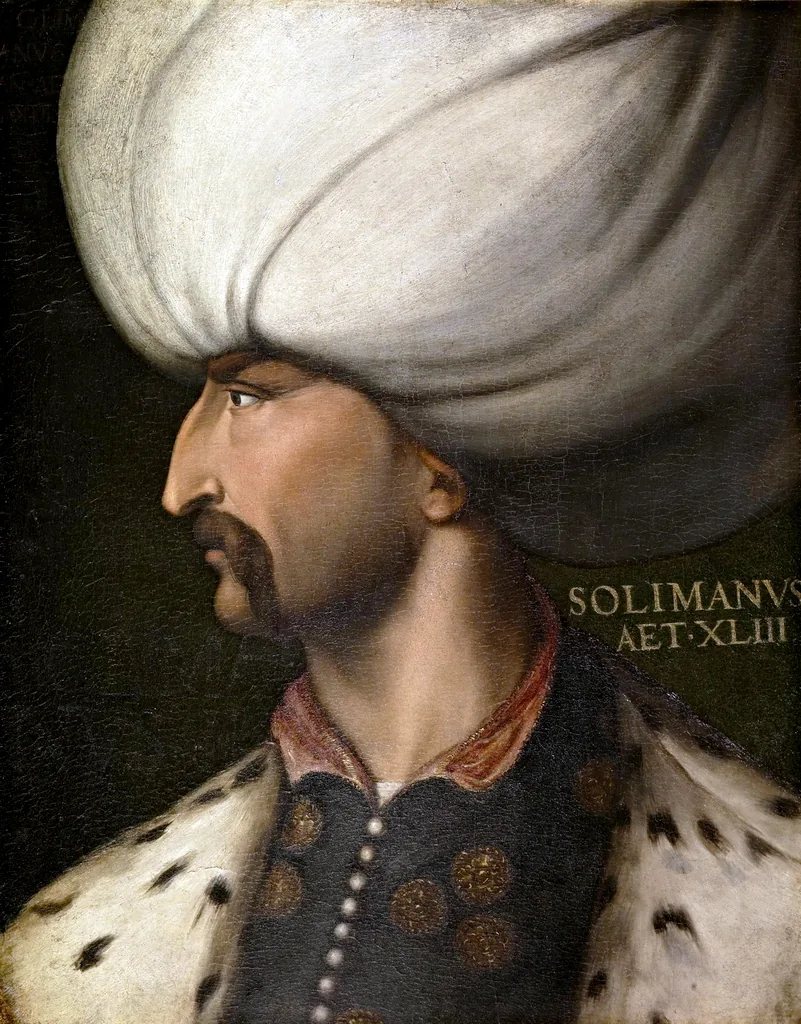
- Present the image.
- Describe the clothing and the posture.
- Why was the portrait painted by a European in Italy?
- What image of the sultan does it give?
Exercise 8 : A mosque and an empire
Look at Document F.
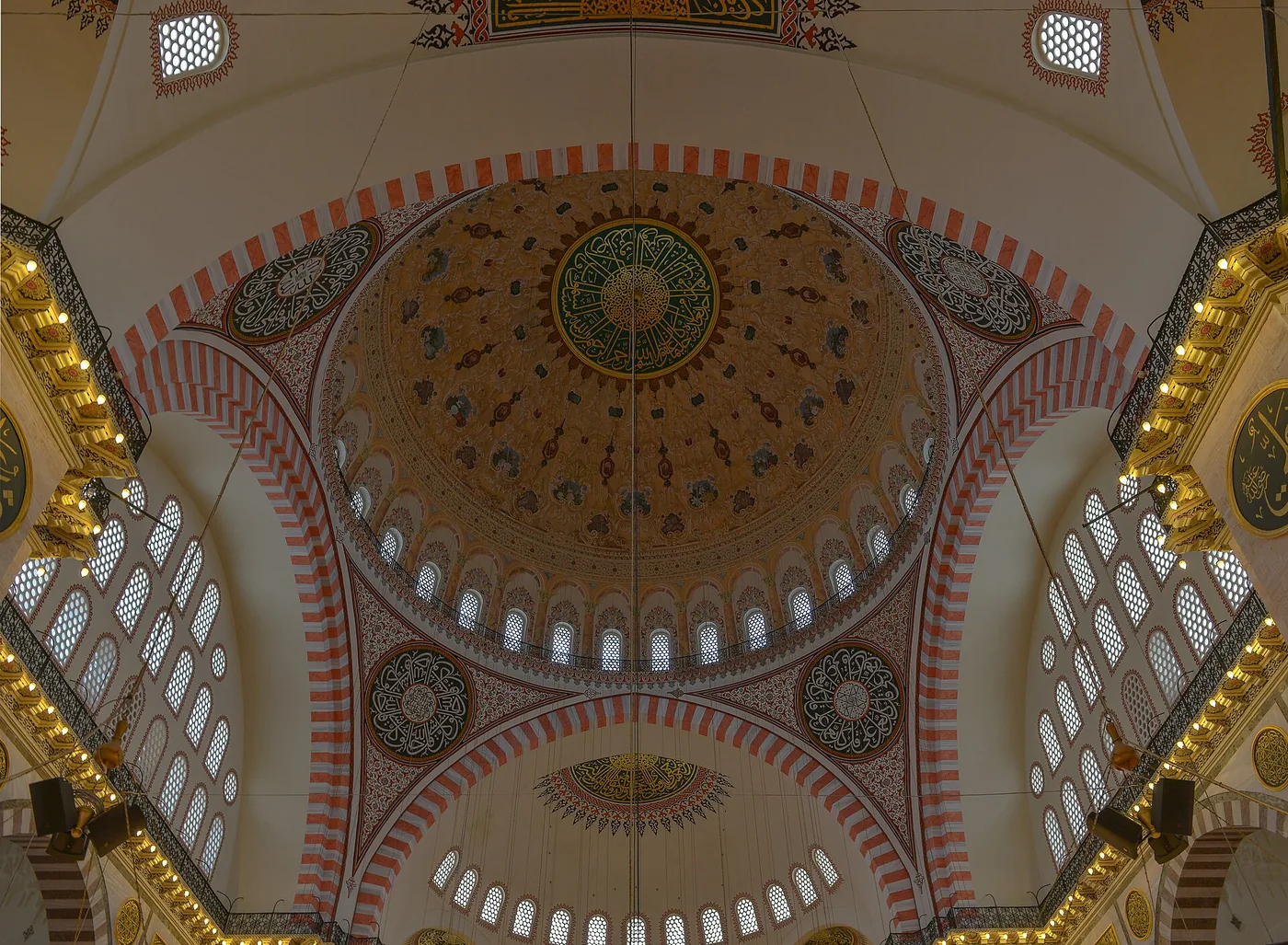
- Present the image.
- Describe the dome and the light.
- How does this building express the power of the sultan?
- What technology and skill are visible?
Exercise 9 : Isfahan and Agra
Compare Documents G and H.
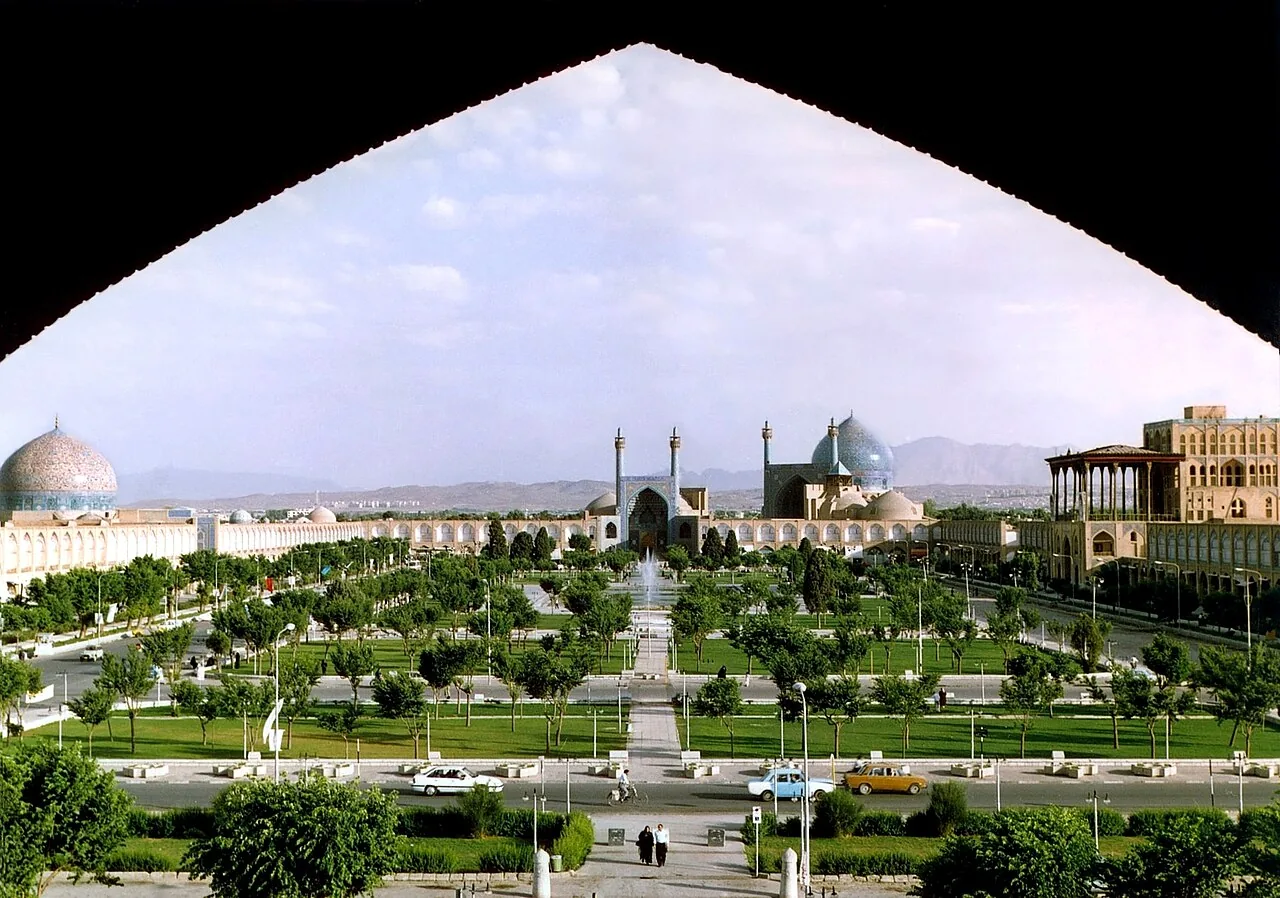
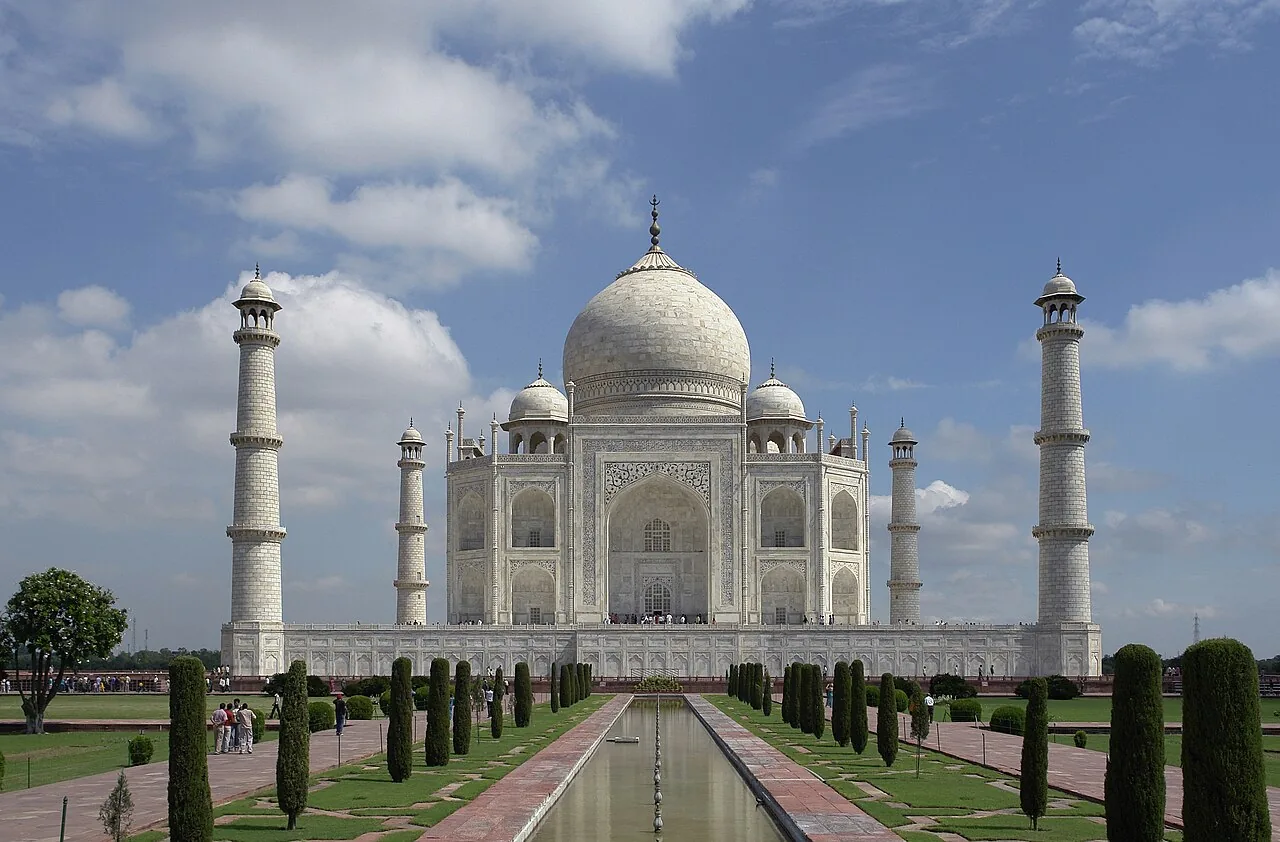
- Present both images.
- What do the two sites have in common?
- How does each express the ruler’s power?
- Identify one difference between the two projects.
Exercise 10 : The Qianlong edict
Read Document I.
As to your entreaty to send one of your nationals to be accredited to my Celestial Court and to be in control of your country’s trade with China, this request is contrary to all usage of my dynasty and cannot possibly be entertained. It is true that Europeans, in the service of the dynasty, have been permitted to live at Peking, but they are compelled to adopt Chinese dress, they are strictly confined to their own precincts and are never permitted to return home.
Source: Qianlong Emperor, edict to King George III of Great Britain in reply to the Macartney embassy, September 1793; translated by E. Backhouse and J. O. P. Bland, Annals and Memoirs of the Court of Peking (1914); Fordham Modern History Sourcebook.
*Celestial Court: the emperor’s court; *accredited: officially sent.
- Present the document.
- What does George III’s envoy request?
- How does the emperor justify his refusal?
- What does the text show about the Qing view of foreign relations?
Exercise 11 : Kangxi and the Forbidden City
Look at Documents J and K.
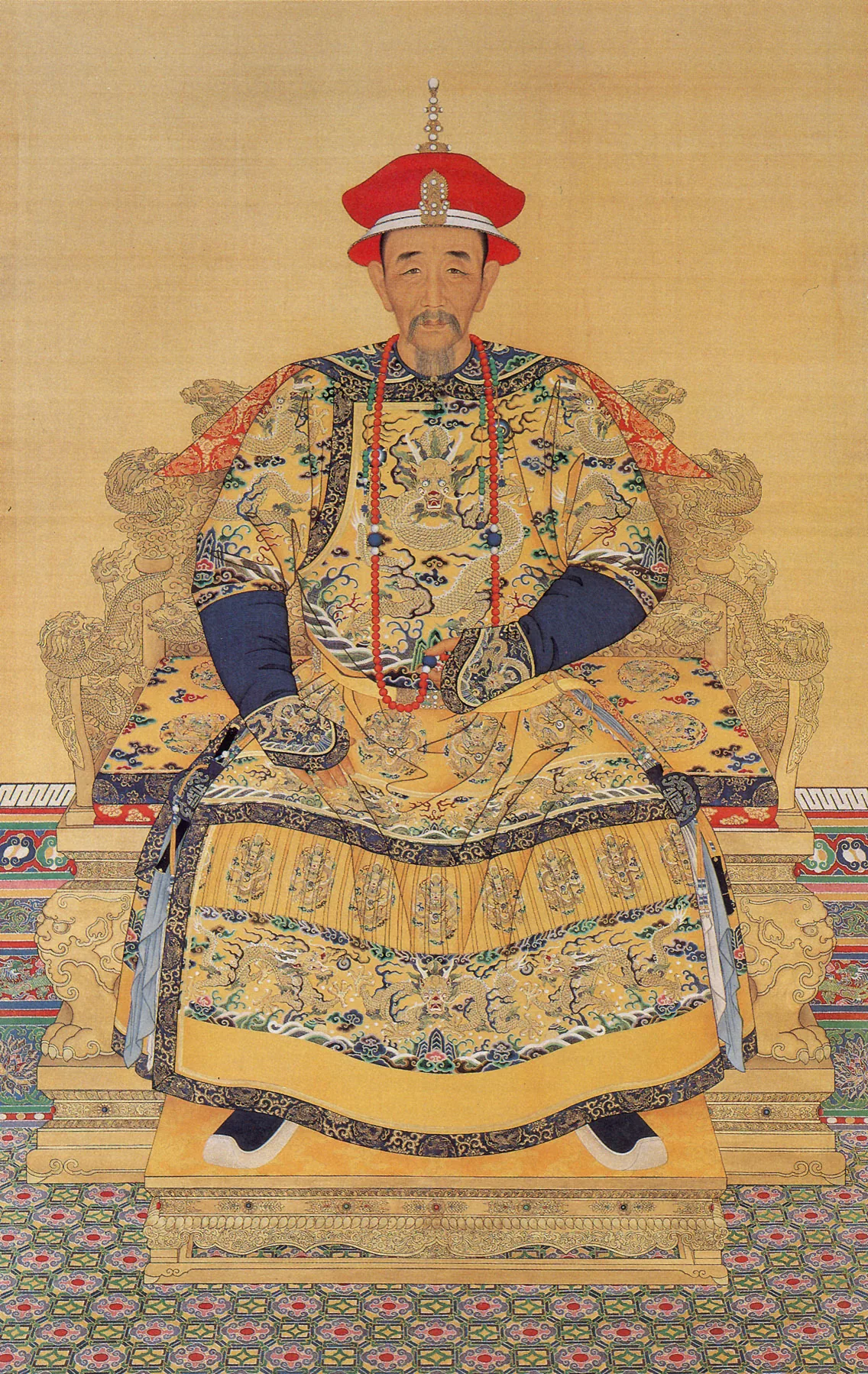

- Present the images.
- What do they show about Qing imperial self-presentation?
- How did the Qing use older Chinese symbols?
Exercise 12 : The Mughal court
Read Document C again.
Hindūstān is a country of few charms. Its people have no good looks; of social intercourse, paying and receiving visits there is none; of genius and capacity none; of manners none; in handicraft and work there is no form or symmetry, method or quality; there are no good horses, no good dogs, no grapes, musk-melons or first-rate fruits, no ice or cold water, no good bread or cooked food in the _bāzārs_, no Hot-baths, no Colleges, no candles, torches or candlesticks. […] Pleasant things of Hindūstān are that it is a large country and has masses of gold and silver.
Source: Babur, Baburnama (memoirs), written about 1526-1530 after the conquest of northern India; translated by Annette Susannah Beveridge (1922); Project Gutenberg.
*Hindustan: northern India; *begs: nobles; *lungi: loincloth.
- Present the document.
- What does Babur dislike in India?
- What does he like?
- Why did Mughal rulers later need to adapt to India?
Exercise 13 : Land and rulers
Read Document L.
The King being proprietor of all the lands in the empire, there can exist neither Dukedoms nor Marquisates ; nor can any family be found possessed of wealth arising from a domain, and living upon its own patrimony. The courtiers are often not even descendants of Omrahs, because, the King being heir of all their posses- sions, no family can long maintain its distinction, but, after the Omrah’s death, is soon extinguished, and the sons, or at least the grandsons, reduced generally, we might almost say, to beggary
Source: Francois Bernier, Travels in the Mogul Empire, A.D. 1656-1668, letter to Jean-Baptiste Colbert on the Mughal court, written in India in 1663; translation by Irving Brock revised by Archibald Constable (1891), second edition by Vincent A. Smith (1914); Internet Archive.
*Omrahs: nobles of the Mughal court; *Mogols: Mughals; *Dukedoms: titles held with land.
- Present the document.
- What does Bernier say about land ownership?
- How does he contrast the Mughal nobility with the French nobility?
- Why might Bernier exaggerate this point?
Exercise 14 : Timeline of empires
Place in order: Safavid state founded; Ottomans capture Constantinople; Babur wins at Panipat; Manchus take Beijing; Peter founds St. Petersburg; Qianlong’s edict.
- Date each event.
- Which two are separated by about 25 years?
- How many years separate Panipat and the fall of Beijing to the Manchus?
Exercise 15 : Reigns
Suleiman reigned 1520-1566 and Akbar 1556-1605. Calculate how long each reigned and say how many years they overlapped. Then state what each ruler is known for.
Exercise 16 : Guided research: the Taj Mahal
Investigate how and why the Taj Mahal was built.
- Keywords: Taj Mahal construction, Shah Jahan, Mumtaz Mahal, Mughal architecture.
- Reliable sites: Metropolitan Museum of Art, UNESCO World Heritage page, Encyclopaedia Britannica. Check the author and date.
- Fill in: when was construction begun and finished; who was it built for; which materials; what styles did it combine; the source for each fact.
Exercise 17 : Short answer: Ottoman rule
Answer A, B, and C.
- A. Identify one way the Ottomans recruited loyal soldiers and officials.
- B. Explain one way they governed religious diversity.
- C. Explain one reason the empire faced difficulties after 1570.
Exercise 18 : Stimulus-based multiple choice
Use Document L (Bernier) to answer.
The King being proprietor of all the lands in the empire, there can exist neither Dukedoms nor Marquisates ; nor can any family be found possessed of wealth arising from a domain, and living upon its own patrimony. The courtiers are often not even descendants of Omrahs, because, the King being heir of all their posses- sions, no family can long maintain its distinction, but, after the Omrah’s death, is soon extinguished, and the sons, or at least the grandsons, reduced generally, we might almost say, to beggary
Source: Francois Bernier, Travels in the Mogul Empire, A.D. 1656-1668, letter to Jean-Baptiste Colbert on the Mughal court, written in India in 1663; translation by Irving Brock revised by Archibald Constable (1891), second edition by Vincent A. Smith (1914); Internet Archive.
*Omrahs: nobles; *Mogols: Mughals.
- 1. Bernier’s main claim is that (A) the king owned all land; (B) nobles were hereditary landlords; (C) the empire had no nobles; (D) peasants owned the land.
- 2. His audience was most likely (A) French officials; (B) Mughal peasants; (C) Chinese emperors; (D) Ottoman sultans.
- 3. The comparison with France shows that Bernier (A) wrote with European assumptions; (B) was Persian; (C) hated Europe; (D) was a Mughal official.
Exercise 19 : Causes of expansion
Explain how gunpowder weapons helped the Ottoman, Safavid, and Mughal empires expand, and say what limits the label “gunpowder empires” has.
Exercise 20 : True or false? Justify
Decide whether each statement is true or false and justify it.
- Akbar ended the tax on non-Muslims in 1564.
- The Safavids were Sunni Muslims.
- The Qing allowed European merchants to trade freely everywhere in China.
- Peter the Great founded St. Petersburg in 1703.
Exercise 21 : LEQ: comparison
Prompt (AP style): Compare how two of the following empires governed religious and ethnic diversity between 1450 and 1750: Ottoman, Mughal, Qing. Write a thesis and plan two body paragraphs.
Hint: A thesis for a comparison names a similarity and a difference.


Quick review: flashcards
Tap a card to see the answer.