


This AP World History: Modern test covers AP World Unit 6: Consequences of Industrialization. Like a classroom assessment, it includes documents to analyze, knowledge questions and a short writing task. To prepare, review the lesson first, then practice with the worksheet.
Time : 55 min
The test has three parts: knowledge (32 points), documents (48 points), and a written argument (20 points). Answer in complete sentences and cite the documents.
Document 1 – Document 1 – Africa in 1914
Schematic map prepared for this unit with Natural Earth data; colonial borders approximate (c. 1914).
Document 2 – Document 2 – A cartoon of Cecil Rhodes
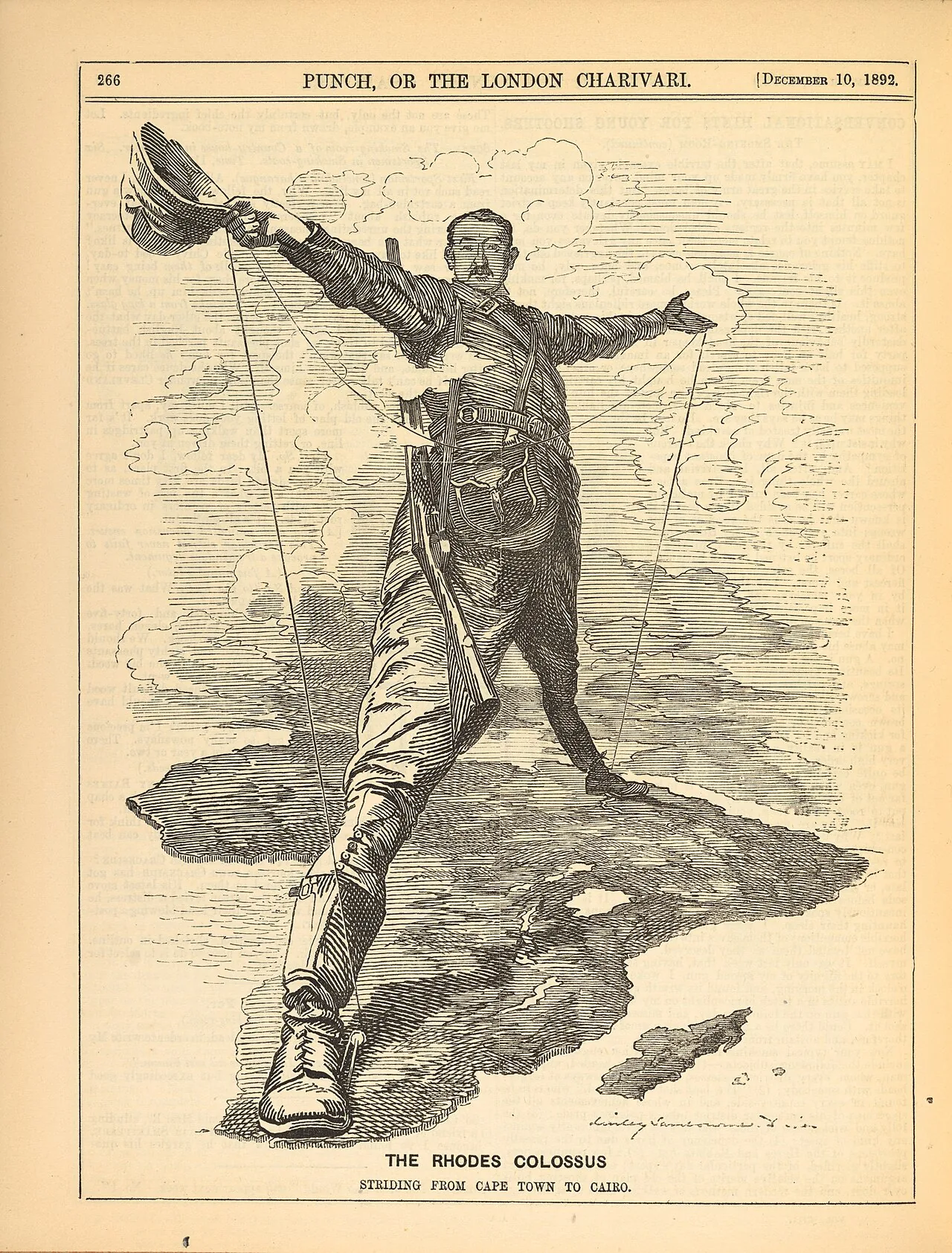
Wikimedia Commons; <em>Punch</em>, December 10, 1892.
Document 3 – Document 3 – Jules Ferry on empire
Gentlemen, we must speak more loudly and more honestly! We must say openly that indeed the higher races have a right over the lower races […] I repeat, that the superior races have a right because they have a duty. They have the duty to civilize the inferior races […] In the history of earlier centuries these duties, gentlemen, have often been misunderstood; and certainly when the Spanish soldiers and explorers introduced slavery into Central America, they did not fulfill their duty as men of a higher race
Source: Jules Ferry, speech to the French Chamber of Deputies, July 28, 1885, in the debate on colonial credits; Fordham University Internet Modern History Sourcebook (translation).
Jules Ferry, speech to the French Chamber of Deputies, 1885; Fordham University Internet Modern History Sourcebook.
Document 4 – Document 4 – Key dates
- 1839-1842 First Opium War
- 1857 Sepoy Rebellion
- 1868 Meiji Restoration
- 1884-1885 Berlin Conference
- 1896 Battle of Adwa
- 1899-1901 Boxer Uprising
Dates as given in standard reference works.
Questions
- Part 1 – Knowledge. Define industrialization, socialism, and imperialism. (12 pts)
- Part 1. Name four causes that explain why industrialization began in Britain. (10 pts)
- Part 1. Document 1: name two colonial powers and two territories each held; name the two independent states. (10 pts)
- Part 2 – Documents. Document 2: present the cartoon, describe it, and explain what it shows about British ambitions in Africa. (14 pts)
- Part 2. Document 3: present the text, state Ferry’s claim, and explain the reasons he gives. (14 pts)
- Part 2. Document 4: calculate the years between the Meiji Restoration and the Battle of Adwa, and between the start of the First Opium War and the Berlin Conference. (8 pts)
- Part 2. Using Documents 1 and 3 and the lesson, explain how the Berlin Conference changed Africa. (12 pts)
- Part 3 – Written argument (LEQ). Evaluate the extent to which industrialization caused the imperial expansion of the nineteenth century. (20 pts)


Quick review: flashcards
Tap a card to see the answer.