


This worksheet on AP World Unit 6: Consequences of Industrialization belongs to the AP World History: Modern course. Its questions use primary sources, maps and timelines, and they move from basic recall to short writing tasks. Before you start, review the lesson; afterward, try the true or false quiz.
Exercise 1 : Vocabulary of industry and empire
Match each term to its definition and write one sentence using it correctly: (a) laissez-faire, (b) proletariat, (c) treaty port, (d) indentured laborer, (e) Social Darwinism, (f) sphere of influence.
- A worker who signs a contract to work for a fixed time, often to pay for passage.
- A region in which one foreign power claims special economic rights.
- The idea that government should not interfere in the economy.
- In Marxist thought, the class of wage workers.
- A port opened to foreign trade by an unequal treaty.
- The use of evolutionary ideas to claim some peoples are fit to rule others.
Exercise 2 : Marx and Engels: the history of class struggle
Document 1 – A claim about history
The history of all hitherto existing societies is the history of class struggles. Freeman and slave, patrician and plebeian, lord and serf, guild-master and journeyman, in a word, oppressor and oppressed, stood in constant opposition to one another, carried on an uninterrupted, now hidden, now open fight, a fight that each time ended, either in a revolutionary re-constitution of society at large, or in the common ruin of the contending classes.
Source: Karl Marx and Friedrich Engels, Manifesto of the Communist Party, 1848, part 1, English translation of 1888; Project Gutenberg, ebook 61.
*Oppressor and oppressed: those who rule and those who are ruled.
- Present the document (authors, date, work).
- Identify the main claim in the first sentence.
- List four pairs of opposed groups the authors name, and say what period each pair comes from.
- Explain what the authors say were the two possible outcomes of every class struggle.
- Explain how the authors’ claim reflects the industrial setting of 1848, and name one limit of using this text alone as evidence of working-class life.
Exercise 3 : The Charter Oath
Document 2 – Japan’s new government promises reform
By this oath we set up as our aim the establishment of the national weal on a broad basis and the framing of a constitution and laws. 1. Deliberative assemblies shall be widely established and all matters decided by public discussion. 2. All classes, high and low, shall unite in vigorously carrying out the administration of affairs of state. 3. The common people, no less than the civil and military officials, shall each be allowed to pursue his own calling so that there may be no discontent. 4. Evil customs of the past shall be broken off and everything based upon the just laws of Nature. 5. Knowledge shall be sought throughout the world so as to strengthen the foundations of imperial rule.
Source: the Charter Oath of the Meiji emperor, April 6, 1868, in Tsunoda, de Bary, and Keene, eds., Sources of Japanese Tradition, vol. 2.
*Weal: well-being. *Deliberative assemblies: bodies that debate and advise.
- Present the document (author, date, situation).
- Identify two promises that suggest Japan would change its political life.
- Identify the promise about learning from other countries and explain why it mattered.
- Explain how events in the years just before 1868 (such as Perry’s arrival) help explain the oath.
- Explain one way this document shows continuity with the past, not only change.
Exercise 4 : Commissioner Lin writes to Queen Victoria
Document 3 – A Chinese official, 1839
But, during the commercial intercourse which has existed so long, among the numerous foreign merchants resorting hither, are wheat and tares, good and bad; and of these latter are some, who, by means of introducing opium by stealth, have seduced our Chinese people, and caused every province of the land to overflow with that poison. […] Every native of the Inner Land who sells opium, as also all who smoke it, are alike adjudged to death.
Source: Lin Zexu, letter to Queen Victoria, 1839; Fordham University Internet Modern History Sourcebook.
*Tares: weeds that grow among wheat. *Inner Land: China. *Annihilation: complete destruction.
- Present the document (author, date, recipient, situation).
- Describe how the author divides foreign merchants and what he blames some of them for.
- State what punishment Chinese law gave to Chinese sellers and users of opium.
- Explain the purpose of the letter: what does Lin hope the queen will do?
- Evaluate one limit of the source: why historians doubt the letter reached Queen Victoria, and how it was in fact used.
Exercise 5 : Jules Ferry defends colonial expansion
Document 4 – A French politician argues for empire
Gentlemen, we must speak more loudly and more honestly! We must say openly that indeed the higher races have a right over the lower races […] I repeat, that the superior races have a right because they have a duty. They have the duty to civilize the inferior races […] In the history of earlier centuries these duties, gentlemen, have often been misunderstood; and certainly when the Spanish soldiers and explorers introduced slavery into Central America, they did not fulfill their duty as men of a higher race
Source: Jules Ferry, speech to the French Chamber of Deputies, July 28, 1885, in the debate on colonial credits; Fordham University Internet Modern History Sourcebook (translation).
- Present the document (author, date, audience).
- Identify the claim Ferry says must be made “openly.”
- Explain the reason he gives for why higher races have rights.
- Identify how this argument draws on ideas such as Social Darwinism or the “civilizing mission.”
- Describe how an African or Asian person living under colonial rule might have answered him.
Exercise 6 : The White Man’s Burden
Document 5 – A poet addresses the United States
Take up the White Man’s burden–
Send forth the best ye breed–
Go bind your sons to exile
To serve your captives’ need;
To wait in heavy harness,
On fluttered folk and wild–
Your new-caught, sullen peoples,
Half-devil and half-child.
Take up the White Man’s burden–
In patience to abide,
To veil the threat of terror
And check the show of pride;
By open speech and simple,
An hundred times made plain
To seek another’s profit,
And work another’s gain.
Source: Rudyard Kipling, “The White Man’s Burden,” 1899, first two stanzas; Fordham University Internet Modern History Sourcebook.
- Present the document (author, date, form).
- Identify who the poem tells to “take up” the burden.
- Identify two words the poet uses to describe the people to be ruled and explain what they show about his view.
- Explain what the poem says the rulers will gain and lose.
- Explain how the poem relates to the U.S. takeover of the Philippines in 1898-1899.
Exercise 7 : Adam Smith and the pin workshop
Document 6 – Counting pins
I have seen a small manufactory of this kind, where ten men only were employed, and where some of them consequently performed two or three distinct operations. But though they were very poor, and therefore but indifferently accommodated with the necessary machinery, they could, when they exerted themselves, make among them about twelve pounds of pins in a day. There are in a pound upwards of four thousand pins of a middling size. Those ten persons, therefore, could make among them upwards of forty-eight thousand pins in a day.
Source: Adam Smith, An Inquiry into the Nature and Causes of the Wealth of Nations, 1776, book 1, chapter 1; Project Gutenberg, ebook 3300.
- Present the document (author, date, work).
- Use the passage to find how many pins each of the ten workers helped make in a day (divide 48,000 by 10).
- Explain how Smith’s example supports the idea of the division of labor.
- Explain why a factory owner might have wanted to adopt this system.
- Name one way the system might have been harmful for workers.
Exercise 8 : Two justifications of empire
Document 7 – Ferry (1885)
Gentlemen, we must speak more loudly and more honestly! We must say openly that indeed the higher races have a right over the lower races […] I repeat, that the superior races have a right because they have a duty. They have the duty to civilize the inferior races […] In the history of earlier centuries these duties, gentlemen, have often been misunderstood; and certainly when the Spanish soldiers and explorers introduced slavery into Central America, they did not fulfill their duty as men of a higher race
Source: Jules Ferry, speech to the French Chamber of Deputies, July 28, 1885, in the debate on colonial credits; Fordham University Internet Modern History Sourcebook (translation).
Document 8 – Kipling (1899)
Take up the White Man’s burden–
Send forth the best ye breed–
Go bind your sons to exile
To serve your captives’ need;
To wait in heavy harness,
On fluttered folk and wild–
Your new-caught, sullen peoples,
Half-devil and half-child.
Take up the White Man’s burden–
In patience to abide,
To veil the threat of terror
And check the show of pride;
By open speech and simple,
An hundred times made plain
To seek another’s profit,
And work another’s gain.
Source: Rudyard Kipling, “The White Man’s Burden,” 1899, first two stanzas; Fordham University Internet Modern History Sourcebook.
- Present each document (author, nationality, form, date).
- Identify one idea the two texts share about how colonizers see colonized people.
- Identify one difference in tone or form.
- Explain how each text would help a historian study the ideology of imperialism, and name one limit common to both.
Exercise 9 : Two views of foreign trade
Document 9 – Lin Zexu (1839)
But, during the commercial intercourse which has existed so long, among the numerous foreign merchants resorting hither, are wheat and tares, good and bad; and of these latter are some, who, by means of introducing opium by stealth, have seduced our Chinese people, and caused every province of the land to overflow with that poison. […] Every native of the Inner Land who sells opium, as also all who smoke it, are alike adjudged to death.
Source: Lin Zexu, letter to Queen Victoria, 1839; Fordham University Internet Modern History Sourcebook.
*Tares: weeds that grow among wheat. *Inner Land: China. *Annihilation: complete destruction.
Document 10 – Ferry (1885)
Gentlemen, we must speak more loudly and more honestly! We must say openly that indeed the higher races have a right over the lower races […] I repeat, that the superior races have a right because they have a duty. They have the duty to civilize the inferior races […] In the history of earlier centuries these duties, gentlemen, have often been misunderstood; and certainly when the Spanish soldiers and explorers introduced slavery into Central America, they did not fulfill their duty as men of a higher race
Source: Jules Ferry, speech to the French Chamber of Deputies, July 28, 1885, in the debate on colonial credits; Fordham University Internet Modern History Sourcebook (translation).
- Identify the purpose of each text.
- Both authors use moral language. Give one example from each.
- Compare how each author describes the relationship between his country and foreigners.
- Explain what the contrast shows about how power changed between 1839 and 1885.
Exercise 10 : The Crystal Palace
Document 11 – A showcase of industry
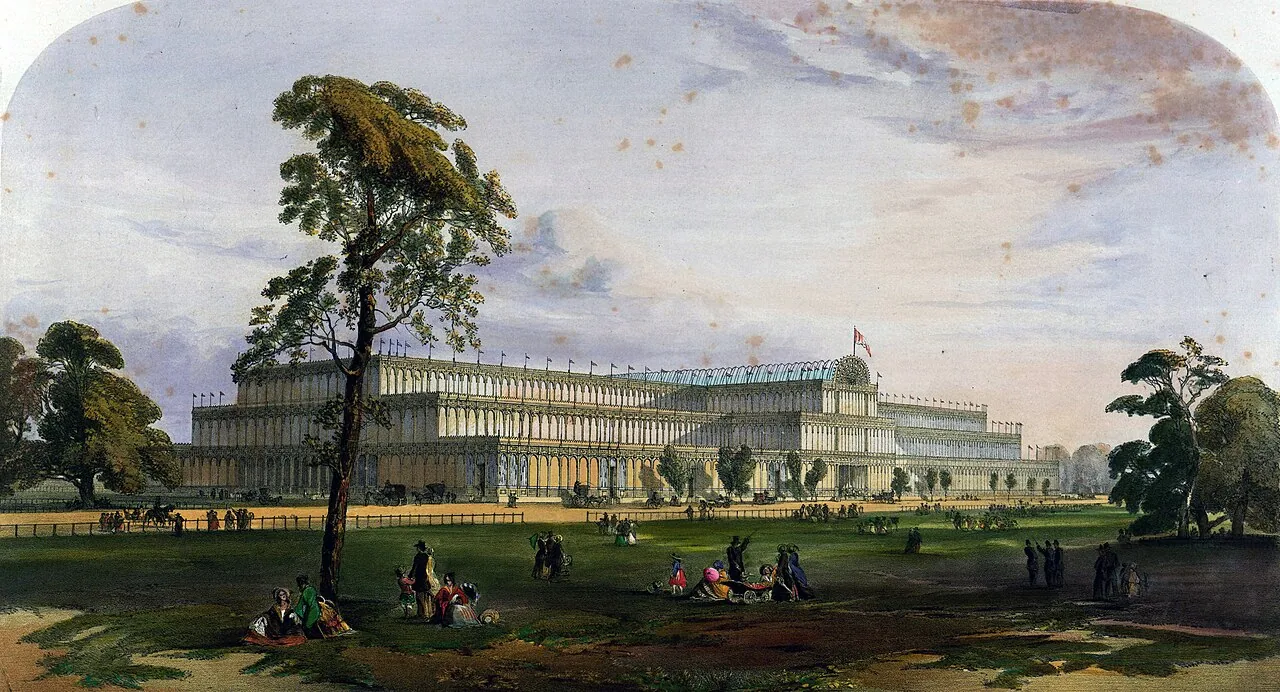
- Present the image (nature, artist, date, place).
- Describe the building and the people shown near it.
- Explain what the Great Exhibition was meant to show.
- Explain one limit of a lithograph published in 1854 as evidence of what the exhibition was like.
Exercise 11 : The Nemesis in the First Opium War
Document 12 – Gunboats at Anson’s Bay
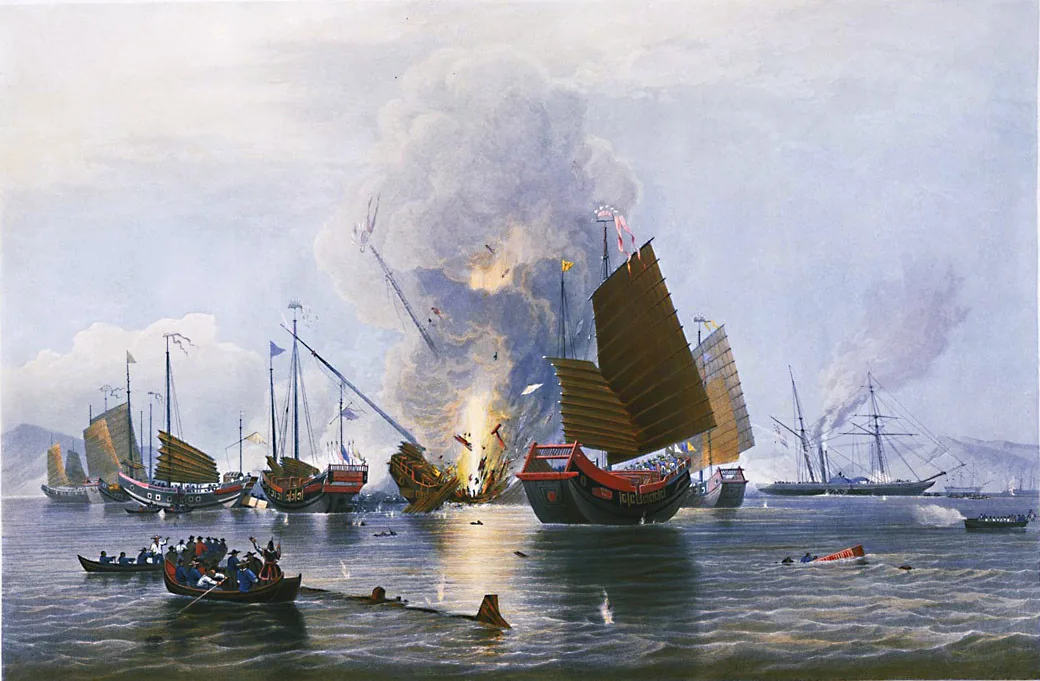
- Present the image (nature, artist, date, event).
- Describe the two sides of the picture: what ships are on the left and right?
- Identify the technological advantage the picture shows.
- Explain how the image might look different if it had been made by a Chinese artist.
Exercise 12 : Over London by rail
Document 13 – Railway above the slums
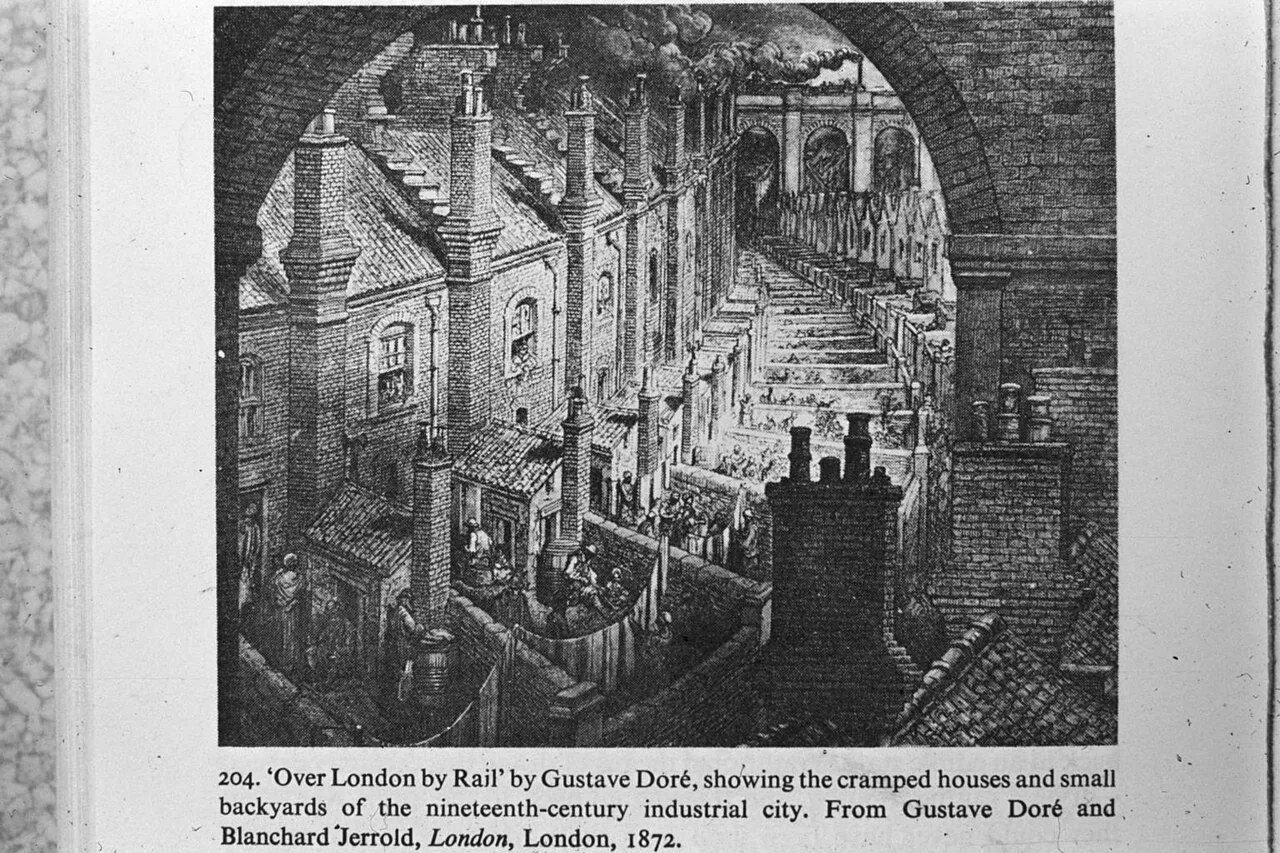
- Present the image (nature, artist, date).
- Describe what lies beneath the railway.
- Explain what the picture suggests about the effects of industrial growth on cities.
- Name a question you would ask to judge whether the picture is reliable.
Exercise 13 : A portrait of an engineer
Document 14 – Brunel before the chains
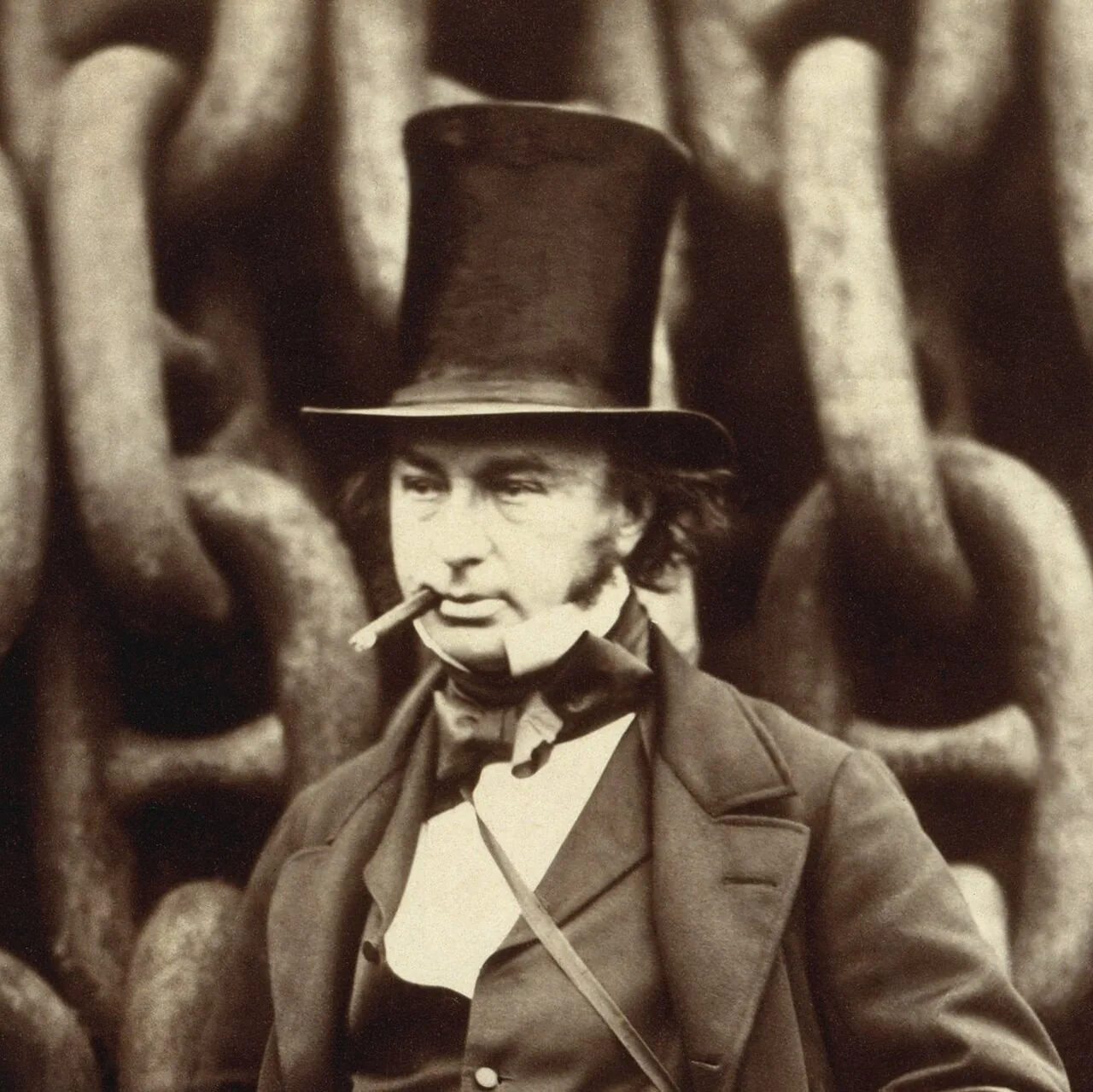
- Present the image (nature, photographer, date).
- Describe the pose and setting.
- Explain why the chains are an important part of the image.
- Explain what the photograph suggests about how Victorians saw engineers.
Exercise 14 : Cartoon and speech: how empire was pictured
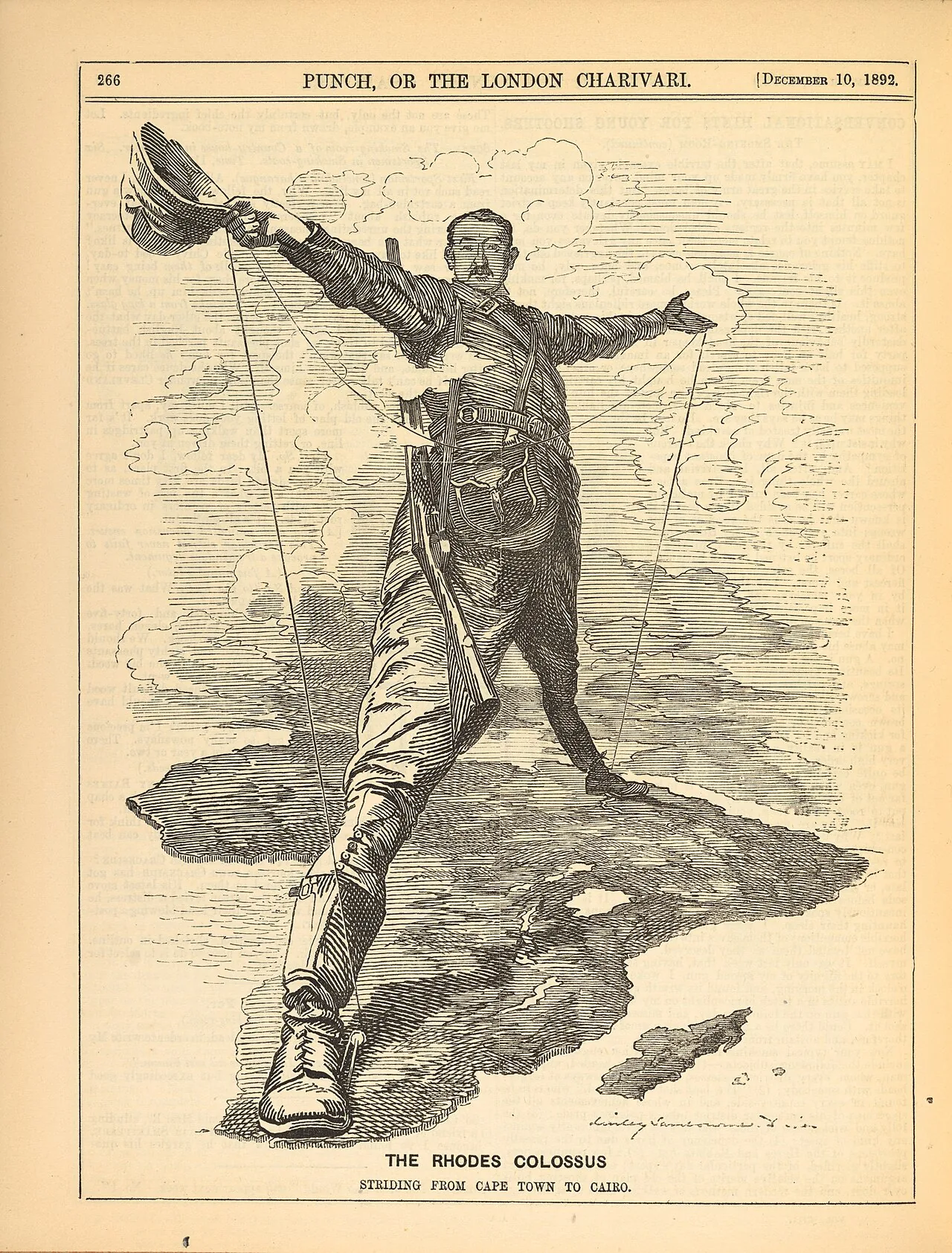
Document 15 – A cartoon
Document 16 – A speech
Gentlemen, we must speak more loudly and more honestly! We must say openly that indeed the higher races have a right over the lower races […] I repeat, that the superior races have a right because they have a duty. They have the duty to civilize the inferior races […] In the history of earlier centuries these duties, gentlemen, have often been misunderstood; and certainly when the Spanish soldiers and explorers introduced slavery into Central America, they did not fulfill their duty as men of a higher race
Source: Jules Ferry, speech to the French Chamber of Deputies, July 28, 1885, in the debate on colonial credits; Fordham University Internet Modern History Sourcebook (translation).
- Present each document.
- Explain what the cartoon says about the aims of Rhodes.
- Explain one idea from the speech that supports those aims.
- Name one economic cause of imperialism that neither document states directly, and explain it.
Exercise 15 : Inventions of the industrial age
Use the table to answer the questions.
| Invention | Person | Date | Effect |
|---|---|---|---|
| Spinning jenny | James Hargreaves | c. 1764 | Spun several threads at once |
| Steam engine (separate condenser) | James Watt | patented 1769 | Power for mills, mines, and later trains |
| Power loom | Edmund Cartwright | patented 1785 | Mechanized weaving |
| Telegraph (first long-distance message) | Samuel Morse | 1844 | Instant messages over wire |
| Bessemer process | Henry Bessemer | 1856 | Cheap steel |
Dates as given in standard reference works.
- Calculate the number of years between the spinning jenny and the Bessemer process.
- Identify which invention in the table most directly freed factories from river sites.
- Explain how two inventions in the table are linked.
- Explain why the telegraph mattered for imperialism.
Exercise 16 : Locate industrial centers
Use Map 3 to answer. The numbers mark six cities.
- Name the cities numbered 1 to 6: Manchester, London, Essen, Glasgow, Paris, Liverpool.
- Which two cities were linked by the railway of 1830?
- Which city, outside Britain, became the center of German coal and steel?
- Explain why many industrial cities grew near coal and ports.
Exercise 17 : Locate the Scramble for Africa
Use Map 4. The numbers mark six places.
- Identify the places: 1 Cairo, 2 Cape Town, 3 Johannesburg, 4 Addis Ababa, 5 Omdurman, 6 Accra.
- Which two places mark the ends of the “Cape to Cairo” line imagined by Cecil Rhodes?
- Name the two African states that stayed independent in 1914 and locate one of them from the map.
- Explain how rivers and railways helped Europeans move inland.
Exercise 18 : Order the events
Put the events in order, oldest first: (a) Berlin Conference opens, (b) Treaty of Nanjing, (c) Liverpool and Manchester Railway opens, (d) Meiji Restoration, (e) Battle of Adwa, (f) Sepoy Rebellion.
- Write the correct order with dates.
- Which events belong to the first half of the nineteenth century?
- Which events show resistance to imperial power?
Exercise 19 : Durations
Use the dates in the lesson to calculate: (a) from the First Opium War (began 1839) to the Treaty of Nanjing (1842); (b) from the end of the Taiping Rebellion (1864) to its start (1850); (c) from the abolition of slavery in the British Empire (1833) to the end of slavery in the United States (1865); (d) from the Meiji Restoration (1868) to the Japanese constitution (1889).
Exercise 20 : Guided research: the Congo Free State
Mission: find out how Leopold II ruled the Congo Free State and why it ended.
- Type in a search engine: Congo Free State Leopold II history. Prefer encyclopedias, museum sites, and university pages (Britannica, a national archive, a university history department).
- Fill in the card: dates of Leopold’s personal rule; main product the colony exported; one criticism made at the time; the person or group who made it; when and how the rule ended.
- Write two sentences telling how the Berlin Conference helped him.
Hint: the critics included the British consul Roger Casement and the journalist E. D. Morel.
Exercise 21 : SAQ: effects of industrialization
Short-answer question (AP style). Answer parts A, B, and C in complete sentences.
- Identify ONE way industrialization changed the lives of workers in the nineteenth century.
- Identify ONE way governments or reformers responded to those changes.
- Explain ONE way industrialization contributed to imperialism.
Exercise 22 : LEQ: evaluate the effects of industrialization
Prompt (AP style). Evaluate the extent to which industrialization transformed economic and social life in the period 1750 to 1900.
- Write a thesis that makes a claim and gives a line of reasoning.
- List three pieces of evidence from different regions.
- Write one body paragraph that addresses a continuity.
Exercise 23 : DBQ practice: reactions to imperial expansion
Prompt. Evaluate the extent to which the documents show different views of imperial power between 1839 and 1899.
Document A – Lin (1839)
But, during the commercial intercourse which has existed so long, among the numerous foreign merchants resorting hither, are wheat and tares, good and bad; and of these latter are some, who, by means of introducing opium by stealth, have seduced our Chinese people, and caused every province of the land to overflow with that poison. […] Every native of the Inner Land who sells opium, as also all who smoke it, are alike adjudged to death.
Source: Lin Zexu, letter to Queen Victoria, 1839; Fordham University Internet Modern History Sourcebook.
*Tares: weeds that grow among wheat. *Inner Land: China. *Annihilation: complete destruction.
Document B – Ferry (1885)
Gentlemen, we must speak more loudly and more honestly! We must say openly that indeed the higher races have a right over the lower races […] I repeat, that the superior races have a right because they have a duty. They have the duty to civilize the inferior races […] In the history of earlier centuries these duties, gentlemen, have often been misunderstood; and certainly when the Spanish soldiers and explorers introduced slavery into Central America, they did not fulfill their duty as men of a higher race
Source: Jules Ferry, speech to the French Chamber of Deputies, July 28, 1885, in the debate on colonial credits; Fordham University Internet Modern History Sourcebook (translation).
Document C – Kipling (1899)
Take up the White Man’s burden–
Send forth the best ye breed–
Go bind your sons to exile
To serve your captives’ need;
To wait in heavy harness,
On fluttered folk and wild–
Your new-caught, sullen peoples,
Half-devil and half-child.
Take up the White Man’s burden–
In patience to abide,
To veil the threat of terror
And check the show of pride;
By open speech and simple,
An hundred times made plain
To seek another’s profit,
And work another’s gain.
Source: Rudyard Kipling, “The White Man’s Burden,” 1899, first two stanzas; Fordham University Internet Modern History Sourcebook.
- Write a thesis.
- For each document, state the point of view (author, audience, purpose).
- Name one additional document you would want and explain why.
Exercise 24 : Stimulus-based multiple choice
Stimulus
The need of a constantly expanding market for its products chases the bourgeoisie over the whole surface of the globe. It must nestle everywhere, settle everywhere, establish connexions everywhere. […] The bourgeoisie has through its exploitation of the world-market given a cosmopolitan character to production and consumption in every country.
Source: Karl Marx and Friedrich Engels, Manifesto of the Communist Party, 1848, part 1, English translation of 1888; Project Gutenberg, ebook 61.
*Bourgeoisie: the owning class. *Connexions: connections.
- The passage best illustrates which development? (A) Growth of nationalism (B) Spread of global capitalism (C) Decline of industry (D) Expansion of serfdom
- Which group would most likely have agreed with the authors’ criticism of the bourgeoisie? (A) Factory owners (B) Socialist workers (C) Colonial governors (D) Landed nobles
- The idea in the passage is most similar to which later process? (A) Globalization (B) Feudalism (C) Isolationism (D) Subsistence farming


Quick review: flashcards
Tap a card to see the answer.