


This worksheet on AP World Unit 7: Global Conflict belongs to the AP World History: Modern course. Its questions use primary sources, maps and timelines, and they move from basic recall to short writing tasks. Before you start, review the lesson; afterward, try the true or false quiz.
Exercise 1 : Vocabulary of war and crisis
Match each term to its definition: (a) mandate, (b) appeasement, (c) total war, (d) armistice, (e) reparations, (f) Holocaust.
- An agreement to stop fighting.
- Payments demanded from a defeated state for damage caused.
- The Nazi murder of about six million Jews.
- A territory administered by a power for the League of Nations.
- Giving in to an aggressor’s demands to avoid war.
- A war in which a state mobilizes all its resources, including civilians.
Exercise 2 : The Zimmermann Telegram
Document 1 – A secret offer to Mexico
We intend to begin on the first of February unrestricted submarine warfare. We shall endeavor in spite of this to keep the United States of America neutral. In the event of this not succeeding, we make Mexico a proposal of alliance on the following basis: make war together, make peace together, generous financial support and an understanding on our part that Mexico is to reconquer the lost territory in Texas, New Mexico, and Arizona.
Source: the Zimmermann Telegram, sent by German Foreign Secretary Arthur Zimmermann to the German minister in Mexico, January 16, 1917, as decoded and published in 1917; Wikisource.
*Mediate: act as a go-between.
- Present the document (author, date, recipient).
- Identify what Germany intended to start on February 1.
- Describe what Germany offered Mexico.
- Explain why the telegram helped bring the United States into the war.
- Explain one reason a historian would still need other evidence to understand why the United States declared war.
Exercise 3 : The Fourteen Points
Document 2 – Wilson’s goals for peace
I. Open covenants of peace, openly arrived at, after which there shall be no private international understandings of any kind but diplomacy shall proceed always frankly and in the public view. […] V. A free, open-minded, and absolutely impartial adjustment of all colonial claims, based upon a strict observance of the principle that in determining all such questions of sovereignty the interests of the populations concerned must have equal weight with the equitable claims of the government whose title is to be determined.
Source: Woodrow Wilson, address to a joint session of Congress, January 8, 1918 (the Fourteen Points); Avalon Project, Yale Law School.
*Covenants: agreements. *Equitable: fair.
- Present the document (author, date, occasion).
- Identify what point I asks for.
- Explain what point V says about colonies and why colonized peoples might find it important.
- Explain how the Fourteen Points aimed to prevent another war.
- Name one limit of the principles when applied in the peace treaties.
Exercise 4 : Article 231
Document 3 – The war guilt clause
The Allied and Associated Governments affirm and Germany accepts the responsibility of Germany and her allies for causing all the loss and damage to which the Allied and Associated Governments and their nationals have been subjected as a consequence of the war imposed upon them by the aggression of Germany and her allies.
Source: Treaty of Versailles, June 28, 1919, part VIII (Reparation), article 231; Avalon Project, Yale Law School.
*Allied and Associated Governments: the victorious states. *Aggression: attack.
- Present the document (nature, date, article).
- Identify who is said to be responsible for the loss and damage.
- Explain how this article was used to justify reparations.
- Explain why many Germans resented it.
- Explain how this resentment could be used by a political movement.
Exercise 5 : The Atlantic Charter
Document 4 – Allied war aims, 1941
First, their countries seek no aggrandizement, territorial or other; Second, they desire to see no territorial changes that do not accord with the freely expressed wishes of the peoples concerned; Third, they respect the right of all peoples to choose the form of government under which they will live; and they wish to see sovereign rights and self government restored to those who have been forcibly deprived of them;
Source: the Atlantic Charter, joint declaration by President Franklin D. Roosevelt and Prime Minister Winston Churchill, August 14, 1941; Avalon Project, Yale Law School.
*Aggrandizement: increase of power or territory.
- Present the document (authors, date, setting).
- Identify two principles of the first three points.
- Explain what the third point says about peoples under foreign control.
- Explain why leaders of colonized peoples, such as in India, paid attention to the third point.
- Describe how Churchill and Roosevelt differed over whether the charter applied to the British Empire.
Exercise 6 : The announcement of Hiroshima
Document 5 – A president tells the world
Sixteen hours ago, an American airplane dropped one bomb on Hiroshima, an important Japanese Army base. That bomb had more power than 20,000 tons of T.N.T. It had more than two thousand times the blast power of the British “Grand Slam” which is the largest bomb ever yet used in the history of warfare. The Japanese began the war from the air at Pearl Harbor. They have been repaid many fold. And the end is not yet. With this bomb we have now added a new and revolutionary increase in destruction to supplement the growing power of our armed forces. In their present form these bombs are now in production and even more powerful forms are in development. It is an atomic bomb. […] The force from which the sun draws its power has been loosed against those who brought war to the Far East.
Source: President Harry S. Truman, statement announcing the use of the atomic bomb at Hiroshima, August 6, 1945; National Constitution Center, Historic Document Library.
*T.N.T.: a chemical explosive used as a measure of power.
- Present the document (author, date, purpose).
- Identify what weapon Truman describes and how he compares its power.
- Explain how he links the bomb to Pearl Harbor.
- Explain what the passage suggests about the aims of the speech.
- Name one question this source cannot answer, and a source to answer it.
Exercise 7 : A general association of nations
Document 6 – Point XIV
XIV. A general association of nations must be formed under specific covenants for the purpose of affording mutual guarantees of political independence and territorial integrity to great and small states alike. […] We cannot be separated in interest or divided in purpose. We stand together until the end.
Source: Woodrow Wilson, address to a joint session of Congress, January 8, 1918 (the Fourteen Points); Avalon Project, Yale Law School.
- Present the document (author, date).
- Identify the organization that Wilson proposes in point XIV.
- State two promises it should guarantee.
- Explain why the League of Nations failed to prevent aggression in the 1930s.
- Explain how the absence of the United States weakened it.
Exercise 8 : Two statements of war aims
Document 7 – Wilson, 1918
I. Open covenants of peace, openly arrived at, after which there shall be no private international understandings of any kind but diplomacy shall proceed always frankly and in the public view. […] V. A free, open-minded, and absolutely impartial adjustment of all colonial claims, based upon a strict observance of the principle that in determining all such questions of sovereignty the interests of the populations concerned must have equal weight with the equitable claims of the government whose title is to be determined.
Source: Woodrow Wilson, address to a joint session of Congress, January 8, 1918 (the Fourteen Points); Avalon Project, Yale Law School.
Document 8 – Atlantic Charter, 1941
First, their countries seek no aggrandizement, territorial or other; Second, they desire to see no territorial changes that do not accord with the freely expressed wishes of the peoples concerned; Third, they respect the right of all peoples to choose the form of government under which they will live; and they wish to see sovereign rights and self government restored to those who have been forcibly deprived of them;
Source: the Atlantic Charter, joint declaration by President Franklin D. Roosevelt and Prime Minister Winston Churchill, August 14, 1941; Avalon Project, Yale Law School.
- Present each document.
- Identify one idea that appears in both.
- Identify one difference in situation (what stage of the war and what role of the author).
- Explain what the continuity shows about American goals across twenty years.
Exercise 9 : Peace as promised and peace as written
Document 9 – Wilson, 1918
I. Open covenants of peace, openly arrived at, after which there shall be no private international understandings of any kind but diplomacy shall proceed always frankly and in the public view. […] V. A free, open-minded, and absolutely impartial adjustment of all colonial claims, based upon a strict observance of the principle that in determining all such questions of sovereignty the interests of the populations concerned must have equal weight with the equitable claims of the government whose title is to be determined.
Source: Woodrow Wilson, address to a joint session of Congress, January 8, 1918 (the Fourteen Points); Avalon Project, Yale Law School.
Document 10 – Treaty of Versailles, 1919
The Allied and Associated Governments affirm and Germany accepts the responsibility of Germany and her allies for causing all the loss and damage to which the Allied and Associated Governments and their nationals have been subjected as a consequence of the war imposed upon them by the aggression of Germany and her allies.
Source: Treaty of Versailles, June 28, 1919, part VIII (Reparation), article 231; Avalon Project, Yale Law School.
- Present each document.
- Compare the tone of the two texts.
- Explain how the treaty differed from Wilson’s hopes.
- Evaluate which text a German citizen in 1920 would have found more fair.
Exercise 10 : Signing the peace at Versailles
Document 11 – The Hall of Mirrors
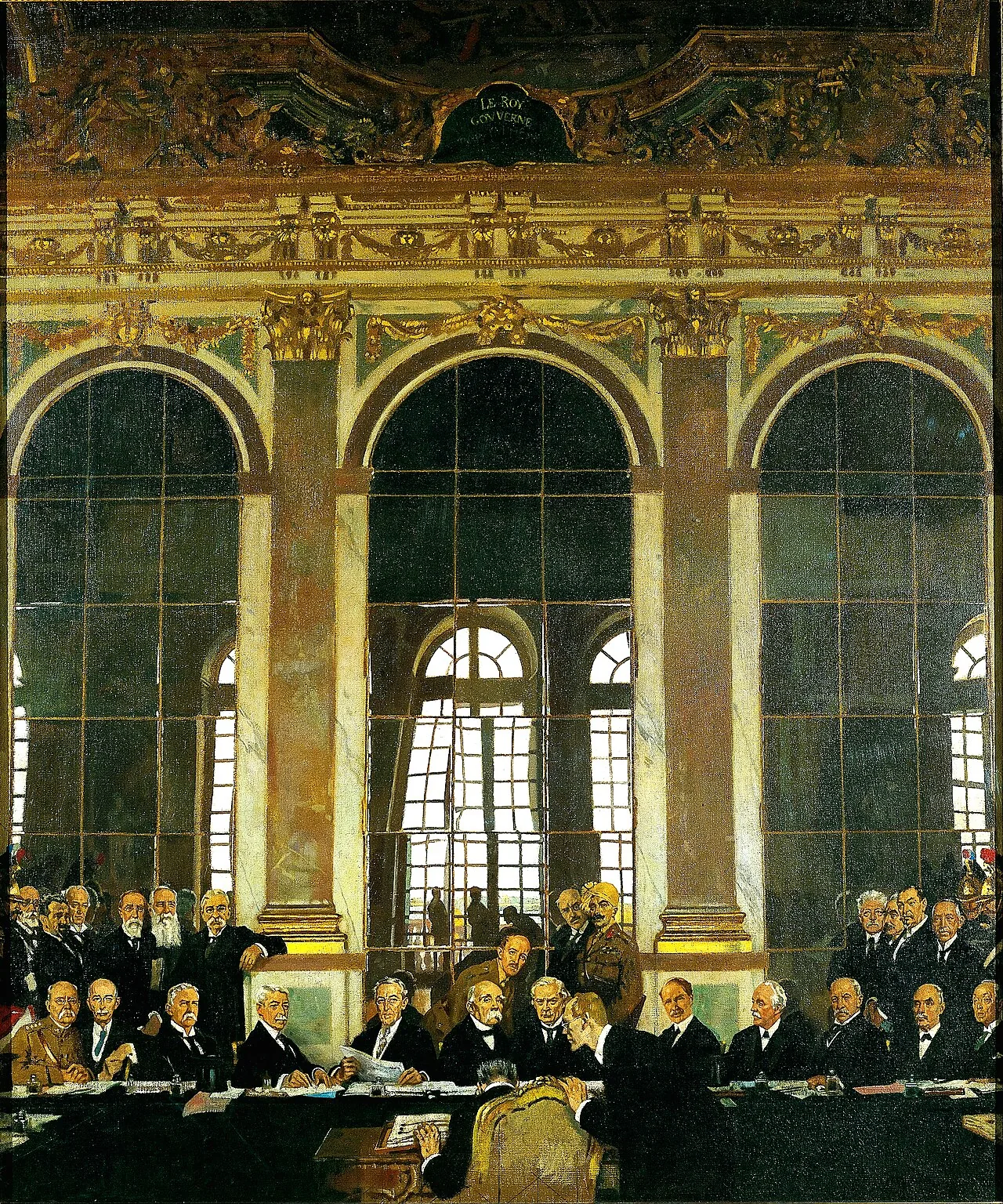
- Present the image (nature, artist, date).
- Describe the setting and the people.
- Explain why the painter chose the Hall of Mirrors, where the German Empire had been proclaimed in 1871.
- Explain one limit of the painting as evidence of how Germans felt about the treaty.
Exercise 11 : Soldiers in a trench
Document 12 – The Western Front
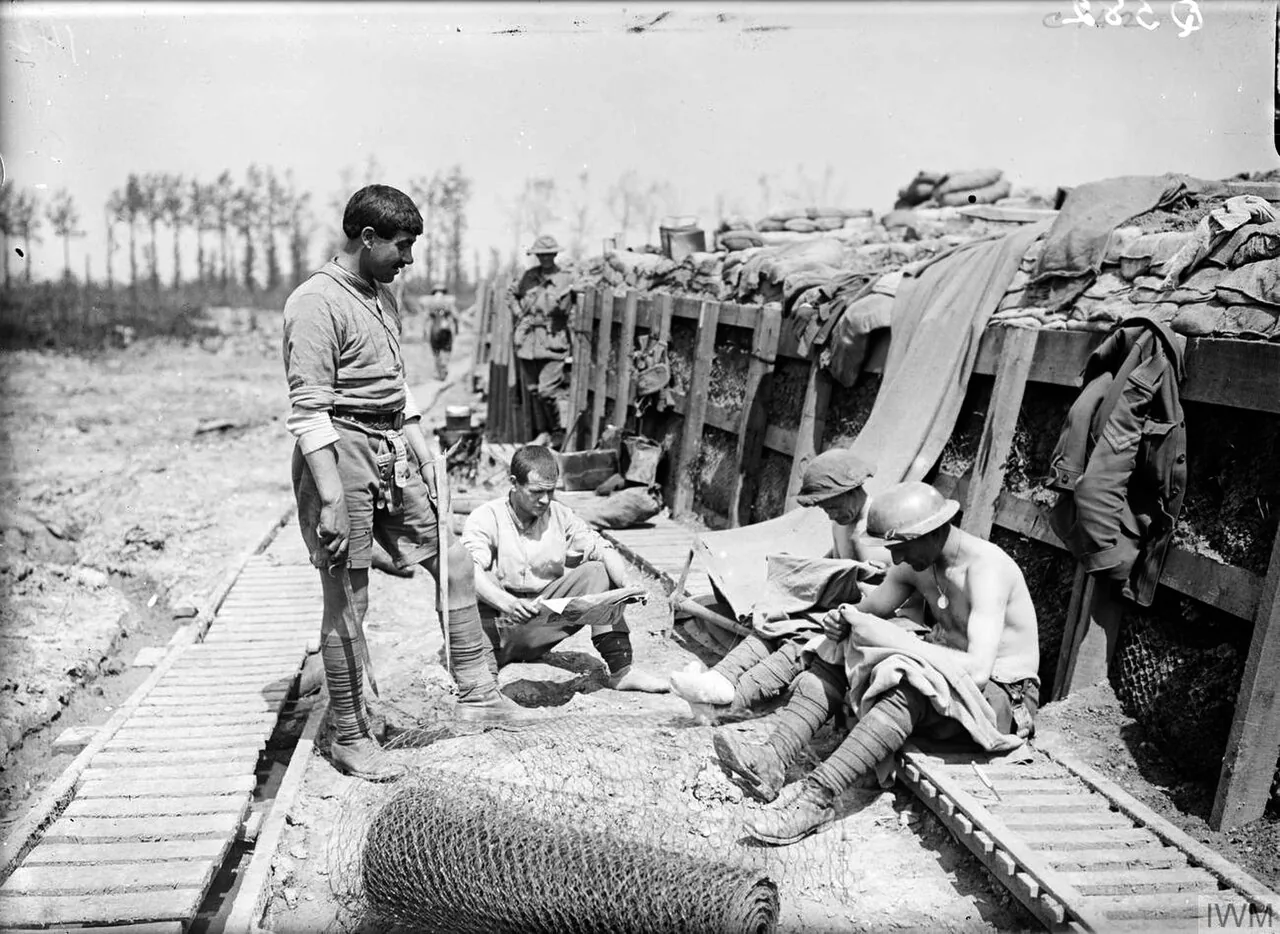
- Present the image (nature, place, date).
- Describe what the soldiers are doing and what surrounds them.
- Explain what the photograph shows about trench warfare.
- Explain a limit of the photograph as evidence.
Exercise 12 : Migrant Mother
Document 13 – A face of the Depression
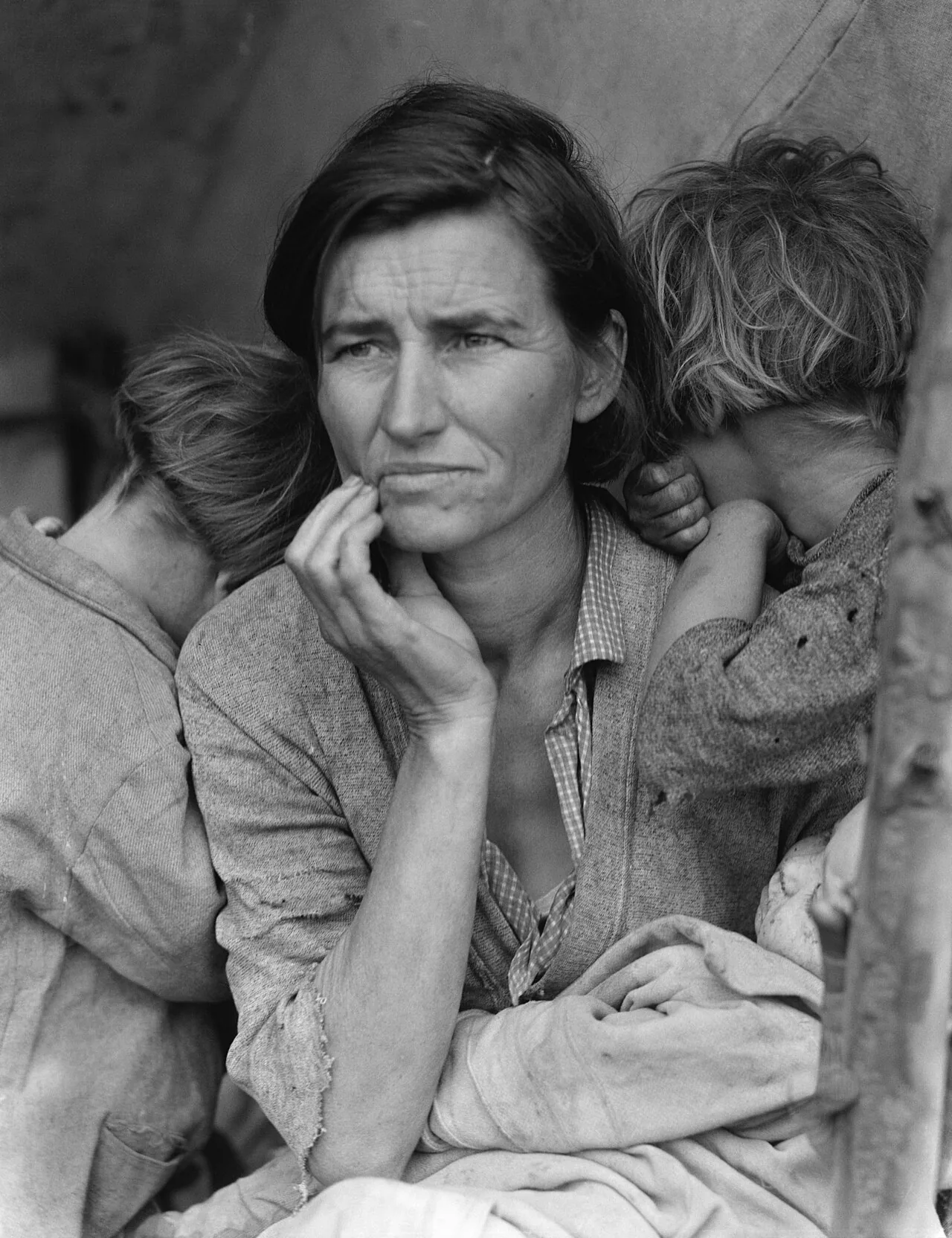
- Present the image (nature, photographer, date, place).
- Describe the mother and children.
- Explain what the image shows about the effects of the Great Depression.
- Explain why the photograph was effective as a government record.
Exercise 13 : The Big Three at Yalta
Document 14 – The leaders in 1945
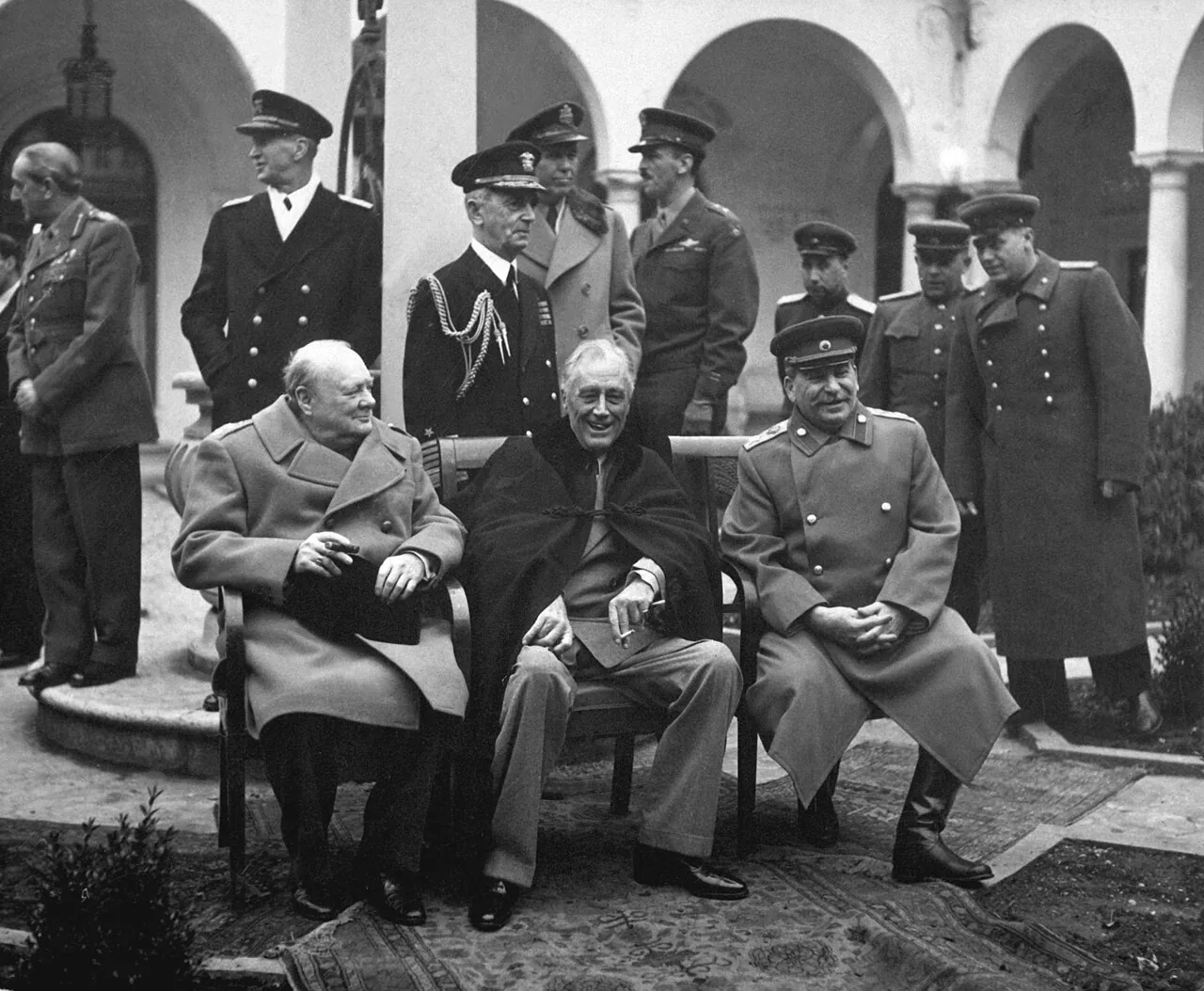
- Present the image (nature, place, date).
- Identify the three seated leaders from left to right: Churchill, Roosevelt, and Stalin.
- Explain what decisions about postwar Europe were discussed at Yalta.
- Explain how the photo reflects the image the Allies wanted to present.
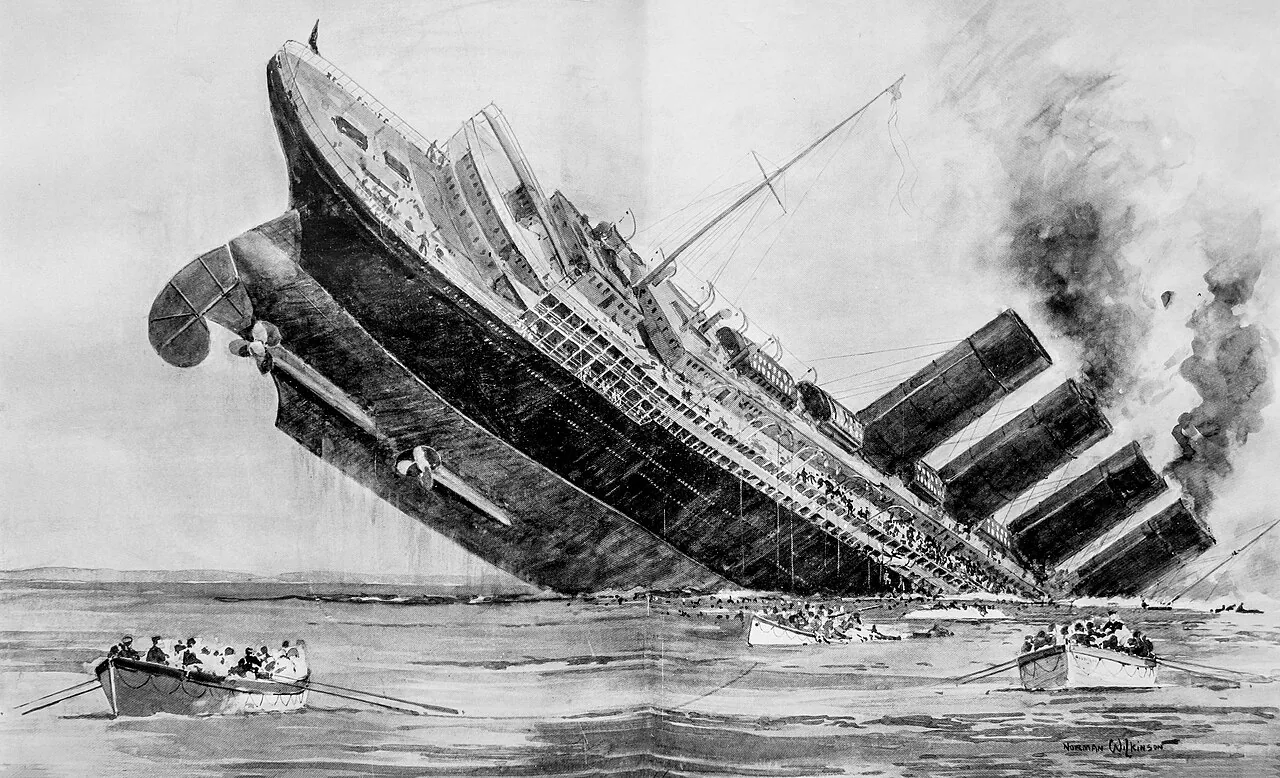
Exercise 14 : Image and text: the Lusitania and the telegram
Document 15 – The sinking of the Lusitania
Document 16 – The Zimmermann Telegram
We intend to begin on the first of February unrestricted submarine warfare. We shall endeavor in spite of this to keep the United States of America neutral. In the event of this not succeeding, we make Mexico a proposal of alliance on the following basis: make war together, make peace together, generous financial support and an understanding on our part that Mexico is to reconquer the lost territory in Texas, New Mexico, and Arizona.
Source: the Zimmermann Telegram, sent by German Foreign Secretary Arthur Zimmermann to the German minister in Mexico, January 16, 1917, as decoded and published in 1917; Wikisource.
- Present each document.
- Explain how each document helped turn American opinion against Germany.
- Name one other cause of American entry in 1917.
- Explain one reason that the sinking of the Lusitania did not bring the United States into war in 1915.
Exercise 15 : Dates of the Second World War
Use the table to answer.
| Date | Event |
|---|---|
| Sept. 1, 1939 | Germany invades Poland |
| June 22, 1941 | Germany invades the Soviet Union |
| Dec. 7, 1941 | Japan attacks Pearl Harbor |
| Feb. 2, 1943 | German surrender at Stalingrad |
| June 6, 1944 | D-Day landings in Normandy |
| May 8, 1945 | Germany surrenders |
| Aug. 6, 1945 | Atomic bomb on Hiroshima |
| Sept. 2, 1945 | Japan signs the surrender |
Dates as given in standard reference works.
- Calculate the number of years between the invasion of Poland and the final surrender of Japan.
- Which events show the war becoming global in 1941?
- Which event marked the opening of a western front?
Exercise 16 : Locate the flashpoints of 1914
Use Map 3. The numbers mark six places.
- Identify: 1 Sarajevo, 2 Verdun, 3 Petrograd, 4 Berlin, 5 Constantinople (Istanbul), 6 London.
- Which place saw the assassination that began the crisis?
- Which capital was the seat of the Ottoman Empire?
- Explain why Britain’s entry was linked to Belgium.
Exercise 17 : Locate the Second World War
Use Map 4. The numbers mark six places.
- Identify: 1 London, 2 Berlin, 3 Moscow, 4 Stalingrad, 5 Auschwitz, 6 the Normandy beaches.
- Which place was the target of Germany’s drive in 1941?
- Which place symbolizes the destruction of European Jews?
- Explain why the Soviet Union’s role at Stalingrad mattered.
Exercise 18 : Order the events
Put in order: (a) Treaty of Versailles, (b) Munich Agreement, (c) Zimmermann Telegram published, (d) Hitler becomes chancellor, (e) Pearl Harbor, (f) stock market crash.
- Write the order with years.
- Which events belong to the First World War period?
- Which events show the failure of appeasement?
Exercise 19 : Durations
Calculate: (a) from the assassination at Sarajevo (1914) to the armistice (1918); (b) from the armistice (1918) to the invasion of Poland (1939); (c) from Hitler’s appointment (1933) to Germany’s surrender (1945); (d) the length of the Soviet-German pact if it began in August 1939 and ended in June 1941.
Exercise 20 : Guided research: the Nuremberg trials
Mission: find out how the Allies tried Nazi leaders after the war.
- Search: Nuremberg trials International Military Tribunal. Use the Harry S. Truman Library, the U.S. Holocaust Memorial Museum, the National Archives, or a university site.
- Fill in the card: the dates; the four Allied countries that provided judges; three types of charges; one result.
- Explain in two sentences why the trials mattered.
Hint: look for “crimes against peace” and “crimes against humanity.”
Exercise 21 : SAQ: the Treaty of Versailles
Short-answer question.
- Identify ONE way the Treaty of Versailles aimed to prevent another war.
- Identify ONE way the treaty angered Germans.
- Explain ONE way the treaty led to dissatisfaction in colonized regions.
Exercise 22 : LEQ: causes of the Second World War
Prompt. Evaluate the extent to which the Treaty of Versailles caused the Second World War.
- Write a thesis.
- List three pieces of evidence.
- Write one paragraph that discusses a cause other than the treaty.
Exercise 23 : DBQ practice: ideas for peace
Prompt. Evaluate the extent to which the documents show continuity in Allied goals between 1918 and 1941.
Document A
I. Open covenants of peace, openly arrived at, after which there shall be no private international understandings of any kind but diplomacy shall proceed always frankly and in the public view. […] V. A free, open-minded, and absolutely impartial adjustment of all colonial claims, based upon a strict observance of the principle that in determining all such questions of sovereignty the interests of the populations concerned must have equal weight with the equitable claims of the government whose title is to be determined.
Source: Woodrow Wilson, address to a joint session of Congress, January 8, 1918 (the Fourteen Points); Avalon Project, Yale Law School.
Document B
The Allied and Associated Governments affirm and Germany accepts the responsibility of Germany and her allies for causing all the loss and damage to which the Allied and Associated Governments and their nationals have been subjected as a consequence of the war imposed upon them by the aggression of Germany and her allies.
Source: Treaty of Versailles, June 28, 1919, part VIII (Reparation), article 231; Avalon Project, Yale Law School.
Document C
First, their countries seek no aggrandizement, territorial or other; Second, they desire to see no territorial changes that do not accord with the freely expressed wishes of the peoples concerned; Third, they respect the right of all peoples to choose the form of government under which they will live; and they wish to see sovereign rights and self government restored to those who have been forcibly deprived of them;
Source: the Atlantic Charter, joint declaration by President Franklin D. Roosevelt and Prime Minister Winston Churchill, August 14, 1941; Avalon Project, Yale Law School.
- Write a thesis.
- State the point of view of each document.
- Name one additional document you would want.
Exercise 24 : Stimulus-based multiple choice
Stimulus
Sixth, after the final destruction of the Nazi tyranny, they hope to see established a peace which will afford to all nations the means of dwelling in safety within their own boundaries, and which will afford assurance that all the men in all lands may live out their lives in freedom from fear and want;
Source: the Atlantic Charter, joint declaration by President Franklin D. Roosevelt and Prime Minister Winston Churchill, August 14, 1941; Avalon Project, Yale Law School.
*Tyranny: harsh rule by a single person or group.
- This passage reflects which development? (A) Allied planning for a postwar peace (B) Growth of fascism (C) The end of the Cold War (D) Japanese expansion
- Which earlier document is it most similar to? (A) The Treaty of Versailles (B) The Fourteen Points (C) The Zimmermann Telegram (D) The Munich Agreement
- The phrase “freedom from fear and want” most directly echoes which president? (A) Woodrow Wilson (B) Franklin Roosevelt (C) Harry Truman (D) Herbert Hoover


Quick review: flashcards
Tap a card to see the answer.