


This AP World History: Modern lesson covers AP World Unit 7: Global Conflict, part of the unit “AP World units.” First, read the full lesson with its primary sources, maps and key terms. Then practice with the worksheet, check yourself with the quiz and get ready with the test.
On June 28, 1914, a nineteen-year-old Bosnian Serb named Gavrilo Princip fired two shots in the streets of Sarajevo. He killed Archduke Franz Ferdinand, the heir to the throne of Austria-Hungary, and his wife Sophie. Within six weeks, the great powers of Europe were at war. The conflict spread to Africa, Asia, and the Pacific, drew in the United States, toppled four empires, and left a continent in ruins. Barely twenty years after it ended, an even larger war began. Together the two wars, with the Russian Revolution, the Great Depression, and the rise of fascism between them, reshaped the world and led to a new international order in 1945.
Guiding question: Why did two world wars break out within thirty years, and how did total war change states, economies, and societies around the globe?
This unit follows the College Board course framework for Unit 7, Global Conflict, c. 1900 to the present. Its key concepts include the causes of world wars and their global scale, the new weapons and the idea of total war, the rise of authoritarian and fascist regimes, the Holocaust and other genocides, and the postwar settlement. Practice the skills of causation, comparison, and contextualization as you read.
1. The First World War, 1914-1918
Causes of the war
Historians discuss the origins of the First World War in terms of long-term and short-term causes. The long-term causes include nationalism, a competition among the great powers for colonies and markets, an arms race (especially between Britain and Germany in battleships), and a system of alliances. By 1907, Europe was divided into two blocs: the Triple Entente of Britain, France, and Russia, and the Triple Alliance of Germany, Austria-Hungary, and Italy.
In the Balkans, the weakening Ottoman Empire left a contest between Austria-Hungary and Serbia, which was backed by Russia. The assassination at Sarajevo was the spark, not the only cause. Austria-Hungary, with German backing, sent an ultimatum to Serbia and declared war on July 28. Russia mobilized to help Serbia, Germany declared war on Russia (August 1) and France (August 3). When German armies invaded neutral Belgium to reach France, Britain declared war on August 4.
Definition: Total war
a war in which states mobilize all their resources, including industry, labor, propaganda, and civilians, for victory, and in which the distinction between soldiers and civilians fades.
Stalemate and new weapons
Germany’s plan to knock out France quickly failed at the first Battle of the Marne in September 1914. The armies on the Western Front dug trenches from the English Channel to Switzerland. For more than three years offensives gained only a few miles at huge cost. In 1916, the Battle of Verdun lasted ten months and the Battle of the Somme (July to November) cost over a million casualties.
New weapons made defense stronger than attack: the machine gun, long-range artillery, barbed wire, poison gas (first used on a large scale in 1915), and later the tank and the airplane. At sea, Britain blockaded Germany, and Germany answered with submarines. The war also spread: Japan seized German holdings in China and the Pacific, the Ottoman Empire fought Britain in the Middle East. In addition, soldiers and laborers from India, Africa, Southeast Asia, China, and Canada served in Europe.
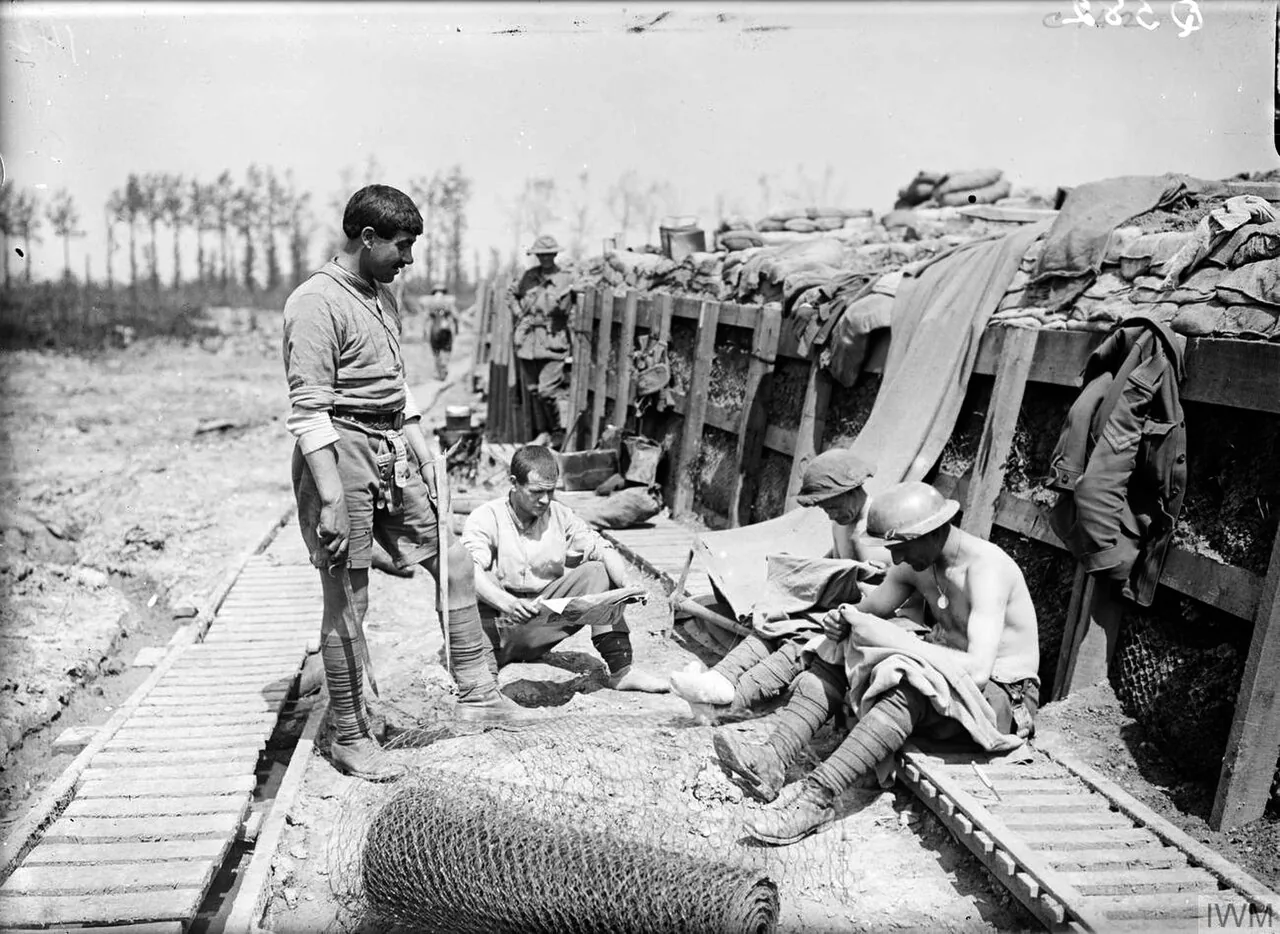
The photograph shows the daily conditions: mud, wooden walkways, barbed wire, and an uncertain rest. Governments met the demands of total war by controlling prices and factories, rationing food, drafting men, and using propaganda to keep morale high. Women took jobs in factories, offices, and transport. Some states also persecuted minorities. In 1915 the Ottoman government began a campaign of deportation and mass killing of Armenians, which most historians describe as a genocide. Estimates of the dead run from several hundred thousand to over a million.
America enters, Russia leaves
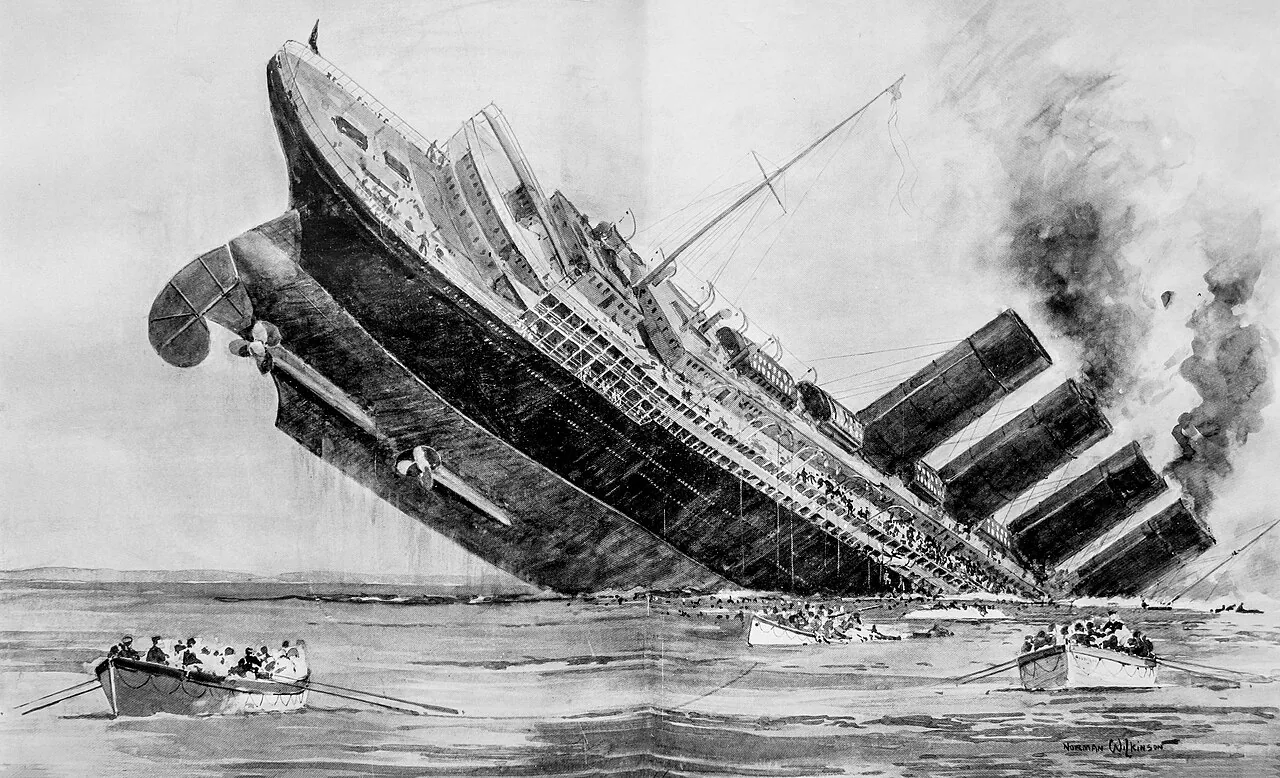
The United States stayed neutral at first. Two events pushed it toward the Allies: Germany’s sinking of the liner Lusitania in May 1915 and its renewed unrestricted submarine warfare in 1917. In January 1917 the German foreign secretary also sent a secret telegram to Mexico, offering an alliance if the United States entered the war. British intelligence decoded the message and passed it to Washington, and it was published on March 1. President Woodrow Wilson asked Congress for a declaration of war, which was approved on April 6, 1917.
Document 1 – The Zimmermann Telegram
We intend to begin on the first of February unrestricted submarine warfare. We shall endeavor in spite of this to keep the United States of America neutral. In the event of this not succeeding, we make Mexico a proposal of alliance on the following basis: make war together, make peace together, generous financial support and an understanding on our part that Mexico is to reconquer the lost territory in Texas, New Mexico, and Arizona.
Source: the Zimmermann Telegram, sent by German Foreign Secretary Arthur Zimmermann to the German minister in Mexico, January 16, 1917, as decoded and published in 1917; Wikisource.
*Unrestricted submarine warfare: attacks on ships without warning. *Reconquer: win back.
Meanwhile, Russia had collapsed. Military defeats and hunger at home led to strikes in Petrograd in March 1917; Tsar Nicholas II abdicated and a Provisional Government took over. In November, the Bolsheviks led by Vladimir Lenin seized power. They signed the harsh Treaty of Brest-Litovsk with Germany in March 1918 and withdrew from the war. Fresh American troops helped the Allies, and Germany, exhausted and facing revolution at home, signed an armistice on November 11, 1918. Roughly nine to ten million soldiers and millions of civilians had died.
2. The peace, the Depression, and the interwar crisis
The peace settlement
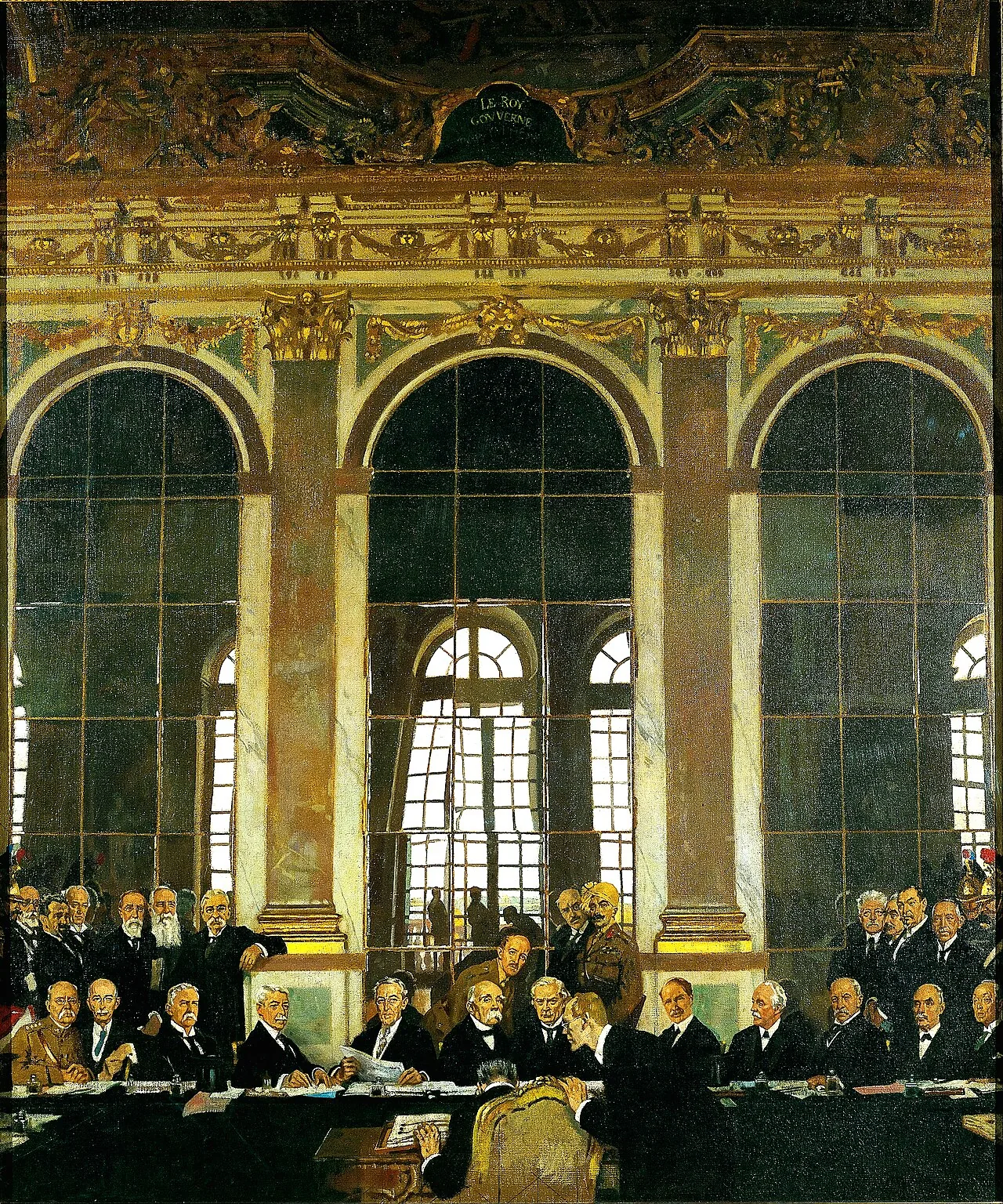
In 1919 the peace conference met in Paris. Woodrow Wilson, who had set out his goals in the Fourteen Points, called for open diplomacy, self-determination for peoples, and a League of Nations. France, whose territory had been devastated, wanted security from Germany, and Britain wanted to protect its empire and trade. The Treaty of Versailles (June 28, 1919) took territory from Germany, limited its army to 100,000 men. It also included article 231, which said that Germany and its allies were responsible for the loss and damage of the war.
This article became the basis for reparations. Germans resented the “war guilt” clause and the payments. Other treaties dissolved Austria-Hungary and the Ottoman Empire. New states appeared in eastern Europe, and Britain and France received League of Nations mandates over former Ottoman lands in the Middle East. The United States Senate refused to ratify the treaty, and the United States never joined the League.
Document 2 – Wilson’s program for peace
I. Open covenants of peace, openly arrived at, after which there shall be no private international understandings of any kind but diplomacy shall proceed always frankly and in the public view. […] V. A free, open-minded, and absolutely impartial adjustment of all colonial claims, based upon a strict observance of the principle that in determining all such questions of sovereignty the interests of the populations concerned must have equal weight with the equitable claims of the government whose title is to be determined.
Source: Woodrow Wilson, address to a joint session of Congress, January 8, 1918 (the Fourteen Points); Avalon Project, Yale Law School.
*Covenants: agreements. *Equitable: fair.
Definition: Mandate
a territory taken from the defeated powers after the First World War and given to a victor to administer on behalf of the League of Nations. Many people in the mandates, including Arabs and Africans, expected independence and were disappointed.
The war also changed the colonial world. Millions of colonial soldiers and workers had served. Leaders such as Mohandas Gandhi in India and nationalists in Egypt, China, and Vietnam asked why self-determination should apply only to Europe. In China, protests that began on May 4, 1919, against the transfer of German rights in Shandong to Japan fed a new nationalism. In the Middle East, the Turkish leader Mustafa Kemal (Ataturk) built a republic from the Ottoman remains in 1923.
The Great Depression
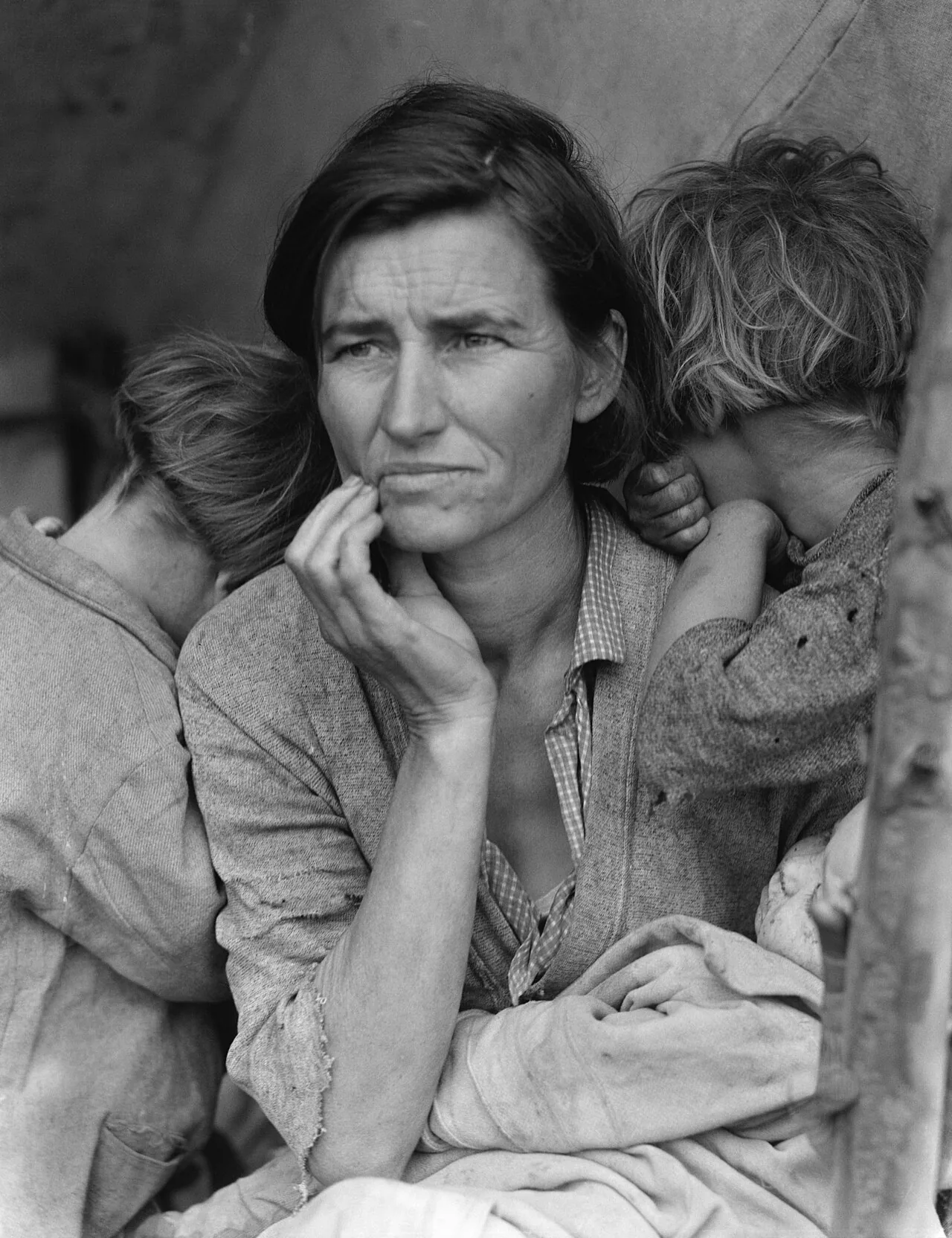
The 1920s brought prosperity to some, especially in the United States, but a weak international economy. The crash on the New York Stock Exchange in October 1929 set off the Great Depression. Banks failed, factories closed, and unemployment soared in industrial countries; producers of raw materials such as rubber, sugar, and coffee saw prices collapse. Governments responded in different ways.
In the United States, President Franklin Roosevelt’s New Deal (from 1933) created public works and social insurance. Britain and France cut spending and raised tariffs. The Soviet Union, with its planned economy, avoided the market crash and industrialized quickly under Joseph Stalin’s Five-Year Plans. The price was forced collectivization of farms, a famine that killed millions in 1932-1933, and a brutal police state.
3. Fascism, militarism, and the road to war
The economic crisis and resentment about the peace helped authoritarian movements. Fascism was a new political form that glorified the nation or race, rejected democracy and socialism, praised violence, and demanded total loyalty to a single leader. Benito Mussolini came to power in Italy in 1922. In Germany, Adolf Hitler and the Nazi Party, which blamed Jews, communists, and the Treaty of Versailles for the nation’s troubles, became the largest party in 1932. Hitler became chancellor on January 30, 1933. He quickly ended democracy. In 1935 the Nuremberg Laws stripped German Jews of citizenship and banned marriage between Jews and non-Jews. The Kristallnacht attacks of November 9-10, 1938, destroyed synagogues and Jewish shops across Germany and Austria.
Definition: Fascism
an extreme nationalist, authoritarian ideology that glorified the state and a single leader, suppressed opposition, and often used violence and racist ideas to unite a people against supposed enemies.
In Asia, militarists gained power in Japan, which needed raw materials and markets. Japan invaded Manchuria in 1931, and in 1937 began a full-scale war in China. During that war its army massacred civilians at Nanjing in December. Italy invaded Ethiopia in 1935. Germany rebuilt its army, reoccupied the Rhineland (1936), and annexed Austria (March 1938). In the Spanish Civil War (1936-1939), Germany and Italy helped General Francisco Franco, while the Soviet Union helped the Republic.
At Munich in September 1938, Britain and France agreed to Hitler’s demand for the Sudetenland, part of Czechoslovakia, in the hope of keeping the peace. This policy is called appeasement. In March 1939 Germany occupied the rest of Czechoslovakia. In August the Nazi-Soviet Pact allowed Hitler and Stalin to divide Poland between them.
4. The Second World War, 1939-1945
Axis victories and the widening war
Germany invaded Poland on September 1, 1939, and Britain and France declared war. In 1940, German armies overran Denmark, Norway, the Netherlands, Belgium, and France; Britain stood alone and survived the air Battle of Britain. On June 22, 1941, Germany attacked the Soviet Union in Operation Barbarossa. On December 7, 1941, Japan attacked the American naval base at Pearl Harbor, Hawaii, and struck British and Dutch colonies in Southeast Asia. Germany then declared war on the United States. The war was now global, with the Allies (Britain, the Soviet Union, the United States, China, and others) against the Axis (Germany, Italy, Japan). In August 1941 Roosevelt and Churchill had issued the Atlantic Charter, which stated their war aims.
Document 3 – The Atlantic Charter
First, their countries seek no aggrandizement, territorial or other; Second, they desire to see no territorial changes that do not accord with the freely expressed wishes of the peoples concerned; Third, they respect the right of all peoples to choose the form of government under which they will live; and they wish to see sovereign rights and self government restored to those who have been forcibly deprived of them;
Source: the Atlantic Charter, joint declaration by President Franklin D. Roosevelt and Prime Minister Winston Churchill, August 14, 1941; Avalon Project, Yale Law School.
*Aggrandizement: increase of power or territory. *Sovereign rights: the full right of self-rule.
Genocide and total war
The Nazi regime murdered about six million Jews in what is now called the Holocaust. After the invasion of the Soviet Union, special killing squads shot Jews in the occupied east. At a meeting at Wannsee in January 1942 officials discussed organizing the deportation of Europe’s Jews to killing centers, among them Auschwitz-Birkenau, Treblinka, and Sobibor. There the Nazis gassed their victims.
The Nazis also murdered Roma, disabled people, Polish and Soviet civilians, and prisoners of war, and persecuted political opponents, Jehovah’s Witnesses, and gay men. Japan’s forces killed many civilians in China and the Philippines, and used forced labor and prisoners across Asia. All sides bombed cities: German raids on Warsaw, Rotterdam, and London; Allied fire-bombing of Hamburg, Dresden, and Tokyo.
Governments mobilized entire economies. The United States became the “arsenal of democracy,” producing aircraft, ships, and tanks in huge numbers. Women filled war jobs in Britain, the United States, and the Soviet Union. Colonies supplied soldiers and materials: troops from India fought in North Africa, Italy, and Burma, and African and Asian colonies sent labor and goods.
Turning points and the end of the war
The war turned in 1942 and 1943. The Allies stopped Japan at Midway (June 1942), defeated Germany and Italy at El Alamein (late 1942). They also won the Battle of Stalingrad (ending February 2, 1943), where the Soviet army surrounded a German army. The Allied invasion of Normandy on June 6, 1944 (D-Day) opened a second front in the west while the Red Army advanced from the east.
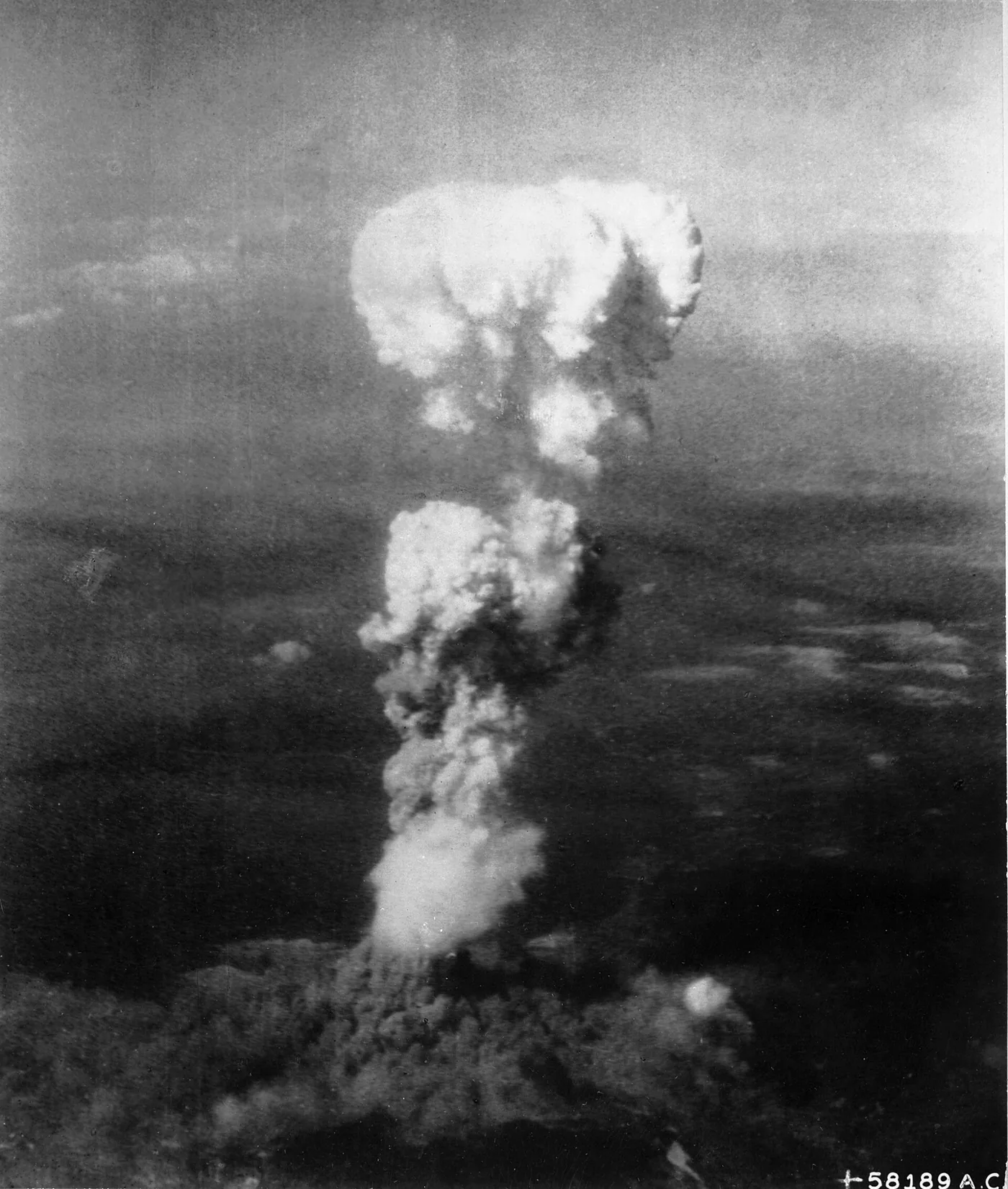
Germany surrendered on May 8, 1945. In the Pacific, American forces island-hopped toward Japan and in August 1945 dropped atomic bombs on Hiroshima (August 6) and Nagasaki (August 9). The Soviet Union declared war on Japan on August 8. Japan announced its surrender on August 15, and the formal surrender was signed on September 2.
Document 4 – The announcement of the atomic bomb
Sixteen hours ago, an American airplane dropped one bomb on Hiroshima, an important Japanese Army base. That bomb had more power than 20,000 tons of T.N.T. It had more than two thousand times the blast power of the British “Grand Slam” which is the largest bomb ever yet used in the history of warfare. The Japanese began the war from the air at Pearl Harbor. They have been repaid many fold. And the end is not yet. With this bomb we have now added a new and revolutionary increase in destruction to supplement the growing power of our armed forces. In their present form these bombs are now in production and even more powerful forms are in development. It is an atomic bomb. […] The force from which the sun draws its power has been loosed against those who brought war to the Far East.
Source: President Harry S. Truman, statement announcing the use of the atomic bomb at Hiroshima, August 6, 1945; National Constitution Center, Historic Document Library.
*T.N.T.: a standard chemical explosive, used here to measure power. *Grand Slam: the largest conventional bomb used in the war.
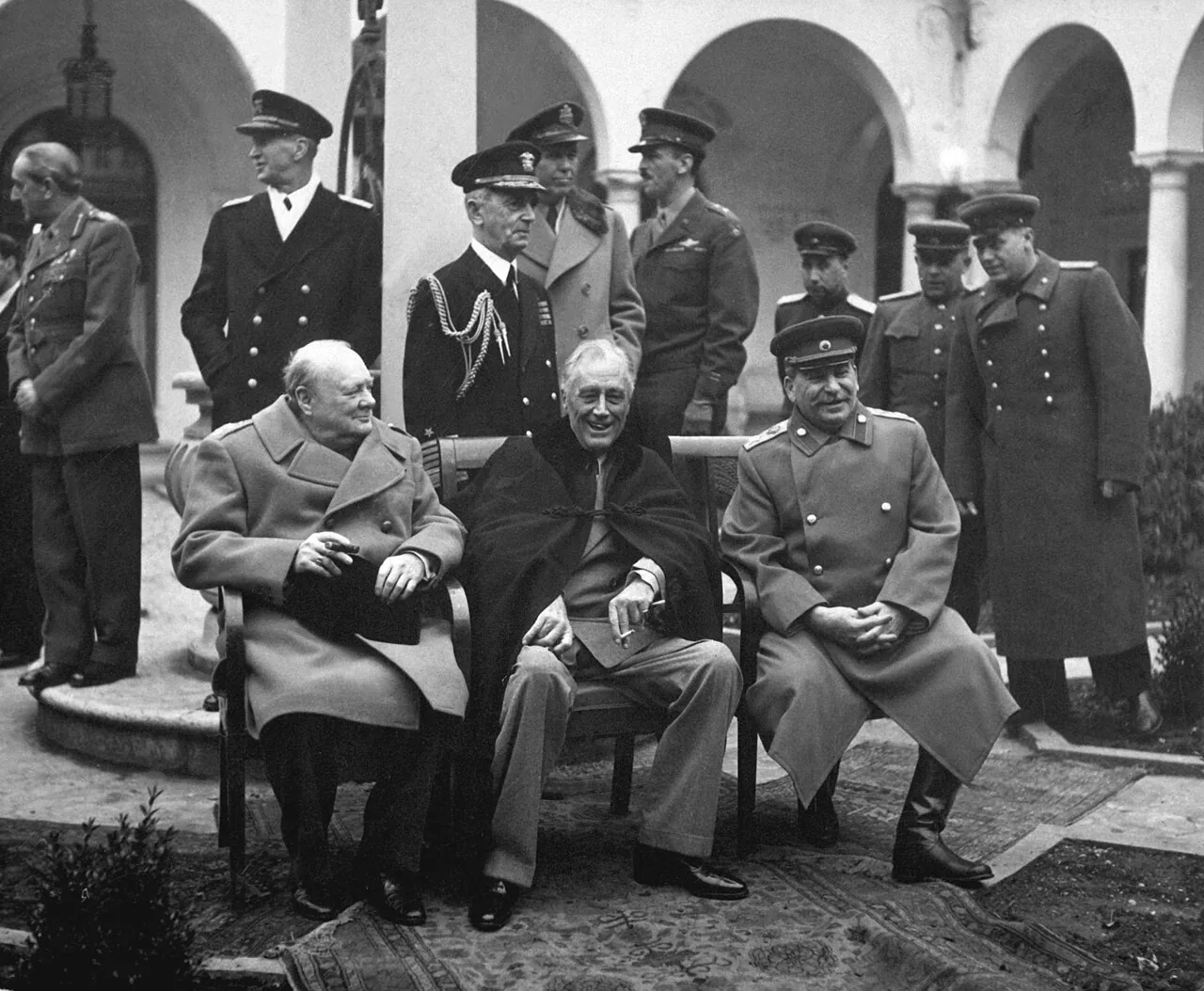
Historians still debate why the United States used the bomb, whether it was needed to end the war, and what role the Soviet entry played. The debate continues. What is clear is that the war ended with a new kind of weapon and an altered balance of power. Europe and Japan lay in ruins, and the United States and the Soviet Union emerged as the two superpowers. An estimated 70 to 85 million people had died, most of them civilians. At Yalta in February 1945, Roosevelt, Churchill, and Stalin planned the occupation of Germany. The United Nations was founded in June 1945. The Nuremberg trials (1945-1946) tried leading Nazis for war crimes and crimes against humanity.
- 1914 Assassination at Sarajevo; the First World War begins
- 1917 United States enters the war; Bolsheviks seize power in Russia
- 1918 Armistice on November 11
- 1919 Treaty of Versailles
- 1929 Stock market crash; the Great Depression begins
- 1933 Hitler becomes chancellor of Germany
- 1937 Japan begins full-scale war in China
- 1939 Germany invades Poland; the Second World War begins
- 1941 Germany invades the USSR; Pearl Harbor
- 1944 D-Day, June 6
- 1945 Germany surrenders (May 8); atomic bombs; Japan surrenders (September 2)
Key takeaways
- The First World War grew from nationalism, alliances, arms races, and imperial rivalry; trench warfare and new weapons made it long and costly, and total war reshaped societies.
- The Treaty of Versailles and the new mandates settled the war but left Germany resentful and colonial peoples disappointed.
- The Great Depression and resentment of the peace helped bring fascist and militarist governments to power in Italy, Germany, and Japan.
- The Second World War was fought across the globe, with industrial mobilization, aerial bombing, the Holocaust, and atomic weapons.
- The war ended with the United States and the Soviet Union as superpowers, the United Nations as a new international body, and trials for war crimes.

Quick review: flashcards
Tap a card to see the answer.