



This AP US History test covers APUSH Period 4: 1800-1848. Like a classroom assessment, it includes documents to analyze, knowledge questions and a short writing task. To prepare, review the lesson first, then practice with the worksheet.
Time : 55 min
Total 100 points. Part A: knowledge (questions 1 to 3, 25 points). Next comes Part B, on documents (questions 4 to 6, 30 points). Finally, Part C is the LEQ (question 7, 45 points).
Document 1 – Document 1 – Jackson vetoes the Bank (1832)
It is to be regretted that the rich and powerful too often bend the acts of government to their selfish purposes. […] but when the laws undertake to add to these natural and just advantages artificial distinctions, to grant titles, gratuities, and exclusive privileges, to make the rich richer and the potent more powerful, the humble members of society-the farmers, mechanics, and laborers-who have neither the time nor the means of securing like favors to themselves,
Source: Andrew Jackson, Veto Message Regarding the Bank of the United States, July 10, 1832; the Avalon Project, Yale Law School.
*Gratuities: gifts.
Andrew Jackson, veto message, 1832
Document 2 – Document 2 – Map: Indian removal
Map made from Natural Earth data
Document 3 – Document 3 – Andrew Jackson
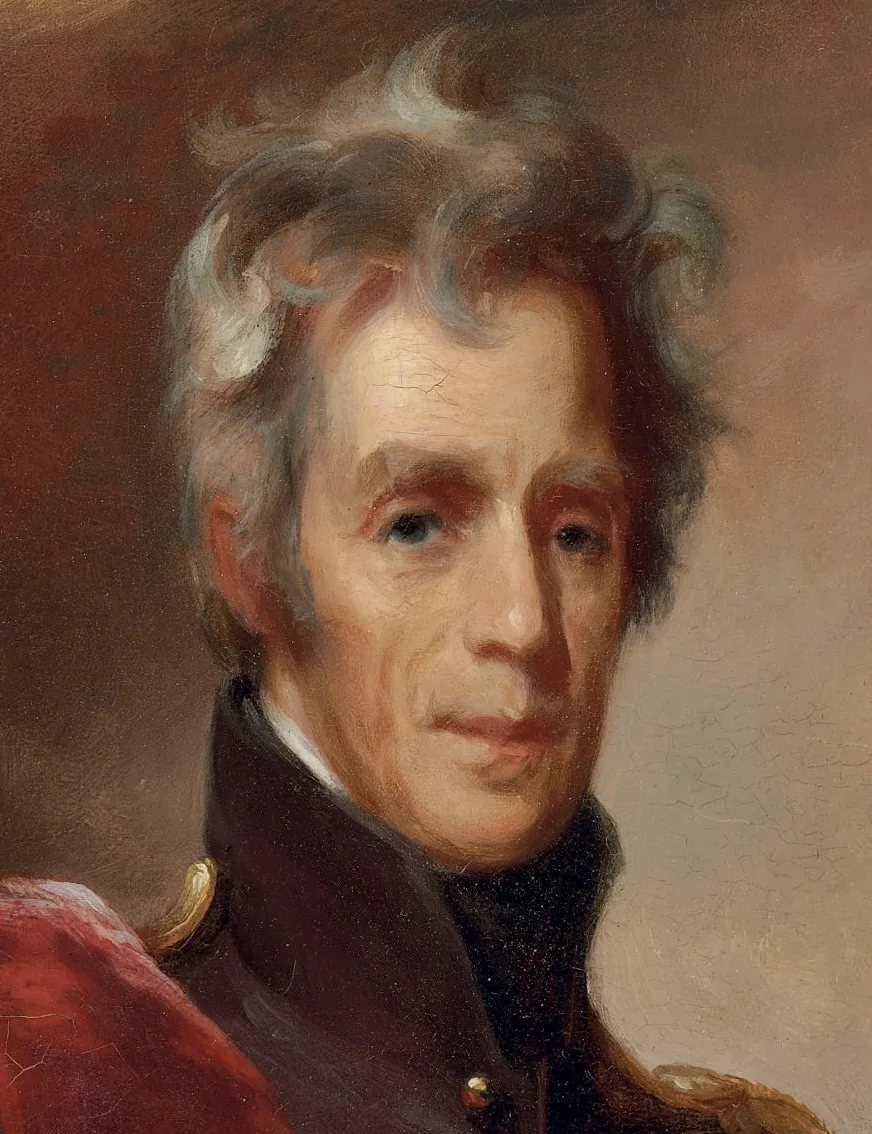
Wikimedia Commons, public domain
Document 4 – Document 4 – Slavery in the census
| Year | Enslaved people |
|---|---|
| 1800 | 893,602 |
| 1820 | 1,538,022 |
| 1840 | 2,487,355 |
Source: U.S. Census Bureau, as reported in the article Slavery in the United States.
U.S. Census Bureau
Questions
- Explain two ways in which transportation changes affected the economy between 1815 and 1848. (10 points) (10 pts)
- Identify two causes of the War of 1812. (10 points) (10 pts)
- Define the Second Great Awakening and name one reform movement it inspired. (5 points) (5 pts)
- Document 1: identify Jackson’s argument and one group that opposed him. (10 points) (10 pts)
- Documents 2 and 3: explain how Jackson’s policy toward Native peoples contradicted his image as a defender of the common man. (10 points) (10 pts)
- Document 4: describe the trend and explain one cause. (10 points) (10 pts)
- LEQ: Evaluate the extent to which Jacksonian democracy expanded political participation between 1824 and 1840. (45 points) (45 pts)


Quick review: flashcards
Tap a card to see the answer.