



This AP US History lesson covers APUSH Period 4: 1800-1848, part of the unit “APUSH periods.” First, read the full lesson with its primary sources, maps and key terms. Then practice with the worksheet, check yourself with the quiz and get ready with the test.
Focus question : How did expansion, the market revolution, democracy, and reform shape the United States between 1800 and 1848, and how did slavery divide the nation?
In 1803 President Thomas Jefferson, a strict reader of the Constitution, bought a territory the size of the existing United States from a French emperor who needed money for war. Over the next four and a half decades, American farmers pushed across the Appalachians, and steamboats and canals knit regions together. Cotton planters in the South multiplied the number of enslaved people they held.
Reformers in New England and the “burned-over district” of New York campaigned to improve the nation’s morals. By 1848 the United States stretched from the Atlantic to the Pacific. However, it had also acquired a political problem that its leaders could not solve: whether new territories would be free or slave. Period 4 of APUSH (1800-1848) covers these changes and the debates they provoked.
Guiding question: How did territorial expansion, the market revolution, and the growth of democracy and reform shape the United States between 1800 and 1848, and how did slavery divide the nation?
Framework and themes
The unit corresponds to Key Concepts 4.1 (the expansion of democracy and the rise of political parties) and 4.2 (innovations in technology, agriculture, and commerce: the market revolution). It also corresponds to 4.3 (the nation’s physical and diplomatic expansion). Themes: Politics and Power (PCE), Work, Exchange, and Technology (WXT), and American and Regional Culture (ARC). Three more themes are Social Structures (SOC), Migration and Settlement (MIG), and Geography and the Environment (GEO). Skills: causation, comparison, continuity and change, and sourcing.
1. A growing nation: expansion and foreign affairs, 1800-1824
The Louisiana Purchase and exploration
When Jefferson took office in 1801, Napoleon had regained Louisiana from Spain. Americans feared that a strong French presence at New Orleans would threaten western farmers who depended on the Mississippi to ship their crops. Jefferson sent diplomats to buy New Orleans. A slave revolt in Saint-Domingue defeated a French army, and Napoleon lost interest in an American empire. As a result, France offered to sell the whole of Louisiana for $15 million in 1803. The purchase doubled the size of the United States. Jefferson had doubts about whether the Constitution gave him the power to make it, but he went ahead anyway. Congress ratified the treaty.
Lewis and Clark
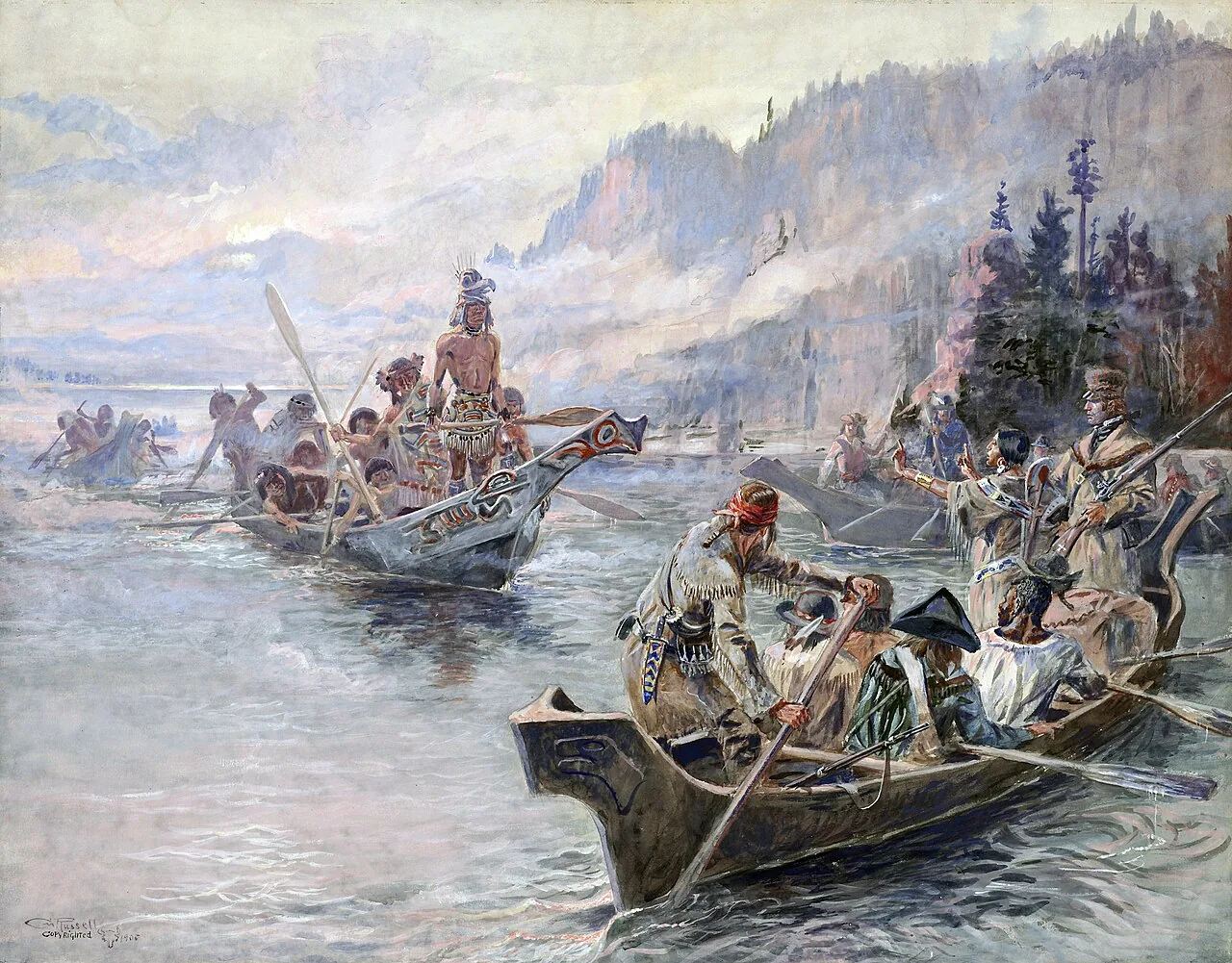
Jefferson also sent Meriwether Lewis and William Clark to explore the new lands. From 1804 to 1806 the Corps of Discovery traveled from St. Louis up the Missouri River to the Pacific Ocean and back. The Shoshone woman Sacagawea guided them. She joined as an interpreter and took her infant son along. Their journals described the land, peoples, plants, and animals, and made American claims to the Pacific Northwest more credible.
Neutral rights and the War of 1812
The wars between Britain and Napoleonic France brought American shipping into danger. British ships stopped American vessels and impressed (seized) sailors, claiming they were British deserters, and both belligerents seized neutral cargo. Jefferson responded with the Embargo Act of 1807, which closed American ports to foreign trade. It hurt American merchants more than it hurt Britain, so Congress repealed it in 1809. In the West, a Shawnee leader, Tecumseh, and his brother, the prophet Tenskwatawa, built a confederacy to resist the loss of Native land. Many westerners blamed Britain for supporting the Native resistance.
In June 1812 Congress, led by young “War Hawks” such as Henry Clay, declared war on Britain. The war went badly at first, and British troops burned Washington in 1814. The Treaty of Ghent (December 1814) restored the situation before the war. However, news of General Andrew Jackson’s victory at New Orleans in January 1815 created a wave of national pride. The battle occurred after the treaty was signed. The Federalist Party had met at Hartford in 1814-1815 to discuss constitutional amendments. Its apparent disloyalty disgraced the party, and it faded.
Postwar diplomacy
After the war, Americans turned inward and outward at once. The Rush-Bagot Agreement (1817) limited naval forces on the Great Lakes, and the Adams-Onis Treaty (1819) transferred Florida from Spain to the United States. As Spain’s Latin American colonies won independence, Secretary of State John Quincy Adams and President James Monroe warned European powers not to interfere.
Document 1 – The Monroe Doctrine, 1823
We owe it, therefore, to candor and to the amicable relations existing between the United States and those powers to declare that we should consider any attempt on their part to extend their system to any portion of this hemisphere as dangerous to our peace and safety. […] But with the Governments who have declared their independence and maintain it, and whose independence we have, on great consideration and on just principles, acknowledged, we could not view any interposition for the purpose of oppressing them, or controlling in any other manner their destiny, by any European power in any other light than as the manifestation of an unfriendly disposition toward the United States.
Source: James Monroe, Seventh Annual Message to Congress, December 2, 1823 (the Monroe Doctrine); the Avalon Project, Yale Law School.
*Allied powers: Austria, Russia, and Prussia (the Holy Alliance) and France. *Candor: honesty.
Commentary. Monroe says that the American continents are no longer open to European colonization and that the United States will consider any European attempt to extend its system in the Western Hemisphere a danger to its “peace and safety.” He also promises not to interfere in existing colonies or in European affairs. In 1823 the United States could not enforce the doctrine. The British navy, which also opposed European intervention in Latin America, gave it force. Later presidents used it to justify American intervention in the hemisphere.
Definition: Monroe Doctrine
a statement by President Monroe in 1823 that the Western Hemisphere was closed to new European colonization and that the United States would regard European intervention there as a threat, in return for staying out of European conflicts.
2. The market revolution, 1815-1848
Transportation, factories, and cotton
The decades after 1815 brought what historians call the market revolution. It was a shift from household production for local use to production for distant markets, powered by new transportation and technology. Steamboats, introduced by Robert Fulton in 1807, made upstream travel on western rivers practical. Turnpikes and the National Road, which reached Wheeling on the Ohio River, helped settlers cross the mountains.
The Erie Canal, built by New York State and finished in 1825, joined the Hudson River at Albany with Lake Erie at Buffalo, about 360 miles. It cut the cost of shipping goods between the Atlantic coast and the Great Lakes. As a result, New York City became the nation’s leading port, and a canal-building boom began. Railroads began to appear in the 1830s and would soon surpass the canals.
Textile factories
In New England, textile factories created a new kind of work. The Boston Manufacturing Company at Waltham, Massachusetts (1814), and then the mills at Lowell, employed young farm women, the “mill girls.” They lived in company boardinghouses and worked long hours for wages. Eli Whitney’s interchangeable parts, first used for muskets, helped lay the groundwork for the American system of manufacturing. In the Northeast and the Old Northwest, farmers specialized in market crops. Families increasingly bought goods that they had once made at home. Banks, credit, and the risk of panic grew with the market, as the economic panics of 1819 and 1837 showed.
Cotton and slavery
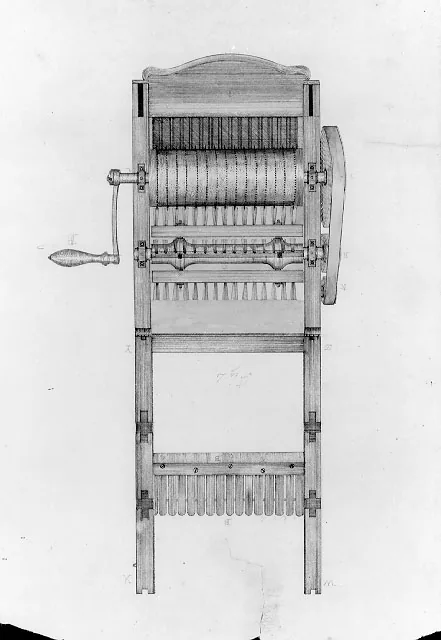
In the South, the market revolution meant cotton. The cotton gin, patented by Eli Whitney in 1794, made it easy to clean the short-staple cotton that grew well in the upland South. Also, the British and New England textile mills demanded huge quantities. Cotton planters spread west into Alabama, Mississippi, and beyond. They bought enslaved workers from the Upper South in a domestic slave trade that forcibly moved roughly a million people and broke up families. Congress banned the importation of slaves from abroad in 1808, but slavery grew stronger. Slaveholders became more defensive as northerners began to attack the institution.
Definition: Market revolution
the transformation of the early 1800s in which improved transportation, new technology, banking, and wage labor tied farmers and workers to national and international markets. It changed work, family life, and regional economies.
3. Democracy and its limits: the Age of Jackson
The expansion of white male democracy
During the 1820s and 1830s most states eliminated property requirements for voting by white men. In most states, voters rather than legislatures increasingly chose presidential electors. Political parties organized campaigns with conventions, newspapers, and rallies. In the disputed election of 1824, no candidate won a majority of electoral votes, and the House chose John Quincy Adams. This result convinced Jackson’s supporters that a “corrupt bargain” had cheated him.
In 1828 Jackson won easily and brought a new political style. He appealed to ordinary voters, rewarded loyal supporters with government jobs (the spoils system), and used the veto power vigorously. Democracy at this time was narrowly drawn. The electorate excluded women, enslaved people, most free Black men, and Native Americans. Some states even took the vote from free Black men in this period.
The Bank War and nullification
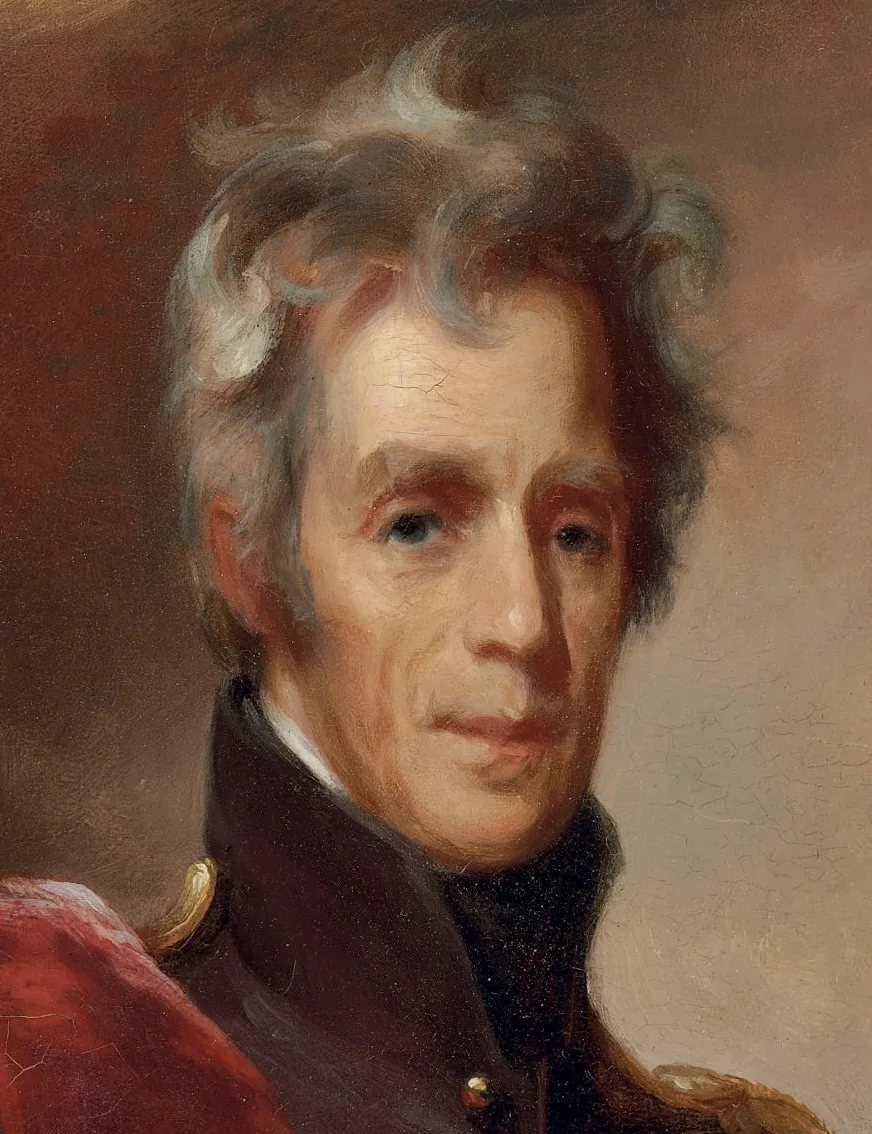
The Second Bank of the United States held federal deposits and regulated the supply of credit through its control of state banks’ notes. Jackson, who distrusted banks, vetoed its recharter in 1832. His message attacked the bank as a privileged institution that helped the rich. He won reelection and moved the government’s deposits to state banks in 1833. A bank panic and a speculative boom followed, and in 1837 a severe economic panic struck.
Document 2 – Jackson vetoes the Bank, 1832
It is to be regretted that the rich and powerful too often bend the acts of government to their selfish purposes. […] but when the laws undertake to add to these natural and just advantages artificial distinctions, to grant titles, gratuities, and exclusive privileges, to make the rich richer and the potent more powerful, the humble members of society-the farmers, mechanics, and laborers-who have neither the time nor the means of securing like favors to themselves,
Source: Andrew Jackson, Veto Message Regarding the Bank of the United States, July 10, 1832; the Avalon Project, Yale Law School.
*Gratuities: gifts or special benefits. *Mechanics: skilled workers.
Commentary. Jackson casts himself as the defender of “the humble members of society” against a privileged elite. His argument helped build the Democratic Party’s identity, but critics called him a tyrant for overriding Congress and the Supreme Court, which had upheld the Bank in McCulloch v. Maryland (1819). The Whigs, who formed in opposition to him, favored the bank and an active federal role in economic growth.
Nullification and the tariff
A second crisis arose over the tariff. The Tariff of 1828, which Southerners called the “Tariff of Abominations,” raised duties on imported goods to protect Northern manufacturers. John C. Calhoun of South Carolina, Jackson’s vice president, argued in a secret essay that a state could nullify a federal law that it judged unconstitutional. This idea echoed the Virginia and Kentucky Resolutions of 1798. In November 1832 a South Carolina convention declared the tariffs null and void in the state.
It threatened secession if the federal government tried to force collection. Jackson answered with a proclamation that called nullification incompatible with the Union and asked Congress for the power to use force. Congress passed both the Force Bill and a compromise tariff, written by Henry Clay, that lowered rates gradually. Then South Carolina repealed its ordinance. The crisis ended without bloodshed, but it showed the sectional divide and the unresolved question of where final authority lay.
Document 3 – South Carolina nullifies, 1832
We, therefore, the people of the State of South Carolina, in convention assembled, do declare and ordain and it is hereby declared and ordained, that the several acts and parts of acts of the Congress of the United States, purporting to be laws for the imposing of duties and imposts on the importation of foreign commodities, […] affirmance thereof, are and shall be held utterly null and void. […] it shall not be lawful for any of the constituted authorities, whether of this State or of the United States, to enforce the payment of duties imposed by the said acts within the limits of this State;
Source: South Carolina Ordinance of Nullification, November 24, 1832; the Avalon Project, Yale Law School.
*Impost: tax on imports. *Constituted authorities: officials with legal power.
Commentary. The convention declares federal tariff laws void within the state and forbids federal officials to collect duties there. It claims that the Constitution gives Congress no power to protect manufactures, a power that most scholars consider doubtful in the text but long accepted in practice. The ordinance rests on the compact theory of the Union.
Document 4 – Jackson answers, 1832
I consider, then, the power to annul a law of the United States, assumed by one State, incompatible with the existence of the Union, contradicted expressly by the letter of the Constitution, unauthorized by its spirit, inconsistent with every principle on which It was founded, and destructive of the great object for which it was formed.
Source: Andrew Jackson, Proclamation to the People of South Carolina, December 10, 1832; the Avalon Project, Yale Law School.
*Annul: cancel. *Incompatible: that cannot exist together.
Commentary. Jackson does not deny that the tariff was unpopular in the South; he denies that one state may overrule the whole Union. He insisted that the Constitution formed a government and not a league of states, and his argument anticipated Lincoln’s a generation later.
Definition: Nullification
the theory, defended by John C. Calhoun and South Carolina, that a state could declare a federal law void within its borders if it judged the law unconstitutional. President Jackson rejected it as incompatible with the Union.
Indian removal
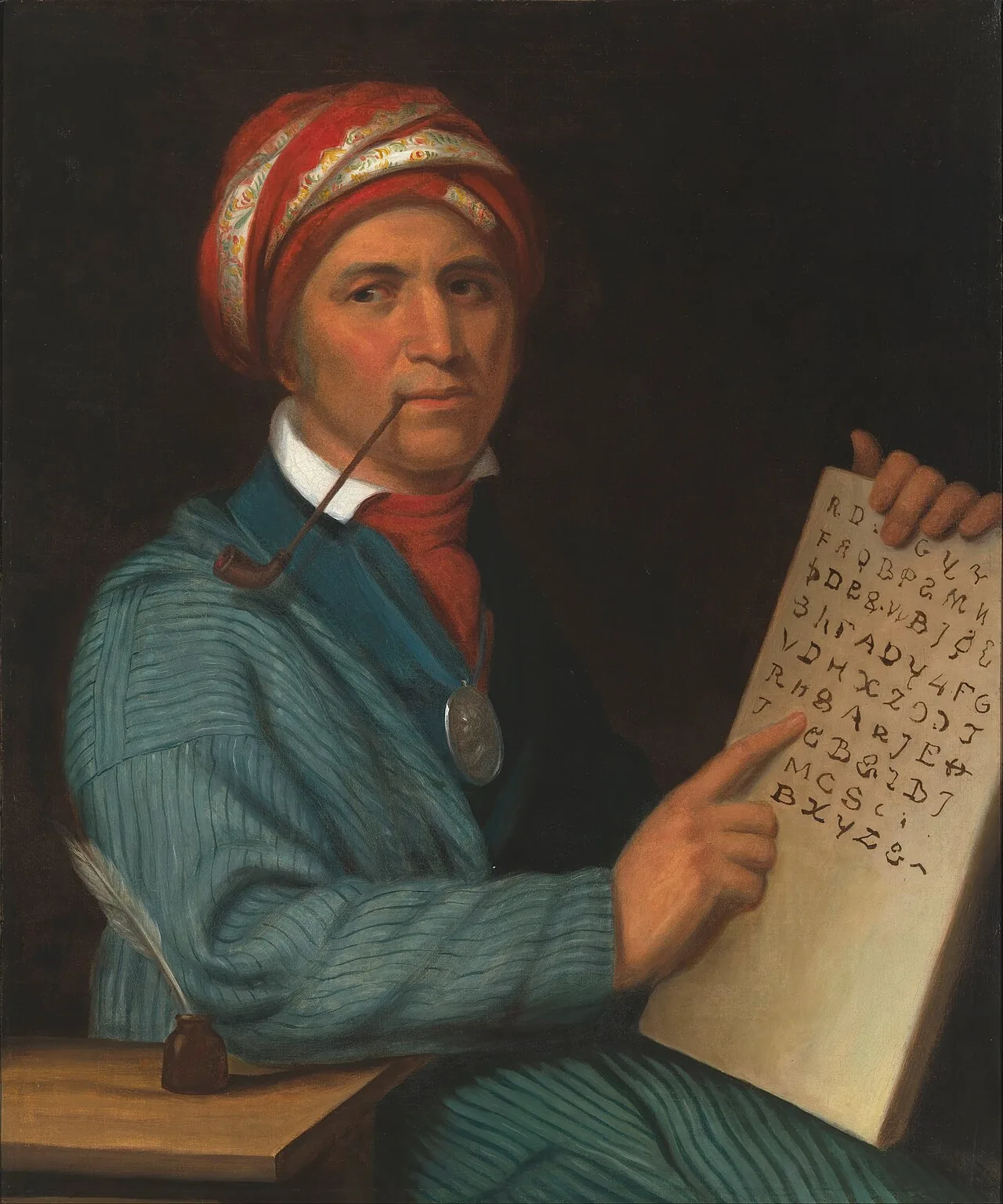
In the Southeast, the Cherokee, Creek, Choctaw, Chickasaw, and Seminole had adapted to American pressure. The Cherokee adopted a written constitution (1827) and used American courts to defend their land. They also published a newspaper, the Cherokee Phoenix, in a syllabary invented by Sequoyah. White settlers and the state of Georgia wanted their land, especially after gold was found there. Jackson supported removal. In 1830 Congress passed the Indian Removal Act, which authorized the president to exchange land west of the Mississippi for Native lands in the East.
In Worcester v. Georgia (1832), the Supreme Court held that Georgia had no authority over Cherokee territory. Jackson is reported to have ignored the decision. In 1835 a small faction of Cherokee signed the Treaty of New Echota, giving up the nation’s land. Most Cherokee, led by Principal Chief John Ross, protested. However, in 1838 federal troops rounded up some sixteen thousand Cherokee and forced them to walk west. Thousands died on what is called the Trail of Tears. The Choctaw, Creek, and Chickasaw were also removed, and the Seminole resisted in Florida for years.
4. Reform, slavery, and sectional tension
The Second Great Awakening and reform
Beginning around 1800, evangelical revivals swept the frontier and then the Northeast. Preachers such as Charles Grandison Finney taught that individuals could choose salvation and that they had a duty to reform society. The revivals inspired movements for temperance (against alcohol) and for public schools (Horace Mann in Massachusetts). They also inspired asylum and prison reform (Dorothea Dix) and the abolition of slavery. Other Americans looked to utopian communities, such as the Shakers and the Oneida community, or to the Transcendentalists, Ralph Waldo Emerson and Henry David Thoreau. They celebrated individualism and nature. Women, who were prominent in the churches and in reform societies, often learned organizing skills that they later used to claim rights for themselves.
Abolitionism and the defense of slavery
Some opponents of slavery, in the American Colonization Society (1816), proposed to send free Black people to Africa. Most African Americans rejected this plan. In 1831 William Lloyd Garrison began publishing The Liberator in Boston and demanded immediate emancipation. In 1833 he helped found the American Anti-Slavery Society. African American abolitionists such as Frederick Douglass, who escaped slavery in 1838 and published his Narrative in 1845, made the movement more powerful.
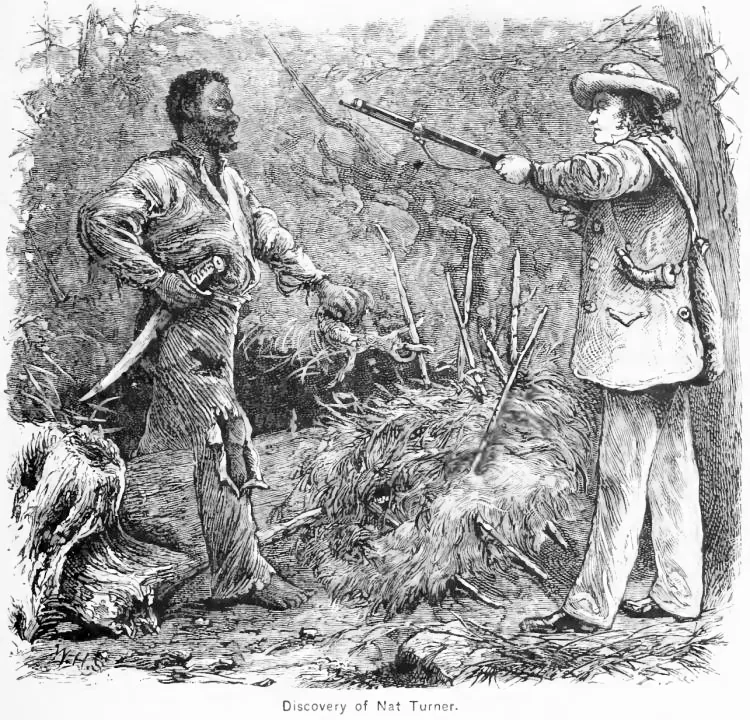
So did women such as Sarah and Angelina Grimke and Sojourner Truth. In 1831 an enslaved preacher, Nat Turner, led an uprising in Southampton County, Virginia, in which dozens of white people died. Whites killed many Black people in revenge. Virginia and other states passed harsher laws. Southern leaders responded by defending slavery as a “positive good” and by trying to silence debate. In 1836 the House of Representatives adopted a “gag rule” to table antislavery petitions without discussion.
Document 5 – A slave becomes a man, 1845
This battle with Mr. Covey was the turning-point in my career as a slave. It rekindled the few expiring embers of freedom, and revived within me a sense of my own manhood. It recalled the departed self-confidence, and inspired me again with a determination to be free. The gratification afforded by the triumph was a full compensation for whatever else might follow, even death itself. He only can understand the deep satisfaction which I experienced, who has himself repelled by force the bloody arm of slavery. I felt as I never felt before. It was a glorious resurrection, from the tomb of slavery, to the heaven of freedom. My long-crushed spirit rose, cowardice departed, bold defiance took its place; and I now resolved that, however long I might remain a slave in form, the day had passed forever when I could be a slave in fact.
Source: Frederick Douglass, Narrative of the Life of Frederick Douglass, an American Slave, 1845, chapter 10 (the fight with Edward Covey); Project Gutenberg.
*Resurrection: rising from the dead. *Cowardice: fear.
Commentary. Douglass describes his decision to fight back against Edward Covey, a “slave breaker” to whom he had been rented in 1834. The passage shows how he understood freedom as a state of mind as well as a legal status. Douglass wrote for white Northern readers and for the antislavery movement, and he understood their expectations.
Women’s rights
Women who joined the antislavery movement found that men often tried to limit their role. In 1840 the World Anti-Slavery Convention in London did not allow American delegates, including Elizabeth Cady Stanton and Lucretia Mott, to participate. They resolved to hold a convention of their own. It met in Seneca Falls, New York, in July 1848, and adopted a Declaration of Sentiments modeled on the Declaration of Independence. It listed grievances against men and demanded legal rights for women, including the vote. The resolution on suffrage was the most controversial.
Document 6 – The Declaration of Sentiments, 1848
We hold these truths to be self-evident: that all men and women are created equal; that they are endowed by their Creator with certain inalienable rights; that among these are life, liberty, and the pursuit of happiness; that to secure these rights governments are instituted, deriving their just powers from the consent of the governed. […] The history of mankind is a history of repeated injuries and usurpations on the part of man toward woman, having in direct object the establishment of an absolute tyranny over her.
Source: Declaration of Sentiments, adopted at the Woman’s Rights Convention, Seneca Falls, New York, July 19-20, 1848; text from the Internet History Sourcebooks (Fordham University).
*Inalienable: that cannot be taken away. *Usurpations: seizures of power.
Commentary. The authors deliberately copy the opening of the Declaration of Independence and add “and women.” By turning the founding document against the status quo, they claim that the nation’s own principles require equality. Women would not win the national right to vote until 1920.
5. Texas, Oregon, and the road to war with Mexico
Americans moved into Mexican Texas in the 1820s, many of them slaveholders from the South. After Mexico tried to restrict immigration and slavery, the settlers revolted. In 1836 Texas declared independence and won a decisive victory at San Jacinto. Texas asked for annexation, but Northern opposition delayed it because it would add slave territory. In the 1840s the phrase “Manifest Destiny” expressed the belief that the United States was meant to spread across the continent. A journalist coined it in 1845. The United States annexed Texas in 1845. Then it settled the Oregon boundary at the 49th parallel in 1846, and war with Mexico began that year. The war and its consequences belong to Period 5.
Definition: Manifest Destiny
the belief, named in 1845 by a journalist, that the United States was destined to expand across the continent. It justified the annexation of Texas, the Oregon claim, and war with Mexico.
- 1803 Louisiana Purchase; Marbury v. Madison
- 1804-1806 Lewis and Clark expedition
- 1807 Embargo Act
- 1812-1815 War of 1812
- 1819-1820 Panic of 1819; Missouri Compromise
- 1823 Monroe Doctrine
- 1825 Erie Canal opens
- 1830 Indian Removal Act
- 1831 Nat Turner; The Liberator
- 1832-1833 Bank veto; Nullification Crisis
- 1836 Texas independence
- 1838-1839 Trail of Tears
- 1845 Douglass publishes his Narrative; Texas annexed
- 1848 Seneca Falls Convention
6. Skills: continuity, change, and comparison in Period 4
Period 4 rewards students who can explain how economic change shaped politics. A good chain: the market revolution tied regions into national markets, and cotton made slavery more profitable. The growth of the North and the West shifted the balance of power in Congress. Each new territory raised the question of slavery, which led to the Missouri Compromise (1820) and later crises. Likewise, the rise of democracy for white men was linked to the market revolution, because wage earners and farmers wanted a voice in a changing economy. However, the exclusion of women, Native Americans, and Black people shows how democracy had limits.
For comparison questions, you may be asked to compare Jackson’s and Clay’s views of federal power. You may also compare the experience of mill workers and enslaved workers, or the arguments of nullifiers and Jackson. State a similarity and a difference, then explain the reason. In a document-based question, source each text. Calhoun’s ordinance is the work of a state convention defending a regional interest. In contrast, Jackson’s proclamation is the work of a president defending national authority.
Key takeaways
- The Louisiana Purchase (1803) doubled the nation; Lewis and Clark explored it; the War of 1812 strengthened nationalism and ended Federalist opposition.
- The Monroe Doctrine (1823) declared the Western Hemisphere closed to new European colonization.
- The market revolution (canals, steamboats, factories, the cotton gin) changed work and tied regions together; in the South it made slavery more profitable.
- Jacksonian democracy expanded white male suffrage but excluded women, Black Americans, and Native Americans; Jackson fought the Bank and forced Indian removal.
- The Nullification Crisis (1832-1833) tested federal authority; Jackson opposed nullification and Congress passed a compromise tariff.
- The Second Great Awakening inspired reform movements (temperance, schools, abolition, women’s rights); Seneca Falls (1848) launched the organized women’s rights movement.

Quick review: flashcards
Tap a card to see the answer.