


This AP US History lesson covers APUSH Period 5: 1844-1877, part of the unit “APUSH periods.” First, read the full lesson with its primary sources, maps and key terms. Then practice with the worksheet, check yourself with the quiz and get ready with the test.
On March 4, 1865, the Civil War was almost won. Abraham Lincoln stood on the Capitol steps and said that slavery was “somehow the cause of the war.” The sentence is a good summary of the period. Between 1844 and 1877 the United States added half a continent and divided over whether to allow slavery there. It fought the bloodiest war in its history, ended slavery, and wrote new rights into the Constitution. Then, within a dozen years, violence and political compromise eroded most of those gains in the South. Period 5 of APUSH (1844-1877) asks you to understand the causes of the Civil War and the meanings of Reconstruction.
Guiding question: Why did territorial expansion lead to civil war? To what extent did the war and Reconstruction change the meaning of freedom and citizenship?
This unit follows three Key Concepts. Concept 5.1 covers the political crisis over slavery and expansion. Concept 5.2 deals with the Civil War and its effects on the nation. Finally, 5.3 covers Reconstruction and its end. Themes: Politics and Power (PCE), Social Structures (SOC), and American and National Identity (NAT). Also covered: Migration and Settlement (MIG), Work, Exchange, and Technology (WXT), and Geography and the Environment (GEO). Skills: causation, continuity and change, argumentation, and evaluating evidence.
1. Expansion and the road to secession, 1844-1860
Texas, Oregon, and war with Mexico
James K. Polk, a Democrat who favored expansion, won the election of 1844. His victory led to the annexation of Texas in 1845. Britain and the United States settled the Oregon boundary at the 49th parallel in 1846. Mexico, which had never recognized Texan independence and disputed the border (the Nueces or the Rio Grande), broke diplomatic relations. American and Mexican troops clashed north of the Rio Grande in April 1846. Polk then asked Congress for a declaration of war, saying that Mexico had shed American blood on American soil.
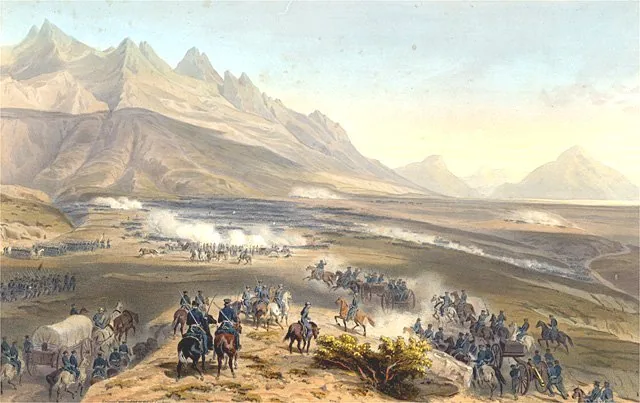
Many Whigs, including Representative Abraham Lincoln, and antislavery Northerners opposed the war. Henry David Thoreau also wrote against slavery and the war. He had gone to jail in 1846 for refusing to pay a tax. American armies won nearly every battle. Zachary Taylor won in northern Mexico, including Buena Vista in February 1847. Winfield Scott marched from Veracruz to Mexico City in 1847, and small forces took California and New Mexico.
The Mexican Cession
In the Treaty of Guadalupe Hidalgo (February 2, 1848), Mexico accepted the Rio Grande border. It also ceded about half of its territory, including what is now California, Nevada, and Utah. The ceded land also took in most of Arizona and New Mexico and parts of Colorado and Wyoming. The United States paid $15 million. The treaty promised Mexicans in the ceded lands the right to choose American citizenship and to keep their property. These promises were poorly kept. Gold was discovered at Sutter’s Mill in California in January 1848. The gold rush of 1849 then brought tens of thousands of people to the Pacific coast.
Document 1 – Guadalupe Hidalgo, 1848
Mexicans now established in territories previously belonging to Mexico, and which remain for the future within the limits of the United States, as defined by the present treaty, shall be free to continue where they now reside, or to remove at any time to the Mexican Republic, retaining the property which they possess in the said territories, or disposing thereof, and removing the proceeds wherever they please, without their being subjected, on this account, to any contribution, tax, or charge whatever. […] Those who shall prefer to remain in the said territories may either retain the title and rights of Mexican citizens, or acquire those of citizens of the United States.
Source: Treaty of Guadalupe Hidalgo, February 2, 1848, Article VIII; the Avalon Project, Yale Law School.
*Contribution: tax or payment.
Commentary. Article VIII promises Mexicans in the ceded lands that they could stay and choose Mexican or American citizenship. It also promises that their property would be respected. In practice, many Mexican landowners lost their land through litigation, taxes, and violence, and Spanish-speaking residents often faced discrimination.
Slavery in the territories
The acquisition of new land reopened the question of slavery’s expansion. In 1846 Representative David Wilmot of Pennsylvania proposed that slavery be barred from any territory acquired from Mexico. The Wilmot Proviso passed the House but never the Senate, and it divided Congress along sectional rather than party lines. Southerners argued that the territories belonged to all citizens and that slaveholders could bring their property into them. Some Democrats, such as Lewis Cass, proposed popular sovereignty, in which settlers would decide for themselves. In 1848 the Free Soil Party, which opposed the expansion of slavery, ran Martin Van Buren for president.
California asked to enter the Union as a free state in 1849. This created a crisis that Henry Clay and Stephen Douglas helped settle with the Compromise of 1850. California entered as a free state. Congress organized New Mexico and Utah without restrictions on slavery, to be decided by popular sovereignty. Texas gave up its claims to part of New Mexico in return for the assumption of its debt. Congress abolished the slave trade, but not slavery, in the District of Columbia.
Finally, a stronger Fugitive Slave Act required Northerners to help capture people who had escaped from slavery. The new law denied accused fugitives a jury trial. It led many Northerners, who had never thought much about slavery, to feel complicit. Harriet Beecher Stowe’s novel Uncle Tom’s Cabin (1852) sold hundreds of thousands of copies. It brought the cruelty of slavery to a broad audience.
Definition: Popular sovereignty
the doctrine that the residents of a territory should vote on whether to permit slavery. Stephen Douglas supported it, and it became part of the Compromise of 1850 and the Kansas-Nebraska Act. It produced violence in Kansas.
The collapse of compromise
Senator Douglas wanted a railroad route west through the Nebraska country. In 1854 he introduced the Kansas-Nebraska Act, which created two territories and applied popular sovereignty. The act repealed the Missouri Compromise line of 1820. Northerners were outraged. The Whig Party disintegrated, and the new Republican Party, which opposed the extension of slavery into the territories, emerged. In Kansas, proslavery and antislavery settlers rushed in and fought a small civil war, “Bleeding Kansas.” John Brown and his sons killed five proslavery settlers at Pottawatomie Creek in 1856. Meanwhile, Senator Charles Sumner denounced the “Crime against Kansas” in May 1856. Representative Preston Brooks of South Carolina then beat him with a cane on the Senate floor.
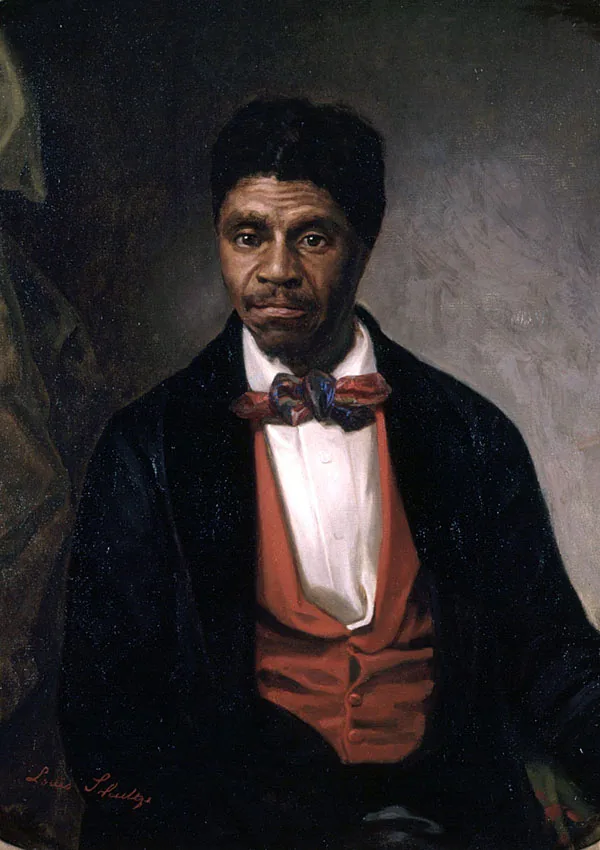
In Dred Scott v. Sandford (1857), the Supreme Court ruled against Dred Scott, an enslaved man who sued for freedom after living in free territory. The Court decided that he was not a citizen and could not sue. It also held that Black people, whether enslaved or free, were not and could never be American citizens. Finally, it ruled that Congress had no power to ban slavery in the territories. This meant that the Missouri Compromise had been unconstitutional. The decision was a victory for the South and a shock to the North.
Republicans said it showed a conspiracy to nationalize slavery. In the Illinois Senate campaign of 1858, Abraham Lincoln and Stephen Douglas held seven debates. Lincoln said that the nation could not endure “half slave and half free.” Douglas, in his “Freeport Doctrine,” said that territories could exclude slavery by refusing to pass laws protecting it. In October 1859 John Brown tried to seize the federal arsenal at Harpers Ferry, Virginia, to start a slave uprising. He was captured and hanged, and Southerners were alarmed when some Northerners hailed him as a martyr.
Document 2 – Chief Justice Taney, 1857
They had for more than a century before been regarded as beings of an inferior order, and altogether unfit to associate with the white race, either in social or political relations; and so far inferior, that they had no rights which the white man was bound to respect; and that the negro might justly and lawfully be reduced to slavery for his benefit. He was bought and sold, and treated as an ordinary article of merchandise and traffic, whenever a profit could be made by it. This opinion was at that time fixed and universal in the civilized portion of the white race. It was regarded as an axiom in morals as well as in politics, which no one thought of disputing, or supposed to be open to dispute;
Source: Chief Justice Roger B. Taney, opinion of the Court, Dred Scott v. Sandford, 60 U.S. 393 (1857); Legal Information Institute, Cornell Law School.
*Axiom: a statement accepted as true. *Eternal: no change.
Commentary. Taney claims that Black people were regarded as an inferior order at the time of the Constitution. He says they had no rights that white people were bound to respect. Historians point out that this claim ignores the fact that free Black men could vote in several states in 1787. They add that the Court was deciding what the Constitution meant, not describing how people thought. Abraham Lincoln and the Republicans rejected the reasoning, and the Fourteenth Amendment later overturned the citizenship holding.
Document 3 – John Brown’s last speech, 1859
Now, if it is deemed necessary that I should forfeit my life for the furtherance of the ends of justice, and mingle my blood farther with the blood of my children and with the blood of millions in this slave country whose rights are disregarded by wicked, cruel, and unjust enactments, I say let it be done.
Source: John Brown, address to the court at his sentencing, Charles Town, Virginia, November 2, 1859; the Avalon Project, Yale Law School.
*Furtherance: help toward a goal. *Enactments: laws.
Commentary. Brown, who had been convicted of treason, murder, and inciting a slave insurrection, speaks as a martyr. He identifies the law of slavery as “wicked, cruel, and unjust” and links his blood to that of enslaved people. For many Southerners, his speech proved that Northern abolitionists wanted bloodshed; for some Northerners, it made him a hero.
2. Secession and the Civil War, 1860-1865
Why the South seceded
The Democratic Party split in 1860 along sectional lines. Lincoln won the presidency with about 40 percent of the popular vote and no electoral votes from the South. He had promised not to touch slavery where it existed but to oppose its expansion. Southern leaders considered this a mortal threat. South Carolina seceded on December 20, 1860. Six more states of the Lower South followed by February 1861. Together they formed the Confederate States of America with Jefferson Davis as president.
Their declarations of secession spoke plainly: slavery was the cause. The secession declaration of Mississippi stated that its position was “thoroughly identified with the institution of slavery.” The Confederate attack on Fort Sumter, in Charleston harbor, on April 12, 1861, began the war. Lincoln’s call for troops caused four more states of the Upper South (Virginia, Arkansas, Tennessee, and North Carolina) to secede. Four slave states, Delaware, Maryland, Kentucky, and Missouri, the “border states,” stayed in the Union.
Document 4 – Mississippi explains secession, 1861
Our position is thoroughly identified with the institution of slavery– the greatest material interest of the world. Its labor supplies the product which constitutes by far the largest and most important portions of commerce of the earth. These products are peculiar to the climate verging on the tropical regions, and by an imperious law of nature, none but the black race can bear exposure to the tropical sun. These products have become necessities of the world, and a blow at slavery is a blow at commerce and civilization.
Source: A Declaration of the Immediate Causes which Induce and Justify the Secession of the State of Mississippi from the Federal Union, January 1861; the Avalon Project, Yale Law School.
*Material interest: economic interest.
Commentary. The authors state that slavery was the basis of their economy and of “commerce and civilization.” They say that the “blow” against it had decided them to leave. Later writers claimed that the South fought only for states’ rights. However, the official declarations of secession cite slavery as the reason.
The course of the war
The North had more people, more factories, more railroads, and a navy. On the other hand, the South had the advantage of fighting on defensive ground and of more experienced officers at the start. The Union’s initial plan, the “Anaconda Plan,” was to blockade Southern ports and split the Confederacy along the Mississippi. In the East, the Confederate army under Robert E. Lee won victories until Antietam in September 1862 stopped his invasion of Maryland. The single day of fighting caused about 23,000 casualties.
In the West, Ulysses S. Grant took Forts Henry and Donelson (1862) and Vicksburg (July 1863), which gave the Union control of the Mississippi River. At Gettysburg, Pennsylvania, July 1-3, 1863, Lee’s second invasion of the North was defeated. In 1864 Grant fought Lee in Virginia in a costly campaign, and William T. Sherman took Atlanta in September and marched across Georgia to Savannah, destroying railroads and property to break the South’s will. Lee surrendered to Grant at Appomattox Court House on April 9, 1865.
The war and freedom
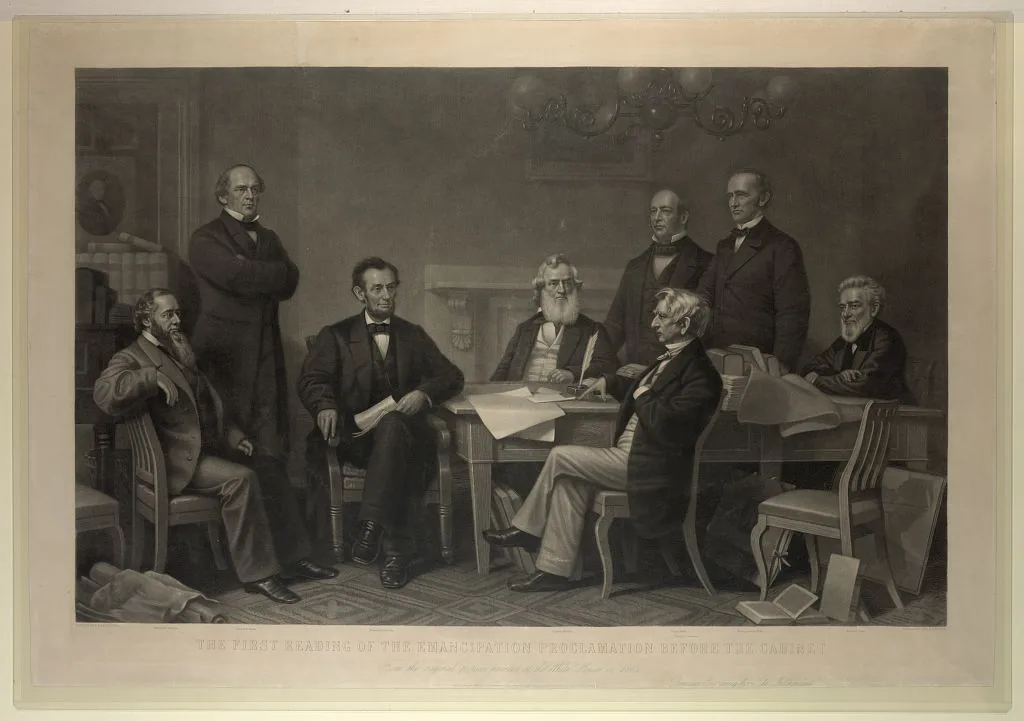
The war started as a fight to preserve the Union, but the actions of enslaved people changed its purpose. Thousands escaped to Union lines, and Congress declared them “contraband” and later passed confiscation acts. Lincoln, who feared losing the border states, moved cautiously. After Antietam he issued a preliminary proclamation on September 22, 1862. On January 1, 1863, the Emancipation Proclamation declared free all enslaved people in areas in rebellion. It did not free the enslaved in the border states or in Union-held parts of the Confederacy.
Legally, it rested on Lincoln’s powers as commander in chief. But it changed the war. The Union now fought against slavery, and it allowed the enlistment of Black men. Some 180,000 served in the Union army, and the proclamation made European intervention for the Confederacy politically impossible. In the Gettysburg Address (November 19, 1863), Lincoln redefined the purpose of the war as a “new birth of freedom.” He described a nation “dedicated to the proposition that all men are created equal.”
Document 5 – The Emancipation Proclamation, 1863
That on the first day of January, in the year of our Lord one thousand eight hundred and sixty-three, all persons held as slaves within any State or designated part of a State, the people whereof shall then be in rebellion against the United States, shall be then, thenceforward, and forever free;
Source: Abraham Lincoln, Emancipation Proclamation, January 1, 1863 (quoting the preliminary proclamation of September 22, 1862); the Avalon Project, Yale Law School.
*Executive Government: the president and his officers.
Commentary. Notice the legal language and the geographic limits: the order applies to states or parts of states “in rebellion.” Critics at the time and since have noted these limits. Still, it made the end of slavery a goal of the Union war effort. It also encouraged enslaved people to flee to Union lines.
Document 6 – Gettysburg, 1863
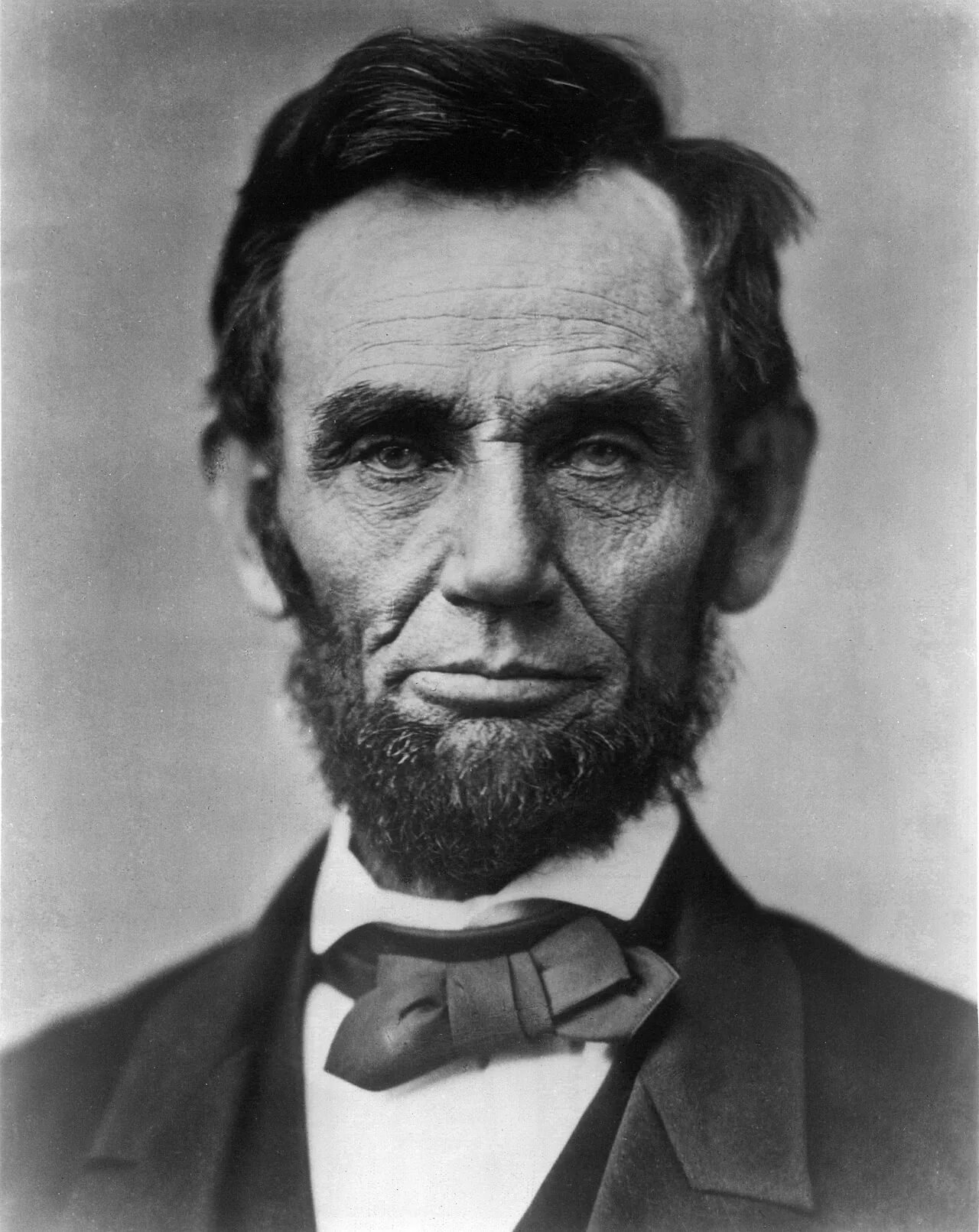
Now we are engaged in a great civil war, testing whether that nation or any nation so conceived and so dedicated can long endure. We are met on a great battlefield of that war. We have come to dedicate a portion of that field as a final resting-place for those who here gave their lives that that nation might live. […] The world will little note nor long remember what we say here, but it can never forget what they did here. It is for us the living rather to be dedicated here to the unfinished work which they who fought here have thus far so nobly advanced. It is rather for us to be here dedicated to the great task remaining before us–that from these honored dead we take increased devotion to that cause for which they gave the last full measure of devotion
Source: Abraham Lincoln, Gettysburg Address, November 19, 1863 (Bliss copy); the Avalon Project, Yale Law School.
*Consecrate, hallow: make sacred.
Commentary. In just over two minutes, Lincoln links the nation’s founding to the principle of equality. He asks the living to complete the “unfinished work.” Notice that he speaks of “a new birth of freedom,” which gives the war a larger meaning. The speech helped turn the Declaration of Independence into a standard for judging the nation.
The war transformed the Northern economy and the powers of the national government. Congress, without Southern members, passed the Homestead Act (1862). It offered 160 acres of public land to settlers who lived on and improved it for five years. It also passed the Morrill Act (1862), which supported state colleges. A third law, the Pacific Railway Act (1862), subsidized a transcontinental railroad. The National Banking Acts created a national currency, and the government issued paper money (greenbacks) and levied an income tax.
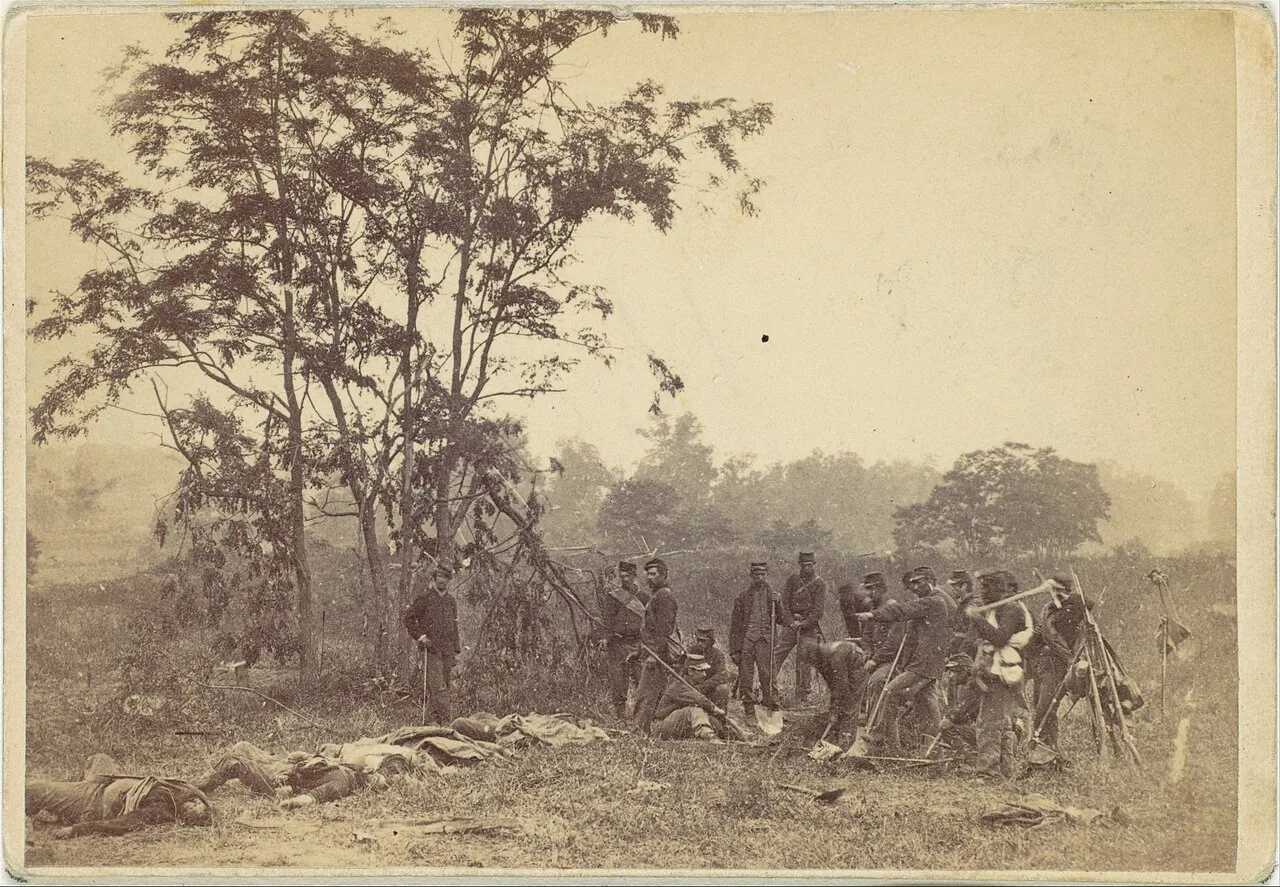
Lincoln suspended the writ of habeas corpus in some areas. A draft law provoked riots in New York City in July 1863. In the South, shortages, inflation, conscription, and the collapse of slavery weakened the Confederacy. The war killed roughly 620,000 to 750,000 soldiers, according to historians’ estimates. Recent research puts the toll at the upper end of this range. It was the largest loss of life in any American war, and it left much of the South in ruins.
Document 7 – The Homestead Act, 1862
That any person who is the head of a family, or who has arrived at the age of twenty-one years, and is a citizen of the United States, or who shall have filed his declaration of intention to become such, as required by the naturalization laws of the United States, and who has never borne arms against the United States Government or given aid and comfort to its enemies, shall, from and after the first January, eighteen hundred and sixty-three, be entitled to enter one quarter section or a less quantity of unappropriated public lands
Source: The Homestead Act, May 20, 1862, Section 1; the Avalon Project, Yale Law School.
*Quarter section: 160 acres.
Commentary. The act offered land to heads of families and adults who were citizens or intended to become citizens. Applicants also could not have fought against the United States. Free land attracted farmers, immigrants, and later Black homesteaders. However, speculators and railroads also got much of the best land, and the settlement took the land of Native peoples.
3. Reconstruction, 1865-1877
Presidential and Congressional plans
Reconstruction was the effort to bring the Southern states back into the Union. It also had to decide what freedom would mean for four million formerly enslaved people. Lincoln had proposed a lenient plan in 1863 (the “Ten Percent Plan”). In his Second Inaugural he said, “With malice toward none, with charity for all,” to bind up the nation’s wounds. He was assassinated by John Wilkes Booth on April 14, 1865. His successor, Andrew Johnson, a Tennessee Democrat, offered pardons to most ex-Confederates and let the Southern states form governments quickly.
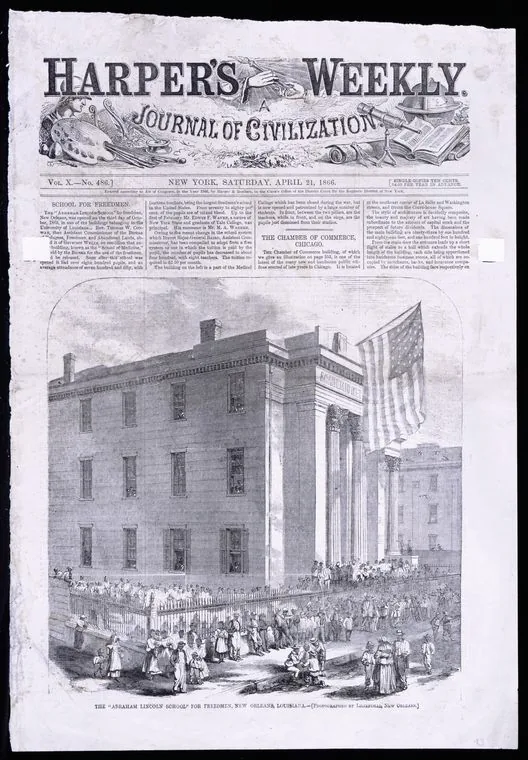
They elected former Confederate leaders and passed Black Codes. These laws restricted the rights of freed people and tried to force them back into plantation labor. Congress, controlled by Republicans, refused to seat Southern representatives. The Thirteenth Amendment (ratified December 1865) abolished slavery. Congress established the Freedmen’s Bureau (1865), which provided food, schools, and help with labor contracts. Congress also passed the Civil Rights Act of 1866 over Johnson’s veto.
Document 8 – Citizenship and equal protection, 1868
Section 1. All persons born or naturalized in the United States, and subject to the jurisdiction thereof, are citizens of the United States and of the State wherein they reside. No State shall make or enforce any law which shall abridge the privileges or immunities of citizens of the United States; nor shall any State deprive any person of life, liberty, or property, without due process of law; nor deny to any person within its jurisdiction the equal protection of the laws.
Source: The Fourteenth Amendment, Section 1, ratified July 9, 1868; the National Archives.
*Abridge: reduce. *Jurisdiction: legal authority.
Commentary. The Fourteenth Amendment overturned Dred Scott by making everyone born in the United States a citizen. It forbade states to deny citizens their rights. They could not deprive any person of life, liberty, or property without due process. Nor could they deny the equal protection of the laws. It changed the relationship between the national government and the states. It also became the basis of many later civil rights decisions.
Radical Reconstruction and Black political power
The Fourteenth Amendment was proposed in 1866, and the Republicans won a large majority in that year’s elections. In the Reconstruction Acts of 1867, Congress divided the former Confederacy (except Tennessee) into five military districts. It required the states to write new constitutions that guaranteed Black men the vote and to ratify the Fourteenth Amendment. The House impeached Johnson in 1868 for violating the Tenure of Office Act. However, the Senate acquitted him by a single vote.
The Fifteenth Amendment (1870) prohibited denying the vote because of race. In the South, Black men voted in large numbers. They served as delegates to state conventions, legislators, and, in some cases, members of Congress. Hiram Revels of Mississippi became the first Black senator in 1870. Biracial governments built public schools, hospitals, and roads, and raised taxes to pay for them. Black communities built churches, schools, and colleges.
Definition: Black Codes
laws passed by Southern states in 1865-1866 that restricted the freedom of formerly enslaved people. They included vagrancy laws and labor contracts that forced them to work for white employers. They helped persuade Northerners that Congress had to act.
Resistance and the end of Reconstruction
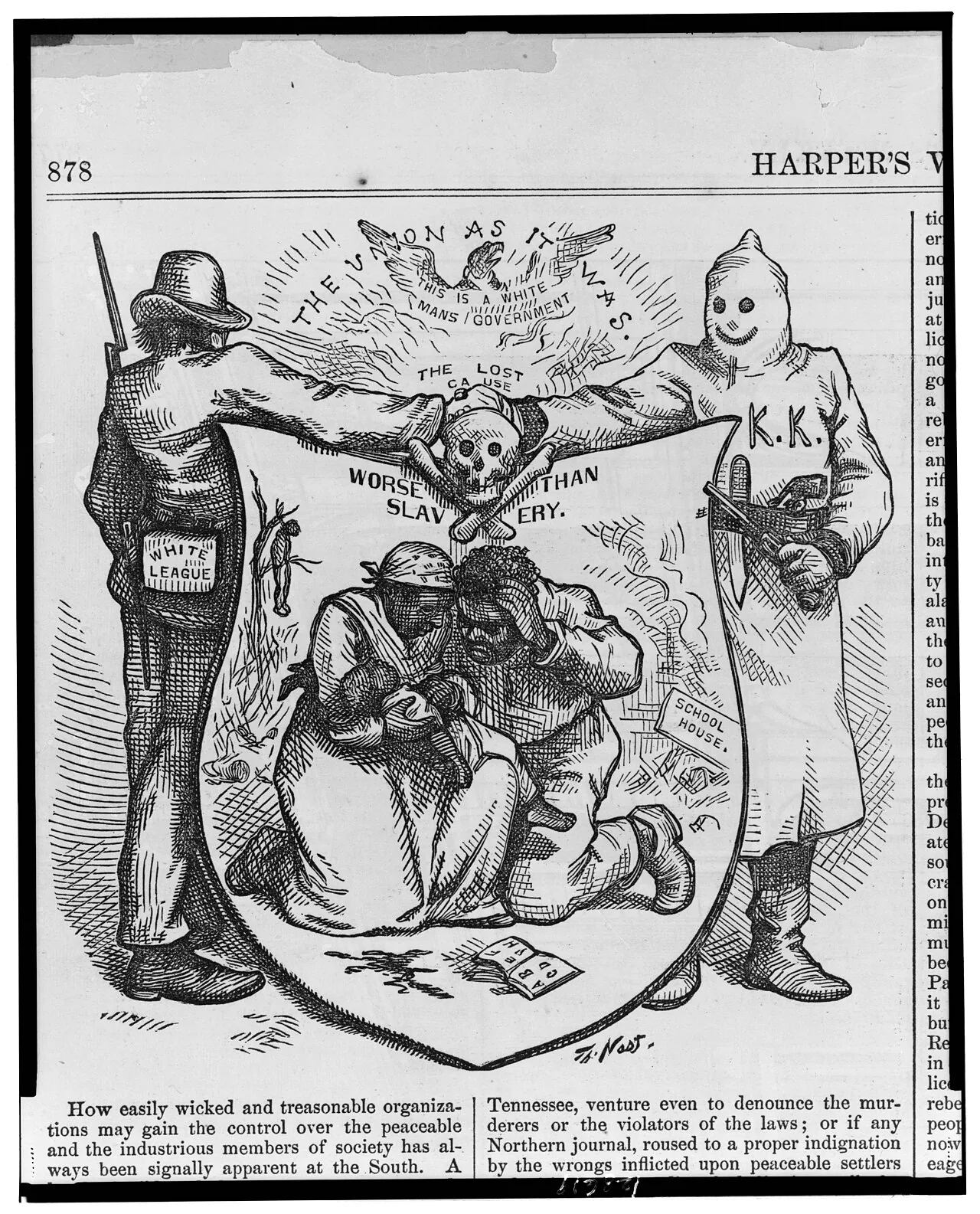
White Southern opponents of Reconstruction formed groups such as the Ku Klux Klan, founded in 1866 in Tennessee. These groups used terror to intimidate Black voters and Republican officials. Congress passed Enforcement Acts (1870-1871) that allowed the federal government to prosecute the Klan. The acts weakened the organization for a time. Most freed people did not receive land, though some had hoped for “forty acres and a mule.” Many became sharecroppers, farming a landowner’s land in return for a share of the crop. This system kept them in debt. Northern support for Reconstruction waned. Corruption scandals and the Panic of 1873 reduced the commitment of Republicans. Many Northerners also came to believe that the South should manage its own affairs.
The Redeemers and the Compromise of 1877
Groups of white Democrats, calling themselves “Redeemers,” used violence and fraud to retake control of state governments. The disputed election of 1876 was settled by a bargain, the Compromise of 1877: Rutherford B. Hayes, the Republican, became president, and the remaining federal troops left the South. Reconstruction was over. The promise of equal citizenship for Black Americans went largely unfulfilled for nearly a century, until the civil rights movement.
Definition: Reconstruction
the period after the Civil War (1865-1877). The nation readmitted the Southern states and decided the rights of formerly enslaved people. It produced the Thirteenth, Fourteenth, and Fifteenth Amendments and ended with the withdrawal of federal troops from the South.
- 1846-1848 War with Mexico; Treaty of Guadalupe Hidalgo
- 1850 Compromise of 1850 and Fugitive Slave Act
- 1854 Kansas-Nebraska Act; Republican Party formed
- 1857 Dred Scott decision
- 1859 John Brown’s raid at Harpers Ferry
- 1860-1861 Lincoln elected; secession; Fort Sumter
- 1862 Antietam; Homestead Act
- 1863 Emancipation Proclamation; Gettysburg; Vicksburg
- 1865 Appomattox; Lincoln assassinated; 13th Amendment
- 1866 Civil Rights Act; Fourteenth Amendment proposed
- 1867 Reconstruction Acts
- 1868-1870 14th and 15th Amendments ratified
- 1877 Compromise of 1877 ends Reconstruction
4. Skills: causation and argument on the exam
Questions about the causes of the Civil War reward a careful line of argument. Slavery and its expansion are the central cause, and the evidence is in the declarations of secession and in the political crises, from the Wilmot Proviso to Kansas-Nebraska and Dred Scott.
Yet students should show how other factors interacted: economic differences between the industrializing North and the plantation South, the failure of political institutions to settle the question, and the radicalization of public opinion by events such as Uncle Tom’s Cabin and John Brown’s raid. A good thesis might be: “Although economic and cultural differences divided the regions, the dispute over the expansion of slavery into the territories was the decisive cause of secession, because each compromise failed to resolve it.”
For Reconstruction, practice continuity and change. What changed: slavery was abolished, the Constitution was amended, and Black men voted and held office. What did not: economic dependence and white supremacy persisted, and violence undermined political rights. Be ready to explain why Reconstruction ended and why historians describe it as both a success and a failure. When evaluating the Emancipation Proclamation or the Fourteenth Amendment, avoid an either-or answer: say what each accomplished and what it left undone.
Key takeaways
- The Mexican War (1846-1848) added the Mexican Cession and reopened the question of slavery in the territories.
- Compromises (1820, 1850) delayed conflict; the Kansas-Nebraska Act, Bleeding Kansas, Dred Scott, and John Brown’s raid destroyed them.
- Lincoln’s election led seven Lower South states to secede; their declarations name slavery as the cause.
- The Union won through greater resources and by turning the war into a fight against slavery (Emancipation Proclamation, Black soldiers).
- Reconstruction produced the 13th, 14th, and 15th Amendments and Black political participation, but violence, Northern fatigue, and the Compromise of 1877 ended it.
- The era enlarged federal power and set standards of citizenship and equality that later generations would invoke.

Quick review: flashcards
Tap a card to see the answer.