


This worksheet on Slavery and Sectionalism belongs to the Grade 8 US History to 1877 course. Its questions use primary sources, maps and timelines, and they move from basic recall to short writing tasks. Before you start, review the lesson; afterward, try the true or false quiz.
Exercise 1 : Vocabulary of sectionalism
Match each term with its meaning, then use three of the terms in sentences of your own.
- Abolitionist
- Popular sovereignty
- Secession
- Cotton gin
- Underground Railroad
- Sectionalism
Meanings: (a) the withdrawal of a state from the Union; (b) a machine that made cotton growing very profitable; (c) loyalty to one region instead of to the nation as a whole; (d) a person who wanted slavery ended; (e) a network of people who helped enslaved people escape; (f) the idea that settlers should vote on slavery in their territory.
Exercise 2 : Slavery from the inside: Douglass
Document 1 – The effect of slavery on a slaveholder
My mistress was, as I have said, a kind and tender-hearted woman; and in the simplicity of her soul she commenced, when I first went to live with her, to treat me as she supposed one human being ought to treat another. In entering upon the duties of a slaveholder, she did not seem to perceive that I sustained to her the relation of a mere chattel, and that for her to treat me as a human being was not only wrong, but dangerously so. Slavery proved as injurious to her as it did to me. […] Slavery soon proved its ability to divest her of these heavenly qualities. Under its influence, the tender heart became stone, and the lamblike disposition gave way to one of tiger-like fierceness.
Source: Frederick Douglass, Narrative of the Life of Frederick Douglass, an American Slave (Boston, 1845), chapter 7. Project Gutenberg.
*chattel: a piece of property. *divest: to strip away.
- Present the document (nature, author, date, context).
- How did Mrs. Auld first treat Douglass, and what changed?
- What does Douglass mean when he writes that slavery “proved as injurious to her as it did to me”?
- Douglass wrote this for Northern readers. Why would the point have mattered to them?
Coup de pouce: think about who was likely to read a book published in Boston in 1845.
Exercise 3 : A young woman’s war: Harriet Jacobs
Document 2 – A young woman in slavery
The war of my life had begun; and though one of God’s most powerless creatures, I resolved never to be conquered. Alas, for me! If there was one pure, sunny spot for me, I believed it to be in Benjamin’s heart, and in another’s, whom I loved with all the ardor of a girl’s first love. My owner knew of it, and sought in every way to render me miserable. He did not resort to corporal punishment, but to all the petty, tyrannical ways that human ingenuity could devise.
Source: Harriet Jacobs (writing as Linda Brent), Incidents in the Life of a Slave Girl (Boston, 1861). Project Gutenberg.
*corporal punishment: beating or whipping. *human ingenuity: human cleverness.
- Present the document (nature, author, date, context).
- Which words show that Jacobs refused to give up her will?
- What kind of cruelty does she describe, if it was not whipping?
- What does this source show about slavery that a law or a statistic cannot?
Exercise 4 : The line at 36°30′
Document 3 – The Missouri Compromise
SEC. 8. And be it further enacted. That in all that territory ceded by France to the United States, under the name of Louisiana, which lies north of thirty-six degrees and thirty minutes north latitude, not included within the limits of the state, contemplated by this act, slavery and involuntary servitude, otherwise than in the punishment of crimes, whereof the parties shall have been duly convicted, shall be, and is hereby, forever prohibited: Provided always, That any person escaping into the same, from whom labour or service is lawfully claimed, in any state or territory of the United States, such fugitive may be lawfully reclaimed and conveyed to the person claiming his or her labour or service as aforesaid.
Source: Act of Congress of March 6, 1820 (Missouri Compromise), section 8. Avalon Project, Yale Law School.
*servitude: the condition of being enslaved. *labour: work.
- Present the document (nature, author, date, context).
- Where is slavery forbidden by this law? Use Map 1 in the lesson to name the line.
- What exception does the last part of the passage make?
- Why can this law be called a compromise?
Exercise 5 : A law that put Northerners to work
Document 4 – The Fugitive Slave Act, 1850
In no trial or hearing under this act shall the testimony of such alleged fugitive be admitted in evidence; and the certificates in this and the first [fourth] section mentioned, shall be conclusive of the right of the person or persons in whose favor granted, to remove such fugitive to the State or Territory from which he escaped, and shall prevent all molestation of such person or persons by any process issued by any court, judge, magistrate, or other person whomsoever.
Source: Fugitive Slave Act, September 18, 1850, section 6. Avalon Project, Yale Law School.
*alleged: claimed but not proven. *conclusive: final.
in all cases where the proceedings are before a commissioner, he shall be entitled to a fee of ten dollars in full for his services in each case, upon the delivery of the said certificate to the claimant, his agent or attorney; or a fee of five dollars in cases where the proof shall not, in the opinion of such commissioner, warrant such certificate and delivery
Source: Fugitive Slave Act, September 18, 1850, section 8. Avalon Project, Yale Law School.
*commissioner: a federal official who decided these cases.
- Present the document (nature, author, date, context).
- What rights does an accused person lose, according to the first passage?
- How was a commissioner paid, according to the second passage? What might that payment encourage?
- Explain why many Northerners who did not call themselves abolitionists opposed this law.
Exercise 6 : The Supreme Court rules
Document 5 – The Dred Scott decision, 1857
They had for more than a century before been regarded as beings of an inferior order, and altogether unfit to associate with the white race, either in social or political relations; and so far inferior, that they had no rights which the white man was bound to respect; and that the negro might justly and lawfully be reduced to slavery for his benefit.
Source: Chief Justice Roger B. Taney, opinion of the Court, Dred Scott v. Sandford, March 6, 1857. Wikisource. Taney is describing what he said were the attitudes at the time the Constitution was written.
*axiom: a statement accepted without question. *inferior order: lower class.
- Present the document (nature, author, date, context).
- According to Taney, how were Black people regarded when the Constitution was written?
- Taney claims to describe the past. Why would this claim help him decide the case in 1857?
- Historians note that some Black men could vote in several states in the 1780s. What does this fact suggest about Taney’s claim?
Coup de pouce: a judge who says “this was always so” avoids having to take responsibility for a decision.
Exercise 7 : Two voices on the nation’s promise
Document A – The Supreme Court, 1857
They had for more than a century before been regarded as beings of an inferior order, and altogether unfit to associate with the white race, either in social or political relations; and so far inferior, that they had no rights which the white man was bound to respect; and that the negro might justly and lawfully be reduced to slavery for his benefit.
Source: Chief Justice Roger B. Taney, Dred Scott v. Sandford, March 6, 1857.
Document B – Frederick Douglass, 1852
What, to the American slave, is your 4th of July? I answer: a day that reveals to him, more than all other days in the year, the gross injustice and cruelty to which he is the constant victim. To him, your celebration is a sham; your boasted liberty, an unholy license; your national greatness, swelling vanity; your sounds of rejoicing are empty and heartless; your denunciations of tyrants, brass fronted impudence; your shouts of liberty and equality, hollow mockery; your prayers and hymns, your sermons and thanksgivings, with all your religious parade, and solemnity, are, to him, mere bombast, fraud, deception, impiety, and hypocrisy—a thin veil to cover up crimes which would disgrace a nation of savages.
Source: Frederick Douglass, Rochester, New York, July 5, 1852.
- Present each document (author, date, kind of source).
- Compare what each author says about the rights of Black Americans.
- Which document relies on the past to defend its view? Which relies on an ideal? Explain.
- In two sentences, say which document is more representative of the views of the American government in the 1850s, and why.
Exercise 8 : Equality in the Lincoln-Douglas debates
Document A – Stephen Douglas, Ottawa, Illinois, August 21, 1858
Mr. Lincoln, following the example and lead of all the little Abolition orators, who go around and lecture in the basements of schools and churches, reads from the Declaration of Independence, that all men were created equal, and then asks, how can you deprive a negro of that equality which God and the Declaration of Independence awards to him? He and they maintain that negro equality is guarantied by the laws of God, and that it is asserted in the Declaration of Independence. If they think so, of course they have a right to say so, and so vote. I do not question Mr. Lincoln’s conscientious belief that the negro was made his equal, and hence is his brother, (laughter,) but for my own part, I do not regard the negro as my equal, and positively deny that he is my brother or any kin to me whatever.
Source: Stephen A. Douglas, first Lincoln-Douglas debate, Ottawa, Illinois, August 21, 1858. Text of the debate.
*guarantied: guaranteed. *Abolition orators: speakers who wanted to end slavery.
Document B – Abraham Lincoln, Ottawa, Illinois, August 21, 1858
I hold that, notwithstanding all this, there is no reason in the world why the negro is not entitled to all the natural rights enumerated in the Declaration of Independence, the right to life, liberty, and the pursuit of happiness. [Loud cheers.] I hold that he is as much entitled to these as the white man. I agree with Judge Douglas he is not my equal in many respects-certainly not in color, perhaps not in moral or intellectual endowment. But in the right to eat the bread, without the leave of anybody else, which his own hand earns, he is my equal and the equal of Judge Douglas, and the equal of every living man.
Source: Abraham Lincoln, reply in the first Lincoln-Douglas debate, Ottawa, Illinois, August 21, 1858. Text of the debate.
- Present the two documents (authors, date, occasion).
- Both men use the language of their time about race. Describe what each says about equality between white and Black Americans.
- On what point do they disagree? Use a sentence from each document.
- Lincoln says that Black Americans are not equal to whites “in many respects.” Why does that not make him agree with Douglas?
Exercise 9 : A house divided
Document 6 – Lincoln’s “House Divided” speech, 1858
A house divided against itself cannot stand.” I believe this government cannot endure, permanently half slave and half free. I do not expect the Union to be dissolved — I do not expect the house to fall — but I do expect it will cease to be divided. It will become all one thing or all the other. Either the opponents of slavery, will arrest the further spread of it, and place it where the public mind shall rest in the belief that it is in the course of ultimate extinction; or its advocates will push it forward, till it shall become alike lawful in all the States, old as well as new — North as well as South.
Source: Abraham Lincoln, speech at Springfield, Illinois, June 16, 1858. Abraham Lincoln Online.
*ultimate extinction: the final end of slavery.
- Present the document (nature, author, date, context).
- What are the two possible futures that Lincoln describes?
- Does Lincoln say the Union will break up? Quote the sentence that shows it.
- Why did Lincoln’s opponents use this speech against him?
Exercise 10 : Why Mississippi left
Document 7 – Mississippi explains its secession, 1861
Our position is thoroughly identified with the institution of slavery– the greatest material interest of the world. Its labor supplies the product which constitutes by far the largest and most important portions of commerce of the earth. These products are peculiar to the climate verging on the tropical regions, and by an imperious law of nature, none but the black race can bear exposure to the tropical sun. These products have become necessities of the world, and a blow at slavery is a blow at commerce and civilization.
Source: A Declaration of the Immediate Causes which Induce and Justify the Secession of the State of Mississippi from the Federal Union, January 1861. Avalon Project, Yale Law School.
*consummation: completion. *imperious: commanding.
- Present the document (nature, author, date, context).
- What does the state say is the main reason for its decision?
- What claim does the declaration make about the “black race”? Is it supported by evidence?
- Some people say the Civil War was about states’ rights or tariffs. Use this document to answer them.
Exercise 11 : The slave auction ad
Study the image.
Document 8 – A slave sale advertised in Charleston
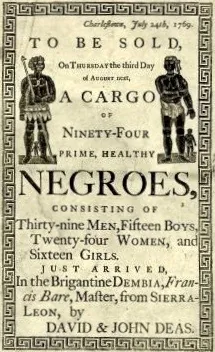
Source: Wikimedia Commons.
- Present the document (nature, date, place).
- Describe what you read and see. Which words show how the buyers were meant to think of the people for sale?
- What does the ad tell you about where the people came from and how they arrived?
- What can historians learn from an advertisement like this that they cannot learn from a speech?
Exercise 12 : The caning in the Senate
Study the image.
Document 9 – A Northern view of the attack on Sumner
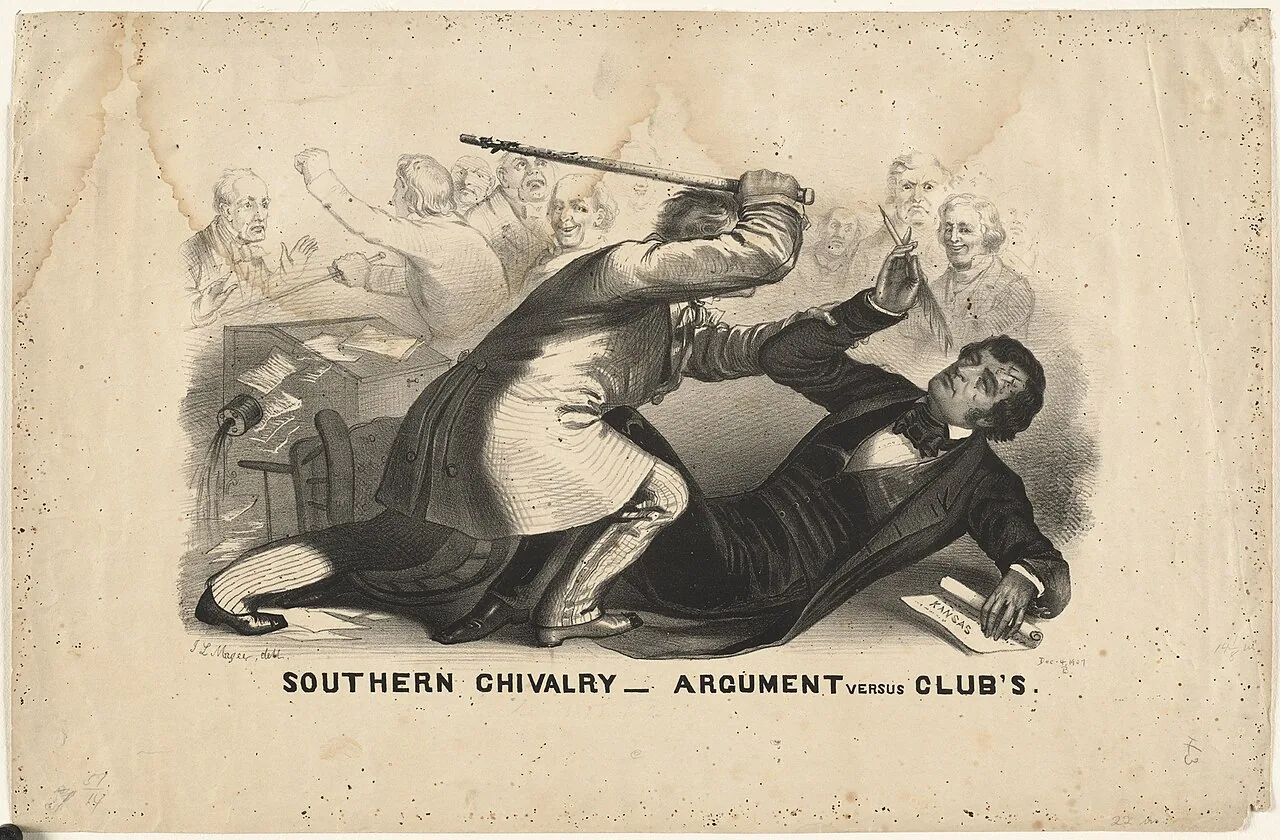
Source: Wikimedia Commons.
- Present the document (nature, date, event).
- Describe the two men and the people in the background.
- The title is “Southern Chivalry: Argument versus Club’s.” What message does it send?
- Why would a print like this be popular in the North but not in the South?
Exercise 13 : Harriet Tubman
Study the image and the caption.
Document 10 – Harriet Tubman
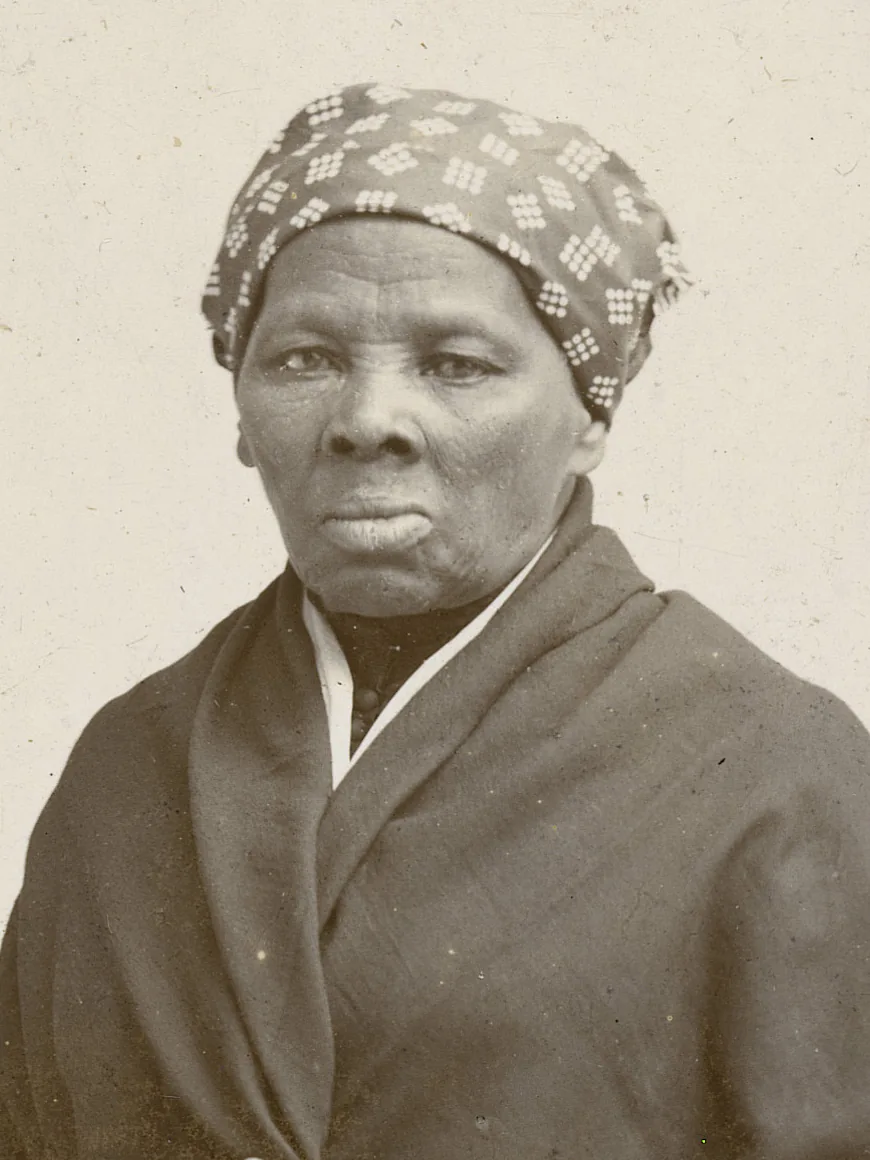
Source: Wikimedia Commons.
- Present the document (nature, subject, approximate date).
- Describe what you see: clothing, expression, pose.
- The Underground Railroad had no tracks or trains. Explain the name.
- Give two reasons why photographs of formerly enslaved people are valuable historical evidence.
Exercise 14 : Dred Scott and Frederick Douglass
Study the two images.
Document 11 – Two men, two legal fates
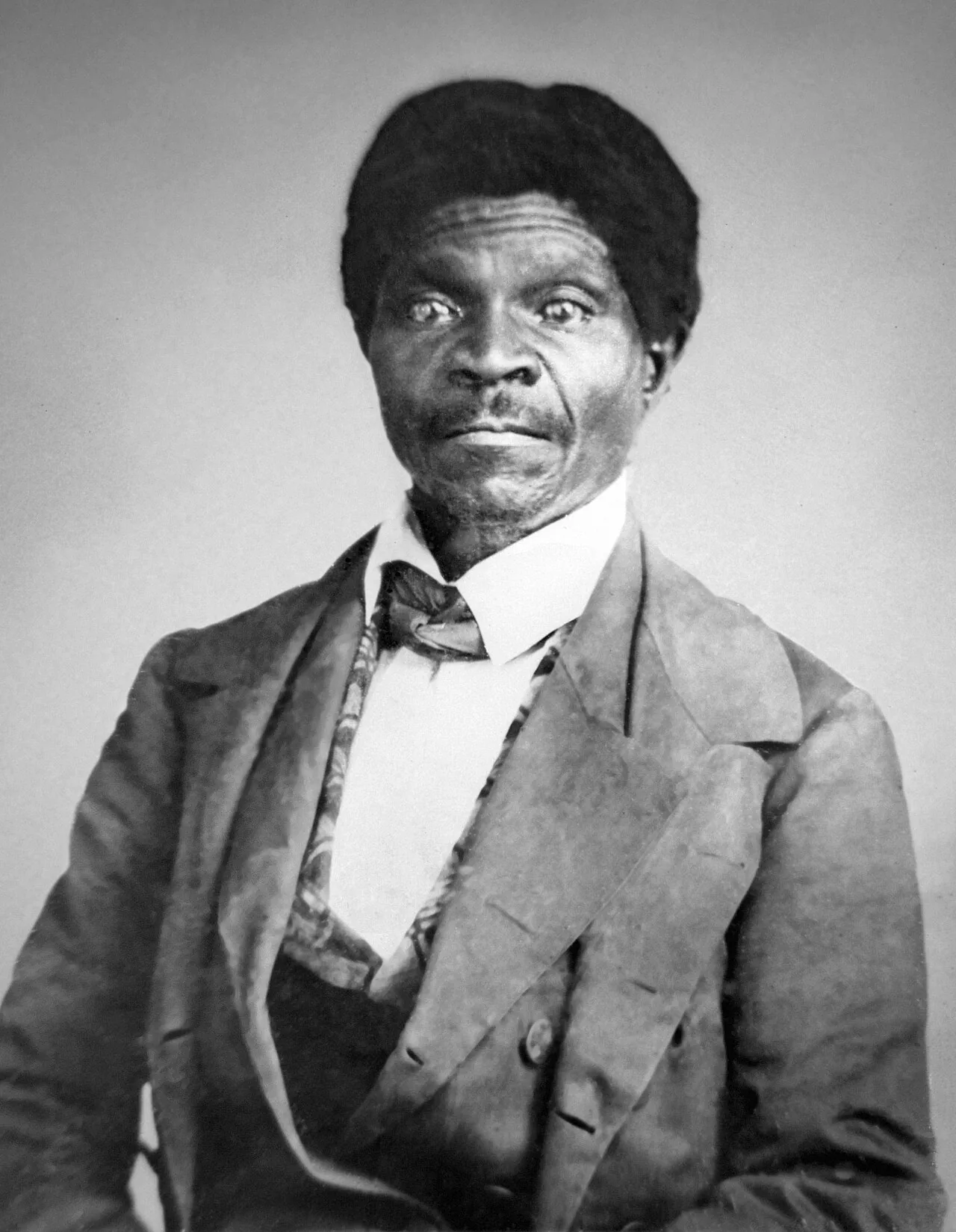
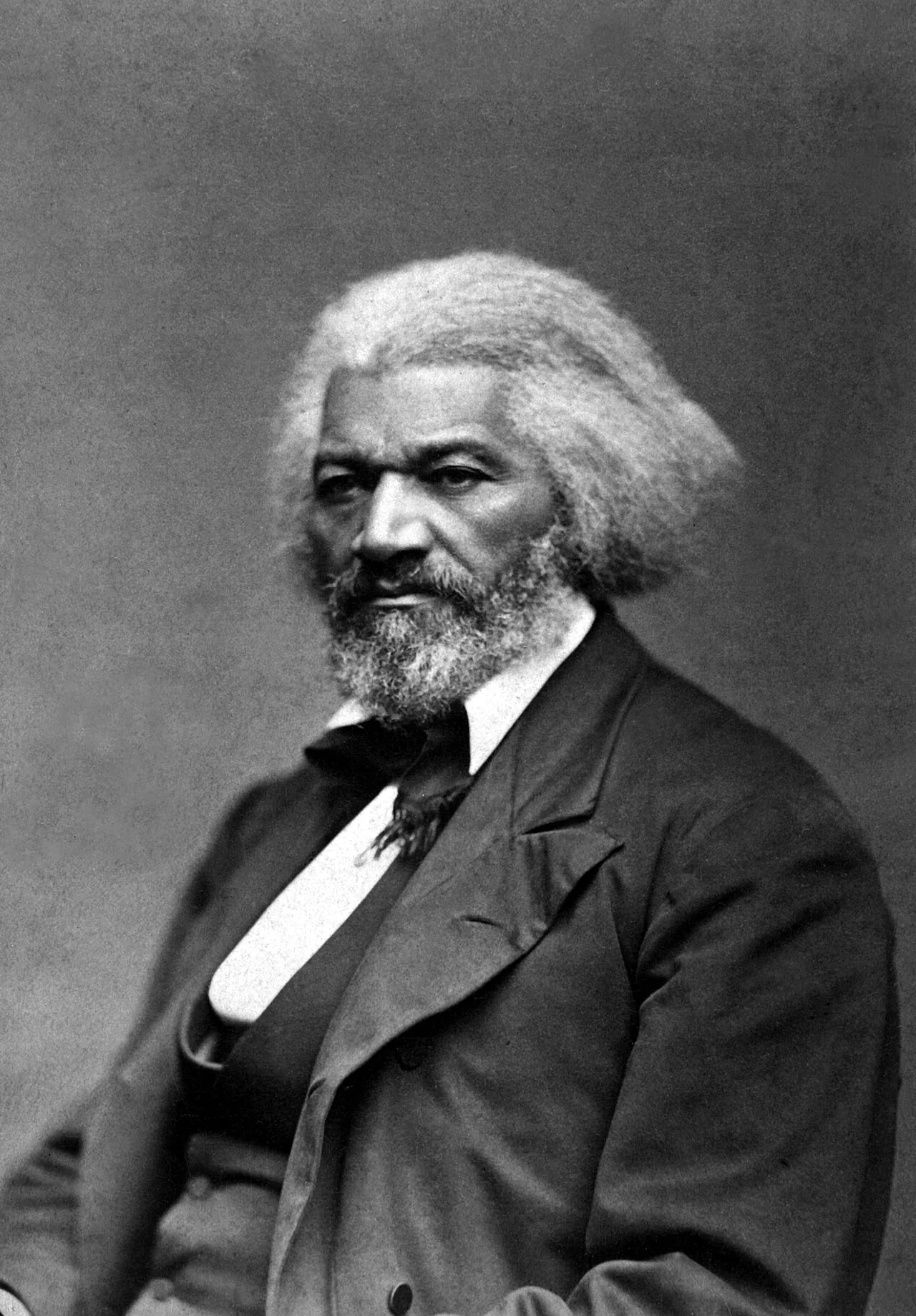
Source: Wikimedia Commons.
- Present the two photographs (subjects, approximate dates).
- What do both men have in common in their pose and clothing?
- Dred Scott lost his case in 1857. Douglass was free. Explain why Douglass could still be harmed by the Dred Scott decision.
- Why might a photograph help students understand the Dred Scott decision better than the legal text alone?
Exercise 15 : The enslaved population in 1860
Study the table, then answer the questions.
Document 12 – Enslaved people in seven Southern states, 1860
| State | Enslaved people (rounded) | Share of population (about) |
|---|---|---|
| Virginia | 491,000 | 31% |
| Georgia | 462,000 | 44% |
| Mississippi | 437,000 | 55% |
| Alabama | 435,000 | 45% |
| South Carolina | 402,000 | 57% |
| Louisiana | 332,000 | 47% |
| North Carolina | 331,000 | 33% |
Source: U.S. Census, 1860 (figures rounded). The total number of enslaved people in the United States in 1860 was about 3.95 million.
- Which state had the most enslaved people? Which had the highest share of its population?
- Add the seven numbers and find what part of the national total they represent (give a percentage).
- Why does a state with a high percentage of enslaved people have a strong reason to fear a rebellion or Northern interference?
- Why does this table help explain which states left the Union first?
Exercise 16 : Map 1: free and slave states
Use the map below (the same as Map 1 in the lesson, without names).
- What does the dashed line represent, and in what year was it drawn?
- Name the colors that show the states that seceded and the slave states that stayed in the Union. Name two states of the second group.
- Identify the places marked 1, 2, and 3.
- Explain why the Kansas-Nebraska Act of 1854 seemed to Northerners to cancel this line.
Exercise 17 : Map 2: secession in two waves
Use the map below.
- Seven states seceded between December 1860 and February 1861. Name them. Which lies farthest west?
- Four more states seceded after April 1861. Name them.
- Why was it important to Lincoln that Maryland, Kentucky, and Missouri stayed in the Union? Give two reasons based on the map.
- Point 1 is a fort in a harbor. Name it and the event that took place there on April 12, 1861.
Coup de pouce: Maryland surrounds Washington on three sides; Missouri and Kentucky touch the Mississippi and Ohio rivers.
Exercise 18 : Order the events
Put these events in order from earliest to latest and give the date (or the year) of each.
- Dred Scott decision
- Fugitive Slave Act
- Missouri Compromise
- Election of Abraham Lincoln
- Kansas-Nebraska Act
- John Brown’s raid on Harpers Ferry
- Attack on Fort Sumter
Exercise 19 : How much time between events?
Use the timeline in the lesson to answer.
- How many years passed between the Missouri Compromise and the attack on Fort Sumter?
- How many years passed between the Compromise of 1850 and the Dred Scott decision?
- For how many years had the Missouri Compromise line been in force when the Kansas-Nebraska Act repealed it?
- Which interval was longer: from the cotton gin to the Missouri Compromise, or from the Missouri Compromise to the election of Lincoln? By how many years?
Exercise 20 : Guided research: Harriet Tubman and the Underground Railroad
Complete a research card on a person who worked against slavery. This example uses Harriet Tubman; you may choose Frederick Douglass or Sojourner Truth instead.
Keywords to search: Harriet Tubman biography; Underground Railroad Maryland Eastern Shore; Combahee River Raid 1863.
Reliable sites: National Archives (archives.gov), Library of Congress (loc.gov), National Park Service (nps.gov), Smithsonian National Museum of African American History and Culture (nmaahc.si.edu).
- Where and when was she born, and when did she escape?
- How many trips did she make back to the South, and about how many people did she help?
- What did she do during the Civil War?
- Find one primary source (a photograph, a letter, or a document) and write its title, date, and where it is kept.
- Why should you check at least two sites for the same fact?
Exercise 21 : CER paragraph: the road to war
Write a paragraph in the form Claim, Evidence, Reasoning in answer to the question: Was the Kansas-Nebraska Act the most important step on the road to the Civil War? Use at least two pieces of evidence from the lesson.
Coup de pouce: Claim = your answer in one sentence. Evidence = facts, dates, quotations. Reasoning = explain why the evidence supports your claim.
Exercise 22 : SAQ: the Dred Scott decision
Answer all parts in complete sentences.
- Identify one claim made by the Supreme Court in Dred Scott v. Sandford.
- Explain one way in which the decision made the sectional conflict worse.
- Explain one reason why Republicans opposed the decision.
Exercise 23 : True or false? Justify
Say whether each statement is true or false, and correct the false ones.
- The cotton gin reduced the need for enslaved labor.
- The Compromise of 1850 admitted California as a free state.
- Abraham Lincoln won the 1860 election with a majority of the popular vote.
- All the states with slavery seceded before the attack on Fort Sumter.
- Frederick Douglass was born into slavery.
Exercise 24 : Causes and consequences: the road to 1861
Complete the chain by writing, for each event, one cause and one consequence.
- The Fugitive Slave Act of 1850
- The Kansas-Nebraska Act of 1854
- John Brown’s raid of 1859
- The election of 1860


Quick review: flashcards
Tap a card to see the answer.