


This worksheet on The Civil War belongs to the Grade 8 US History to 1877 course. Its questions use primary sources, maps and timelines, and they move from basic recall to short writing tasks. Before you start, review the lesson; afterward, try the true or false quiz.
Exercise 1 : Vocabulary of the Civil War
Match each term with its meaning, then use three of the terms in sentences of your own.
- Anaconda Plan
- Emancipation Proclamation
- Total war
- Blockade
- Border state
- Conscription
Meanings: (a) the use of ships to stop trade into and out of enemy ports; (b) a slave state that stayed in the Union; (c) a required draft into the army; (d) a strategy to squeeze the South by a blockade and control of the Mississippi River; (e) Lincoln’s order freeing enslaved people in the rebel states; (f) fighting that attacks the enemy’s economy and civilians’ support as well as its army.
Exercise 2 : Lincoln’s first appeal
Document 1 – Lincoln’s First Inaugural Address, 1861
One section of our country believes slavery is right and ought to be extended, while the other believes it is wrong and ought not to be extended. This is the only substantial dispute. […] The fugitive-slave clause of the Constitution and the law for the suppression of the foreign slave trade are each as well enforced, perhaps, as any law can ever be in a community where the moral sense of the people imperfectly supports the law itself.
Source: Abraham Lincoln, First Inaugural Address, March 4, 1861. Avalon Project, Yale Law School.
*suppression: ending. *moral sense: the sense of right and wrong.
- Present the document (nature, author, date, context).
- What does Lincoln say is the “only substantial dispute” between the sections?
- What does he say about the fugitive-slave clause and the law against the foreign slave trade?
- Seven states had already seceded when he spoke. What do you think he hoped his words would do?
Exercise 3 : A call to arms
Document 2 – Frederick Douglass recruits soldiers, 1863
Liberty won by white men would lose half its luster. “Who would be free themselves must strike the blow.” “Better even die free, than to live slaves.” This is the sentiment of every brave colored man amongst us. There are weak and cowardly men in all nations. We have them amongst us. They tell you this is the “white man’s war”; […] Believe them not; cowards themselves, they do not wish to have their cowardice shamed by your brave example. Leave them to their timidity, or to whatever motive may hold them back. I have not thought lightly of the words I am now addressing you. The counsel I give comes of close observation of the great struggle now in progress, and of the deep conviction that this is your hour and mine.
Source: Frederick Douglass, “Men of Color, To Arms!,” March 21, 1863. Teaching American History.
*luster: shine, glory. *timidity: fear.
- Present the document (nature, author, date, purpose).
- Why does Douglass say that liberty won only by white men “would lose half its luster”?
- What argument does he answer when he says “Believe them not”?
- What claim does he make about the moment in history?
Exercise 4 : What the Proclamation said
Document 3 – The Emancipation Proclamation, January 1, 1863
And by virtue of the power, and for the purpose aforesaid, I do order and declare that all persons held as slaves within said designated States, and parts of States, are, and henceforward shall be free; and that the Executive government of the United States, including the military and naval authorities thereof, will recognize and maintain the freedom of said persons. […] And I further declare and make known, that such persons of suitable condition, will be received into the armed service of the United States to garrison forts, positions, stations, and other places, and to man vessels of all sorts in said service.
Source: Abraham Lincoln, Emancipation Proclamation, January 1, 1863. Avalon Project, Yale Law School.
*designated: named in the earlier part of the document. *garrison: to guard.
- Present the document (nature, author, date, context).
- Whom does it declare free?
- What does it say about Black men and the military?
- Name two groups of enslaved people the Proclamation did not free, using the lesson. Why did Lincoln leave them out?
Exercise 5 : War is cruelty: Sherman
Document 4 – Sherman writes to Atlanta’s mayor, 1864
War is cruelty, and you cannot refine it; and those who brought war into our country deserve all the curses and maledictions a people can pour out. I know I had no hand in making this war, and I know I will make more sacrifices to-day than any of you to secure peace. But you cannot have peace and a division of our country. […] You might as well appeal against the thunder-storm as against these terrible hardships of war. They are inevitable, and the only way the people of Atlanta can hope once more to live in peace and quiet at home, is to stop the war, which can only be done by admitting that it began in error and is perpetuated in pride.
Source: William T. Sherman, letter to James M. Calhoun, mayor of Atlanta, September 12, 1864. Wikisource.
*maledictions: curses.
- Present the document (nature, author, date, context).
- How does Sherman explain who is responsible for the suffering of the war?
- What is the condition for peace that he sets?
- Sherman believed that harsh war would shorten the war. Do you find this argument convincing? Explain with one argument for and one against.
Exercise 6 : Lincoln looks back: the Second Inaugural
Document 5 – Lincoln’s Second Inaugural Address, 1865
One-eighth of the whole population were colored slaves, not distributed generally over the Union, but localized in the southern part of it. These slaves constituted a peculiar and powerful interest. All knew that this interest was somehow the cause of the war. […] Fondly do we hope, fervently do we pray, that this mighty scourge of war may speedily pass away. Yet, if God wills that it continue until all the wealth piled by the bondsman’s two hundred and fifty years of unrequited toil shall be sunk, and until every drop of blood drawn with the lash shall be paid by another drawn with the sword, as was said three thousand years ago, so still it must be said “the judgments of the Lord are true and righteous altogether.”
Source: Abraham Lincoln, Second Inaugural Address, March 4, 1865. Avalon Project, Yale Law School.
*bondsman: a person held as a slave. *unrequited: unpaid.
- Present the document (nature, author, date, context).
- What does Lincoln say was “somehow the cause of the war”?
- What does he suggest about the war as a possible punishment for the nation?
- Why might this view have been unusual in a speech by a victorious president?
Exercise 7 : Two ideas of the nation
Document A – Alexander Stephens, Savannah, March 21, 1861
Our new government is founded upon exactly the opposite idea; its foundations are laid, its corner-stone rests upon the great truth, that the negro is not equal to the white man; that slavery — subordination to the superior race — is his natural and normal condition.
Source: Alexander H. Stephens, Vice President of the Confederacy, “Cornerstone Speech,” Savannah, Georgia, March 21, 1861. Wikisource.
*subordination: a lower position. *physical, philosophical, and moral truth: Stephens’s own description of his idea.
Document B – Abraham Lincoln, Gettysburg, November 19, 1863
Fourscore and seven years ago our fathers brought forth on this continent a new nation, conceived in liberty and dedicated to the proposition that all men are created equal. […] It is for us the living rather to be dedicated here to the unfinished work which they who fought here have thus far so nobly advanced. It is rather for us to be here dedicated to the great task remaining before us–that from these honored dead we take increased devotion to that cause for which they gave the last full measure of devotion–that we here highly resolve that these dead shall not have died in vain, that this nation under God shall have a new birth of freedom, and that government of the people, by the people, for the people shall not perish from the earth.
Source: Abraham Lincoln, Gettysburg Address, November 19, 1863.
- Present the two documents (authors, dates, occasions).
- According to Stephens, on what idea is the Confederacy based?
- According to Lincoln, on what idea was the United States founded?
- Explain in three or four sentences why the two documents show that the war was about the meaning of equality.
Exercise 8 : Did the aim of the war change?
Document A – Lincoln to Horace Greeley, August 22, 1862
My paramount object in this struggle is to save the Union, and is not either to save or to destroy slavery. If I could save the Union without freeing any slave I would do it, and if I could save it by freeing all the slaves I would do it; and if I could save it by freeing some and leaving others alone I would also do that. What I do about slavery, and the colored race, I do because I believe it helps to save the Union; and what I forbear, I forbear because I do not believe it would help to save the Union.
Source: Abraham Lincoln, letter to Horace Greeley, editor of the New-York Tribune, August 22, 1862. Abraham Lincoln Online.
Document B – The Emancipation Proclamation, January 1, 1863
And by virtue of the power, and for the purpose aforesaid, I do order and declare that all persons held as slaves within said designated States, and parts of States, are, and henceforward shall be free; and that the Executive government of the United States, including the military and naval authorities thereof, will recognize and maintain the freedom of said persons. […] And I further declare and make known, that such persons of suitable condition, will be received into the armed service of the United States to garrison forts, positions, stations, and other places, and to man vessels of all sorts in said service.
Source: Abraham Lincoln, Emancipation Proclamation, January 1, 1863. Avalon Project, Yale Law School.
- Present the two documents (author, date, kind of source).
- What is Lincoln’s “paramount object” in Document A? What does he say about slavery?
- What does Document B do about slavery?
- Lincoln wrote Document A one month before the preliminary Proclamation. Explain how both documents can come from the same man.
Coup de pouce: in Document A Lincoln explains his principle, and the letter does not mention the decision he had already made.
Exercise 9 : Two views of the dead
Study the two photographs.
Document 6 – Photographing the battlefield
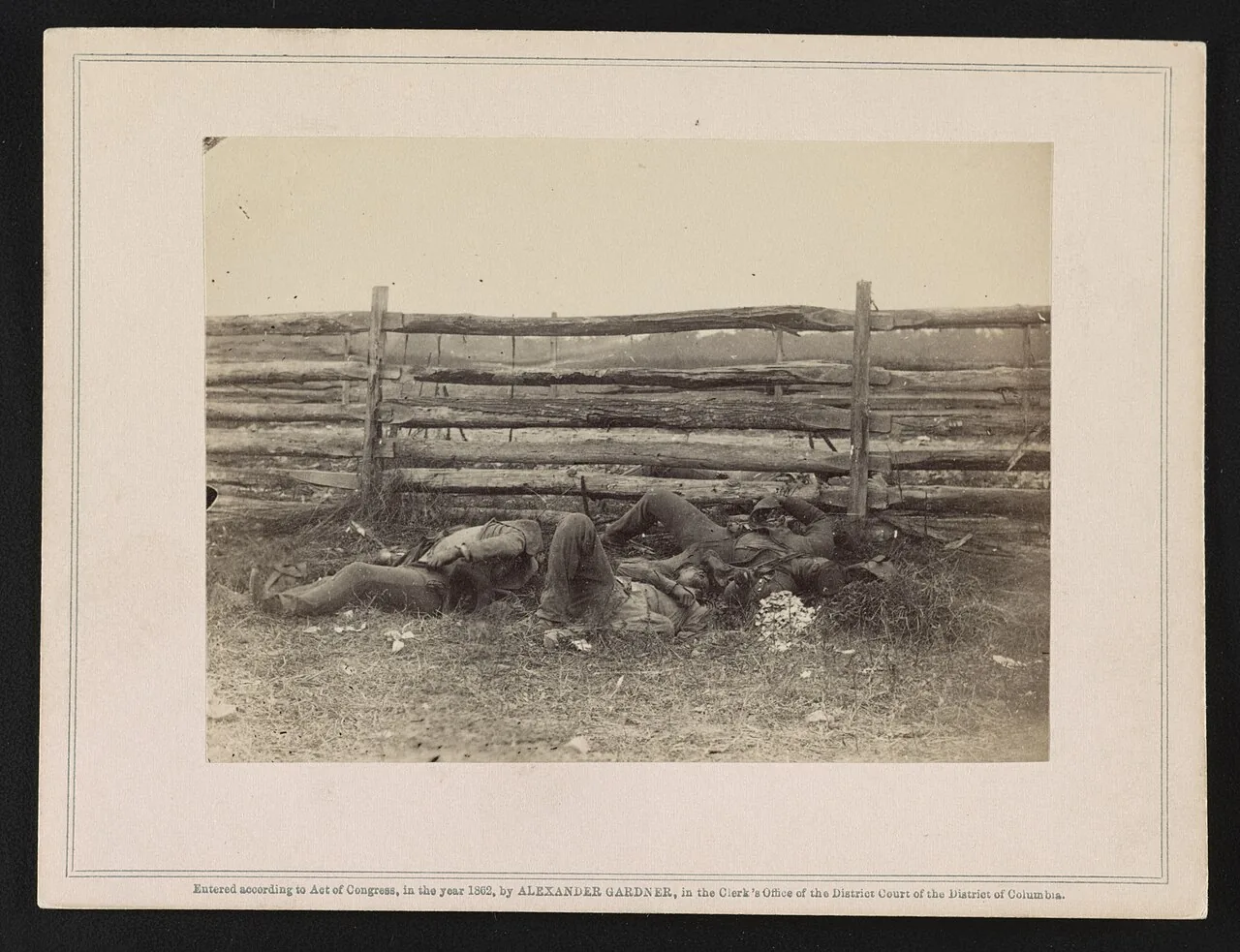
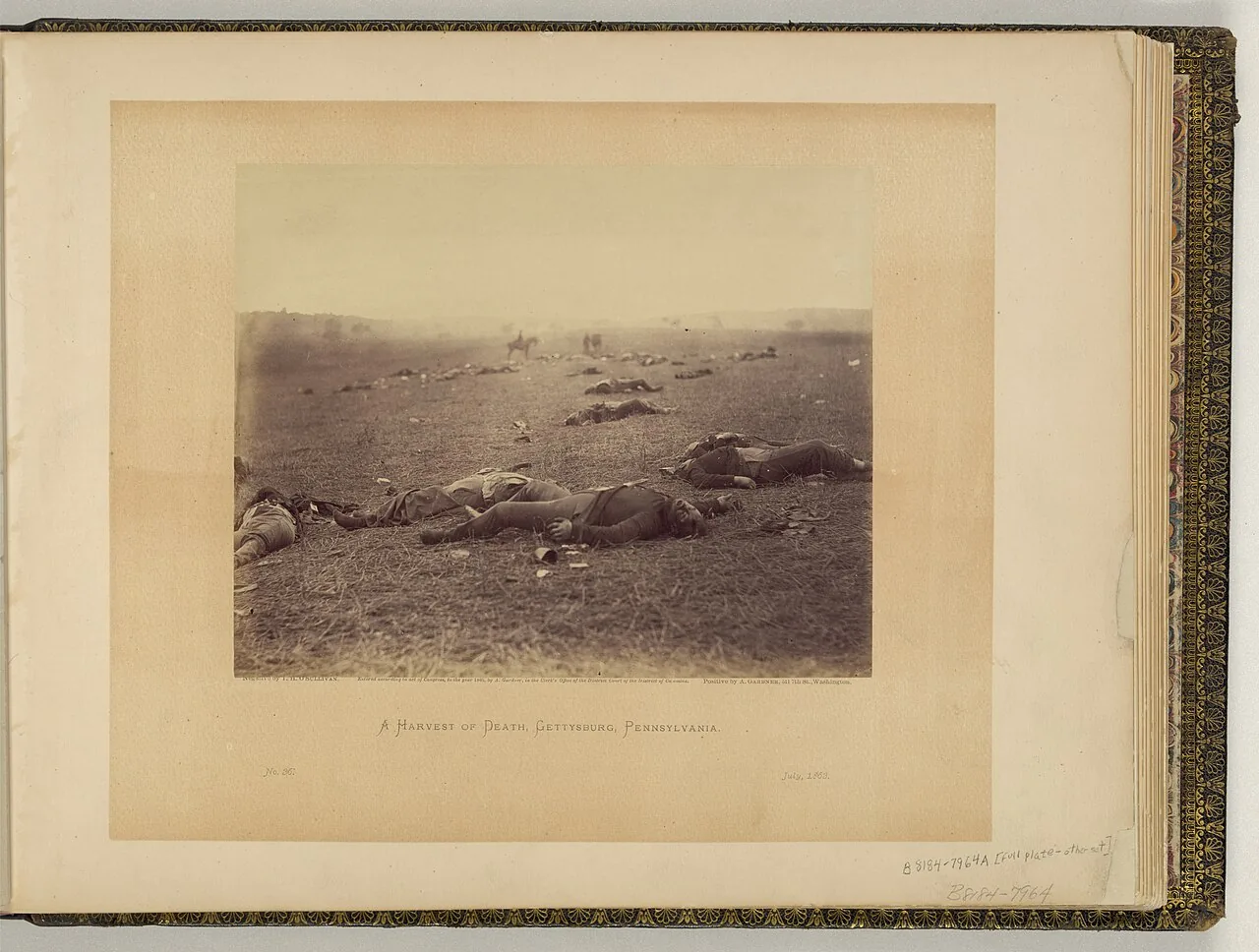
Source: Library of Congress, via Wikimedia Commons.
- Present the two photographs (photographers, places, dates).
- Describe what you see in each of them.
- Why do you think Gardner and O’Sullivan photographed bodies and not battles?
- Explain how photographs like these changed the way Americans understood the war.
Exercise 10 : A president’s face
Study the photograph.
Document 7 – Abraham Lincoln in November 1863
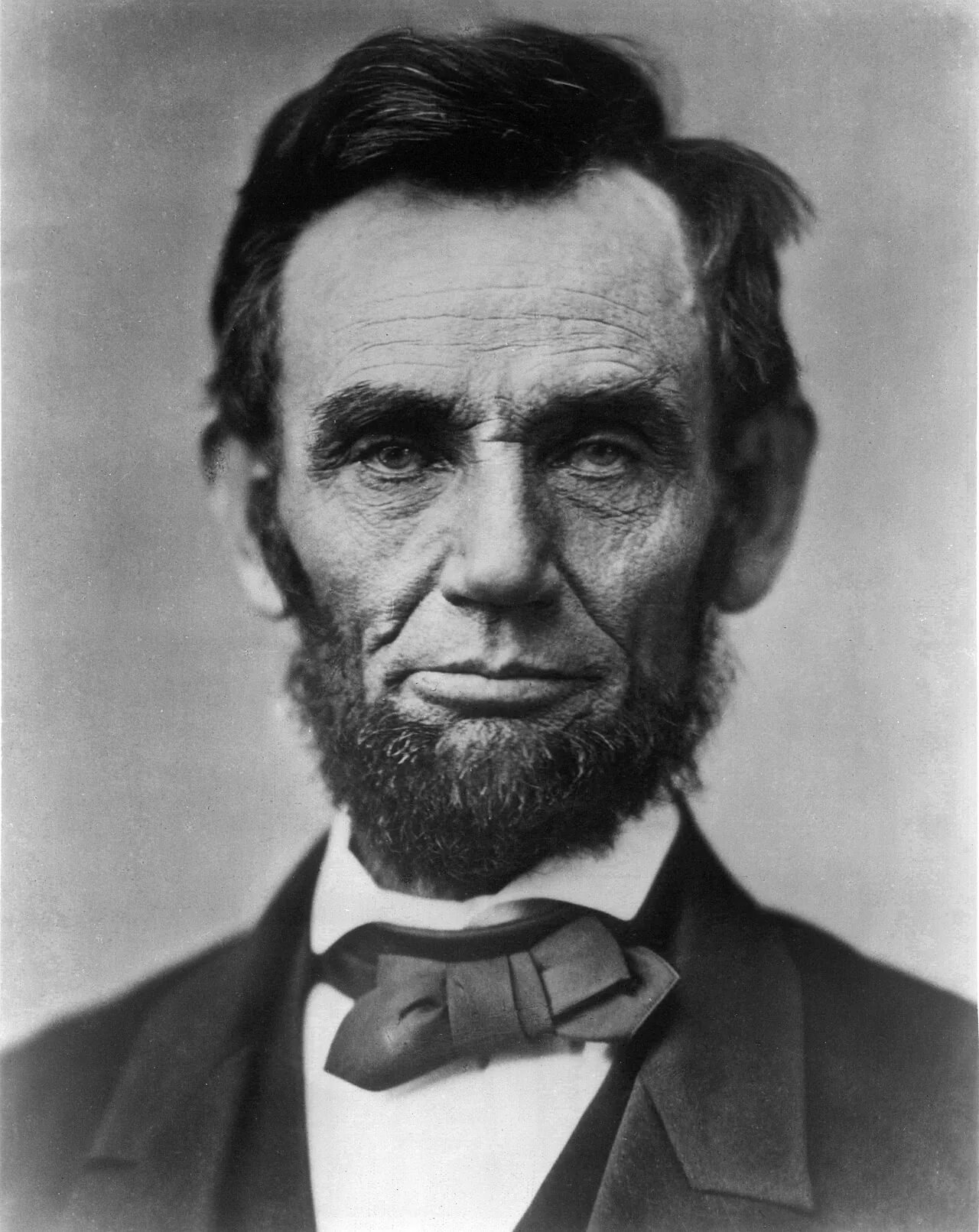
Source: Library of Congress, via Wikimedia Commons.
- Present the document (nature, subject, date).
- Describe the president’s clothing, pose, and expression.
- What had happened in the war in the months before the photograph was taken?
- Why might a photograph be a better source than a painted portrait for historians who want to know how Lincoln looked?
Exercise 11 : Burning Atlanta
Study the image.
Document 8 – Atlanta, November 1864
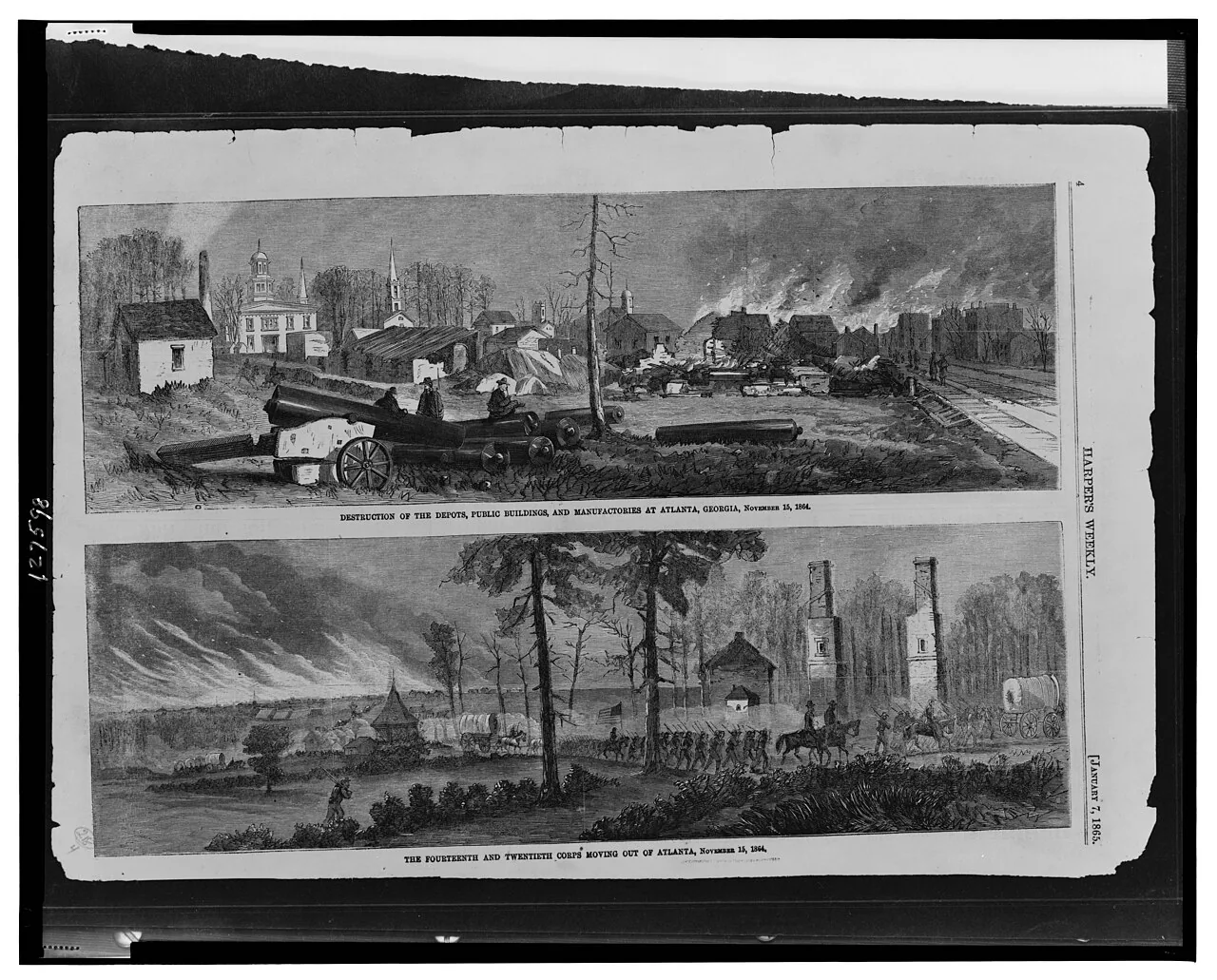
Source: Library of Congress, via Wikimedia Commons.
- Present the document (nature, event, date).
- Describe the two scenes.
- What does this image show about Sherman’s idea of total war?
- Illustrated newspapers published such engravings for Northern readers. Why might their point of view differ from that of the people of Atlanta?
Exercise 12 : The Shaw Memorial
Study the image.
Document 9 – A monument to the 54th Massachusetts
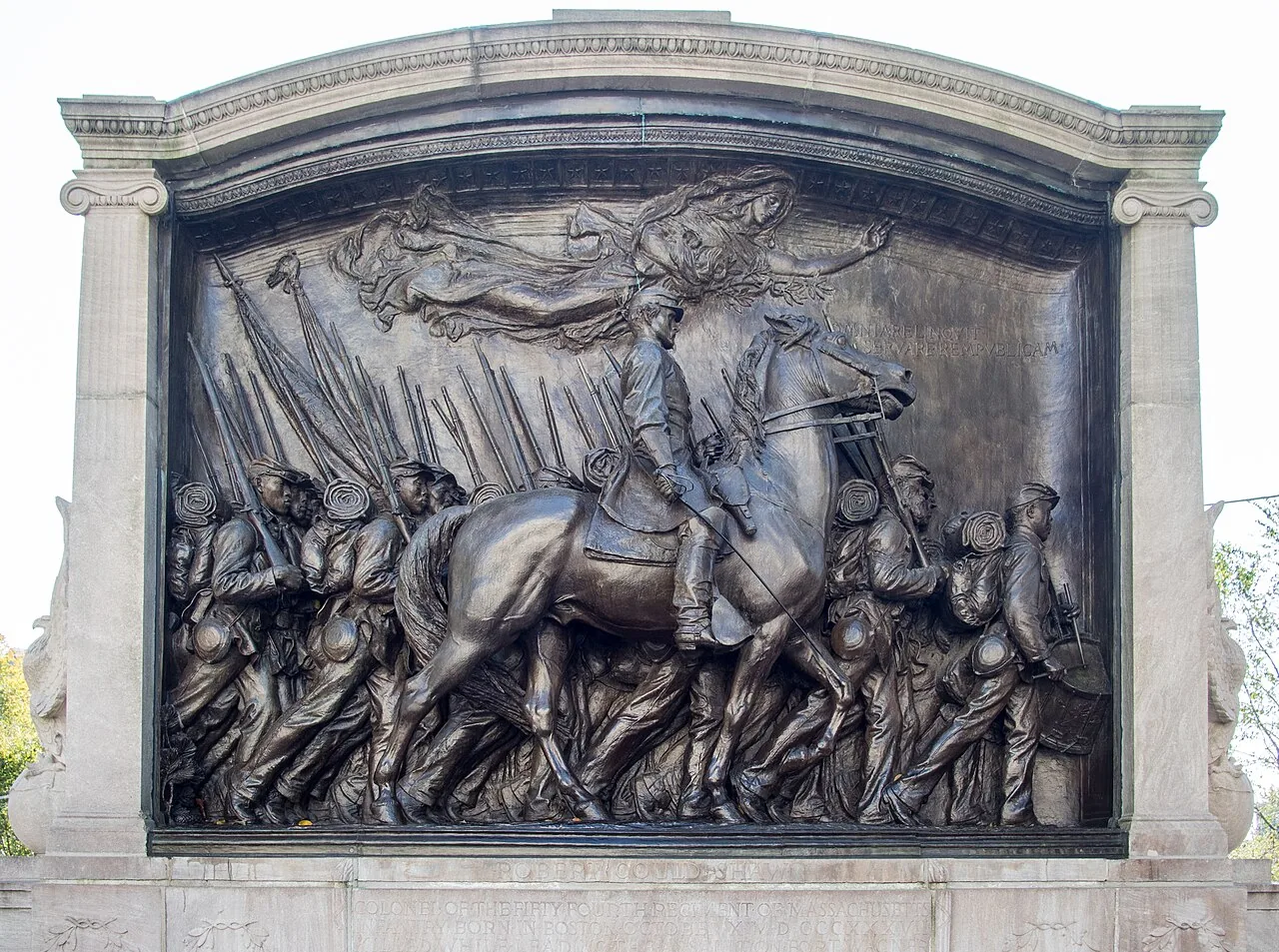
Source: photograph on Wikimedia Commons.
- Present the document (nature, artist, place, date).
- Describe how the sculptor shows the colonel and the soldiers.
- The monument was finished in 1897, thirty-four years after the event. What does it show about how Americans remembered the war?
- What historical facts about the 54th Massachusetts does the lesson give?
Exercise 13 : The balance of forces
Study the table, then answer the questions.
Document 10 – Union and Confederacy compared
| Union | Confederacy | |
|---|---|---|
| Population, 1860-61 (about) | 22 million | 9 million (including about 3.5 million enslaved) |
| Miles of railroad (about) | 22,000 | 9,000 |
| Soldiers who served (roughly) | 2 million | 900,000 |
| Deaths (about) | 360,000 | 260,000 |
Source: figures as commonly given in reference works such as the National Park Service and the Library of Congress. All numbers are approximate; the number of Confederate soldiers is uncertain because many records were lost.
- How many times larger was the Union population than the Confederate population?
- About what percent of the Confederate population was enslaved?
- Why did the railroads matter in a war that covered such large distances?
- The Confederacy lost the war although it fought well. Use the table to give two reasons.
Exercise 14 : Map 1: the war in the East and South
Use the map below. The numbers mark places that are named in the list.
- Match each number from 1 to 9 with a place from the list. (Hint: 1 is a fort in Charleston harbor; 5 lies on the Mississippi River; 9 lies in Tennessee.)
- Which of the places lie in the border states or in the North?
- Why was Vicksburg so important to the Union?
- Which two places are close to Washington, D.C., and why might that be?
Exercise 15 : Map 2: Sherman’s march
Use the map below.
- Name the city where the March began and the city where it ended. In which direction did the army move?
- About how many days did the march take? (It began on November 15 and ended on December 21.)
- Why did Sherman march through Georgia and not toward Richmond?
- Why is it called a “march to the sea”? What did the Union gain on the coast?
Coup de pouce: Georgia was a major source of food and had railroads and factories that supplied the Confederate armies.
Exercise 16 : Order the events
Put these events in order from earliest to latest and give the date or the year of each.
- Surrender at Appomattox
- Battle of Antietam
- Fall of Atlanta
- Attack on Fort Sumter
- Gettysburg Address
- Battle of Gettysburg
- Emancipation Proclamation takes effect
Exercise 17 : How long did it take?
Use the timeline in the lesson to answer.
- How many days passed between Fort Sumter (April 12, 1861) and Lee’s surrender at Appomattox (April 9, 1865)? Give the answer in years and days, or in about four years.
- How many years passed between the Declaration of Independence (1776) and the Gettysburg Address (1863)? Compare this to Lincoln’s “four score and seven.”
- How many days passed between the preliminary Emancipation Proclamation (September 22, 1862) and the date it took effect (January 1, 1863)?
- How many days passed between the end of the battle of Gettysburg (July 3, 1863) and the surrender of Vicksburg (July 4, 1863)?
Exercise 18 : Guided research: the photographers of the war
Choose a photographer or a photograph from the Civil War and complete a research card.
Keywords to search: Mathew Brady photographs Civil War; Alexander Gardner Antietam; Timothy O’Sullivan Gettysburg; Civil War photographs Library of Congress.
Reliable sites: Library of Congress (loc.gov, Prints and Photographs Division), National Archives (archives.gov), National Park Service (nps.gov), Smithsonian American Art Museum.
- Name the photographer and the place and date of the photograph.
- What technology did photographers use in the 1860s, and why could they not photograph action?
- Find a case in which a photographer moved a body or arranged a scene. Why does it matter to historians?
- Write two sentences on what your photograph shows about the war.
Exercise 19 : CER paragraph: the turning point
Write a paragraph in the form Claim, Evidence, Reasoning in answer to the question: Was the Emancipation Proclamation more important than the battle of Gettysburg for the Union victory? Use at least two pieces of evidence from the lesson.
Coup de pouce: think about what each event changed in the war: the Confederacy’s chances, the Union’s aims, and the Union’s army.
Exercise 20 : SAQ: Black soldiers in the Union army
Answer all parts in complete sentences.
- Identify one way in which the Emancipation Proclamation made it possible for Black men to serve in the Union army.
- Explain one way in which Black soldiers helped the Union war effort.
- Explain one difficulty that Black soldiers faced that white soldiers did not.
Exercise 21 : True or false? Justify
Say whether each statement is true or false, and correct the false ones.
- The Emancipation Proclamation freed all enslaved people in the United States on January 1, 1863.
- Vicksburg surrendered to General Grant on July 4, 1863.
- Sherman’s army marched from Atlanta to Savannah.
- Lee surrendered to Grant at Gettysburg.
- More soldiers died of disease than in battle.
Exercise 22 : Causes and consequences: Union victory
For each event, give one cause and one consequence.
- The Battle of Antietam
- The Emancipation Proclamation
- The fall of Atlanta
- The surrender at Appomattox


Quick review: flashcards
Tap a card to see the answer.