


This worksheet on The Ancient Hebrews and the Origins of Judaism belongs to the Grade 6 Ancient Civilizations course. Its questions use primary sources, maps and timelines, and they move from basic recall to short writing tasks. Before you start, review the lesson; afterward, try the true or false quiz.
Exercise 1 : Vocabulary of the ancient Hebrews
Define each word, then use it in a sentence.
- covenant
- monotheism
- Torah
- prophet
- exile
- Diaspora
- synagogue
Hint: use the definition boxes and the lesson.
Exercise 2 : The last Commandments
Document 1 – Commandments about relations among people
Honour thy father and thy mother: that thy days may be long upon the land which the LORD thy God giveth thee. Thou shalt not kill. Thou shalt not commit adultery. Thou shalt not steal. Thou shalt not bear false witness against thy neighbour. Thou shalt not covet thy neighbour’s house, thou shalt not covet thy neighbour’s wife, nor his manservant, nor his maidservant, nor his ox, nor his ass, nor any thing that is thy neighbour’s.
Source: Hebrew Bible, Exodus 20:12-17, King James Version (1611). Traditionally the second half of the Ten Commandments.
*honour: respect. *covet: desire what belongs to someone else. *manservant, maidservant: servants.
- Present the document (nature, author, date, context).
- List the five things that the text forbids besides honoring parents.
- Which commandments deal with the family? Which deal with property or the courts?
- Why do these rules apply to everyone, not just to priests or kings?
- Why is the Bible a source for historians even though it is also a sacred text?
Exercise 3 : The people ask for a king
Document 2 – Israel asks for a king
Then all the elders of Israel gathered themselves together, and came to Samuel unto Ramah, And said unto him, Behold, thou art old, and thy sons walk not in thy ways: now make us a king to judge us like all the nations. But the thing displeased Samuel, when they said, Give us a king to judge us. And Samuel prayed unto the LORD. And the LORD said unto Samuel, Hearken unto the voice of the people in all that they say unto thee: for they have not rejected thee, but they have rejected me, that I should not reign over them.
Source: Hebrew Bible, 1 Samuel 8:4-7, King James Version (1611). The story is set in the 11th century BCE; the book was written down later.
*Ramah: the town of the prophet Samuel. *judge: ruler or leader. *Hearken: listen.
- Present the document.
- Who comes to Samuel, and what do they ask for?
- Why do they give Samuel’s age and his sons’ behavior as reasons?
- Which phrase shows that other nations already had kings?
- How does the text suggest that Samuel and God disliked the request?
Exercise 4 : Justice and festivals
Document 3 – The prophet Amos speaks
I hate, I despise your feast days, and I will not smell in your solemn assemblies. Though ye offer me burnt offerings and your meat offerings, I will not accept them: neither will I regard the peace offerings of your fat beasts. Take thou away from me the noise of thy songs; for I will not hear the melody of thy viols. But let judgment run down as waters, and righteousness as a mighty stream.
Source: Hebrew Bible, Amos 5:21-24, King James Version (1611). Amos spoke in the northern kingdom of Israel in the 8th century BCE.
*solemn assemblies: religious gatherings. *burnt offerings, meat offerings, peace offerings: kinds of sacrifice. *viols: stringed instruments. *judgment, righteousness: justice and goodness.
- Present the document.
- What religious practices does the speaker reject?
- What does he ask for instead?
- Which image describes how justice should flow?
- Explain what this passage shows about what the prophets thought God wanted.
Exercise 5 : Hear, O Israel
Document 4 – The Shema
Hear, O Israel: The LORD our God is one LORD: And thou shalt love the LORD thy God with all thine heart, and with all thy soul, and with all thy might. And these words, which I command thee this day, shall be in thine heart: And thou shalt teach them diligently unto thy children, and shalt talk of them when thou sittest in thine house, and when thou walkest by the way, and when thou liest down, and when thou risest up. And thou shalt bind them for a sign upon thine hand, and they shall be as frontlets between thine eyes. And thou shalt write them upon the posts of thy house, and on thy gates.
Source: Hebrew Bible, Deuteronomy 6:4-9, King James Version (1611). A central prayer in Judaism; the book was written down in the 7th-6th centuries BCE.
*thine: your. *might: strength. *frontlets: small boxes or bands worn on the forehead. *posts: door frames.
- Present the document.
- What does the first line say about God?
- Name two things that the text tells people to do with these words.
- How does the text say that the teaching should be passed on?
- Explain why this passage is an example of monotheism.
Exercise 6 : Protecting the stranger
Document 5 – A law about strangers, widows, and orphans
Thou shalt neither vex a stranger, nor oppress him: for ye were strangers in the land of Egypt. Ye shall not afflict any widow, or fatherless child. If thou afflict them in any wise, and they cry at all unto me, I will surely hear their cry; And my wrath shall wax hot, and I will kill you with the sword; and your wives shall be widows, and your children fatherless.
Source: Hebrew Bible, Exodus 22:21-24, King James Version (1611).
*vex: trouble or mistreat. *afflict: cause suffering. *fatherless: orphan. *wrath: anger.
- Present the document.
- Which groups does the law protect?
- What reason does the text give for treating strangers well?
- What punishment does it threaten?
- Why were widows, orphans, and strangers especially vulnerable in ancient societies?
Exercise 7 : The law of the king
Document 6 – Limits on a king
When thou art come unto the land which the LORD thy God giveth thee, and shalt possess it, and shalt dwell therein, and shalt say, I will set a king over me, like as all the nations that are about me; Thou shalt in any wise set him king over thee, whom the LORD thy God shall choose: one from among thy brethren shalt thou set king over thee: thou mayest not set a stranger over thee, which is not thy brother. But he shall not multiply horses to himself, nor cause the people to return to Egypt, to the end that he should multiply horses: forasmuch as the LORD hath said unto you, Ye shall henceforth return no more that way. Neither shall he multiply wives to himself, that his heart turn not away: neither shall he greatly multiply to himself silver and gold.
Source: Hebrew Bible, Deuteronomy 17:14-17, King James Version (1611).
*in any wise: certainly. *brethren: fellow Israelites. *multiply: collect in large numbers.
- Present the document.
- Who may be set as king, according to the text?
- List three things the king must not collect in large numbers.
- Why would the author want to limit a king’s horses, wives, and wealth?
- Compare this idea with the Mandate of Heaven or with another limit on rulers that you have studied.
Exercise 8 : Hammurabi and the Bible: an eye for an eye
Document 1A – Code of Hammurabi
196. If a man put out the eye of another man, his eye shall be put out. 197. If he break another man’s bone, his bone shall be broken. 198. If he put out the eye of a freed man, or break the bone of a freed man, he shall pay one gold mina. 199. If he put out the eye of a man’s slave, or break the bone of a man’s slave, he shall pay one-half of its value. 200. If a man knock out the teeth of his equal, his teeth shall be knocked out.
Source: Code of Hammurabi, laws 196-200, Babylon, about 1754 BCE (translation by L. W. King, 1910).
*freed man: a man who is not a slave but belongs to a lower class. *mina: a unit of silver weight. *his equal: a man of the same rank.
Document 1B – The law of Moses
And if any mischief follow, then thou shalt give life for life, Eye for eye, tooth for tooth, hand for hand, foot for foot, Burning for burning, wound for wound, stripe for stripe. And if a man smite the eye of his servant, or the eye of his maid, that it perish; he shall let him go free for his eye’s sake. And if he smite out his manservant’s tooth, or his maidservant’s tooth; he shall let him go free for his tooth’s sake.
Source: Hebrew Bible, Exodus 21:23-27, King James Version (1611).
*mischief: harm. *smite: strike.
- Present each document.
- Find a similar rule in the two documents.
- In Hammurabi’s laws, does the punishment depend on the rank of the victim? Give evidence.
- Does the biblical text have a similar difference? Explain.
- What do the two texts show about law in the ancient Near East?
Exercise 9 : Lament and decree
Document 2A – By the rivers of Babylon
By the rivers of Babylon, there we sat down, yea, we wept, when we remembered Zion. We hanged our harps upon the willows in the midst thereof. For there they that carried us away captive required of us a song; and they that wasted us required of us mirth, saying, Sing us one of the songs of Zion. How shall we sing the LORD’S song in a strange land?
Source: Hebrew Bible, Psalm 137:1-4, King James Version (1611). A song composed after the destruction of Jerusalem in 586 BCE.
*Zion: Jerusalem. *willows: trees. *required: demanded. *mirth: fun.
Document 2B – The decree of Cyrus
Thus saith Cyrus king of Persia, The LORD God of heaven hath given me all the kingdoms of the earth; and he hath charged me to build him an house at Jerusalem, which is in Judah. Who is there among you of all his people? his God be with him, and let him go up to Jerusalem, which is in Judah, and build the house of the LORD God of Israel, (he is the God,) which is in Jerusalem. And whosoever remaineth in any place where he sojourneth, let the men of his place help him with silver, and with gold, and with goods, and with beasts, beside the freewill offering for the house of God that is in Jerusalem.
Source: Hebrew Bible, Ezra 1:2-4, King James Version (1611). The decree of the Persian king Cyrus, 538 BCE, as reported in the Bible.
*sojourneth: lives for a time. *freewill offering: a gift given willingly.
- Present each document.
- What feelings does the speaker of Document 2A express?
- What does Cyrus allow in Document 2B?
- Which two periods of Jewish history do the documents belong to?
- Explain how a historian can use the two documents together to describe the Exile and its end.
Exercise 10 : The oldest mention of Israel
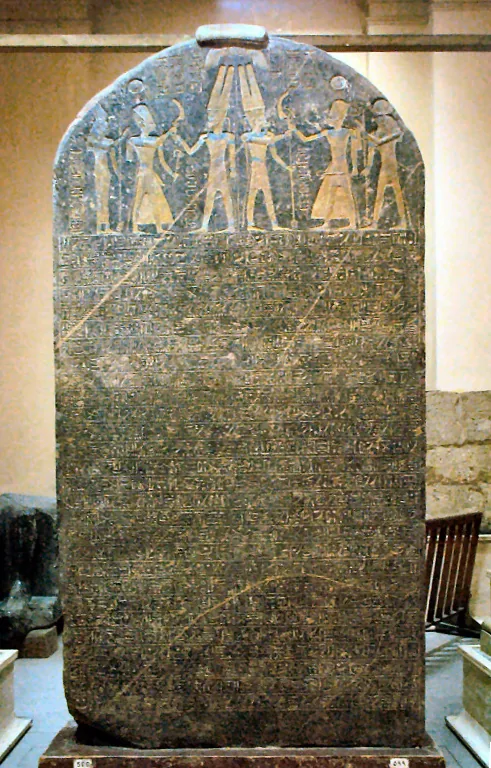
- Present the document (nature, date, place).
- Describe the object. What do you see at the top and on the main surface?
- Why is this stele important for the history of the Hebrews?
- What can historians not conclude from it?
- Why is it a stronger kind of evidence than a story written centuries later?
Exercise 11 : Hezekiah’s Tunnel
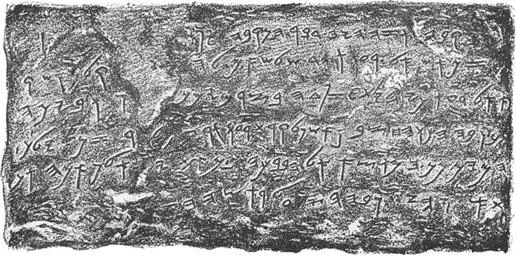
- Present the document (nature, date, place).
- Describe what you see on the surface of the stone.
- Why did King Hezekiah have a tunnel dug? Use the lesson.
- Why is the inscription an important source for the study of the Hebrew language?
- How does this source help historians test what the Bible says about Hezekiah?
Exercise 12 : The siege of Lachish
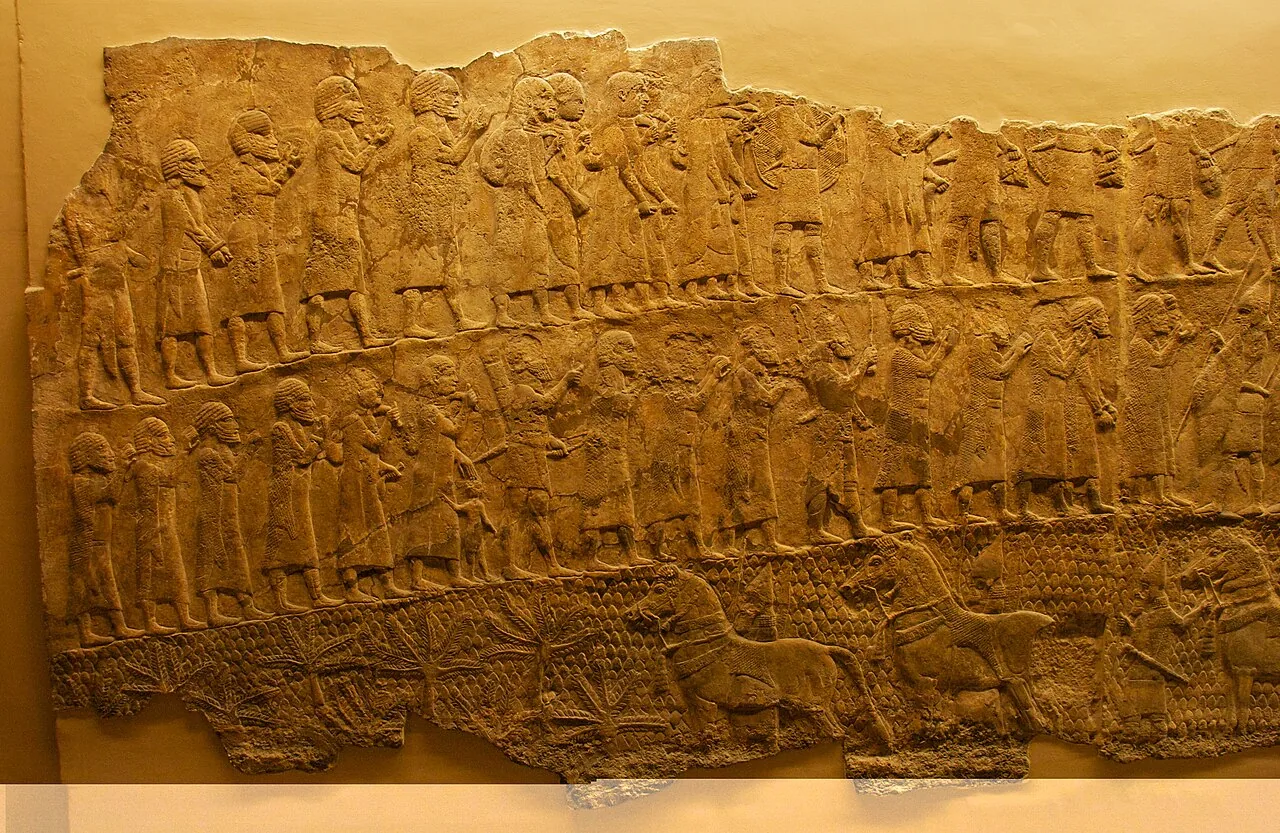
- Present the document (nature, date, place).
- Describe what you see. What are the figures doing?
- Who ordered the relief and why?
- Whose point of view does it show?
- How does this source add to what the Bible says about 701 BCE?
Exercise 13 : Cyrus and the exiles
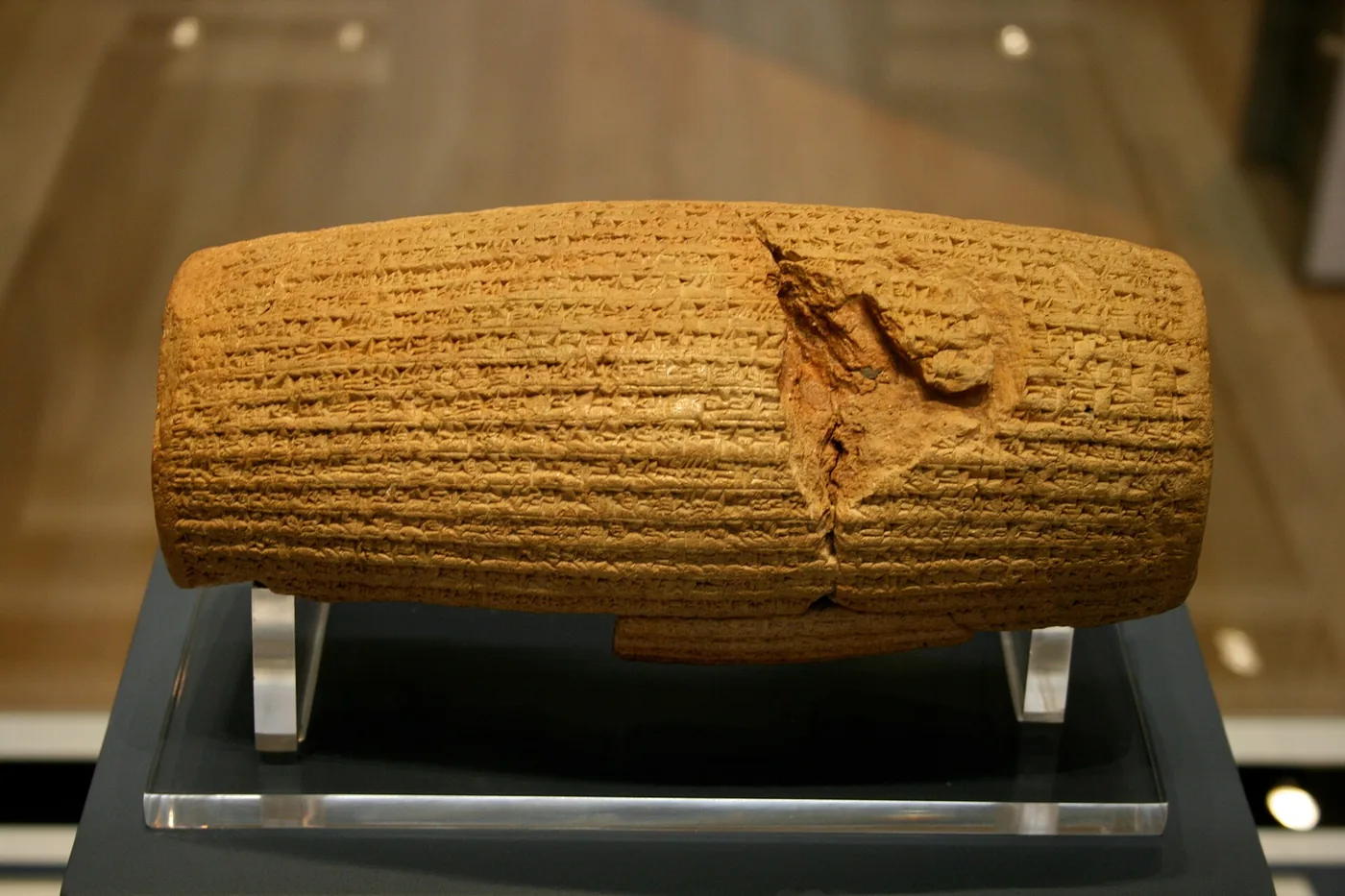
- Present the document (nature, date, place).
- Describe the object and its writing.
- What does the Cyrus Cylinder say about how Cyrus treated peoples he conquered?
- How does it connect with the decree of Cyrus in the Book of Ezra?
- Why do historians need both documents?
Exercise 14 : The ancient Hebrews by the numbers
Document 1 – Periods of Hebrew history
| Period | Dates (approximate) |
|---|---|
| United kingdom (Saul, David, Solomon) | about 1020-930 BCE |
| Kingdom of Israel (north) | about 930-722 BCE |
| Kingdom of Judah (south) | about 930-586 BCE |
| Babylonian Exile | 586-539 BCE |
| Second Temple period | about 516 BCE-70 CE |
Source: Dates as commonly given in reference works such as The Oxford History of the Biblical World, ed. Michael D. Coogan (1998); most early dates are approximate. Table prepared for this unit.
- How long did the kingdom of Israel last?
- How many years did Judah last after Israel was destroyed?
- How long was the Babylonian Exile?
- How long did the Second Temple stand?
- Why are the early dates marked “approximate”?
Exercise 15 : Locate sites in the Near East
- Match the numbers to these names: Babylon, Haran, Jerusalem, Memphis, Nineveh, Tyre, Ur.
- Which two rivers flow through Mesopotamia?
- Describe the route of Abraham from Ur to Canaan.
- Why was Canaan a crossroads, and why did that matter for the Hebrews?
Hint: Canaan is east of the Mediterranean and north of Egypt.
Exercise 16 : Israel and Judah
- Name the sites 1 to 8, using this list: Beersheba, Damascus, Dan, Jerusalem, Lachish, Megiddo, Samaria, Tyre.
- Which kingdom had its capital at Samaria? Which had Jerusalem?
- Which kingdom lay to the south? Which of the two was larger in area?
- Which sea lies to the west of the two kingdoms?
Exercise 17 : Order the events
Put these events in order from the oldest to the most recent.
- The Second Temple is finished.
- Assyria captures Samaria.
- Romans destroy the Second Temple.
- Babylon destroys Jerusalem.
- The Merneptah Stele names Israel.
- The Maccabees recapture the Temple.
- Solomon builds the Temple.
Exercise 18 : How long between events?
Calculate each time span. Remember that BCE years count down toward zero.
- From the split of the kingdom (about 930 BCE) to the fall of Samaria (722 BCE).
- From the destruction of the first Temple (586 BCE) to the end of the Exile (539 BCE).
- From the destruction of the Second Temple (70 CE) to the Bar Kokhba revolt (135 CE).
- From the Merneptah Stele (about 1208 BCE) to the year 2026: about how many years?
Exercise 19 : Guided research: the Dead Sea Scrolls
Find out how the oldest known manuscripts of the Hebrew Bible were found. Use at least two reliable sites, such as the Israel Museum’s Digital Dead Sea Scrolls, the Library of Congress, the British Museum, or Britannica. Suggested keywords: Dead Sea Scrolls Israel Museum, Qumran caves discovery 1947, Great Isaiah Scroll.
- When and where were the scrolls found?
- About how old are they?
- What kinds of texts do they include?
- Why are they important for historians of the Hebrew Bible?
- Which websites did you use, and why do you trust them?
Hint: compare two sources; if they differ, note it.
Exercise 20 : CER paragraph: the Exile
Write a Claim, Evidence, Reasoning paragraph that answers: Did the Babylonian Exile weaken or strengthen the Jewish people?
- Claim: state your position.
- Evidence: use at least two details from the documents or the lesson.
- Reasoning: explain how the evidence supports your claim.
Hint: think about what the Judeans lost, and what they kept or created while living abroad.
Exercise 21 : SAQ: Rome and the Jews
Answer in complete sentences.
- Identify two ways Rome ruled Judea.
- Explain one cause of the great revolt of 66 CE.
- Explain one effect of the destruction of the Second Temple in 70 CE on Jewish religious life.
Exercise 22 : True or false? Justify
Decide whether each statement is true or false, and justify your answer.
- The Hebrews were the only people in Canaan to believe in one God, and the belief was already complete in the time of Abraham.
- The word Jew comes from Judah.
- Assyria, not Babylon, destroyed the kingdom of Israel.
- The Merneptah Stele proves that the Exodus happened.
Exercise 23 : Causes and consequences: why the Diaspora grew
Complete the chain and explain each link.
- Cause: Babylon destroys Jerusalem and deports many Judeans. Effect: ______.
- Effect when Cyrus lets the exiles go home: ______.
- Effect of the Roman destruction of the Temple in 70 CE and the ban after 135 CE: ______.
- Later consequence for Jewish religious life: ______.


Quick review: flashcards
Tap a card to see the answer.