


This World History Grades 9-10 test covers The Cold War. Like a classroom assessment, it includes documents to analyze, knowledge questions and a short writing task. To prepare, review the lesson first, then practice with the worksheet.
Time : 50 min
The test has three parts: knowledge (30 points), documents (45 points), and a written argument (25 points). Answer in complete sentences and cite the documents.
Document 1 – Cold War Europe
Map made for this lesson from Natural Earth data; East Germany is approximate.
Document 2 – Missile site in Cuba, 1962
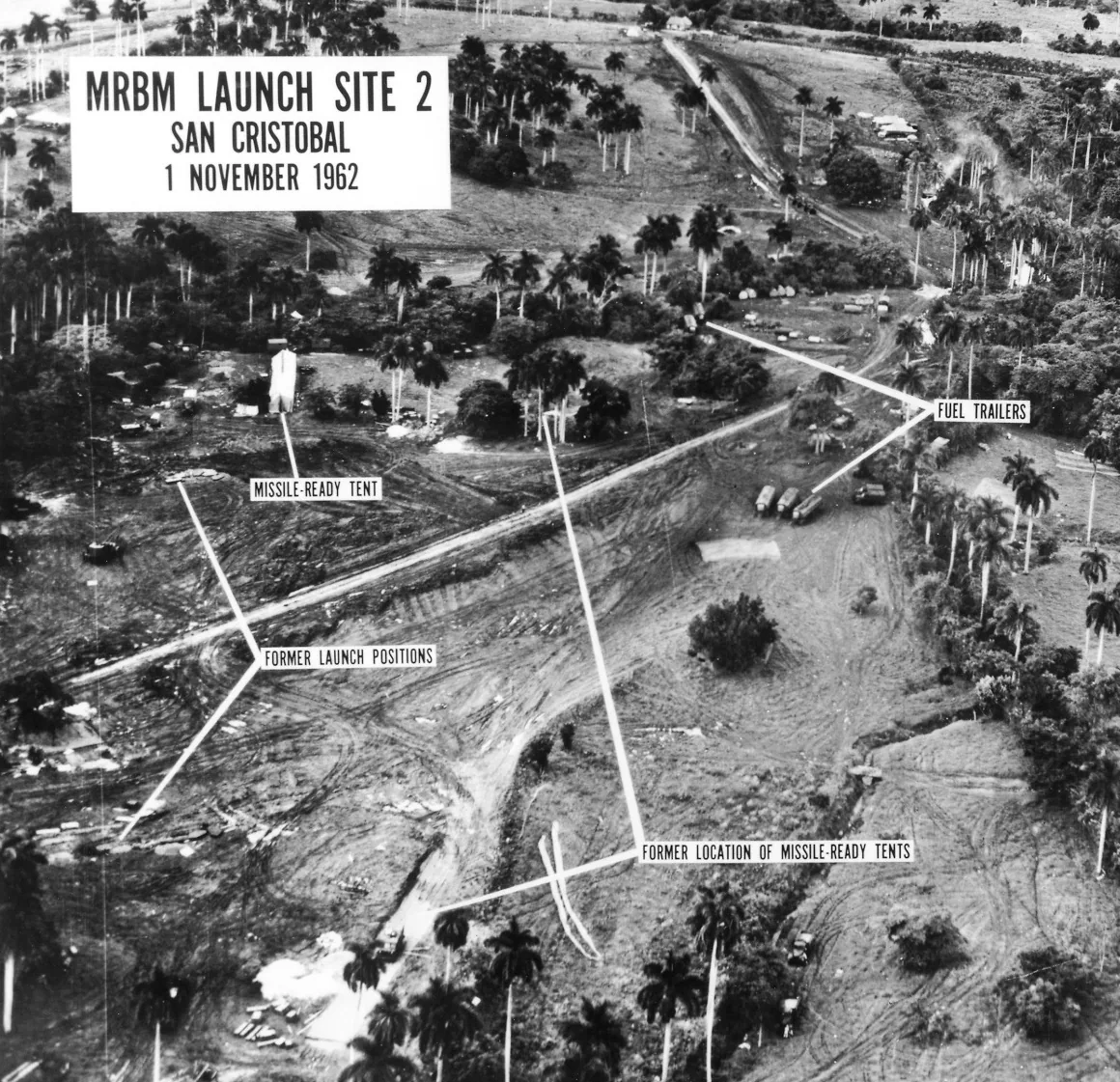
U.S. reconnaissance photograph; image from Wikimedia Commons, public domain.
Document 3 – Kennedy, October 22, 1962
Within the past week unmistakable evidence has established the fact that a series of offensive missile sites is now in preparation on that imprisoned island. The purposes of these bases can be none other than to provide a nuclear strike capability against the Western Hemisphere. […] We will not prematurely or unnecessarily risk the costs of worldwide nuclear war in which even the fruits of victory would be ashes in our mouth-but neither will we shrink from that risk at any time it must be faced.
Source: John F. Kennedy, address to the nation on the Cuban crisis, October 22, 1962. Text: Internet Modern History Sourcebook, Fordham University.
Source: John F. Kennedy, address to the nation on the Cuban crisis, October 22, 1962. Text: Internet Modern History Sourcebook, Fordham University.
Document 4 – Key dates
- March 12, 1947 Truman Doctrine
- June 24, 1948 Berlin Blockade begins
- April 4, 1949 NATO signed
- May 14, 1955 Warsaw Pact
- August 13, 1961 Berlin Wall begins
- November 9, 1989 The Wall opens
Dates from the lesson.
Questions
- Part 1 – Knowledge. Define containment and detente. (10 pts)
- Part 1. Document 1: identify the cities numbered 1 and 3, and name the alliance of Western countries and the alliance of Soviet-bloc countries. (10 pts)
- Part 1. Name two policies the United States used to contain communism in Europe between 1947 and 1949, with the date of each. (10 pts)
- Part 2 – Documents. Document 2: present the document and explain why such photographs mattered in October 1962. (15 pts)
- Part 2. Document 3: present the document and explain what Kennedy announces and what risk he accepts. (15 pts)
- Part 2. Document 4: calculate how many years separate the Truman Doctrine from the opening of the Wall, and explain why NATO and the Warsaw Pact were created in different years. (15 pts)
- Part 3 – Written argument (LEQ-style). Evaluate the extent to which the Cold War was a conflict of ideas rather than of power. Use at least two documents and the lesson. (25 pts)


Quick review: flashcards
Tap a card to see the answer.