


This World History Grades 9-10 test covers World War II and the Holocaust. Like a classroom assessment, it includes documents to analyze, knowledge questions and a short writing task. To prepare, review the lesson first, then practice with the worksheet.
Time : 50 min
The test has three parts: knowledge (30 points), documents (45 points), and a written argument (25 points). Answer in complete sentences and cite the documents.
Document 1 – Europe in late 1942
Map made for this lesson from Natural Earth data; territories are schematic.
Document 2 – Hiroshima, August 6, 1945
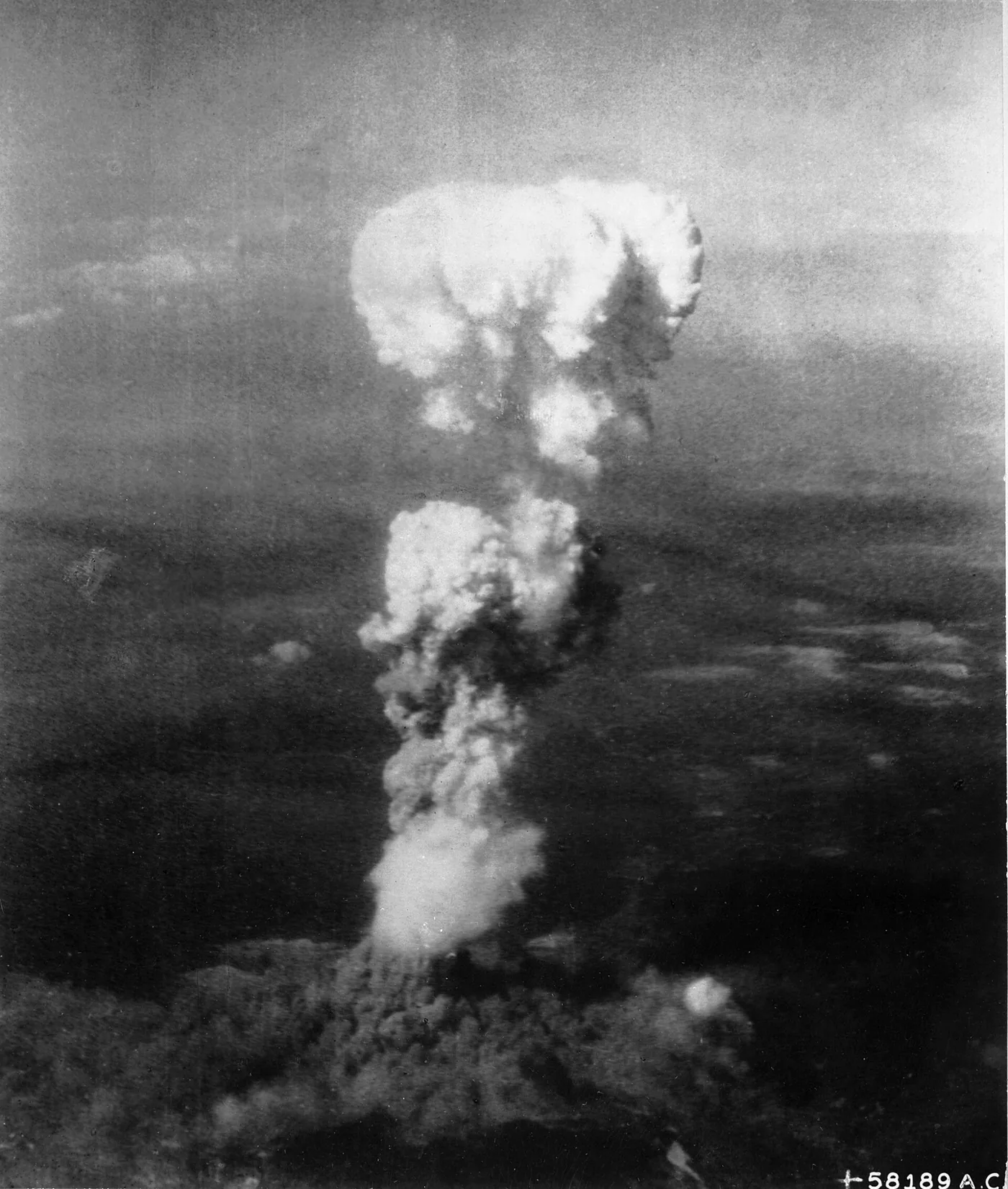
Photograph by George R. Caron, U.S. Army Air Forces; image from Wikimedia Commons, public domain.
Document 3 – Robert H. Jackson at Nuremberg, 1945
The wrongs which we seek to condemn and punish have been so calculated, so malignant, and so devastating, that civilization cannot tolerate their being ignored, because it cannot survive their being repeated. […] That four great nations, flushed with victory and stung with injury stay the hand of vengeance and voluntarily submit their captive enemies to the judgment of the law is one of the most significant tributes that Power has ever paid to reason.
Source: Robert H. Jackson, opening statement for the United States, International Military Tribunal, Nuremberg, November 21, 1945. Text: Avalon Project, Yale Law School.
Source: Robert H. Jackson, opening statement for the United States, International Military Tribunal, Nuremberg, November 21, 1945. Text: Avalon Project, Yale Law School.
Document 4 – Key dates
- January 20, 1942 Wannsee Conference
- February 2, 1943 German surrender at Stalingrad
- June 6, 1944 D-Day
- May 8, 1945 V-E Day
- August 6, 1945 Hiroshima
- October 1, 1946 Nuremberg judgments
Dates from the lesson.
Questions
- Part 1 – Knowledge. Define genocide and blitzkrieg. (10 pts)
- Part 1. Document 1: identify the sites numbered 1, 4, and 7, and the Allied victory numbered 8. (10 pts)
- Part 1. Name two events of 1941 that made the war global, with the date of each. (10 pts)
- Part 2 – Documents. Document 2: present the document and explain why the bomb is called a turning point of the century. (15 pts)
- Part 2. Document 3: present the document and explain what Jackson says about the purpose of the trial. (15 pts)
- Part 2. Document 4: calculate how many months separate D-Day from V-E Day, and how many years separate the Wannsee Conference from the Nuremberg judgments. (15 pts)
- Part 3 – Written argument (LEQ-style). Evaluate the extent to which the Holocaust was made possible by the conditions of war. Use at least two of the documents and the lesson. (25 pts)


Quick review: flashcards
Tap a card to see the answer.