



This worksheet on The Great Depression and the New Deal belongs to the US History Grade 11 course. Its questions use primary sources, maps and timelines, and they move from basic recall to short writing tasks. Before you start, review the lesson; afterward, try the true or false quiz.
Exercise 1 : Vocabulary of the Depression and the New Deal
Match each term with its definition and write a sentence using each term.
- Bank run
- Deflation
- Hooverville
- Fireside chat
- Sit-down strike
- Dust Bowl
Definitions: (a) a shantytown of the unemployed; (b) a drop in the general level of prices; (c) a radio talk to the public by the president; (d) workers occupy a workplace and refuse to leave; (e) many customers withdraw their money at once; (f) the drought-stricken region of the southern Great Plains.
Exercise 2 : Hoover on prosperity
Document 1 – Hoover, Inaugural Address, 1929
Ours is a land rich in resources; stimulating in its glorious beauty; filled with millions of happy homes; blessed with comfort and opportunity. In no nation are the institutions of progress more advanced. In no nation are the fruits of accomplishment more secure. In no nation is the government more worthy of respect. No country is more loved by its people. I have an abiding faith in their capacity, integrity and high purpose. I have no fears for the future of our country. It is bright with hope.
Source: Herbert Hoover, Inaugural Address, March 4, 1929; text from the Avalon Project, Yale Law School.
*stimulating: exciting.
- Present the document (nature, author, date, context).
- What claims does Hoover make about the nation in March 1929?
- What does he say about the future?
- The stock market crashed seven months later. Explain what this tells you about the document as evidence of how leaders saw the economy.
Hint: ask whether the author had any way of knowing what was coming.
Exercise 3 : Fear itself
Document 2 – Roosevelt, First Inaugural Address, 1933
This great Nation will endure as it has endured, will revive and will prosper. So, first of all, let me assert my firm belief that the only thing we have to fear is fear itself–nameless, unreasoning, unjustified terror which paralyzes needed efforts to convert retreat into advance. In every dark hour of our national life a leadership of frankness and vigor has met with that understanding and support of the people themselves which is essential to victory. I am convinced that you will again give that support to leadership in these critical days. In such a spirit on my part and on yours we face our common difficulties.
Source: Franklin D. Roosevelt, First Inaugural Address, March 4, 1933; text from the Avalon Project, Yale Law School.
*unreasoning: not guided by reason. *paralyzes: makes unable to move.
- Present the document (nature, author, date, context).
- What does Roosevelt say is the main thing to fear?
- Why does he think confidence is needed?
- Explain how this speech differs in tone from Hoover’s speech in 1929.
Exercise 4 : Put people to work
Document 3 – Roosevelt on jobs, 1933
Our greatest primary task is to put people to work. This is no unsolvable problem if we face it wisely and courageously. It can be accomplished in part by direct recruiting by the Government itself, treating the task as we would treat the emergency of a war, but at the same time, through this employment, accomplishing greatly needed projects to stimulate and reorganize the use of our natural resources.
Source: Franklin D. Roosevelt, First Inaugural Address, March 4, 1933 (later passage); text from the Avalon Project, Yale Law School.
*recruiting: hiring. *reorganize: arrange in a new way.
- Present the document (nature, author, date).
- What does Roosevelt call the “greatest primary task”?
- How does he propose to do it?
- Name two New Deal programs that put this idea into practice.
Exercise 5 : Protecting the right to organize
Document 4 – The Wagner Act, 1935
The inequality of bargaining power between employees who do not possess full freedom of association or actual liberty of contract and employers who are organized in the corporate or other forms of ownership association substantially burdens and affects the flow of commerce, and tends to aggravate recurrent business depressions, by depressing wage rates and the purchasing power of wage earners in industry and by preventing the stabilization of competitive wage rates and working conditions within and between industries.
Source: National Labor Relations Act (the Wagner Act), July 5, 1935, Section 1, findings and policy; text from the National Archives.
*bargaining power: strength in negotiating.
- Present the document (nature, date, context).
- According to Congress, what problem is caused by unequal bargaining power?
- What effect does Congress say it has on the economy?
- Explain how the law could help recovery from the Depression.
Exercise 6 : Social Security
Document 5 – The Social Security Act, 1935
to provide for the general welfare by establishing a system of Federal old-age benefits, and by enabling the several States to make more adequate provision for aged persons, blind persons, dependent and crippled children, maternal and child welfare, public health, and the administration of their unemployment compensation laws; to establish a Social Security Board; to raise revenue; and for other purposes
Source: Social Security Act, signed August 14, 1935, opening title of the law; text from the National Archives.
*dependent: relying on others. *revenue: government income.
- Present the document (nature, date).
- List four groups or purposes named in this opening of the law.
- Which phrase tells you that the national government will work with the states?
- Why was the law important in the history of the federal government?
Exercise 7 : Roosevelt's one-third of a nation
Document 6 – Roosevelt, Second Inaugural Address, 1937
I see one-third of a nation ill-housed, ill-clad, ill-nourished. It is not in despair that I paint you that picture. I paint it for you in hope–because the Nation, seeing and understanding the injustice in it, proposes to paint it out. We are determined to make every American citizen the subject of his country’s interest and concern; and we will never regard any faithful law-abiding group within our borders as superfluous. The test of our progress is not whether we add more to the abundance of those who have much; it is whether we provide enough for those who have too little.
Source: Franklin D. Roosevelt, Second Inaugural Address, January 20, 1937; text from the Avalon Project, Yale Law School.
*superfluous: unnecessary.
- Present the document (nature, author, date).
- What three problems does the president list in his picture of the nation?
- What test of progress does he propose?
- Do you think his test is a good way to measure a government? Defend your answer with one reason.
Exercise 8 : Two presidents, two answers
Document 7 – Hoover, 1929
Ours is a land rich in resources; stimulating in its glorious beauty; filled with millions of happy homes; blessed with comfort and opportunity. In no nation are the institutions of progress more advanced. In no nation are the fruits of accomplishment more secure. In no nation is the government more worthy of respect. No country is more loved by its people. I have an abiding faith in their capacity, integrity and high purpose. I have no fears for the future of our country. It is bright with hope.
Source: Herbert Hoover, Inaugural Address, March 4, 1929; text from the Avalon Project, Yale Law School.
*stimulating: exciting.
Document 8 – Roosevelt, 1937
I see one-third of a nation ill-housed, ill-clad, ill-nourished. It is not in despair that I paint you that picture. I paint it for you in hope–because the Nation, seeing and understanding the injustice in it, proposes to paint it out. We are determined to make every American citizen the subject of his country’s interest and concern; and we will never regard any faithful law-abiding group within our borders as superfluous. The test of our progress is not whether we add more to the abundance of those who have much; it is whether we provide enough for those who have too little.
Source: Franklin D. Roosevelt, Second Inaugural Address, January 20, 1937; text from the Avalon Project, Yale Law School.
*superfluous: unnecessary.
- Present each document (author, date, context).
- How does each president describe the condition of the country?
- What explains the difference between them?
- Which document do you think is the better source for understanding the economy in its year? Explain.
Exercise 9 : Relief or rights?
Document 9 – Roosevelt, 1933
Our greatest primary task is to put people to work. This is no unsolvable problem if we face it wisely and courageously. It can be accomplished in part by direct recruiting by the Government itself, treating the task as we would treat the emergency of a war, but at the same time, through this employment, accomplishing greatly needed projects to stimulate and reorganize the use of our natural resources.
Source: Franklin D. Roosevelt, First Inaugural Address, March 4, 1933 (later passage); text from the Avalon Project, Yale Law School.
*recruiting: hiring.
Document 10 – The Wagner Act, 1935
The inequality of bargaining power between employees who do not possess full freedom of association or actual liberty of contract and employers who are organized in the corporate or other forms of ownership association substantially burdens and affects the flow of commerce, and tends to aggravate recurrent business depressions, by depressing wage rates and the purchasing power of wage earners in industry and by preventing the stabilization of competitive wage rates and working conditions within and between industries.
Source: National Labor Relations Act (the Wagner Act), July 5, 1935, Section 1, findings and policy; text from the National Archives.
*bargaining power: strength in negotiating.
- Present each document (nature, date).
- Which document gives jobs, and which gives workers power to bargain?
- How did the New Deal try to help workers in these two different ways?
- Which approach do you think was more lasting? Support your answer.
Exercise 10 : Migrant Mother
Document 11 – Lange, Migrant Mother, 1936
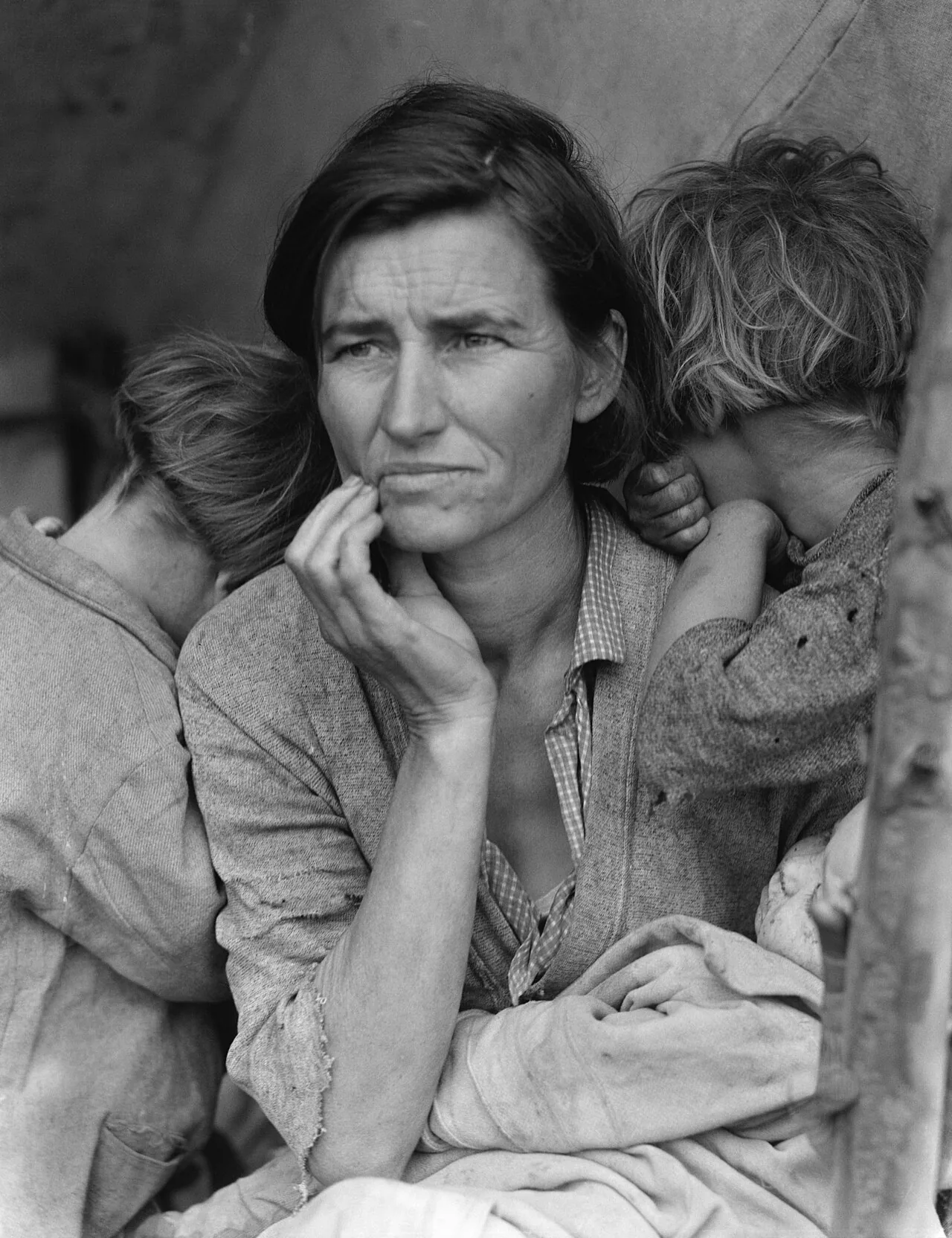
Source: Dorothea Lange, 1936.
- Present the document (nature, photographer, date, place).
- Describe the woman, the children, and their expressions.
- Lange worked for a federal agency. Why might the government want such photographs?
- What can the picture show, and what can it not show about the Depression?
Exercise 11 : Crash on Wall Street
Document 12 – Crowd outside the Stock Exchange, October 1929
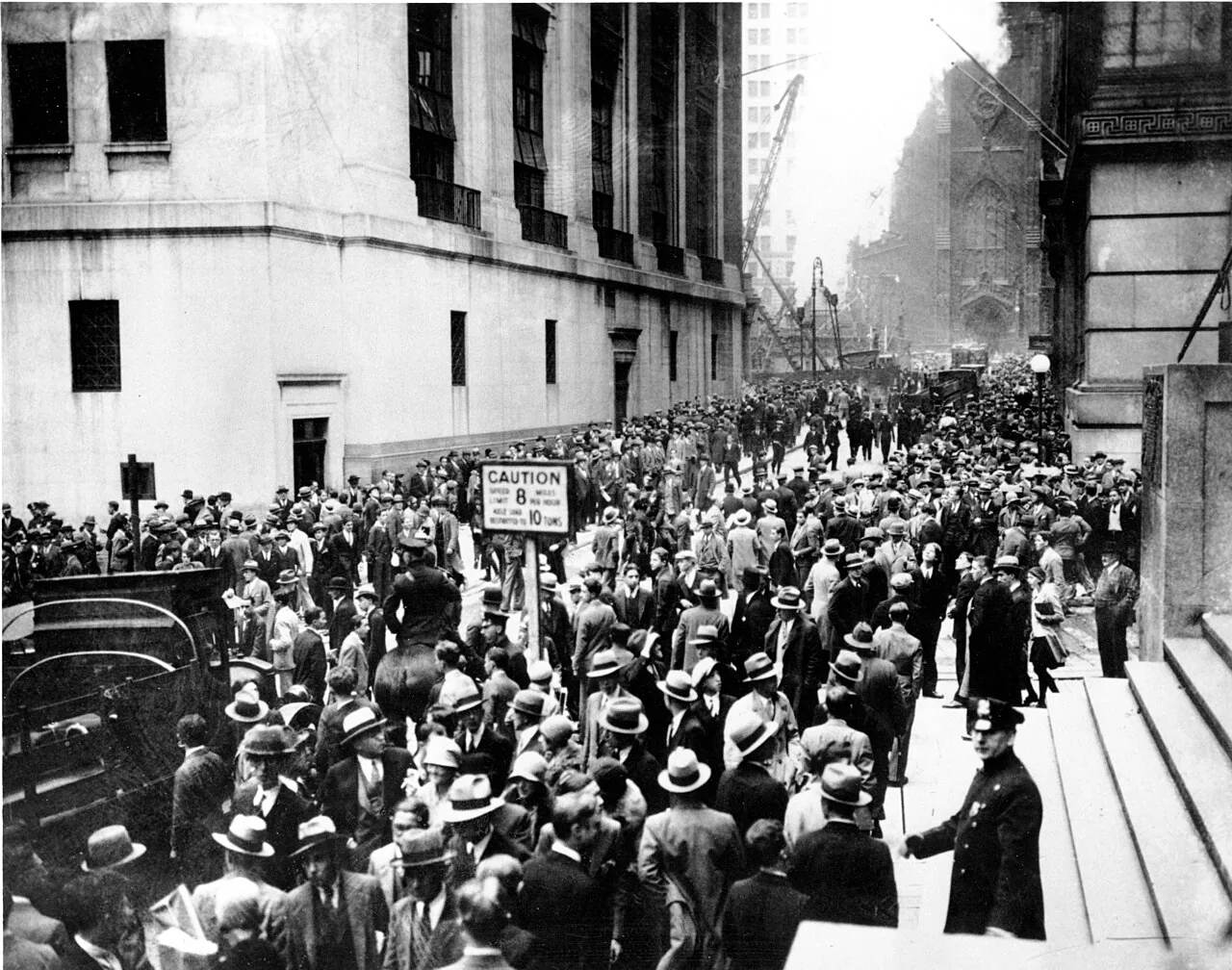
Source: Associated Press photograph, October 1929.
- Present the document (nature, source, date, place).
- Describe the people and the street.
- What does the crowd suggest about the mood of the crash?
- Why does the crash alone not explain the Depression? Give two other causes.
Exercise 12 : Waiting for soup
Document 13 – A soup kitchen in Chicago, 1931
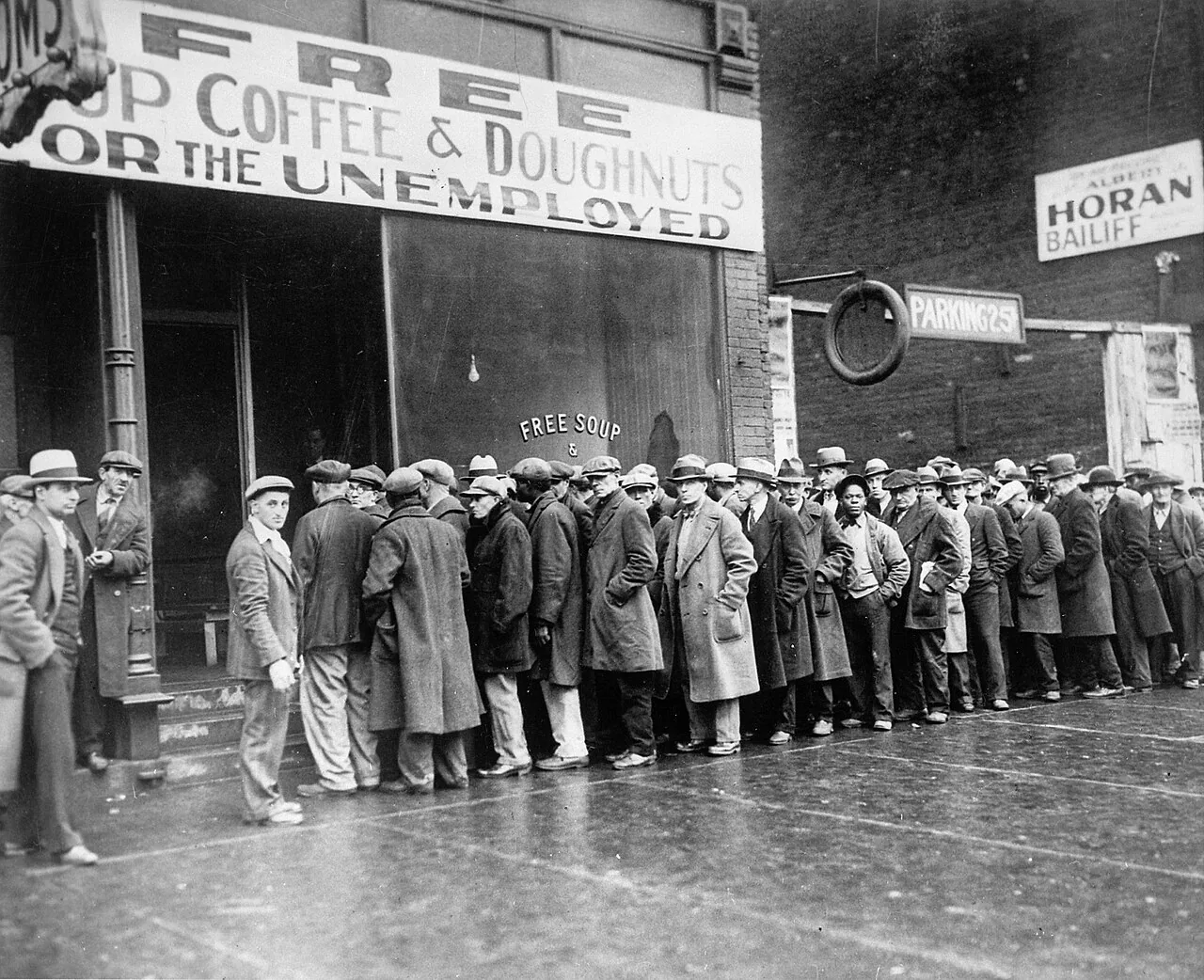
Source: National Archives, February 1931.
- Present the document (nature, place, date).
- Read the sign. What is being offered, and to whom?
- Who is providing the food, and why might that matter?
- Why did private charity prove unable to meet the need by 1932?
Exercise 13 : Dust and migration
Document 14 – A dust storm in Oklahoma, 1936
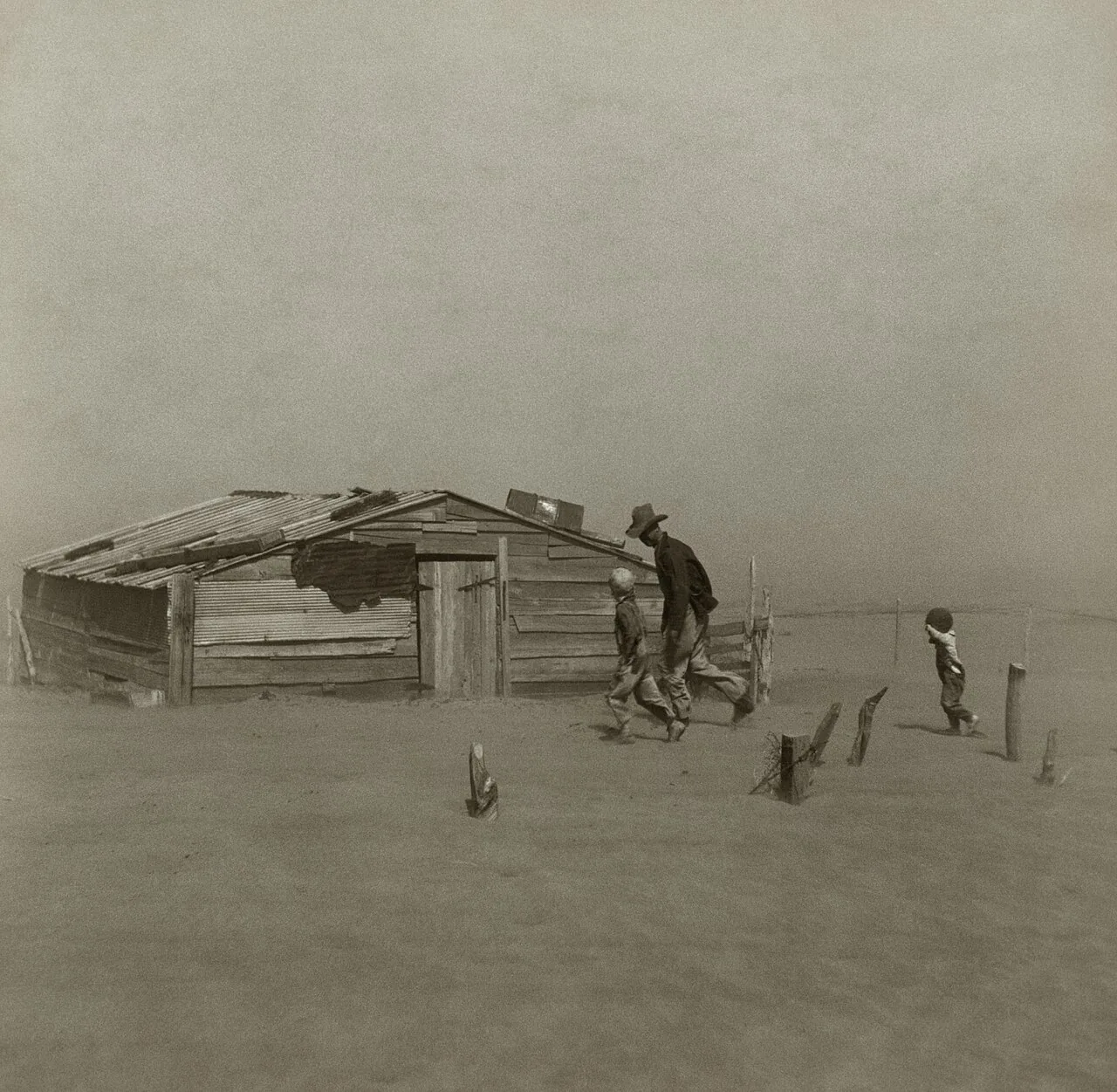
Source: Arthur Rothstein, 1936.
- Present the document (nature, photographer, place, date).
- Describe the landscape and the people.
- Explain how drought and farming practices caused the dust storms.
- Use Map 1 to explain where many such families moved, and why.
Exercise 14 : The Flint sit-down strike
Document 15 – Strikers inside a Flint plant, 1936-37
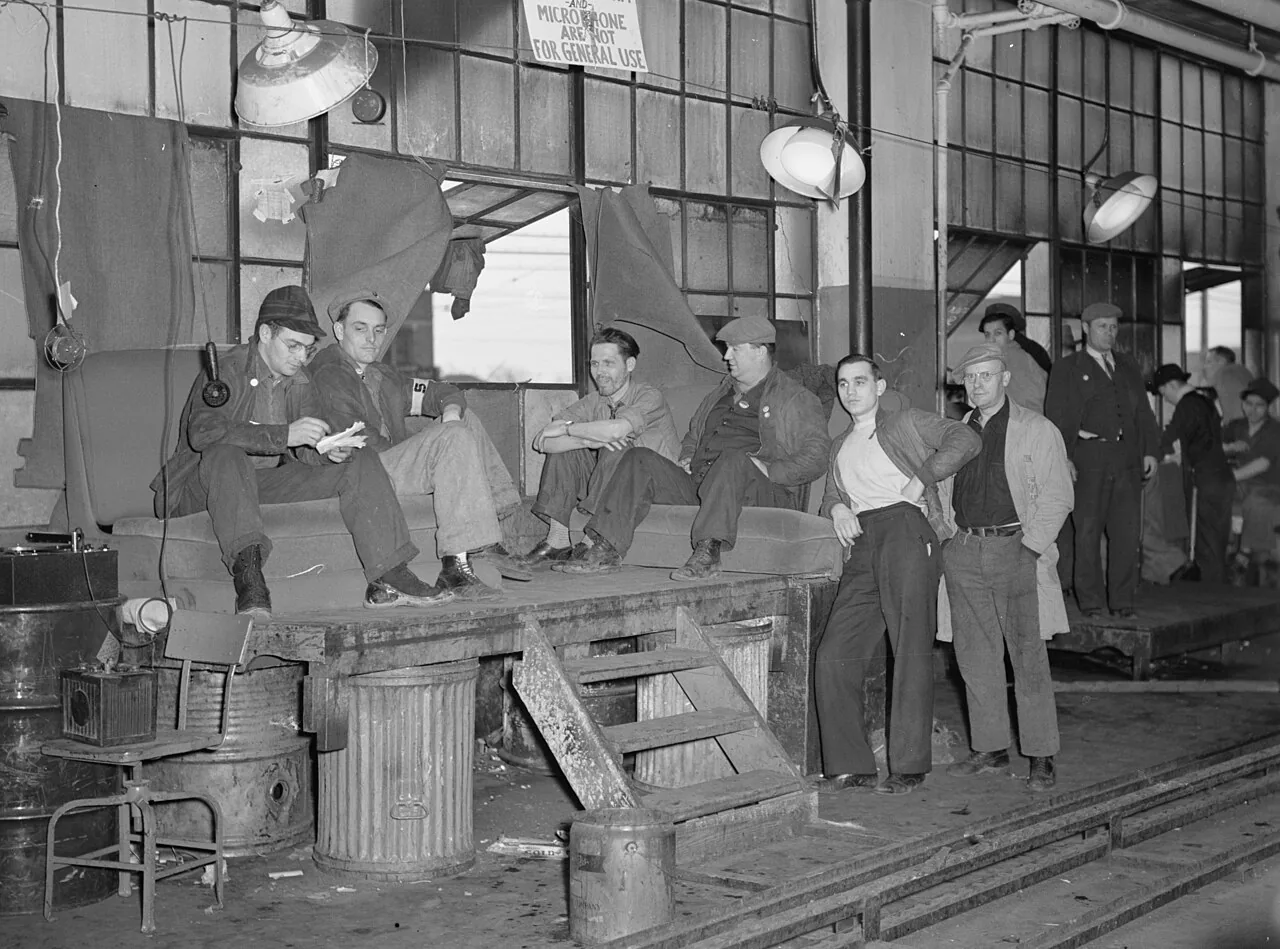
Source: Sheldon Dick, photograph, Flint, Michigan, 1936-37.
- Present the document (nature, photographer, place, date).
- Describe what the workers are doing and the setting.
- Explain why a sit-down strike was an effective tactic.
- Link the strike to the Wagner Act.
Exercise 15 : Signing Social Security
Document 16 – Roosevelt signs the Social Security Act, 1935
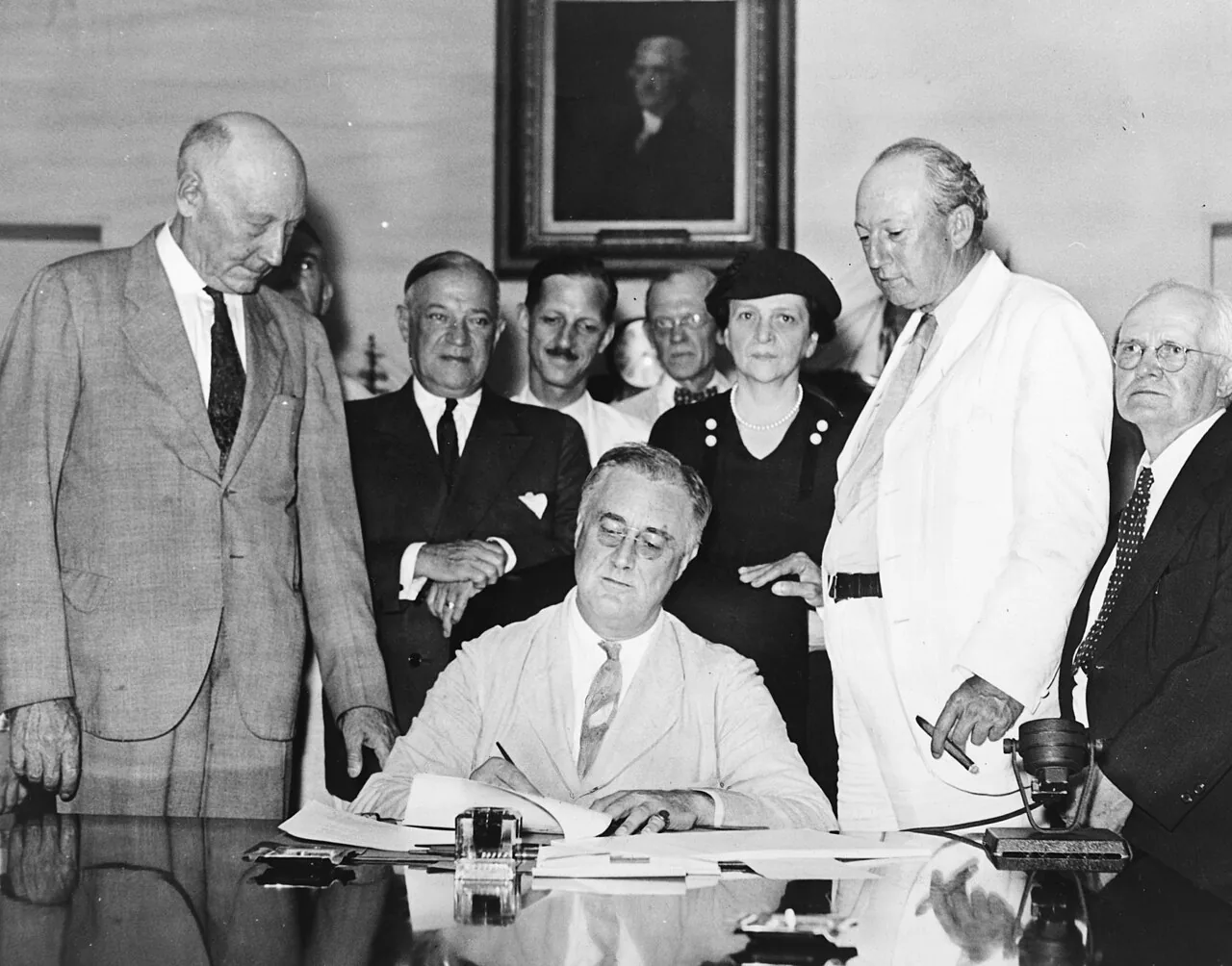
Source: Social Security Online, August 14, 1935.
- Present the document (nature, date, event).
- Describe the people around the desk.
- Why do governments stage and photograph the signing of major laws?
- Name one group that the original law left out of old-age insurance and explain why that mattered.
Exercise 16 : Measuring the Depression
| Measure | Figure |
|---|---|
| Peak unemployment, 1933 (Lebergott estimate) | 24.9 percent |
| Peak unemployment, 1932 (Darby estimate) | 22.5 percent |
| Unemployment, 1937 | 14.3 percent |
| Unemployment, 1938 | 19.0 percent |
| Young men who served in the Civilian Conservation Corps, 1933-1942 | about 3 million |
| People employed by the WPA, 1935-1943 | about 8.5 million |
Source: estimates by Stanley Lebergott (1950s) and Michael Darby (1976), as summarized in Wikipedia, “Great Depression in the United States” and “Great Depression”; CCC and WPA totals from Wikipedia, “Civilian Conservation Corps” and “Works Progress Administration.”
- Explain why there are two different estimates of unemployment in the early 1930s.
- Calculate the change in unemployment between 1937 and 1938 in percentage points.
- Explain what the change shows about the New Deal.
- Why are the CCC and WPA totals measures of relief rather than proof of recovery?
The government did not calculate unemployment rates in the 1930s; historians later estimated them.
Exercise 17 : Map: the Dust Bowl and the New Deal
- Name the five states shaded in yellow.
- Which route did many migrants follow, and to which state?
- Which state is shaded in blue, and which New Deal agency worked there?
- Name one New Deal dam shown on the map.
Exercise 18 : Locate the places of the Depression
- Identify each place: 1 is the capital of the United States; 2 is the site of the first TVA dam; 3 is the largest city of Oklahoma; 4 is the main destination of migrants; 5 is a dam on the Colorado River; 6 is a city in Michigan.
- What does the letter A mark?
- Choose two places and explain how each is linked to the Depression or the New Deal.
Exercise 19 : Order the events
Put these events in order: (a) Social Security Act; (b) stock market crash; (c) Bank holiday and Emergency Banking Act; (d) Roosevelt recession; (e) Bonus Army removed from Washington; (f) Flint sit-down strike ends; (g) Fair Labor Standards Act.
Exercise 20 : Durations
- How many years passed between the crash (1929) and Roosevelt’s inauguration (1933)?
- The CCC lasted from 1933 to 1942. How long did it last?
- The WPA ran from 1935 to 1943. How many years was that?
- What happened in the United States in 1941 that ended the Depression era?
Exercise 21 : Guided research: the Federal Writers' Project
Use the Library of Congress website (loc.gov) and the National Archives (archives.gov).
- Search for: Federal Writers’ Project, WPA slave narratives, or WPA posters.
- Choose one document or image and fill in a card: title, creator, date, place, type of source.
- Explain what the source tells you about life in the 1930s.
- Explain one limit of the source.
Exercise 22 : CER paragraph: did the New Deal end the Depression?
Write a paragraph with a Claim, Evidence, and Reasoning, answering the question: Did the New Deal end the Great Depression? Use at least two pieces of evidence from the lesson, such as the unemployment table or Documents 3 and 6.
Exercise 23 : SAQ: relief, recovery, reform
Answer in complete sentences.
- Identify one New Deal program that aimed at relief.
- Explain how one New Deal law aimed at reform of the financial system.
- Describe one group that was excluded or treated unequally by the New Deal.
Exercise 24 : True or false? Justify
Decide whether each statement is true or false. If it is false, correct it.
- Black Thursday took place in October 1929.
- The FDIC was created to insure bank deposits.
- The Dust Bowl was caused only by drought.
- The Wagner Act protected the right of workers to bargain collectively.
- The New Deal ended unemployment by 1936.
Exercise 25 : Stimulus-based multiple choice
Stimulus
The inequality of bargaining power between employees who do not possess full freedom of association or actual liberty of contract and employers who are organized in the corporate or other forms of ownership association substantially burdens and affects the flow of commerce, and tends to aggravate recurrent business depressions, by depressing wage rates and the purchasing power of wage earners in industry and by preventing the stabilization of competitive wage rates and working conditions within and between industries.
Source: National Labor Relations Act (the Wagner Act), July 5, 1935, Section 1, findings and policy; text from the National Archives.
*bargaining power: strength in negotiating.
- Which was the main purpose of the policy in this passage? (A) to reduce federal taxes; (B) to protect the right of workers to organize; (C) to end Prohibition; (D) to raise tariffs.
- Which later development most directly resulted from the law? (A) the Bonus March; (B) growth of industrial unions such as the CIO; (C) the Dust Bowl; (D) Hoover Dam.
- Which statement best describes the reasoning of the authors? (A) higher wages would raise purchasing power; (B) strikes should be banned; (C) corporations should be broken up; (D) the states should write labor law.


Quick review: flashcards
Tap a card to see the answer.