


This worksheet on The Roaring Twenties belongs to the US History Grade 11 course. Its questions use primary sources, maps and timelines, and they move from basic recall to short writing tasks. Before you start, review the lesson; afterward, try the true or false quiz.
Exercise 1 : Vocabulary of the 1920s
- Define: normalcy, assembly line, Prohibition, fundamentalist, Great Migration, quota.
- Use two of the terms in a sentence about the 1920s.
- Which term describes a way of making goods, and which describes a movement of people?
Exercise 2 : A return to normal
Document A
Our supreme task is the resumption of our onward, normal way. Reconstruction, readjustment, restoration all these must follow. I would like to hasten them. If it will lighten the spirit and add to the resolution with which we take up the task, let me repeat for our Nation, we shall give no people just cause to make war upon us; we hold no national prejudices; we entertain no spirit of revenge; we do not hate; we do not covet; we dream of no conquest, nor boast of armed prowess.
Source: Warren G. Harding, Inaugural Address, March 4, 1921; text from Wikisource.
*resumption: starting again.
- Present the document (author, date, occasion).
- What does Harding say is the “supreme task”?
- What does he promise about foreign policy?
- Why would this message appeal to voters in 1921?
Exercise 3 : A car for the multitude
Document A
I will build a motor car for the great multitude. It will be large enough for the family but small enough for the individual to run and care for. It will be constructed of the best materials, by the best men to be hired, after the simplest designs that modern engineering can devise. But it will be so low in price that no man making a good salary will be unable to own one–and enjoy with his family the blessing of hours of pleasure in God’s great open spaces.
Source: Henry Ford with Samuel Crowther, My Life and Work, 1922, chapter 4, recalling his announcement of a single low-priced car; text from Project Gutenberg.
*multitude: large number.
- Present the document (author, date of the book).
- What kind of car does Ford promise to build, and for whom?
- What conditions does he set for the car (materials, design, price)?
- How did the assembly line help him keep that promise?
Exercise 4 : Darrow questions Bryan
Document A
Mr. Bryan—The purpose is to cast ridicule on everybody who believes in the Bible, and I am perfectly willing that the world shall know that these gentlemen have no other purpose than ridiculing every Christian who believes in the Bible. Mr. Darrow—We have the purpose of preventing bigots and ignoramuses from controlling the education of the United States and you know it, and that is all.
Source: The World’s Most Famous Court Trial: Tennessee Evolution Case, official transcript of the Scopes trial, Dayton, Tennessee, day 7, July 20, 1925 (cross-examination of William Jennings Bryan by Clarence Darrow); text from Wikisource.
*ridicule: mocking. *bigots: intolerant people.
- Present the document.
- What does Bryan say is Darrow’s purpose?
- What does Darrow say his purpose is?
- What larger conflict in American society does the exchange represent?
Exercise 5 : If we must die
Document A
If we must die, let it not be like hogs
Hunted and penned in an inglorious spot,
While round us bark the mad and hungry dogs,
Making their mock at our accursèd lot.
If we must die, O let us nobly die,
So that our precious blood may not be shed
In vain; then even the monsters we defy
Shall be constrained to honor us though dead!
Source: Claude McKay, “If We Must Die,” first published in The Liberator, July 1919 (collected in Harlem Shadows, 1922); text from Wikisource.
*accursed: cursed. *kinsmen: relatives.
- Present the document.
- What does the speaker ask his people to do?
- Which images in the poem compare enemies to animals, and what effect do they have?
- How does the poem fit the events of 1919?
Exercise 6 : Babbitt
Document A
He was forty-six years old now, in April, 1920, and he made nothing in particular, neither butter nor shoes nor poetry, but he was nimble in the calling of selling houses for more than people could afford to pay. […] He seemed prosperous, extremely married and unromantic; and altogether unromantic appeared this sleeping-porch, which looked on one sizable elm, two respectable grass-plots, a cement driveway, and a corrugated iron garage.
Source: Sinclair Lewis, Babbitt, 1922, chapter 1; text from Project Gutenberg.
*nimble: quick.
- Present the document.
- How does the author describe Babbitt and his work?
- Which words show that the author is gently mocking him?
- What does the passage tell a historian about the 1920s, and what can it not tell?
Exercise 7 : The careless people
Document A
They were careless people, Tom and Daisy—they smashed up things and creatures and then retreated back into their money or their vast carelessness, or whatever it was that kept them together, and let other people clean up the mess they had made
Source: F. Scott Fitzgerald, The Great Gatsby, 1925, chapter 9; text from Project Gutenberg.
*carelessness: lack of care.
- Present the document.
- What does the narrator say about Tom and Daisy?
- What do the words “their money” suggest about the source of their behavior?
- Why do historians often read the novel as a comment on the 1920s?
Exercise 8 : Mass production and conformity
Document A
I will build a motor car for the great multitude. It will be large enough for the family but small enough for the individual to run and care for. It will be constructed of the best materials, by the best men to be hired, after the simplest designs that modern engineering can devise. But it will be so low in price that no man making a good salary will be unable to own one–and enjoy with his family the blessing of hours of pleasure in God’s great open spaces.
Source: Henry Ford with Samuel Crowther, My Life and Work, 1922, chapter 4, recalling his announcement of a single low-priced car; text from Project Gutenberg.
*multitude: large number.
Document B
He was forty-six years old now, in April, 1920, and he made nothing in particular, neither butter nor shoes nor poetry, but he was nimble in the calling of selling houses for more than people could afford to pay. […] He seemed prosperous, extremely married and unromantic; and altogether unromantic appeared this sleeping-porch, which looked on one sizable elm, two respectable grass-plots, a cement driveway, and a corrugated iron garage.
Source: Sinclair Lewis, Babbitt, 1922, chapter 1; text from Project Gutenberg.
*nimble: quick.
- Present both documents.
- How does Ford describe the effect of mass production on ordinary people?
- How does Lewis portray the businessman who profits from the prosperous economy?
- Write three sentences comparing the two views.
Exercise 9 : Two Americas, 1919 and 1921
Document A
If we must die, let it not be like hogs
Hunted and penned in an inglorious spot,
While round us bark the mad and hungry dogs,
Making their mock at our accursèd lot.
If we must die, O let us nobly die,
So that our precious blood may not be shed
In vain; then even the monsters we defy
Shall be constrained to honor us though dead!
Source: Claude McKay, “If We Must Die,” first published in The Liberator, July 1919 (collected in Harlem Shadows, 1922); text from Wikisource.
*accursed: cursed.
Document B
Our supreme task is the resumption of our onward, normal way. Reconstruction, readjustment, restoration all these must follow. I would like to hasten them. If it will lighten the spirit and add to the resolution with which we take up the task, let me repeat for our Nation, we shall give no people just cause to make war upon us; we hold no national prejudices; we entertain no spirit of revenge; we do not hate; we do not covet; we dream of no conquest, nor boast of armed prowess.
Source: Warren G. Harding, Inaugural Address, March 4, 1921; text from Wikisource.
*resumption: starting again.
- Present both documents.
- What mood does each text express?
- How can both texts belong to the same period?
- What does the comparison suggest about the idea of “normalcy”?
Exercise 10 : The assembly line
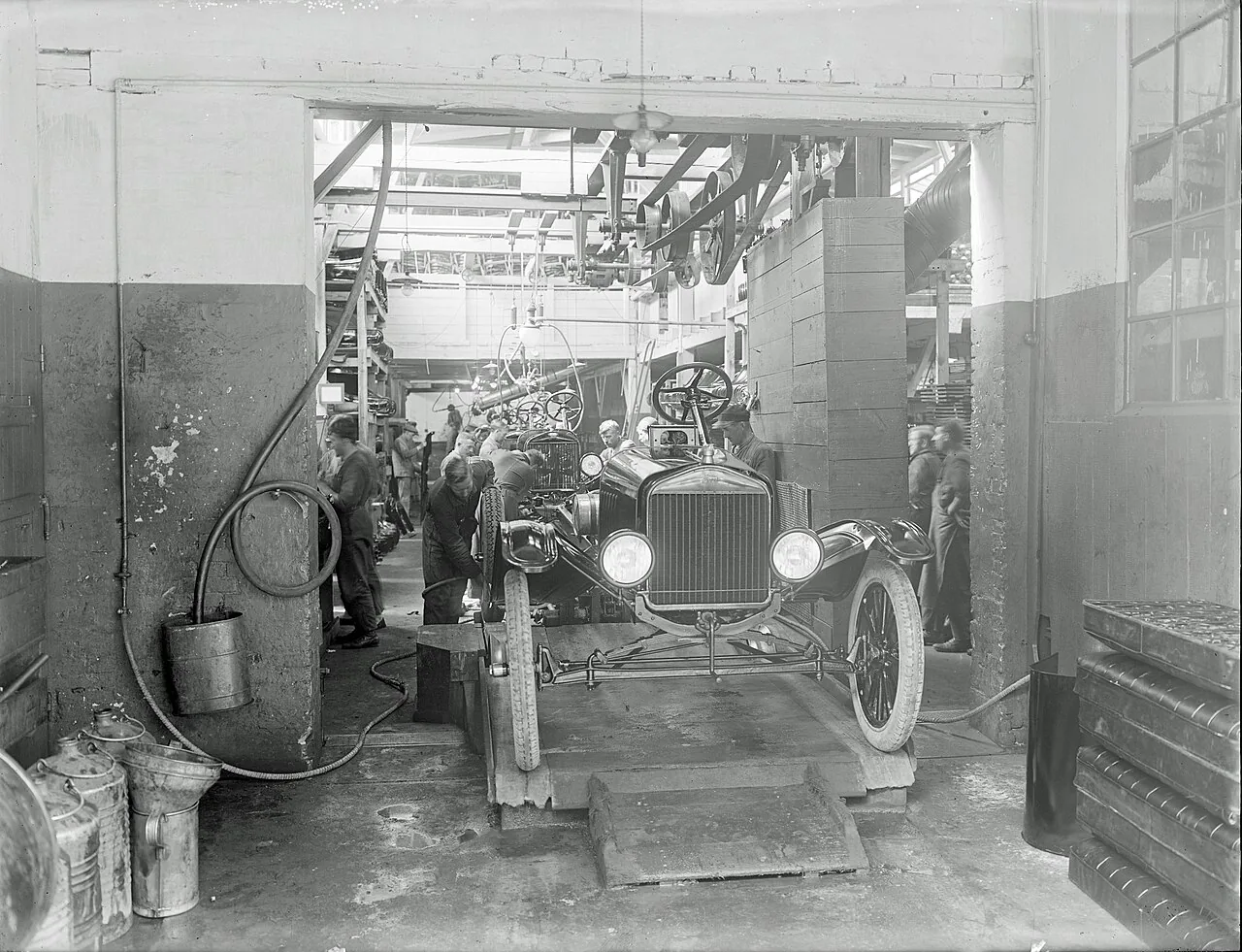
- Present the photograph.
- Describe the scene.
- What advantages did the assembly line bring to the owner? What disadvantages did workers face?
- Why can the photograph not tell us about wages?
Exercise 11 : Marching in white robes
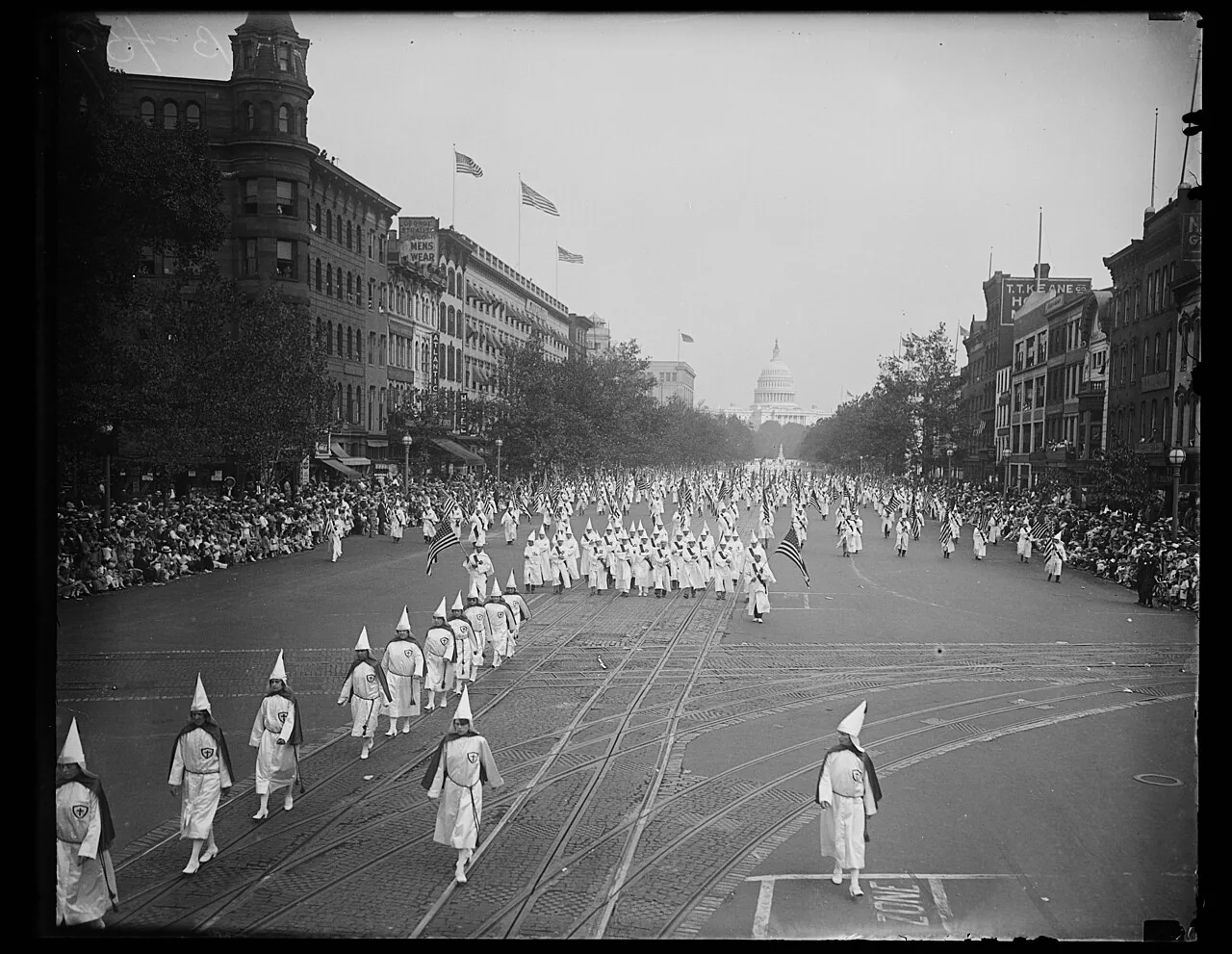
- Present the photograph.
- Describe what you see.
- What does the location tell you about the Klan in the 1920s?
- How might Americans of different groups have reacted to this march?
Exercise 12 : The flapper on the cover
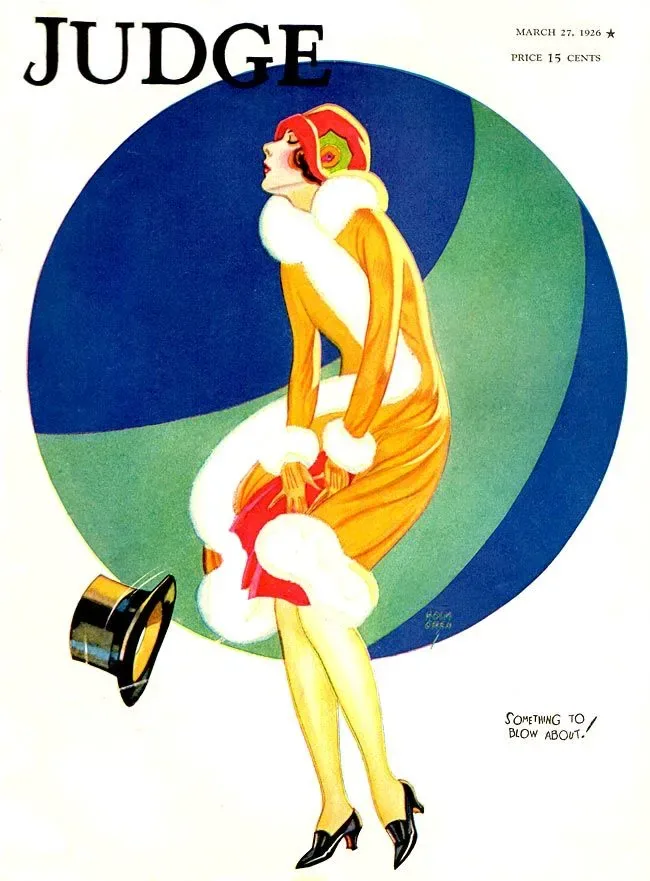
- Present the document.
- Describe the woman and her clothes.
- What does the image suggest about ideal beauty in the 1920s?
- What would a historian need to know to decide whether it shows how most women lived?
Exercise 13 : Pouring out the liquor
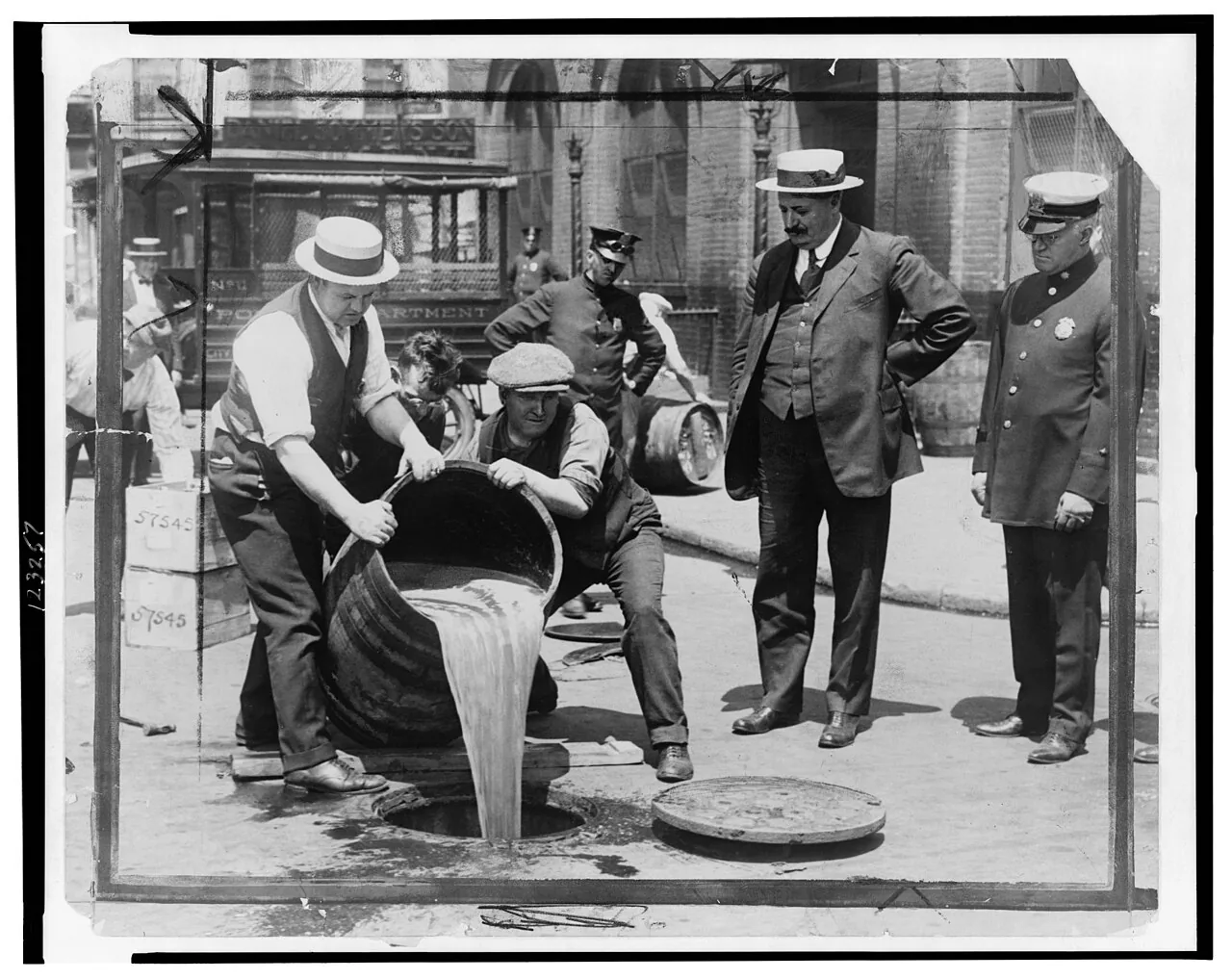
- Present the photograph.
- Describe what the men are doing.
- Why was such a photograph taken?
- What claim could this photograph support, and what evidence is missing?
Exercise 14 : A hero of the air
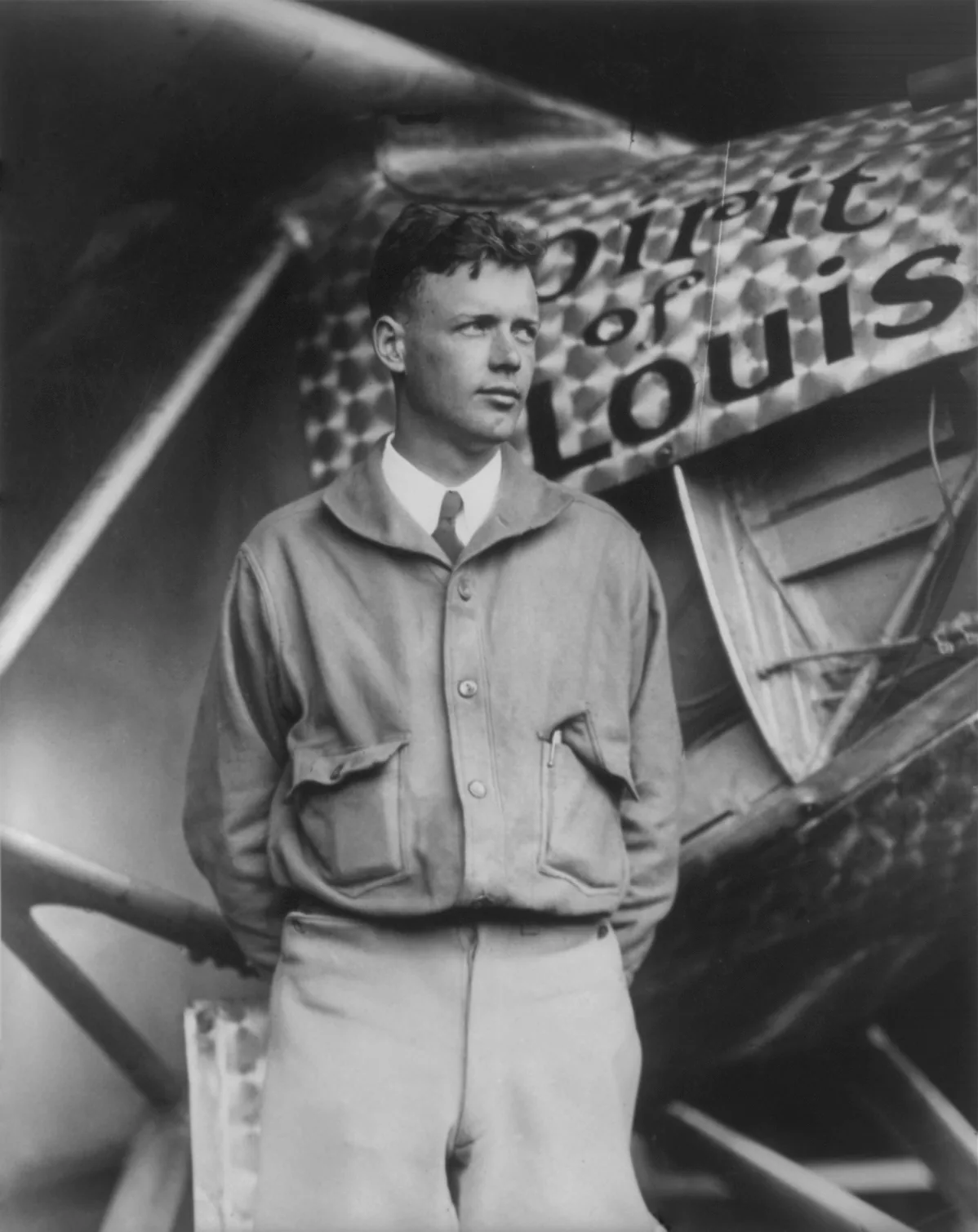
- Present the photograph.
- Describe the man and the airplane.
- Why did Lindbergh become so famous?
- What does his fame show about American attitudes in the 1920s?
Exercise 15 : A poet of Harlem
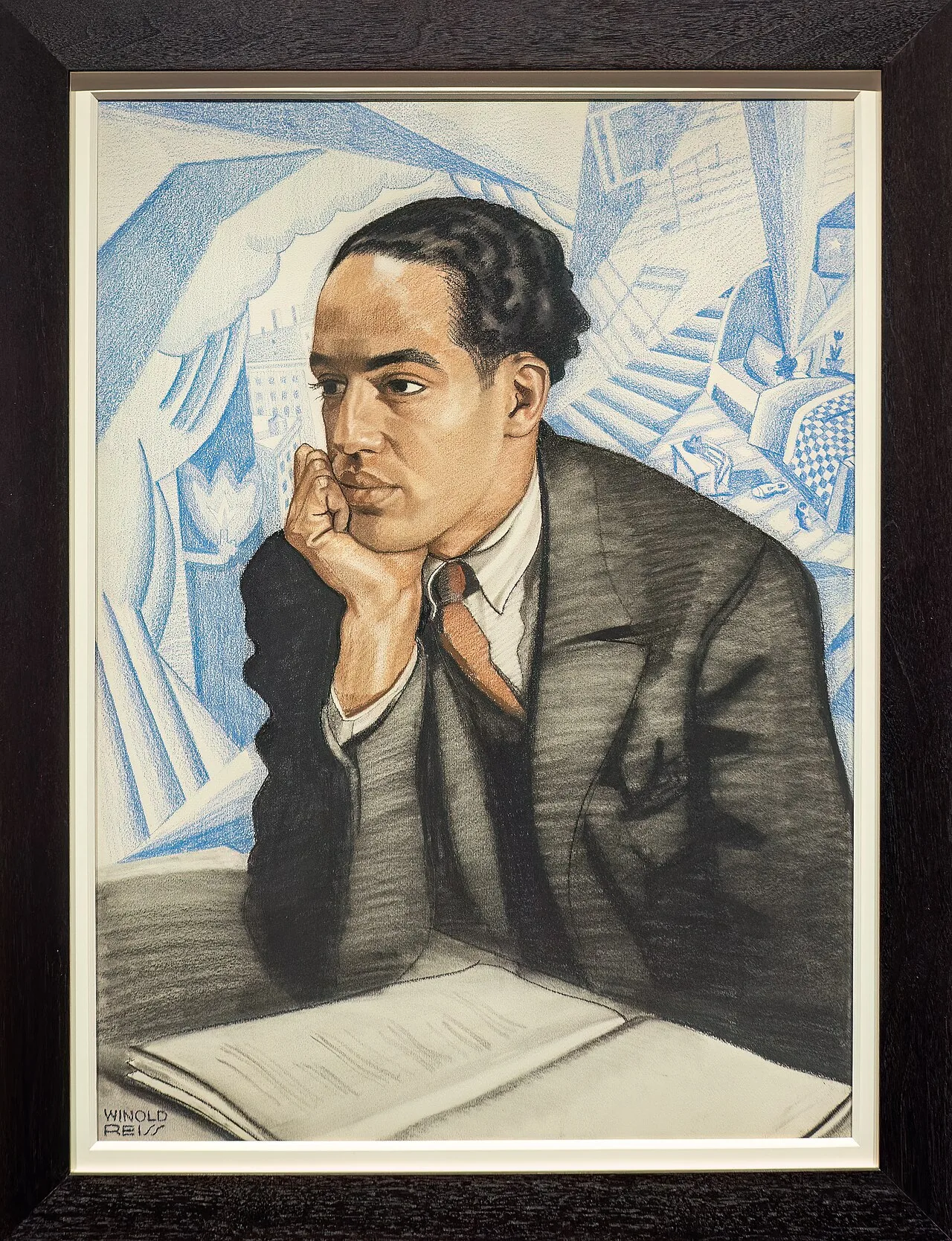
- Present the portrait.
- Describe the pose and the background.
- What does the picture suggest about how the artist wanted to show Hughes?
- What is the Harlem Renaissance? Give two other figures of the movement.
Exercise 16 : Klan and poet
- Present both documents.
- What kind of America does each image suggest?
- How do the two images show conflicting ideas about who is “American”?
- Write two sentences linking them to the Great Migration.
Exercise 17 : A growing, urban nation
Study the table.
| Census year | Population of the United States | Percent living in urban places |
|---|---|---|
| 1900 | 76,212,168 | 39.6 |
| 1910 | 92,228,496 | 45.6 |
| 1920 | 106,021,537 | 51.2 |
| 1930 | 123,202,624 | 56.1 |
Source: U.S. Census Bureau, Historical Statistics of the United States; urban places are those with 2,500 or more inhabitants.
- In which census year did the urban share first pass 50 percent?
- By how many people did the population grow between 1920 and 1930?
- Use the lesson to give one reason why this change worried many rural Americans.
Exercise 18 : The Great Migration
- Name three cities that received migrants.
- Name two states of the South from which they came.
- Why did the migrants leave the South?
- What did they find in the North?
Exercise 19 : The election of 1928
- How many states did Smith win and which were they?
- What does the map show about the Democratic South?
- Give two reasons why Hoover won.
- Which region voted for Smith despite his religion and opposition to Prohibition? Suggest why.
Exercise 20 : Order the events
Put these events in order and give each date: the Scopes trial; the beginning of Prohibition; Lindbergh’s flight; the Immigration Act of 1924; the stock market crash; the election of Harding.
Exercise 21 : How long?
- How many years did Prohibition last (1920 to 1933)?
- How many years passed between the Emergency Quota Act (1921) and the Immigration Act (1924)?
- How many years passed between the Scopes trial (1925) and the crash (1929)?
- How many years separate the Nineteenth Amendment (1920) and the Twenty-first Amendment (1933)?
Exercise 22 : Guided research: the Harlem Renaissance
Keywords: “Harlem Renaissance Library of Congress”, “Langston Hughes biography Poetry Foundation”, “Schomburg Center Harlem Renaissance”. Reliable sites: loc.gov, nypl.org (Schomburg Center), poetryfoundation.org, si.edu.
- Choose one artist or writer of the Harlem Renaissance and give birth and death dates.
- Find one work from the 1920s and note its title and date.
- Explain in three sentences what the artist wanted to say.
- List two sources and say whether each is reliable.
Exercise 23 : CER paragraph: boom or fragile?
Write a paragraph of 6 to 8 sentences that answers: Was the prosperity of the 1920s strong or fragile? State a claim, give two pieces of evidence, explain how they support the claim, and conclude.
Exercise 24 : SAQ: cultural conflict
- Identify one development of the 1920s that caused conflict between traditional and modern values.
- Explain one way in which the conflict appeared in law or politics.
- Explain one reason why the conflict was especially strong in the 1920s.
Exercise 25 : True or false? Justify
Say whether each statement is true or false and correct the false ones.
- The Immigration Act of 1924 set quotas based on national origin.
- Prohibition began in 1920 and ended in 1933.
- John Scopes was found not guilty.
- Herbert Hoover won the election of 1928.
- The Great Migration moved African Americans from the North to the South.
Exercise 26 : Stimulus-based multiple choice
Stimulus
Mr. Bryan—The purpose is to cast ridicule on everybody who believes in the Bible, and I am perfectly willing that the world shall know that these gentlemen have no other purpose than ridiculing every Christian who believes in the Bible. Mr. Darrow—We have the purpose of preventing bigots and ignoramuses from controlling the education of the United States and you know it, and that is all.
Source: The World’s Most Famous Court Trial: Tennessee Evolution Case, official transcript of the Scopes trial, Dayton, Tennessee, day 7, July 20, 1925 (cross-examination of William Jennings Bryan by Clarence Darrow); text from Wikisource.
*bigots: intolerant people.
- The exchange took place during a trial about: (A) Prohibition; (B) the teaching of evolution; (C) immigration quotas; (D) the Ku Klux Klan.
- Which statement best describes Darrow’s view? (A) Science should be banned; (B) Schools should be free from control by those who reject modern knowledge; (C) The Bible should be taught in all schools; (D) The government should limit the press.
- The trial most clearly illustrates: (A) the Red Scare; (B) the conflict between modern and traditional values; (C) the Great Migration; (D) the growth of consumer credit.


Quick review: flashcards
Tap a card to see the answer.