


This worksheet on The Progressive Era belongs to the US History Grade 11 course. Its questions use primary sources, maps and timelines, and they move from basic recall to short writing tasks. Before you start, review the lesson; afterward, try the true or false quiz.
Exercise 1 : Vocabulary of reform
- Define each term: Progressivism, muckraker, settlement house, initiative, conservation, suffrage.
- Choose two terms and write one sentence for each that links it to a person or event of the period.
- Which of the terms describes a change in how citizens take part in government?
Look at the definition boxes.
Exercise 2 : A novel about meatpacking
Document A
These rats were nuisances, and the packers would put poisoned bread out for them; they would die, and then rats, bread, and meat would go into the hoppers together. This is no fairy story and no joke; the meat would be shoveled into carts, and the man who did the shoveling would not trouble to lift out a rat even when he saw one—there were things that went into the sausage in comparison with which a poisoned rat was a tidbit.
Source: Upton Sinclair, The Jungle, 1906, chapter 14; text from Project Gutenberg.
*nuisances: pests. *tidbit: a choice small piece.
- Present the document (nature, author, date, purpose).
- What practices does Sinclair describe?
- Why might a historian not rely on this passage alone as evidence of conditions in the plants?
- Name one law passed in 1906 after the book appeared.
Exercise 3 : Roosevelt on the muck-rake
Document A
There are in the body politic, economic and social, many and grave evils, and there is urgent necessity for the sternest war upon them. There should be relentless exposure of and attack upon every evil man, whether politician or business man, every evil practice, whether in politics, business, or social life.
Source: Theodore Roosevelt, “The Man with the Muck-Rake,” speech at the laying of the cornerstone of the House Office Building, Washington, April 14, 1906; text from Wikisource.
*evils: harmful conditions.
- Present the document.
- What does Roosevelt say there is urgent necessity for?
- Whom does he call a “benefactor”? (Use the lesson’s fuller passage if needed.) Which words in the text show that he supports exposing wrongdoing?
- The same speech criticized writers who see only the bad. Why might Roosevelt have wanted to make both points?
Exercise 4 : The New Nationalism
Document A
We are face to face with new conceptions of the relations of property to human welfare, chiefly because certain advocates of the rights of property as against the rights of men have been pushing their claims too far. The man who wrongly holds that every human right is secondary to his profit must now give way to the advocate of human welfare, who rightly maintains that every man holds his property subject to the general right of the community to regulate its use to whatever degree the public welfare may require it.
Source: Theodore Roosevelt, “The New Nationalism,” speech at Osawatomie, Kansas, August 31, 1910; text from Wikisource.
*advocate: supporter.
- Present the document.
- Which view does Roosevelt reject, and which does he support?
- How does he answer the claim that property rights come before everything else?
- Explain how this view differs from the laissez-faire thinking of the Gilded Age.
Exercise 5 : Du Bois on Washington
Document A
Mr. Washington represents in Negro thought the old attitude of adjustment and submission; but adjustment at such a peculiar time as to make his programme unique. This is an age of unusual economic development, and Mr. Washington’s programme naturally takes an economic cast, becoming a gospel of Work and Money to such an extent as apparently almost completely to overshadow the higher aims of life.
Source: W. E. B. Du Bois, The Souls of Black Folk, 1903, chapter 3, “Of Mr. Booker T. Washington and Others”; text from Project Gutenberg.
*programme: program or plan.
- Present the document.
- What is Du Bois’s main criticism of Washington?
- What does he mean by “a gospel of Work and Money”?
- Why was this criticism significant for the history of the civil rights movement?
Exercise 6 : 1848 and 1913
Document A
We hold these truths to be self-evident; that all men and women are created equal; that they are endowed by their Creator with certain inalienable rights; that among these are life, liberty, and the pursuit of happiness; that to secure these rights governments are instituted, deriving their just powers from the consent of the governed.
Source: Declaration of Sentiments, Seneca Falls Convention, July 19-20, 1848; text from Wikisource.
*inalienable: cannot be taken away.
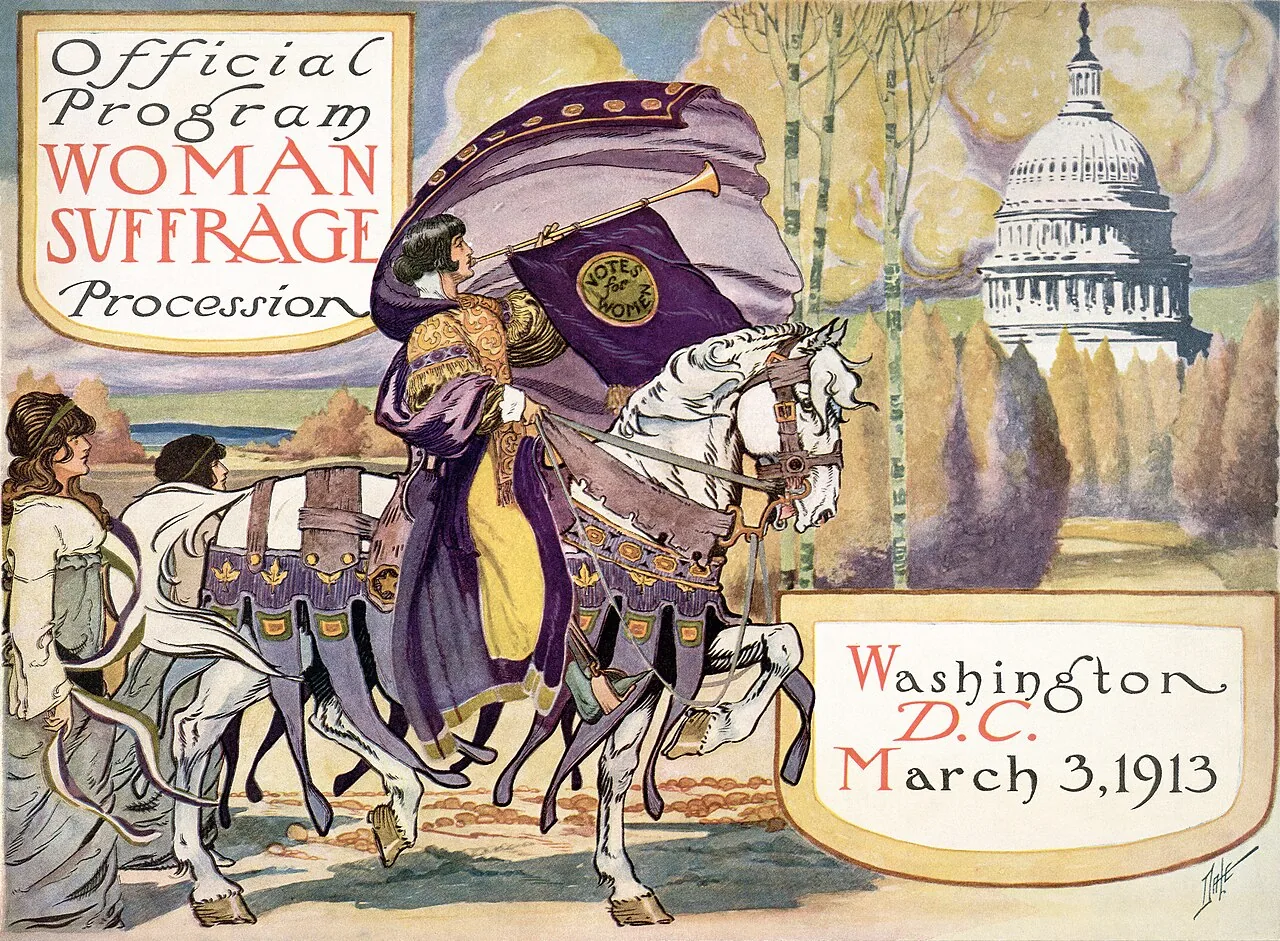
- Present each document.
- What does the Declaration of Sentiments borrow from the Declaration of Independence, and what does it change?
- What does the 1913 program show about the way suffragists campaigned?
- How many years separate the two documents, and what does the number suggest?
Exercise 7 : Two paths for Black Americans
Document A
To those of my race who depend on bettering their condition in a foreign land or who underestimate the importance of cultivating friendly relations with the Southern white man, who is their next-door neighbor, I would say: “Cast down your bucket where you are” — cast it down in making friends in every manly way of the people of all races by whom we are surrounded.
Source: Booker T. Washington, address at the Cotton States and International Exposition, Atlanta, September 18, 1895; text from Wikisource.
*mechanics: skilled trades.
Document B
Mr. Washington represents in Negro thought the old attitude of adjustment and submission; but adjustment at such a peculiar time as to make his programme unique. This is an age of unusual economic development, and Mr. Washington’s programme naturally takes an economic cast, becoming a gospel of Work and Money to such an extent as apparently almost completely to overshadow the higher aims of life.
Source: W. E. B. Du Bois, The Souls of Black Folk, 1903, chapter 3, “Of Mr. Booker T. Washington and Others”; text from Project Gutenberg.
*programme: plan.
- Present both documents.
- What strategy does each author support?
- How does Du Bois respond to Washington’s strategy?
- Which approach would you expect to attract more support from white leaders in 1895, and why?
Exercise 8 : Fiction and reform
Document A
These rats were nuisances, and the packers would put poisoned bread out for them; they would die, and then rats, bread, and meat would go into the hoppers together. This is no fairy story and no joke; the meat would be shoveled into carts, and the man who did the shoveling would not trouble to lift out a rat even when he saw one—there were things that went into the sausage in comparison with which a poisoned rat was a tidbit.
Source: Upton Sinclair, The Jungle, 1906, chapter 14; text from Project Gutenberg.
*tidbit: a small choice piece.
Document B
There are in the body politic, economic and social, many and grave evils, and there is urgent necessity for the sternest war upon them. There should be relentless exposure of and attack upon every evil man, whether politician or business man, every evil practice, whether in politics, business, or social life.
Source: Theodore Roosevelt, “The Man with the Muck-Rake,” speech at the laying of the cornerstone of the House Office Building, Washington, April 14, 1906; text from Wikisource.
*evils: harmful conditions.
- Present both documents.
- What do the two authors have in common in their attitude to abuses?
- Where might they disagree about how to describe the nation’s faults?
- Write two sentences on the role of journalists and writers in the Progressive Era.
Exercise 9 : Fire at the Asch Building
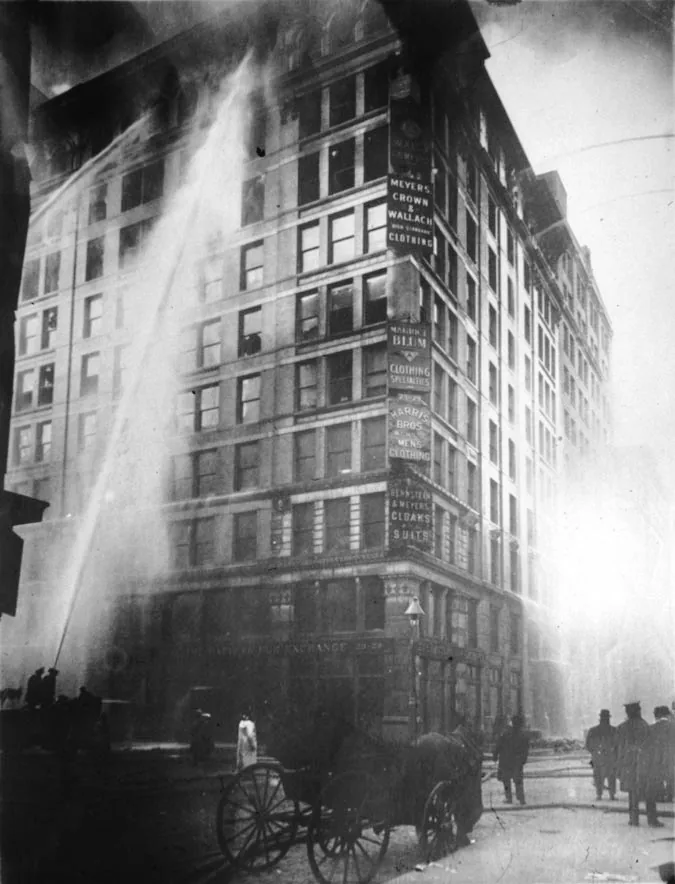
- Present the photograph.
- Describe what you see.
- Use the lesson to explain why so many workers died.
- List two reforms that followed the fire.
Exercise 10 : A child in the mill
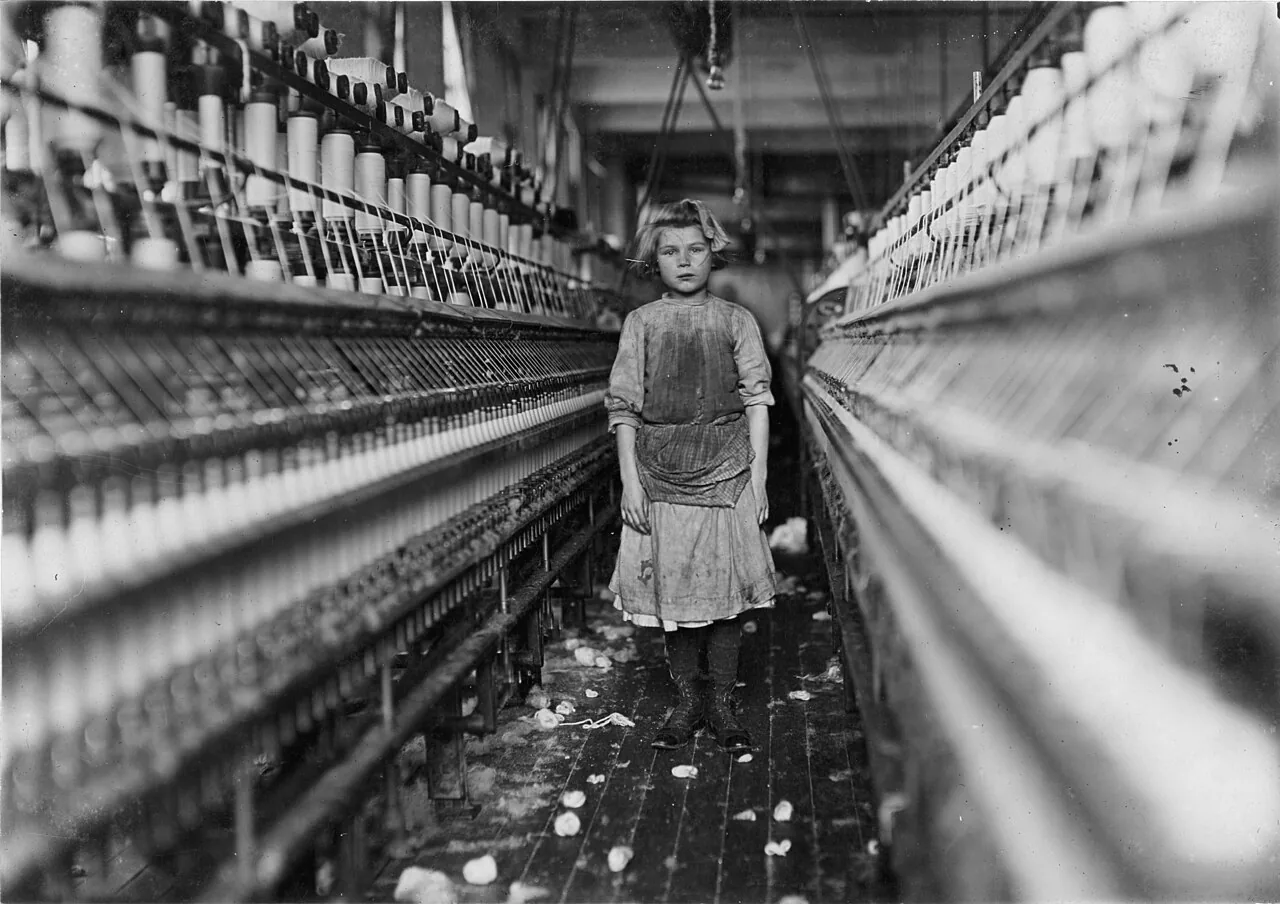
- Present the photograph.
- Describe the girl and the setting.
- Why did the National Child Labor Committee send photographers to mills?
- What might a historian ask about the photograph before using it as evidence?
Exercise 11 : The octopus
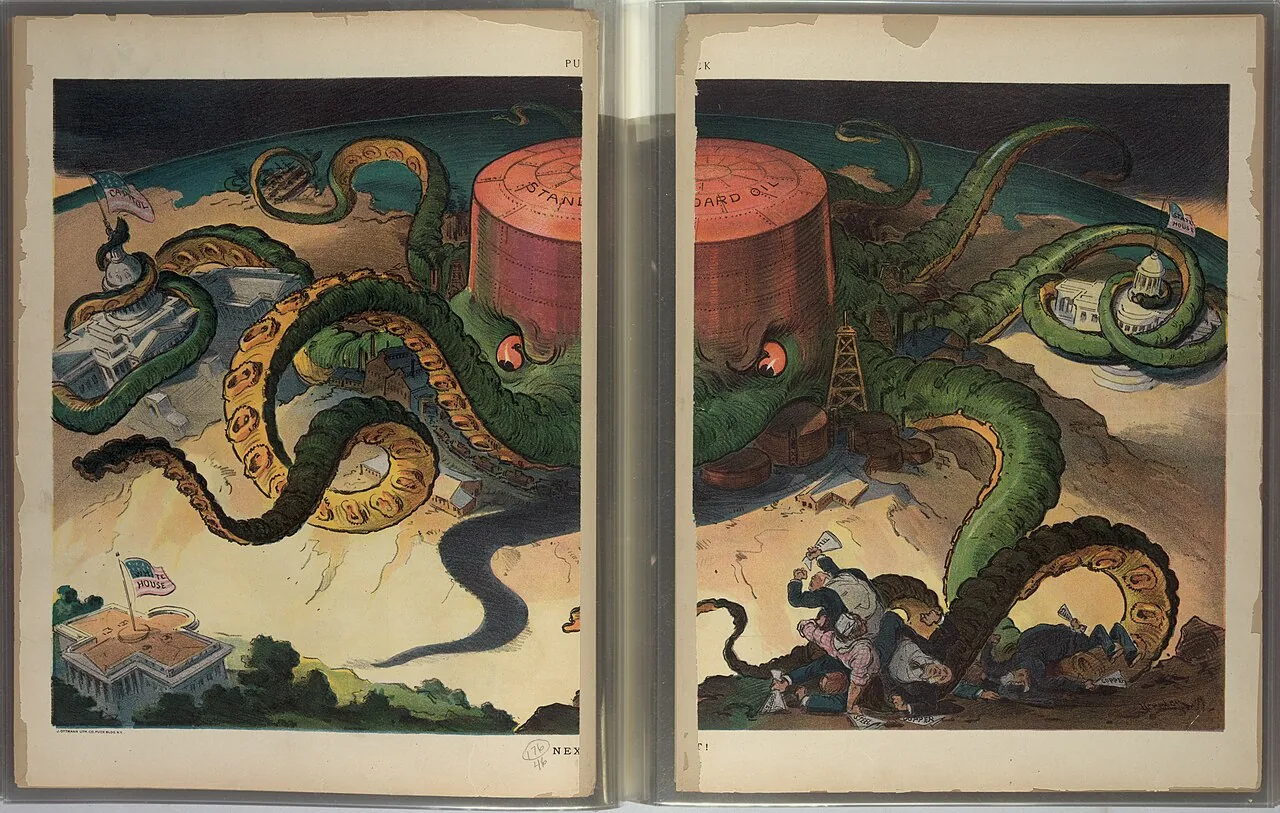
- Present the cartoon.
- What does the octopus stand for and what are its arms doing?
- What political message does the cartoonist send?
- Which action of Roosevelt’s administration answered this fear?
Exercise 12 : Children outside a Vermont mill
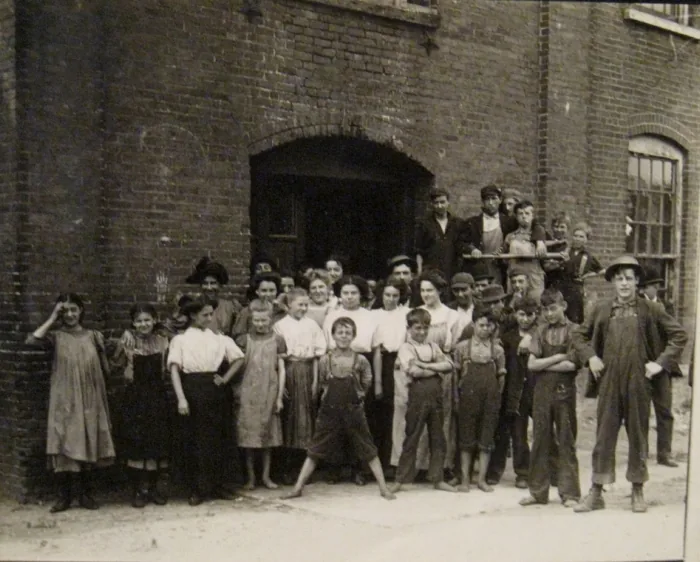
- Present the photograph.
- Describe the group.
- What claim could this photograph support?
- What evidence is missing from it?
Exercise 13 : Two children, two mills
- Present both photographs.
- What do they have in common?
- How do they differ in composition?
- Together, which argument do they make that one alone could not?
Exercise 14 : The election of 1912 in numbers
Study the table.
| Candidate and party | Percent of popular vote | Electoral votes |
|---|---|---|
| Woodrow Wilson (Democrat) | 41.8 | 435 |
| Theodore Roosevelt (Progressive) | 27.4 | 88 |
| William H. Taft (Republican) | 23.2 | 8 |
| Eugene V. Debs (Socialist) | 6.0 | 0 |
Source: National Archives, Electoral College results; popular vote percentages from standard reference works.
- Add Roosevelt’s and Taft’s percentages. What does the total show about the Republican vote?
- Did Wilson win a majority of the popular vote? Explain.
- What does Debs’s result suggest about the appeal of reform?
Exercise 15 : Women’s suffrage by state
- In what region of the country did women gain the vote first?
- Name one state that gave women the vote in 1917 or 1918.
- Where were the large areas in which women had no full voting rights before 1920?
- Suggest two reasons why the movement succeeded first in these states.
Exercise 16 : Who carried the states in 1912?
- Which states did Roosevelt carry?
- Which two states did Taft carry?
- Explain how Wilson won most states with only about 42 percent of the vote.
- Which regions show Wilson’s strongest support?
Exercise 17 : Order the reforms
Put these events in order and give each date: Triangle fire; Federal Reserve Act; Meat Inspection Act; founding of the NAACP; Nineteenth Amendment ratified; assassination of McKinley.
Exercise 18 : How long did it take?
- How many years passed between the Seneca Falls Convention (1848) and the ratification of the Nineteenth Amendment (1920)?
- Roosevelt was president from 1901 to 1909. How many years?
- How many years passed between the Triangle fire and the Nineteenth Amendment?
- The Northern Securities suit was filed in 1902 and decided in 1904. How long was that?
Exercise 19 : Guided research: Hull House
Keywords: “Hull House Jane Addams”, “Hull-House maps and papers”, “Jane Addams Hull House Museum”. Reliable sites: the Jane Addams Hull-House Museum (University of Illinois Chicago), the Library of Congress (loc.gov), the National Park Service, and the Nobel Prize site (nobelprize.org).
- When and where did Hull House open and who founded it?
- List three services it offered.
- Find one primary source (for example, a map or a photograph) and note its title and date.
- In what year did Jane Addams win the Nobel Peace Prize?
Exercise 20 : CER paragraph: Roosevelt and reform
Write a paragraph of 6 to 8 sentences that answers: To what extent did Theodore Roosevelt expand the role of the federal government? State a claim, give two pieces of evidence, explain how they support the claim, and conclude.
Exercise 21 : SAQ: the limits of Progressivism
- Identify one group of Americans whose problems Progressives mostly ignored.
- Explain one way members of that group worked for change.
- Explain one reason why the reforms of the Progressive Era were limited.
Exercise 22 : True or false? Justify
Say whether each statement is true or false and correct the false ones.
- Upton Sinclair wrote The Jungle mainly to expose unsanitary meat.
- The Sixteenth Amendment allowed an income tax.
- Women in the West could vote before women in the Northeast.
- Woodrow Wilson won the 1912 election with a majority of the popular vote.
- The NAACP was founded in 1909.
Exercise 23 : Stimulus-based multiple choice
Stimulus
We are face to face with new conceptions of the relations of property to human welfare, chiefly because certain advocates of the rights of property as against the rights of men have been pushing their claims too far. The man who wrongly holds that every human right is secondary to his profit must now give way to the advocate of human welfare, who rightly maintains that every man holds his property subject to the general right of the community to regulate its use to whatever degree the public welfare may require it.
Source: Theodore Roosevelt, “The New Nationalism,” speech at Osawatomie, Kansas, August 31, 1910; text from Wikisource.
*advocate: supporter.
- The speaker is most likely to support: (A) laissez-faire; (B) regulation of business in the public interest; (C) the abolition of all taxes; (D) the isolationist policy of 1890.
- Which program did the speaker later name in the 1912 campaign? (A) the Square Deal; (B) the New Freedom; (C) the New Nationalism; (D) the Fair Deal.
- The speaker’s argument would most likely be criticized by: (A) the Populists; (B) leaders of the National Association of Manufacturers who favored property rights; (C) muckrakers; (D) members of the NAACP.


Quick review: flashcards
Tap a card to see the answer.