


This Grade 6 Ancient Civilizations lesson covers Ancient Egypt, part of the unit “River valley civilizations.” First, read the full lesson with its primary sources, maps and key terms. Then practice with the worksheet, check yourself with the quiz and get ready with the test.
Stand on the edge of the Sahara and look in one direction: nothing but sand and rock, as far as you can see. Turn around and look in the other direction: a narrow ribbon of green fields, palm trees, and mud-brick villages, with a wide river in the middle. About 5,000 years ago, people who lived on that green ribbon united under one king and built a state that lasted, with ups and downs, for almost 3,000 years. They raised pyramids that still stand, invented a writing system, and wrote more about the afterlife than any other people of the ancient world. This was Egypt.
Guiding question: How did the Nile shape ancient Egyptian government, religion, and daily life?
1. The gift of the Nile
The Nile is one of the longest rivers on Earth, about 4,100 miles from its sources in central Africa to the sea. Unlike the Tigris and Euphrates, which you studied in the last unit, the Nile flows north. It rises in the highlands of East Africa, crosses what is now Sudan, and runs through the desert of Egypt before it splits into branches and empties into the Mediterranean Sea. The Egyptians called the southern part, upriver, Upper Egypt. They called the northern part, near the sea, Lower Egypt. This is the opposite of what a modern map suggests, because Egyptians counted upstream as “up.”
Along the river rapids of hard rock, called cataracts, made boat travel difficult in the far south. The first cataract, near Aswan, marked the traditional southern border of Egypt. North of Cairo, the Nile spreads into a fan-shaped delta of rich farmland. Beyond the narrow green valley lay desert on both sides. The Egyptians called their fertile land Kemet, the “Black Land,” after the dark soil, and the desert Deshret, the “Red Land.” Deserts protected Egypt from invaders, and the sea guarded the north, so for long periods the country was safe and could stay united.
The yearly flood
Every year, heavy summer rains and melting snow in the highlands far to the south made the river rise. Beginning in July, the water spilled over its banks, flooded the fields, and in the fall slowly drew back, leaving a layer of black mud called silt. Egyptians divided the year into three seasons built around this cycle: the flood (Akhet), planting and growing (Peret), and harvest (Shemu). Farmers planted wheat and barley, flax for linen, and vegetables.
The flood was usually gentler and more regular than the floods of the Tigris and Euphrates, though a bad year with too little or too much water could bring famine. Priests measured the height of the river on stone gauges called nilometers and used the numbers to predict the harvest and set taxes.
Definition: Nile
The river of northeastern Africa that flows north through Egypt to the Mediterranean Sea. Its yearly flood left fertile silt on the land.
Definition: delta
A fan-shaped area of low, fertile land where a river splits into several branches before reaching the sea.
Egyptians did not need to build the huge irrigation systems of Mesopotamia at first, but they still dug basins and canals to hold water after the flood, and the work had to be organized. When the Greek writer Herodotus visited Egypt about 450 BCE, he was struck by how the whole country depended on the river.
Document 1 – Herodotus on Egypt and the Nile
For any one who sees Egypt, without having heard a word about it before, must perceive, if he has only common powers of observation, that the Egypt to which the Greeks go in their ships is an acquired country, the gift of the river. […] In the first place, on approaching it by sea, when you are still a day’s sail from the land, if you let down a sounding-line you will bring up mud, and find yourself in eleven fathoms’ water, which shows that the soil washed down by the stream extends to that distance.
Source: Herodotus, Histories, Book II, chapter 5, about 430 BCE (translation by George Rawlinson, 1858-1860).
*acquired country: land that was formed over time, here by mud left by the river. *fathom: a unit of depth, about six feet.
Commentary. Herodotus was a Greek traveler who wrote about 2,500 years ago, long after the first pharaohs. His famous phrase, “the gift of the river,” sums up how the Nile created Egyptian land and wealth. His proof is a good example of evidence: if sailors drop a line far from shore and bring up mud, the Nile must have carried that soil to the sea. Modern geologists confirm that the delta is made of river deposits. Notice that Herodotus relies on what Egyptian priests told him and on his own observation, so a historian checks his claims against archaeology.
2. Pharaohs and kingdoms
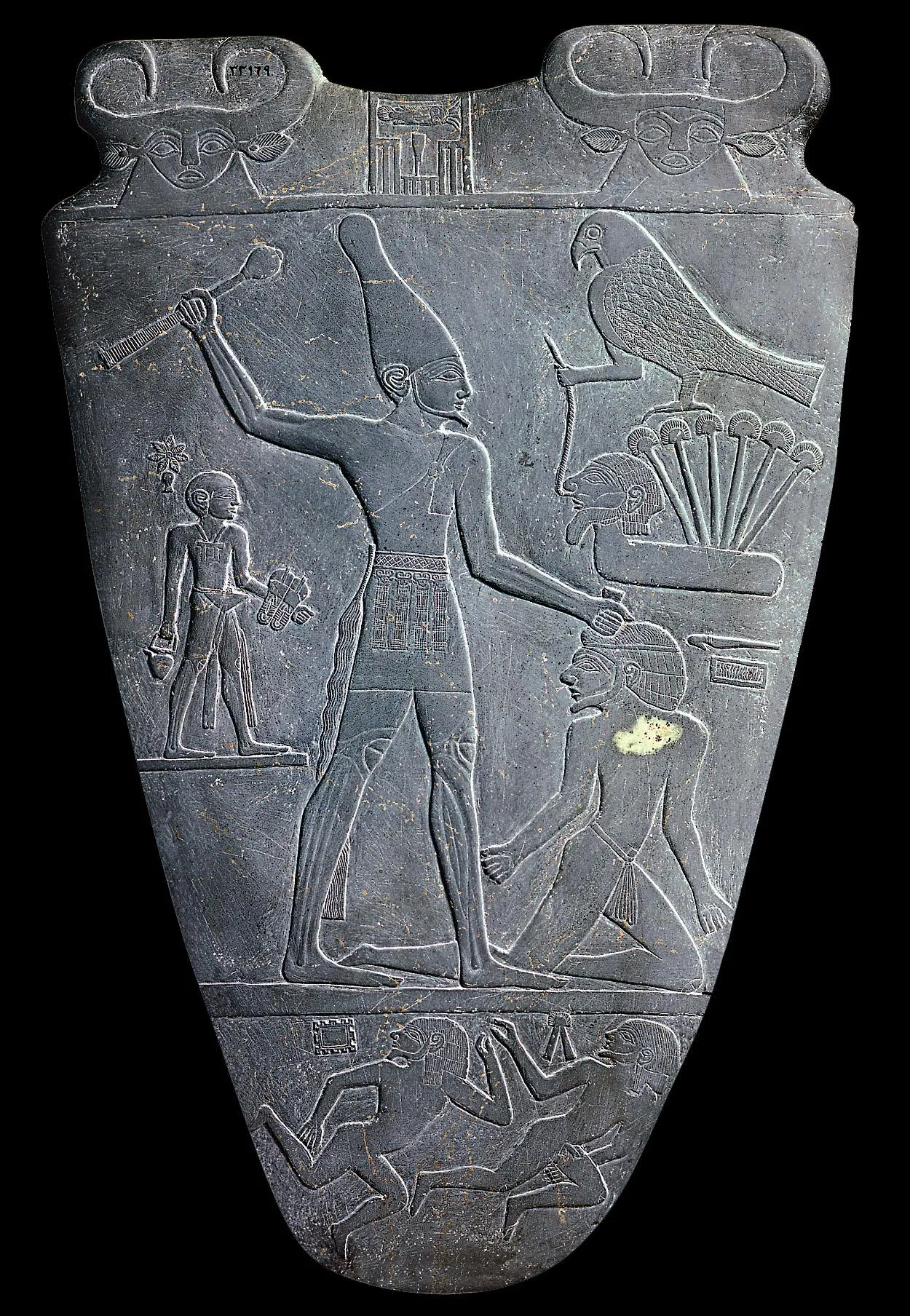
Farming villages along the river grew into small kingdoms. According to Egyptian tradition and archaeological evidence, about 3100 BCE a king from Upper Egypt, whom we know by the name Narmer, united the north and the south. A carved stone slab called the Narmer Palette shows him wearing the white crown of the south and, on the other side, the red crown of the north.
Later Egyptians remembered the first king as Menes. From then on, the ruler was called the pharaoh, a word that originally meant “great house,” the royal palace. Egyptians believed that the pharaoh was a living god, the earthly son of the sun god Ra, who kept the universe in balance by performing rituals and ruling justly.
Definition: pharaoh
The king of ancient Egypt, who was both the political ruler and a god in human form. The word first meant “great house,” the royal palace.
Historians divide Egyptian history into periods called kingdoms, separated by times of weak government. Dates before about 700 BCE are approximate, and scholars still debate them.
The Old Kingdom
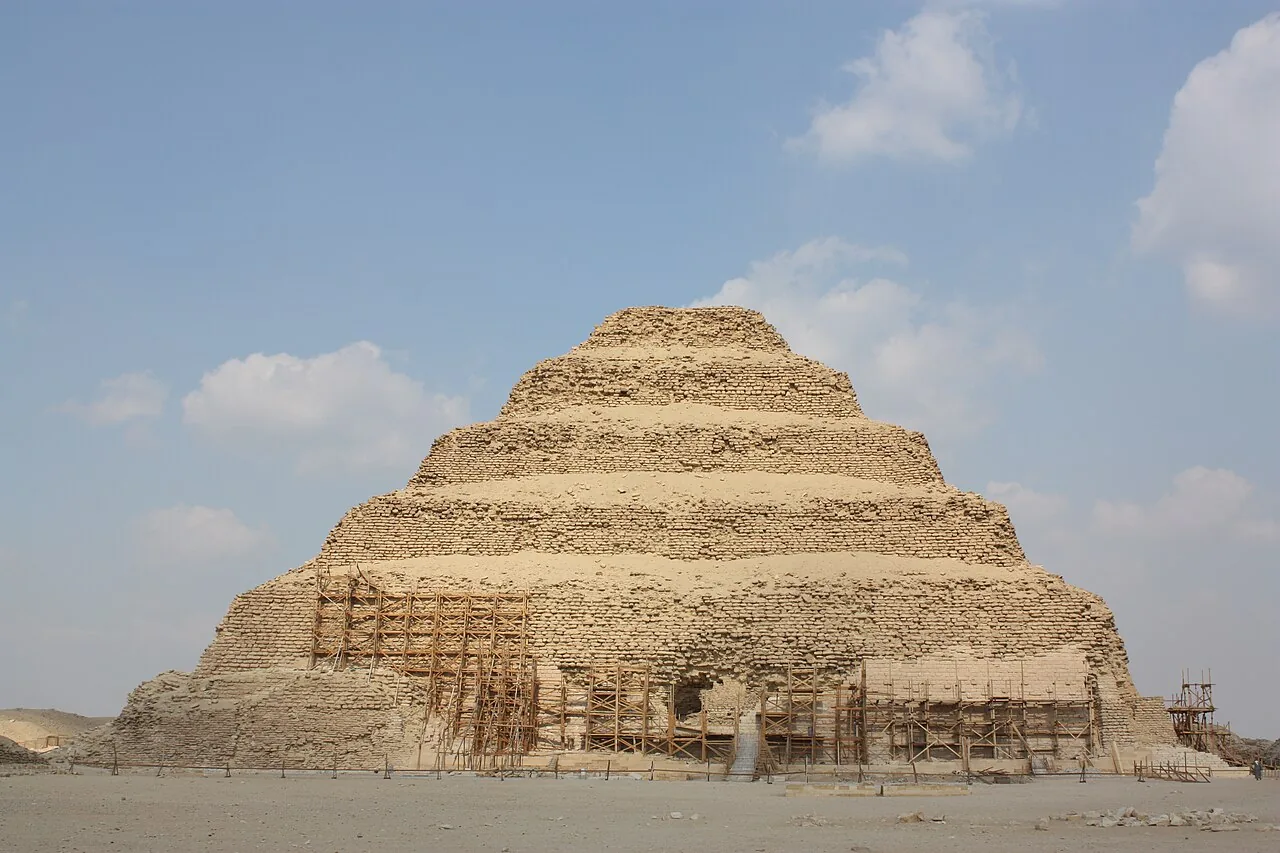
The Old Kingdom (about 2686 to 2181 BCE) is the age of the pyramids. King Djoser and his architect, Imhotep, built the first big stone pyramid, the Step Pyramid at Saqqara, about 2670 BCE. A little more than a century later, the pharaohs of the Fourth Dynasty built the three great pyramids at Giza. The largest, built for Khufu about 2560 BCE, rose about 481 feet and was the tallest human-made structure on Earth for nearly 4,000 years. Pyramids were tombs, built to protect the king’s body and help him in the afterlife. They also showed the pharaoh’s power and the ability of the government to gather workers, food, and stone.
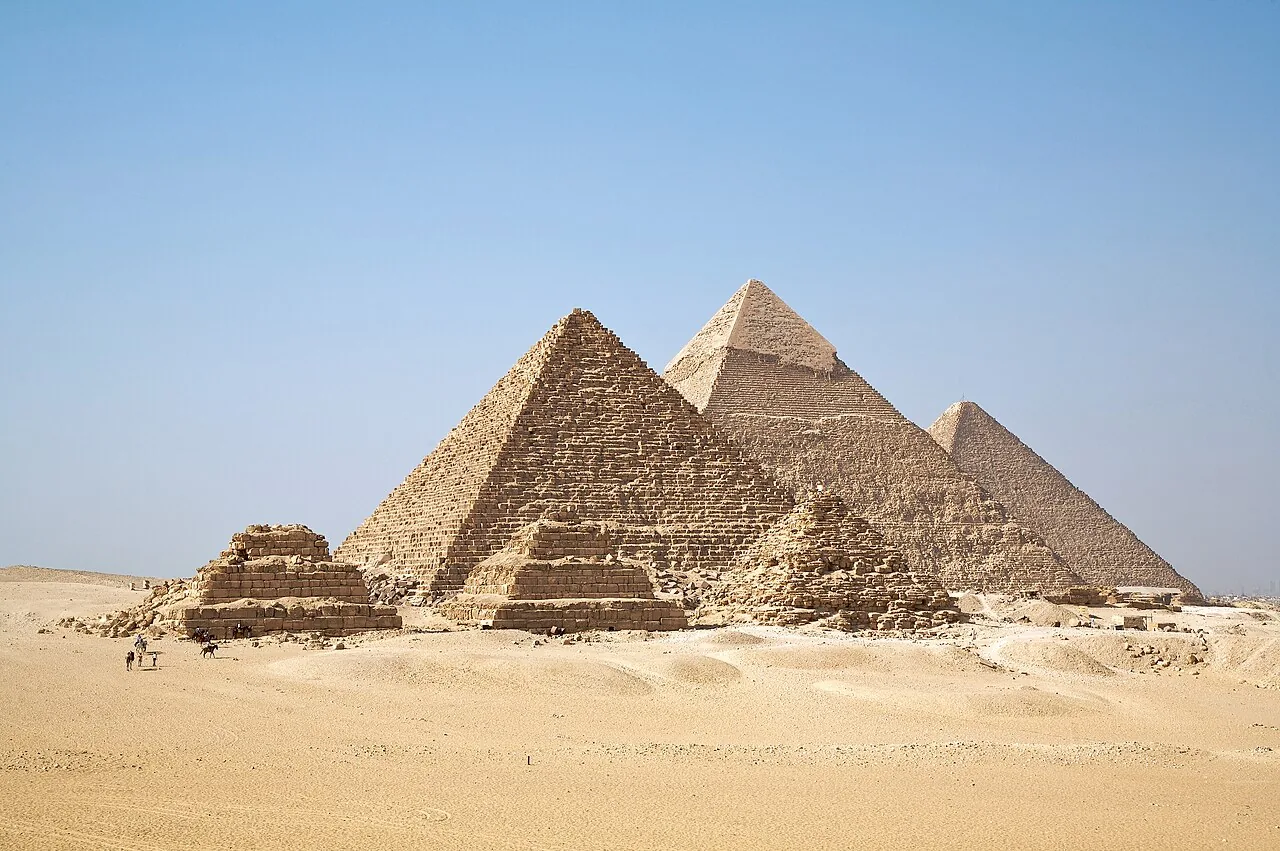
Who built the pyramids? Herodotus, who visited about 2,000 years after Khufu, wrote a story that many people still repeat.
Document 2 – Herodotus on the building of the Great Pyramid
Some were required to drag blocks of stone down to the Nile from the quarries in the Arabian range of hills; others received the blocks after they had been conveyed in boats across the river, and drew them to the range of hills called the Libyan. A hundred thousand men laboured constantly, and were relieved every three months by a fresh lot. It took ten years’ oppression of the people to make the causeway for the conveyance of the stones […]. The pyramid itself was twenty years in building.
Source: Herodotus, Histories, Book II, chapter 124, about 430 BCE (translation by George Rawlinson, 1858-1860).
*Arabian range, Libyan range: the hills east and west of the Nile. *causeway: a raised road. *Herodotus is describing King Cheops, the Greek name for Khufu.
Commentary. Herodotus says that 100,000 men had to work by force, but he is repeating stories that priests told him many centuries after the event. Archaeologists have since found the town where the builders lived, with bakeries, breweries, and cemeteries. The workers were mostly Egyptian farmers and skilled craftworkers who were fed well and given medical care, and the skeletons show healed injuries. Many worked in teams during the flood season, when the fields were underwater, so the pyramids were also a kind of national project. This is a good case where a primary source, though valuable, needs to be checked against material evidence.
The Middle and New Kingdoms
After the Old Kingdom, the central government weakened and Egypt broke into rival regions. A king from Thebes reunited the country about 2055 BCE and began the Middle Kingdom (about 2055 to 1650 BCE), a time remembered for literature, strong rulers, and public works, including the draining of marshland in the Faiyum. Foreign rulers from Asia, called the Hyksos, then took over the Delta for about a century.
The New Kingdom (about 1550 to 1070 BCE) was the age of Egypt’s empire. Pharaohs drove out the Hyksos and conquered lands in Nubia to the south and the Levant to the northeast. Hatshepsut, who ruled as pharaoh from about 1479 to 1458 BCE, sent a trading expedition to the land of Punt. Akhenaten (about 1353 to 1336 BCE) tried to make the worship of a single sun disk, the Aten, the main religion.
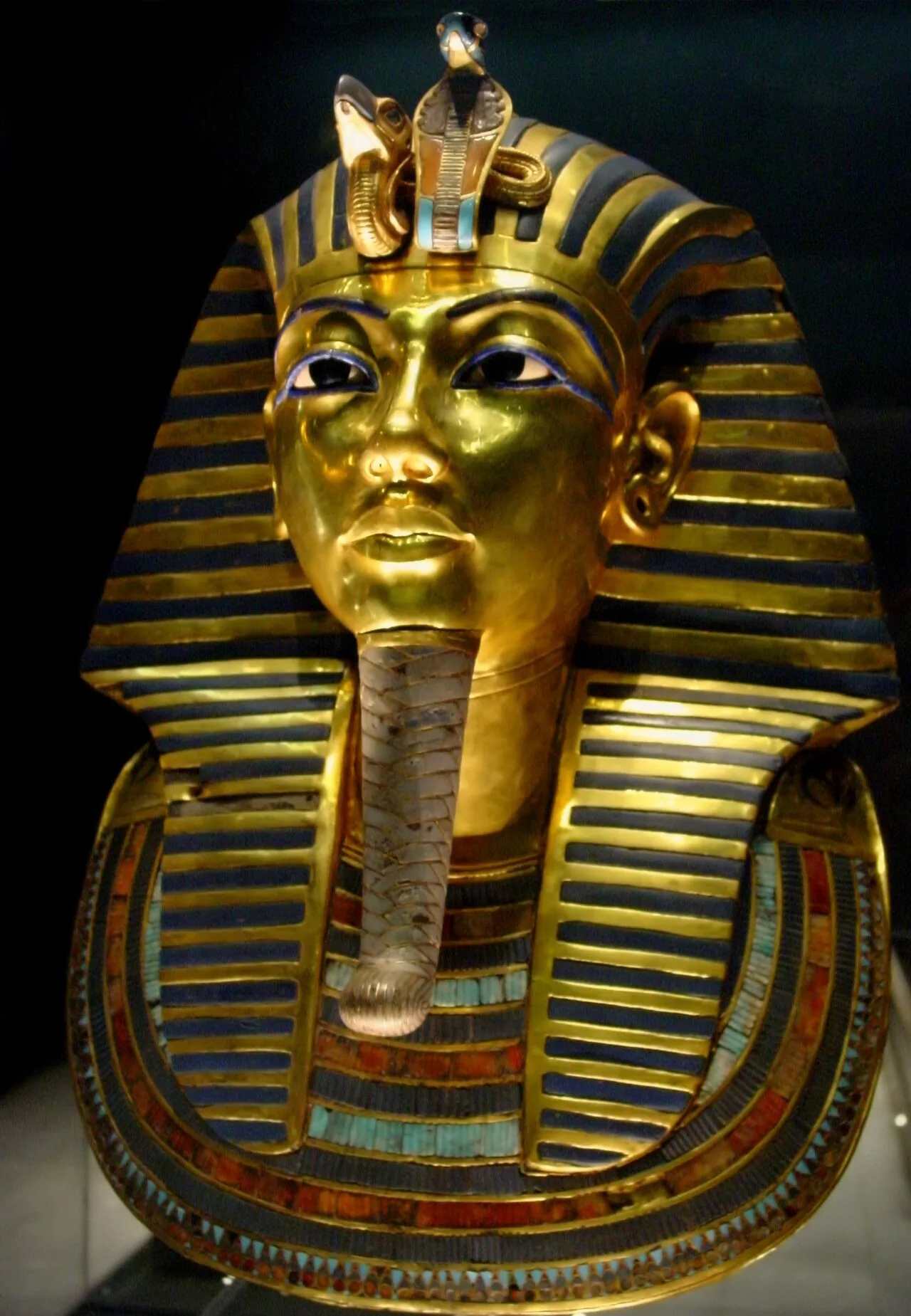
His son Tutankhamun, who became king as a boy and died at about eighteen, is famous mostly because Howard Carter found his tomb almost untouched in 1922. Ramses II, who ruled from 1279 to 1213 BCE, built giant temples such as Abu Simbel and fought the Hittites. After about 1070 BCE, Egypt split apart, and foreigners often ruled it: Libyans, Nubians, Assyrians, and Persians (from 525 BCE). Alexander the Great took Egypt in 332 BCE, and after his death a Greek family, the Ptolemies, ruled it until the last queen, Cleopatra VII, died in 30 BCE and Egypt became part of the Roman Empire.
3. Society, religion, and the afterlife
Egyptian society was shaped like a pyramid. At the top stood the pharaoh. Below him were the vizier, who ran the government, the high priests, and nobles, who owned estates and served as generals and governors. Next came scribes, who kept records, collected taxes, and wrote letters. Because only a small part of the population could read, scribes held a powerful and respected position.
Below them were merchants and skilled craftworkers, such as carpenters, jewelers, and stonecutters, and, at the base, the farmers, who were the great majority. Farmers owed taxes in grain and could be called on to work on royal projects. There were also slaves, mostly prisoners of war, but slavery was less central in Egypt than in some other ancient societies. A scribe’s father wrote in a famous school text that no job was better than writing, because it let a boy escape heavy labor.
Women in Egypt had more legal rights than women in most ancient societies. They could own property, make contracts, sue in court, and inherit. A few women ruled: Hatshepsut and Cleopatra are the best known. Still, most important offices went to men. Herodotus noted these differences and was amazed by them.
Document 3 – Herodotus on Egyptian customs
The women attend the markets and trade, while the men sit at home at the loom; and here, while the rest of the world works the woof up the warp, the Egyptians work it down; the women likewise carry burthens upon their shoulders, while the men carry them upon their heads. […] A woman cannot serve the priestly office, either for god or goddess, but men are priests to both; sons need not support their parents unless they choose, but daughters must, whether they choose or no.
Source: Herodotus, Histories, Book II, chapter 35, about 430 BCE (translation by George Rawlinson, 1858-1860).
*woof, warp: the crosswise and lengthwise threads in weaving. *burthens: burdens.
Commentary. Herodotus compares Egypt with Greece, where respectable women stayed at home, and he tends to exaggerate, as when he says that Egyptians do everything “the opposite” of other people. But his picture of women trading in the market and owning goods matches other evidence, such as contracts and tomb paintings. The text also reminds us that Herodotus was an outsider writing for Greeks, so he notices differences more than similarities.
Gods and temples
Religion touched every part of life. Egyptians worshipped many gods (polytheism). Ra was the sun god. Osiris was the god of the dead and of the fertile land. His brother Set killed him, but his wife Isis brought him back to life, and he became king of the underworld. Their son Horus, a falcon-headed god, was the model for the living pharaoh. Anubis, the jackal-headed god, guided the dead. Ma’at was both a goddess and the idea of truth, justice, and cosmic order, which the pharaoh had to protect. People prayed at home shrines, while priests served the gods in great temples that owned land and employed many workers.
Mummification and the afterlife
The Egyptians believed that life continued after death if the body was preserved and the dead person passed a test. To keep the body from decaying, embalmers developed mummification, a process that took about 70 days. They removed the organs, dried the body with a natural salt called natron, and wrapped it in linen. Embalmers left the heart in the body, because Egyptians thought it was the seat of thought and character.
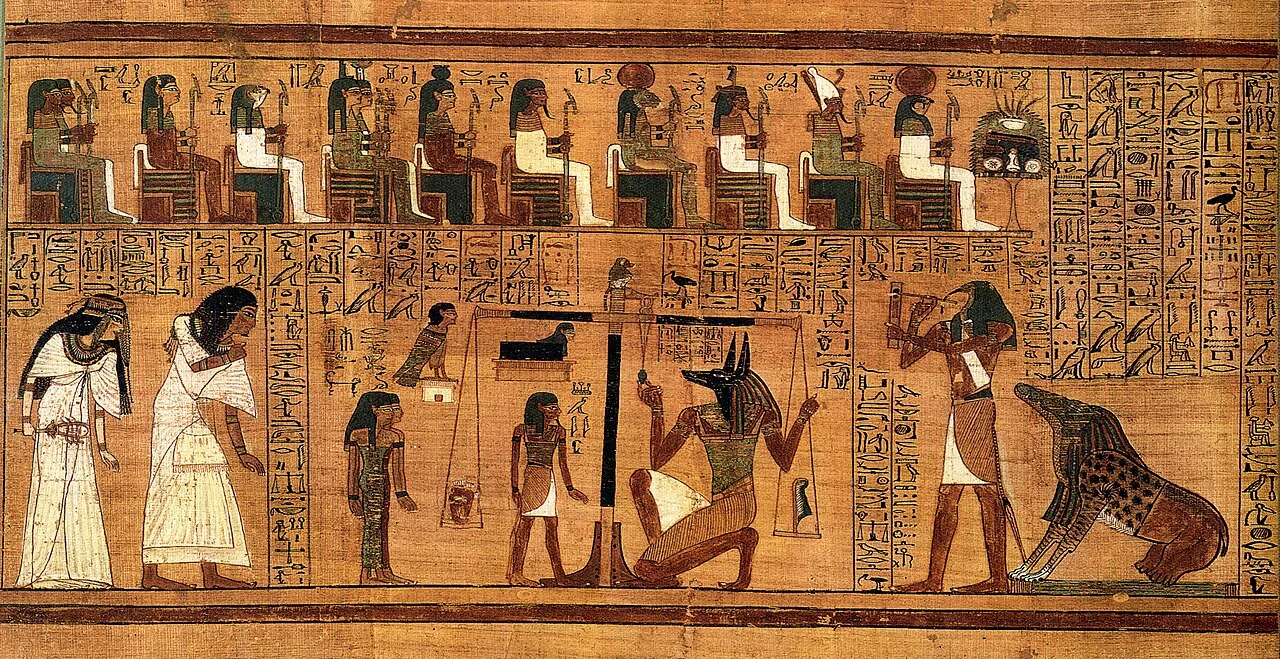
The dead were buried with food, tools, jewelry, and a Book of the Dead, a set of spells written on papyrus to help them through the dangers of the underworld. In the most famous scene, the gods weighed the dead person’s heart on a scale against the feather of Ma’at. If it was light, the person entered paradise. If it was heavy with wrongdoing, the monster Ammit devoured it.
Definition: mummification
The process of preserving a dead body by removing its organs, drying it with natron salt, and wrapping it in linen, so that the spirit could live on in the afterlife.
The Egyptians also thought a good life mattered. Wisdom writings, called Instructions, taught young officials how to behave. Tradition credits one of the oldest to the vizier Ptahhotep.
Document 4 – Advice from the vizier Ptahhotep: be a good leader
If thou be a leader, as one directing the conduct of the multitude, endeavour always to be gracious, that thine own conduct be without defect. Great is Truth, appointing a straight path; never hath it been overthrown since the reign of Osiris. One that oversteppeth the laws shall be punished.
Source: The Instruction of Ptah-hotep, maxim 5, attributed to a vizier of the Old Kingdom, about 2400 BCE (translation by Battiscombe Gunn, 1906).
*gracious: kind and fair. *Osiris: the god of the dead, thought of as the first king of Egypt.
Commentary. The advice is aimed at officials who lead others. Ptahhotep stresses fairness and truth, which the Egyptians called Ma’at, and says that anyone who breaks the laws will be punished. The text shows what Egyptians expected of leaders: justice mattered, and even a powerful official could be judged. Whether leaders really behaved this way is another question, but the maxim tells us what the society said it valued.
4. Writing, knowledge, and legacy
Egyptian writing began about 3200 BCE. Hieroglyphs, from Greek words meaning “sacred carvings,” use pictures and symbols for objects, ideas, and sounds. Artists carved them on temple walls and tombs. For everyday records, scribes used a faster, simplified script called hieratic, and later Demotic. They wrote with reed brushes and ink on papyrus, a paper-like material made from the stem of a plant that grew along the Nile. Papyrus was light and cheap, and traders exported it around the Mediterranean. The English word “paper” comes from it.
Reading the hieroglyphs again
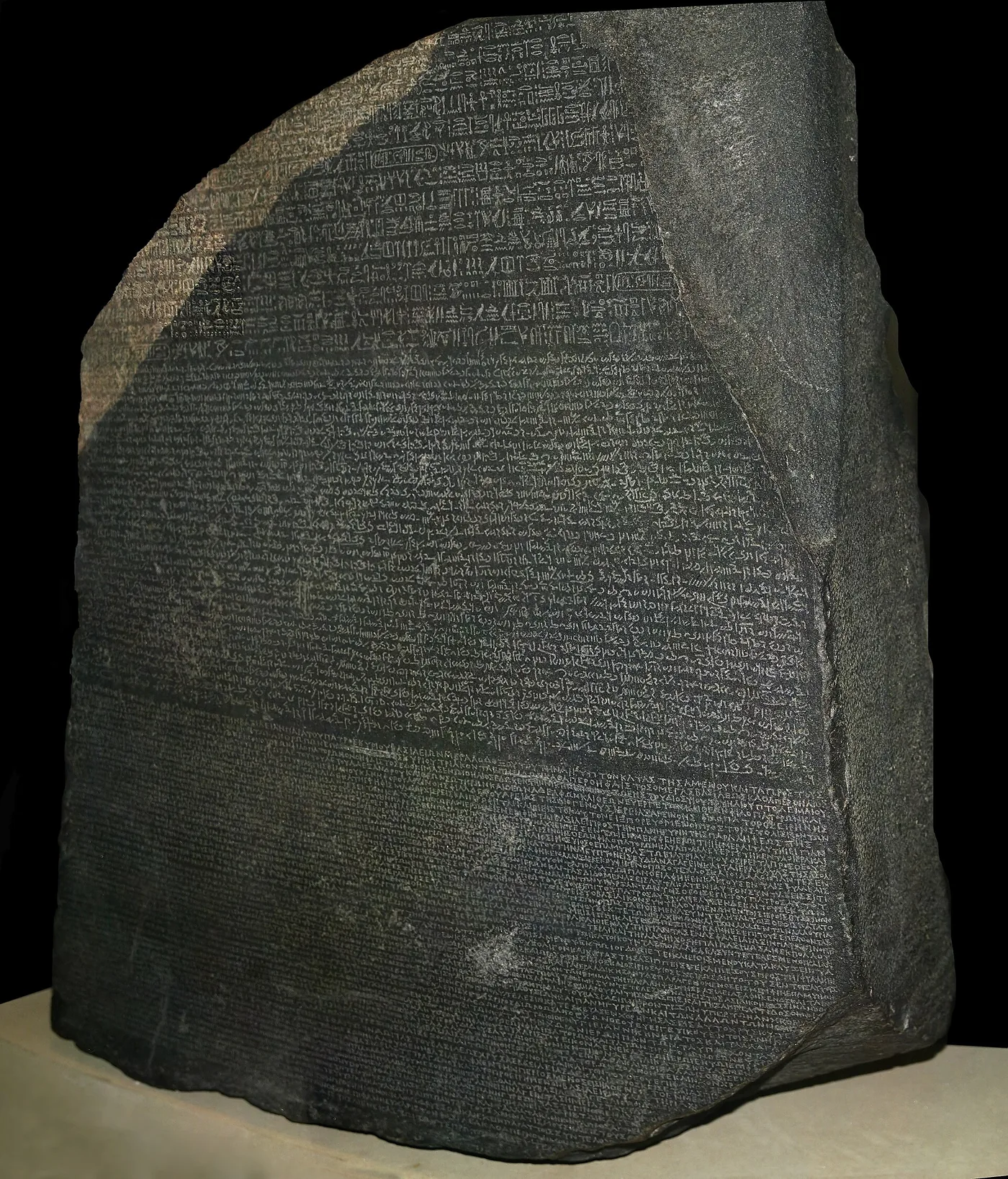
After the Greeks and Romans, hieroglyphs fell out of use and nobody could read them for about 1,400 years. The key was the Rosetta Stone, found in 1799 by French soldiers in the Nile Delta. It carries one decree of King Ptolemy V from 196 BCE in three scripts: hieroglyphs, Demotic, and Greek. Scholars could read Greek, so they compared the three versions. In 1822, the French scholar Jean-François Champollion announced that he had worked out how hieroglyphs functioned.
Definition: hieroglyphs
The picture-based writing system of ancient Egypt, used on monuments and in religious texts. Signs can stand for objects, ideas, or sounds.
Science and art
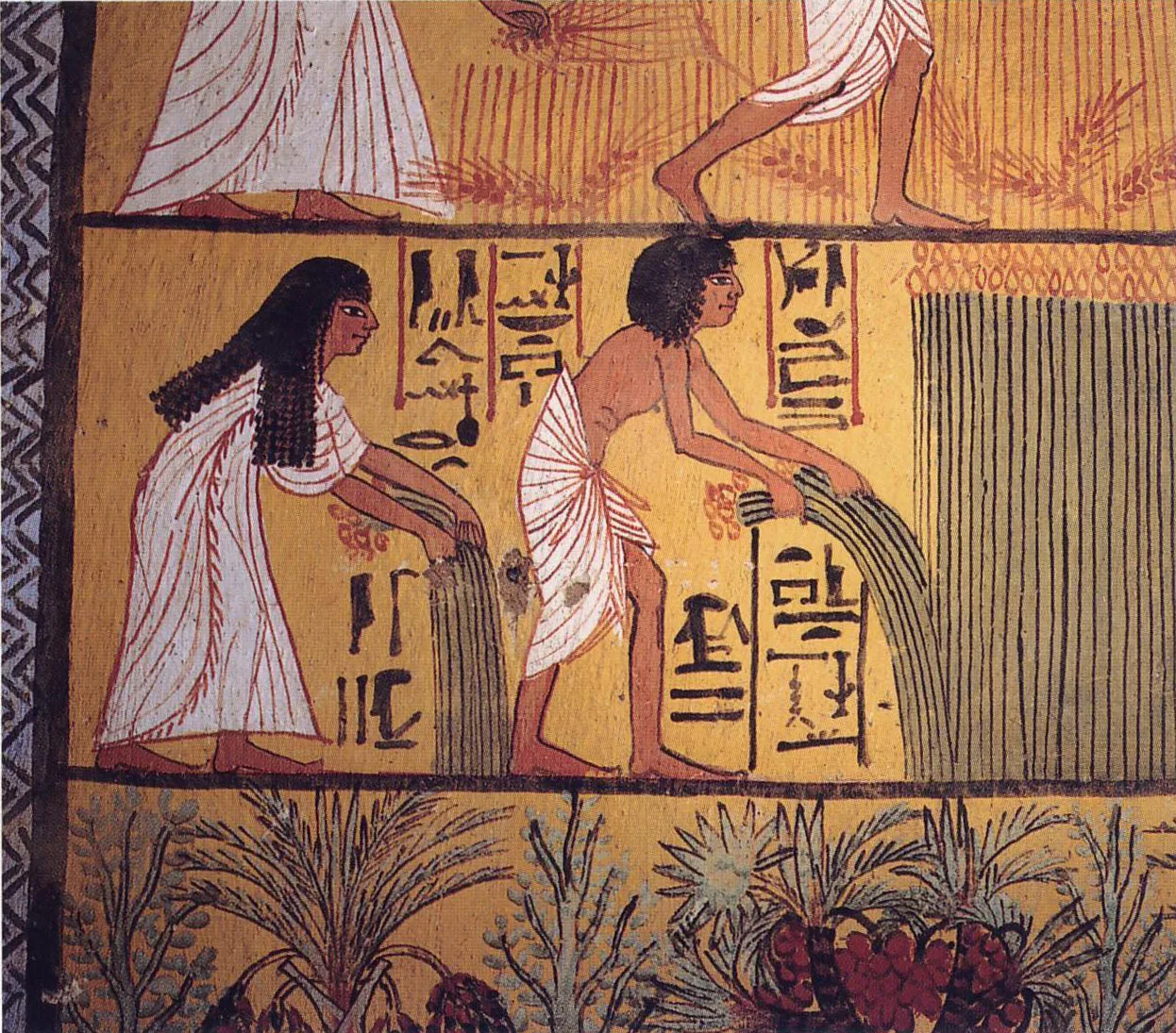
The Egyptians were practical scientists. Surveyors had to mark field boundaries again after every flood, which encouraged the use of geometry. Builders computed slopes and volumes to construct pyramids. Priests watched the star Sirius, whose first appearance before dawn announced the flood, and created a calendar with 365 days: 12 months of 30 days, plus five extra days. This was the ancestor of our own calendar. Doctors treated wounds, set bones, and used herbs; a medical papyrus about 1600 BCE describes dozens of injuries and their treatment. Artists followed fixed rules for showing people, which gave Egyptian art a recognizable style that lasted for thousands of years. Tomb paintings show the work of farmers.
Egypt’s legacy
Egypt’s legacy is large. It left monuments, the idea of a divine ruler, early medicine and mathematics, the calendar, papyrus, and a body of literature. Greek and Roman travelers admired it, and today millions of visitors come to see the pyramids. Its history also shows how geography can shape a civilization: the Nile gave Egypt food, transportation, and a sense of order, and the deserts gave it protection.
- About 3100 BCE Narmer unites Upper and Lower Egypt.
- About 2670 BCE Imhotep builds the Step Pyramid for Djoser at Saqqara.
- About 2560 BCE The Great Pyramid is built for Khufu at Giza.
- About 2055 BCE A king of Thebes reunites Egypt: the Middle Kingdom begins.
- About 1550 BCE The New Kingdom begins after the Hyksos are expelled.
- 1279-1213 BCE Reign of Ramses II, who builds the temples at Abu Simbel.
- 525 BCE Persia conquers Egypt.
- 196 BCE The decree inscribed on the Rosetta Stone is issued.
- 30 BCE Cleopatra VII dies and Egypt becomes a Roman province.
Key takeaways
- The Nile’s yearly flood left fertile silt, so Egypt became a rich farming land surrounded by protective deserts; Herodotus called it “the gift of the river.”
- About 3100 BCE, Narmer united Upper and Lower Egypt; the pharaoh was both king and god.
- Egyptian history is divided into the Old, Middle, and New Kingdoms; pyramids belong to the Old Kingdom, and empire to the New Kingdom.
- Egyptian society had classes: pharaoh and nobles, priests and scribes, craftworkers, and farmers; women had many legal rights.
- Egyptians were polytheists who believed in life after death; mummification and the Book of the Dead prepared people for judgment by the weighing of the heart.
- Hieroglyphs on stone and writing on papyrus recorded Egyptian life; the Rosetta Stone, found in 1799, allowed scholars to read hieroglyphs again.

Quick review: flashcards
Tap a card to see the answer.