


This Grade 6 Ancient Civilizations test covers Ancient India. Like a classroom assessment, it includes documents to analyze, knowledge questions and a short writing task. To prepare, review the lesson first, then practice with the worksheet.
Time : 50 min
The test has three parts: knowledge (30 points), documents (50 points), and a written argument (20 points). Answer in complete sentences and cite the documents.
Document 1 – Map of ancient India
Schematic map prepared for this unit.
Document 2 – The Lion Capital of Ashoka
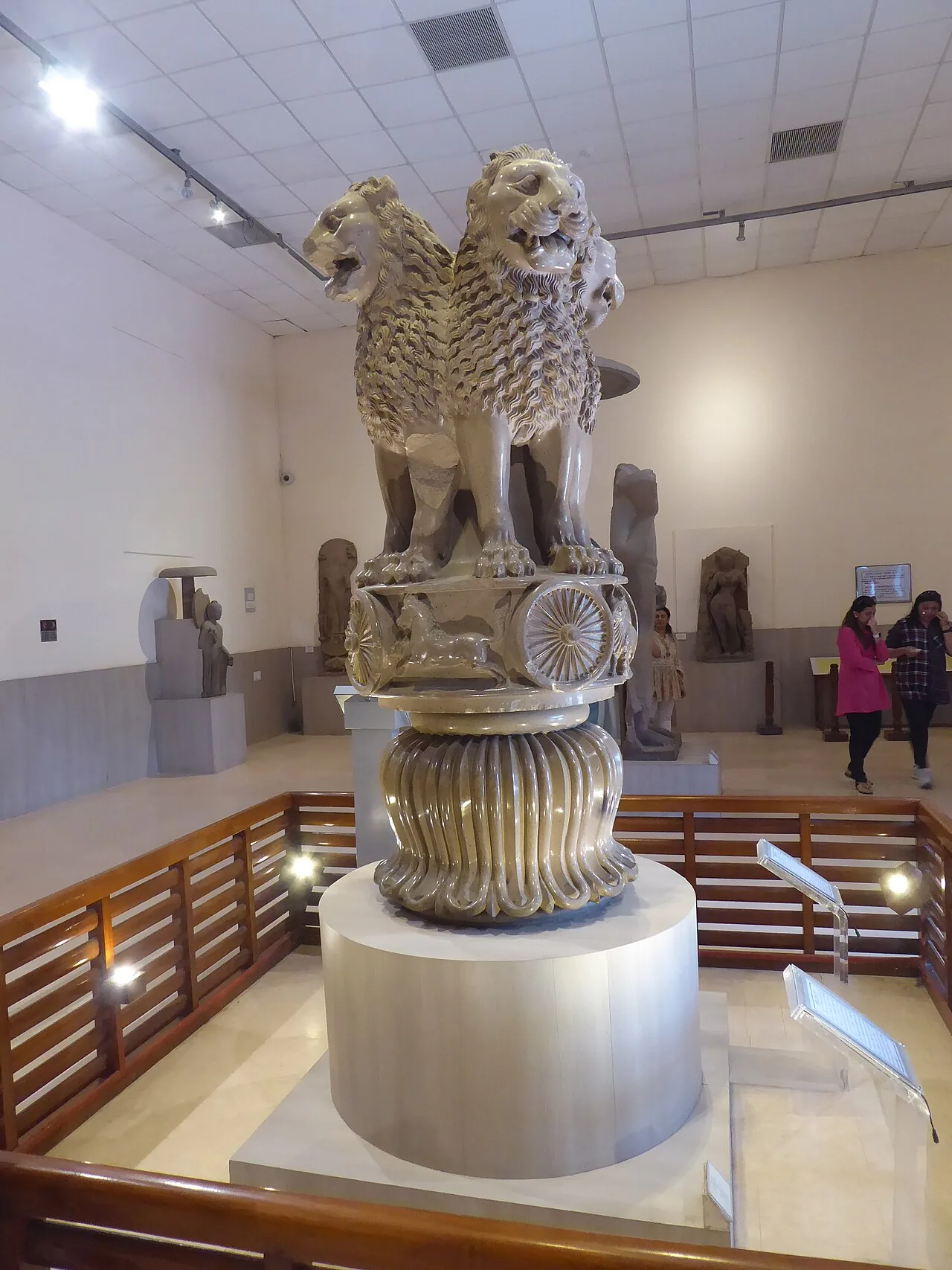
Wikimedia Commons, Sarnath Museum.
Document 3 – Ashoka's Rock Edict XIII
Kalinga was conquered by His Sacred and Gracious Majesty the King when he had been consecrated eight years. One hundred and fifty thousand persons were thence carried away captive, one hundred thousand were there slain, and many times that number died. Directly after the Kalinga had been annexed began His Sacred Majesty’s zealous protection of the Law of Piety, his love of that Law, and his inculcation of that Law. Thence arises the remorse of His Sacred Majesty for having conquered the Kalingas, because the conquest of a country previously unconquered involves the slaughter, death, and carrying away captive of the people. That is a matter of profound sorrow and regret to His Sacred Majesty.
*consecrated: crowned as king in a ceremony. *slain: killed. *the Law of Piety: dhamma, Ashoka’s code of moral conduct. *annexed: taken over.
Ashoka, Rock Edict XIII (Shahbazgarhi version), about 260 BCE (translation by Vincent A. Smith, 1901).
Document 4 – The Laws of Manu
But in order to protect this universe He, the most resplendent one, assigned separate (duties and) occupations to those who sprang from his mouth, arms, thighs, and feet. To Brahmanas he assigned teaching and studying (the Veda), sacrificing for their own benefit and for others, giving and accepting (of alms). The Kshatriya he commanded to protect the people, to bestow gifts, to offer sacrifices, to study (the Veda), and to abstain from attaching himself to sensual pleasures; The Vaisya to tend cattle, to bestow gifts, to offer sacrifices, to study (the Veda), to trade, to lend money, and to cultivate land. One occupation only the lord prescribed to the Sudra, to serve meekly even these (other) three castes.
*the Veda: the sacred texts of the Vedic tradition. *sacrifices: offerings to the gods. *Brahmanas, Kshatriya, Vaisya, Sudra: priests, warriors, farmers and merchants, and servants.
<em>Laws of Manu</em>, chapter 1, verses 87-91, a Sanskrit law code composed between about 200 BCE and 200 CE (translation by Georg Bühler, 1886).
Document 5 – The first Maurya emperors
| Emperor | Relationship | Reign (approximate) |
|---|---|---|
| Chandragupta Maurya | founder | 321-297 BCE |
| Bindusara | son of Chandragupta | 297-273 BCE |
| Ashoka | son of Bindusara | 268-232 BCE |
Dates as commonly given in reference works such as Romila Thapar, <em>Early India</em> (2002); approximate.
Questions
- Part 1 – Knowledge. Define monsoon and subcontinent, and name two features of Indus Valley cities that show careful planning. (12 pts)
- Part 1. Document 1: name the two rivers, name the sea to the west and the sea to the east, and name the city that was the capital of the Maurya Empire. (10 pts)
- Part 1. Explain who the Buddha was and one idea of his first sermon. (8 pts)
- Part 2 – Documents. Document 2: present the document, describe what you see, and explain why modern India chose it as its emblem. (14 pts)
- Part 2. Document 3: present the document and explain what happened at Kalinga and how Ashoka reacted. (14 pts)
- Part 2. Document 4: present the document and explain how the text divides society. Use Document 5 to say who Ashoka’s grandfather was and how long Ashoka ruled. (14 pts)
- Part 2. Using Documents 3 and 5, explain why Ashoka is considered an unusual ruler, and why a historian should be careful with the numbers in Document 3. (8 pts)
- Part 3 – Written argument. Which was the most important legacy of ancient India: planned cities, new religious ideas, or Ashoka’s idea of rule by dhamma? Write a paragraph or two with a claim, at least two pieces of evidence from the documents or the lesson, and your reasoning. (20 pts)


Quick review: flashcards
Tap a card to see the answer.