


This worksheet on Ancient India belongs to the Grade 6 Ancient Civilizations course. Its questions use primary sources, maps and timelines, and they move from basic recall to short writing tasks. Before you start, review the lesson; afterward, try the true or false quiz.
Exercise 1 : Vocabulary of ancient India
Define each word, then use it in a sentence.
- subcontinent
- monsoon
- Veda
- caste system
- nirvana
- dhamma
- seal
Hint: use the definition boxes and the lesson.
Exercise 2 : A hymn about creation
Document 1 – The Hymn of Creation
Then was not non-existent nor existent: there was no realm of air, no sky beyond it. What covered in, and where? and what gave shelter? Was water there, unfathomed depth of water? […] Who verily knows and who can here declare it, whence it was born and whence comes this creation? The Gods are later than this world’s production. Who knows then whence it first came into being?
Source: Rig Veda, Book 10, hymn 129 (Nasadiya Sukta), Vedic period, about 1000 BCE (translation by Ralph T. H. Griffith, 1896).
*non-existent, existent: not existing, existing. *unfathomed: too deep to measure.
- Present the document (nature, date, translator).
- What does the poet say existed before the world began?
- What question does the poet ask at the end?
- Explain why the poet says “the Gods are later than this world’s production.”
- What does this hymn tell historians about the thinkers of the Vedic age?
Hint: look at the first and last lines.
Exercise 3 : The four classes in the Vedas
Document 1 – The Hymn of the Primal Man
A thousand heads hath Puruṣa, a thousand eyes, a thousand feet. […] When they divided Puruṣa how many portions did they make? What do they call his mouth, his arms? What do they call his thighs and feet? The Brahman was his mouth, of both his arms was the Rājanya made. His thighs became the Vaiśya, from his feet the Śūdra was produced.
Source: Rig Veda, Book 10, hymn 90 (Purusha Sukta), late Vedic period, about 1000 BCE (translation by Ralph T. H. Griffith, 1896).
*Puruṣa: the “Primal Man,” whose sacrifice creates the world. *Brahman, Rājanya, Vaiśya, Śūdra: the four classes, or varnas, of Indian society: priests, warriors, farmers and merchants, and servants.
- Present the document.
- According to the hymn, from which part of the body did each of the four classes come?
- Why would priests describe society as a body?
- Which class was said to have come from the feet? What does that suggest about its rank?
- Why must a historian be careful when using this hymn as evidence about daily life in the Vedic age?
Exercise 4 : The middle path
Document 1 – The Buddha’s first sermon: the middle path
There are two extremes, O Bhikkhus, which the man who has given up the world ought not to follow — the habitual practice, on the one hand of those things whose attraction depends upon the passions, and especially of sensuality […] and the habitual practice, on the other hand, of asceticism (or self-mortification), which is painful, unworthy, and unprofitable. There is a middle path, O Bhikkhus, avoiding these two extremes, discovered by the Tathāgata — a path which opens the eyes, and bestows understanding, which leads to peace of mind, to the higher wisdom, to full enlightenment, to Nirvāṇa!
Source: Dhamma-kakka-ppavattana Sutta, the first sermon of the Buddha at Sarnath, a Buddhist text preserved orally and written down centuries later (translation by T. W. Rhys Davids, 1881).
*Bhikkhus: Buddhist monks. *sensuality: pleasure of the senses. *asceticism: severe self-denial. *Tathāgata: a title the Buddha used for himself. *Nirvāṇa: the state of freedom from suffering.
- Present the document (nature, author, date, context).
- What two extremes does the Buddha say monks should avoid?
- What does he offer instead?
- Explain why the text says the middle path “opens the eyes.”
- The sermon was written down long after the Buddha lived. How does that affect how we use it?
Exercise 5 : After Kalinga
Document 1 – Ashoka after the war in Kalinga
Kalinga was conquered by His Sacred and Gracious Majesty the King when he had been consecrated eight years. One hundred and fifty thousand persons were thence carried away captive, one hundred thousand were there slain, and many times that number died. Directly after the Kalinga had been annexed began His Sacred Majesty’s zealous protection of the Law of Piety, his love of that Law, and his inculcation of that Law. Thence arises the remorse of His Sacred Majesty for having conquered the Kalingas, because the conquest of a country previously unconquered involves the slaughter, death, and carrying away captive of the people. That is a matter of profound sorrow and regret to His Sacred Majesty.
Source: Ashoka, Rock Edict XIII (Shahbazgarhi version), about 260 BCE (translation by Vincent A. Smith, 1901).
*consecrated: crowned as king in a ceremony. *slain: killed. *the Law of Piety: dhamma, Ashoka’s code of moral conduct. *annexed: taken over.
- Present the document.
- How many people does Ashoka say were killed and how many captured?
- What did he begin to do “directly after” the conquest?
- Explain why Ashoka says he felt remorse.
- Why might a king carve this confession on a rock in public?
Exercise 6 : A conquest by the Law
Document 1 – Ashoka’s advice to his sons
Because His Sacred Majesty desires for all animate beings security, self-control, peace of mind, and joyousness. And this the chiefest conquest in the opinion of His Sacred Majesty, that conquest of the Law of Piety […]. And for this purpose has this scripture of the Law been recorded, in order that my sons and grandsons, who may be, may not think it their duty to conquer a new conquest. If, perchance, a conquest should please them (?) they should take heed only of patience and gentleness, and regard as a conquest only that which is effected by the Law of Piety.
Source: Ashoka, Rock Edict XIII (Shahbazgarhi version), about 260 BCE (translation by Vincent A. Smith, 1901).
*animate beings: living creatures. *chiefest: most important. *scripture: writing.
- Present the document.
- What does Ashoka want for all living beings?
- What kind of “conquest” does Ashoka now value most?
- What advice does he give his sons and grandsons?
- Ashoka still ruled a large empire. Does that support or weaken his claim that he rejected war? Explain.
Exercise 7 : One society, two explanations
Document 1 – The Hymn of the Primal Man
A thousand heads hath Puruṣa, a thousand eyes, a thousand feet. […] When they divided Puruṣa how many portions did they make? What do they call his mouth, his arms? What do they call his thighs and feet? The Brahman was his mouth, of both his arms was the Rājanya made. His thighs became the Vaiśya, from his feet the Śūdra was produced.
Source: Rig Veda, Book 10, hymn 90 (Purusha Sukta), late Vedic period, about 1000 BCE (translation by Ralph T. H. Griffith, 1896).
*Puruṣa: the “Primal Man,” whose sacrifice creates the world. *Brahman, Rājanya, Vaiśya, Śūdra: the four classes, or varnas, of Indian society: priests, warriors, farmers and merchants, and servants.
Document 2 – The Laws of Manu on the four classes
But in order to protect this universe He, the most resplendent one, assigned separate (duties and) occupations to those who sprang from his mouth, arms, thighs, and feet. To Brahmanas he assigned teaching and studying (the Veda), sacrificing for their own benefit and for others, giving and accepting (of alms). The Kshatriya he commanded to protect the people, to bestow gifts, to offer sacrifices, to study (the Veda), and to abstain from attaching himself to sensual pleasures; The Vaisya to tend cattle, to bestow gifts, to offer sacrifices, to study (the Veda), to trade, to lend money, and to cultivate land. One occupation only the lord prescribed to the Sudra, to serve meekly even these (other) three castes.
Source: Laws of Manu, chapter 1, verses 87-91, a Sanskrit law code composed between about 200 BCE and 200 CE (translation by Georg Bühler, 1886).
*the Veda: the sacred texts of the Vedic tradition. *sacrifices: offerings to the gods. *Brahmanas, Kshatriya, Vaisya, Sudra: priests, warriors, farmers and merchants, and servants.
- Present each document.
- Which classes are named in both texts?
- How does Document 2 describe the duties of the Brahmanas and of the Sudra?
- How does Document 2 build on the idea in Document 1?
- Why might priests and lawmakers have wanted to describe society this way?
Exercise 8 : Suffering and remorse
Document 1 – The Buddha on suffering
Now this, O Bhikkhus, is the noble truth concerning suffering. Birth is attended with pain, decay is painful, disease is painful, death is painful. Union with the unpleasant is painful, painful is separation from the pleasant; and any craving that is unsatisfied, that too is painful.
Source: Dhamma-kakka-ppavattana Sutta, the first sermon of the Buddha at Sarnath, a Buddhist text preserved orally and written down centuries later (translation by T. W. Rhys Davids, 1881).
*craving: strong desire.
Document 2 – Ashoka after the war in Kalinga
Kalinga was conquered by His Sacred and Gracious Majesty the King when he had been consecrated eight years. One hundred and fifty thousand persons were thence carried away captive, one hundred thousand were there slain, and many times that number died. Directly after the Kalinga had been annexed began His Sacred Majesty’s zealous protection of the Law of Piety, his love of that Law, and his inculcation of that Law. Thence arises the remorse of His Sacred Majesty for having conquered the Kalingas, because the conquest of a country previously unconquered involves the slaughter, death, and carrying away captive of the people. That is a matter of profound sorrow and regret to His Sacred Majesty.
Source: Ashoka, Rock Edict XIII (Shahbazgarhi version), about 260 BCE (translation by Vincent A. Smith, 1901).
*consecrated: crowned as king in a ceremony. *slain: killed. *the Law of Piety: dhamma, Ashoka’s code of moral conduct. *annexed: taken over.
- Present each document.
- According to the Buddha, what causes suffering in life?
- What suffering does Ashoka describe in the war?
- Compare the two texts: how does each treat suffering and violence?
- Explain how the Buddha’s teaching might have influenced Ashoka.
Exercise 9 : The Great Bath
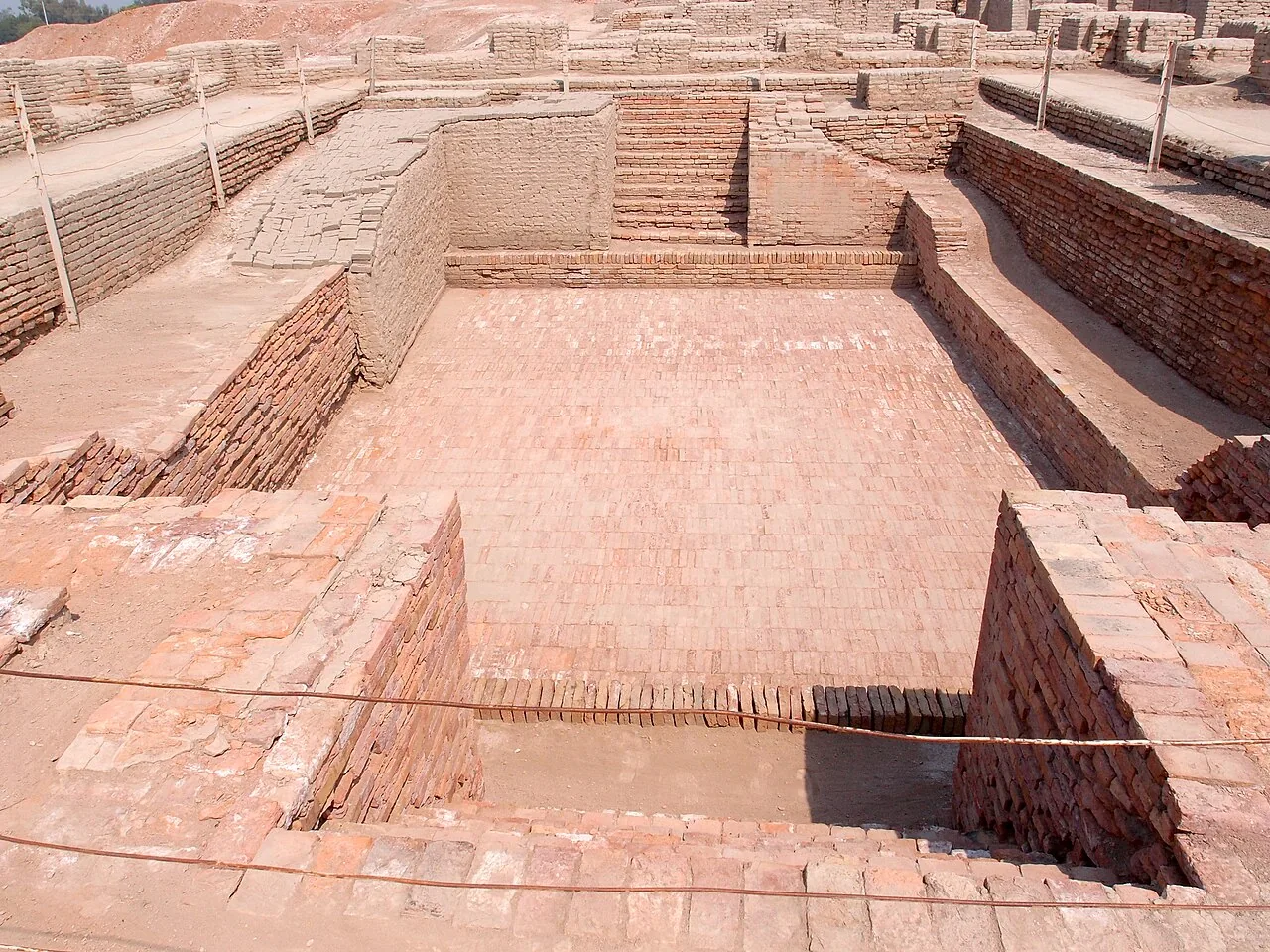
- Present the document.
- Describe what you see: the shape, the materials, and the steps.
- What does the quality of the bricks tell you about the builders?
- What might the Great Bath have been used for? Why can we not be sure?
- Why can we study the Indus cities even though we cannot read their writing?
Exercise 10 : A seal from Mohenjo-daro
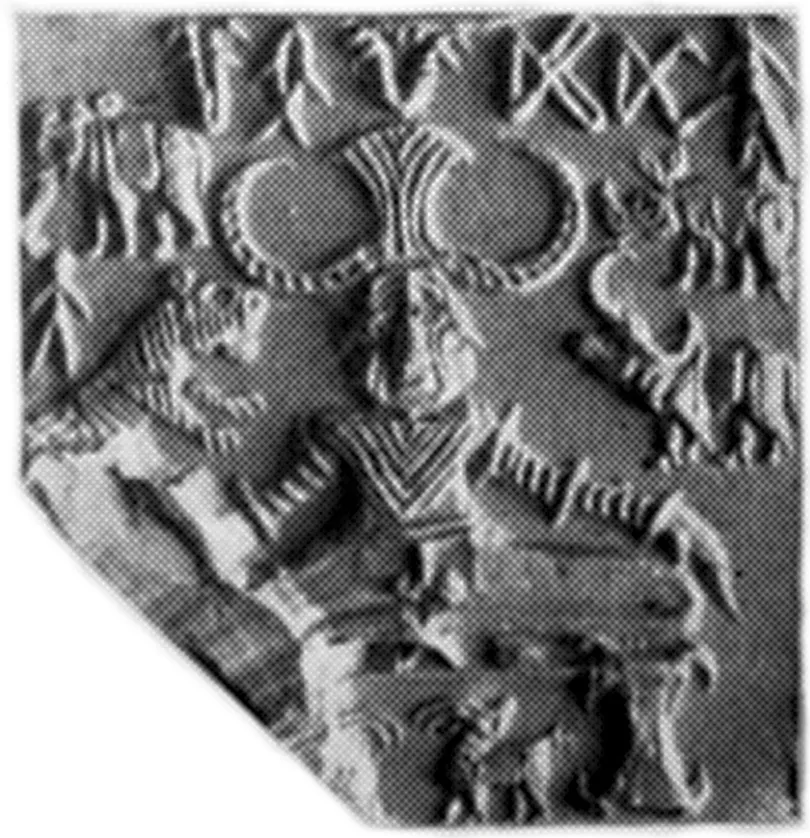
- Present the document.
- Describe the figure in the center and the animals around it.
- What do the signs at the top show?
- Why can no one yet say exactly what the seal meant?
- What might merchants have used seals for?
Exercise 11 : The Dancing Girl
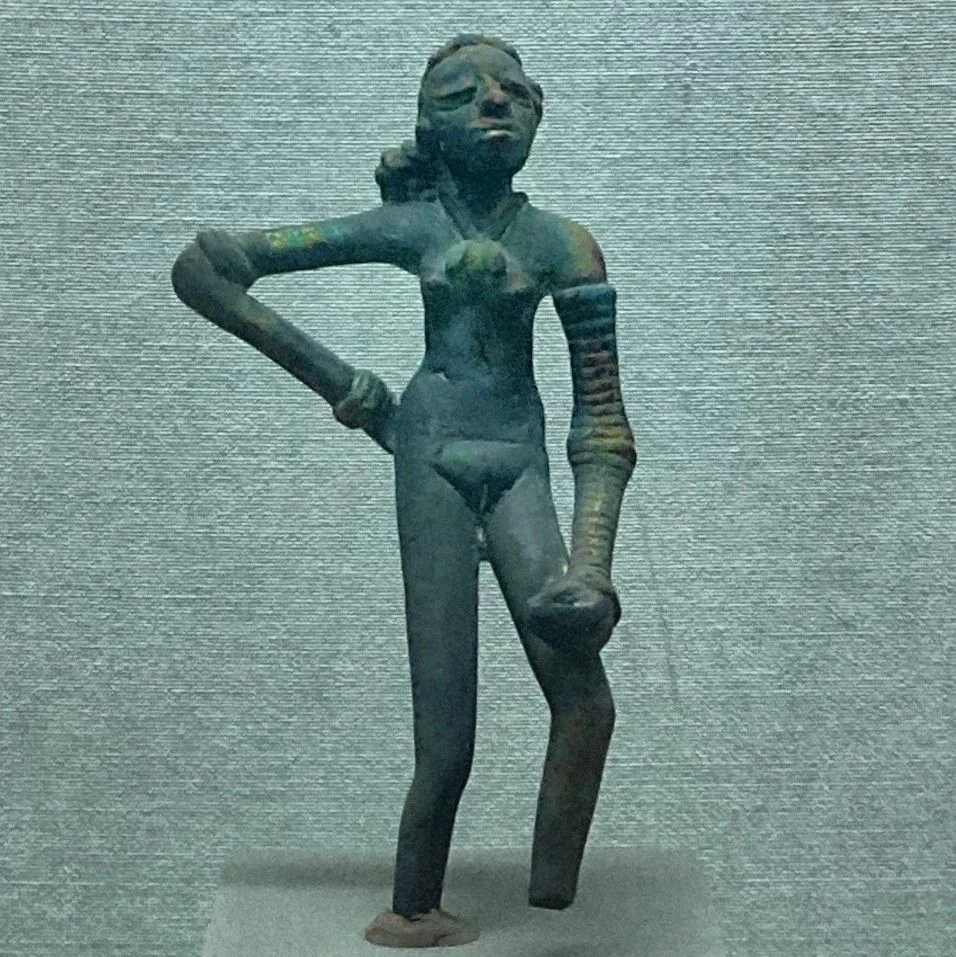
- Present the document.
- Describe the figure: her pose, her ornaments, and the material.
- What does the statue tell us about metalworking skill in the Indus cities?
- Why do historians call it the “Dancing Girl” even though they do not know who she was?
- What questions would you ask about the statue?
Exercise 12 : The Lion Capital
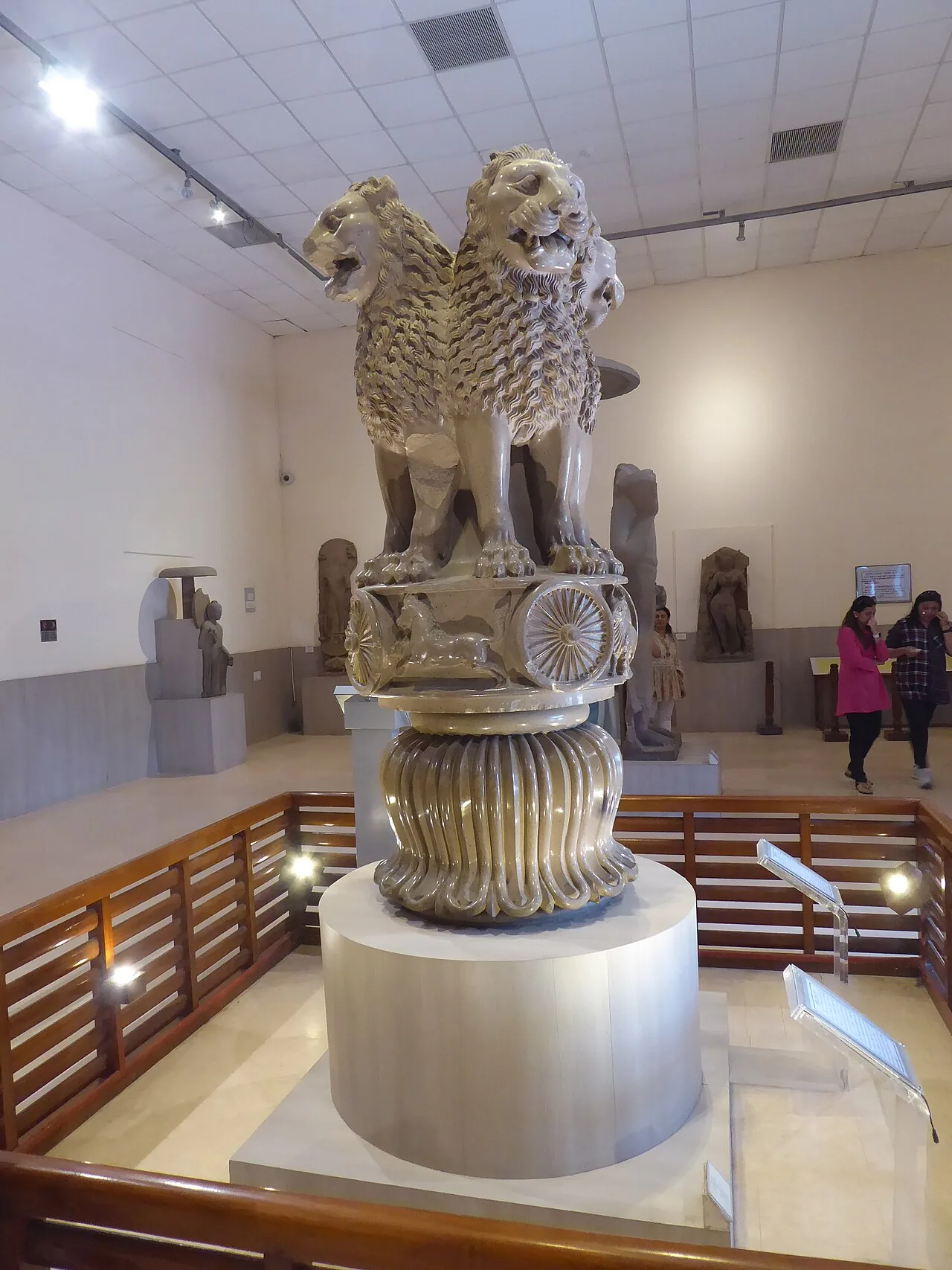
- Present the document.
- Describe the lions and the carved animals below them.
- What does the wheel symbolize in Buddhist art?
- Why would a ruler put such a monument at Sarnath?
- Why did modern India choose this image as its national emblem?
Hint: Sarnath is where the Buddha gave his first sermon.
Exercise 13 : A pillar of Ashoka
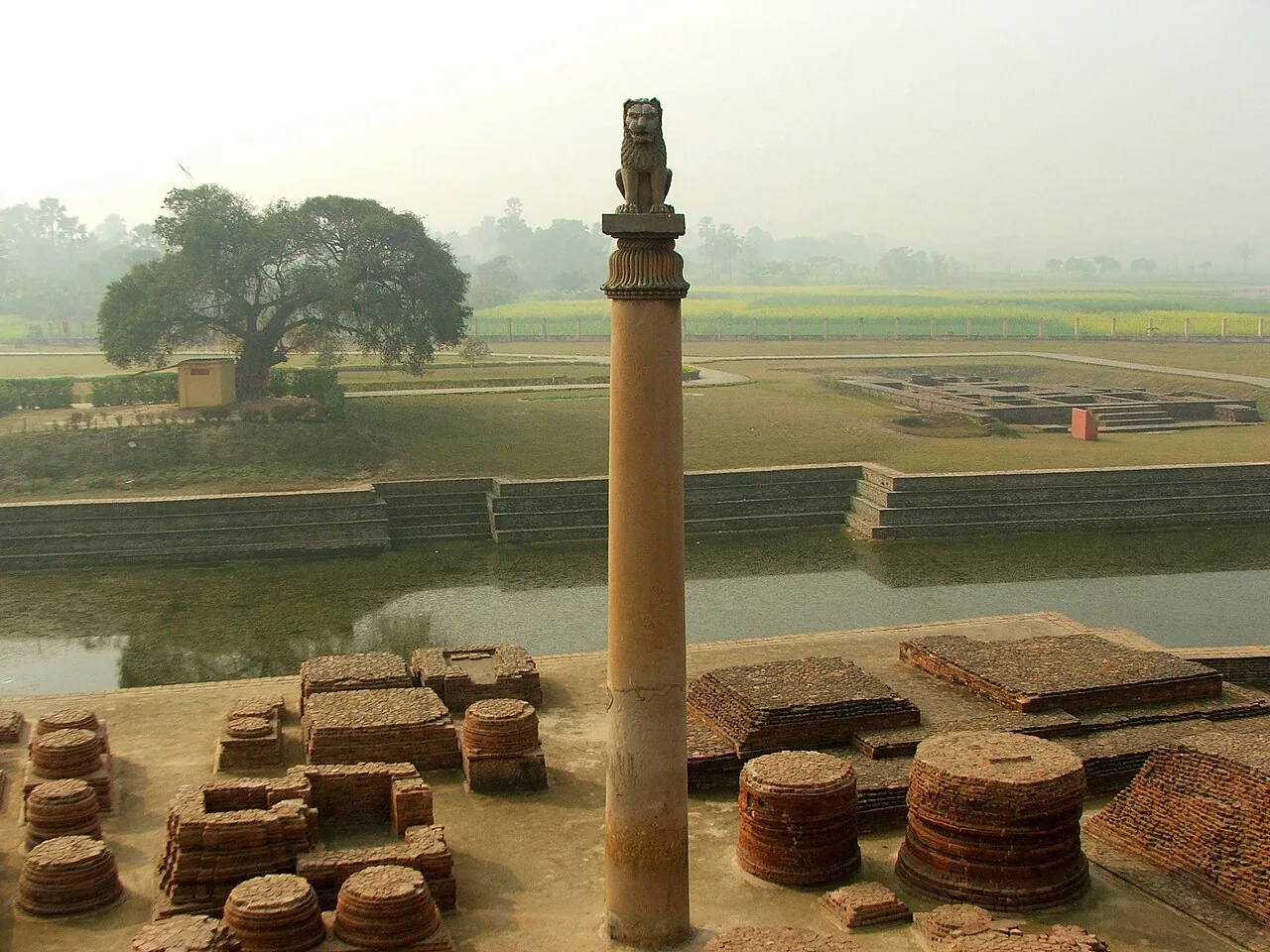
- Present the document.
- Describe the pillar and the lion on top.
- Why did Ashoka have pillars like this placed in public places?
- What was carved on many of these pillars?
- What does the pillar show about the skill of Mauryan craftworkers?
Exercise 14 : The Maurya emperors
Document 1 – The first three Maurya emperors
| Emperor | Relationship | Reign (approximate) |
|---|---|---|
| Chandragupta Maurya | founder | 321-297 BCE |
| Bindusara | son of Chandragupta | 297-273 BCE |
| Ashoka | son of Bindusara | 268-232 BCE |
Source: dates as commonly given in reference works such as Romila Thapar, Early India (University of California Press, 2002); the dates are approximate. Table prepared for this unit.
- Which emperor ruled the longest? For how many years?
- How many years passed from the start of Chandragupta’s reign to the end of Ashoka’s?
- Who was Ashoka’s grandfather?
- Why are the dates in the table only approximate?
Exercise 15 : Locate ancient Indian sites
- Name the two great rivers on the map.
- Which numbered sites belong to the Indus Valley civilization?
- Which site is the capital of the Maurya Empire?
- Explain how the Himalayas and the monsoon affect life on the plains.
Exercise 16 : Complete the map of India
- Name the sites A to G using this list: Harappa, Mohenjo-daro, Lothal, Pataliputra, Sarnath, Lumbini, Kalinga.
- Which sites are near the Ganges?
- Which seas border the subcontinent on the west and east?
- Explain why the Indus cities and the Ganges kingdoms developed in different places and times.
Hint: start with the sites on the Indus.
Exercise 17 : Order the events
Put these events in order from the oldest to the most recent.
- Ashoka conquers Kalinga.
- Harappa and Mohenjo-daro flourish.
- Chandragupta I founds the Gupta dynasty.
- The Buddha gives his first sermon.
- Chandragupta Maurya founds the Maurya Empire.
- The hymns of the Rig Veda are composed.
Exercise 18 : How long between events?
Calculate each time span. Remember that BCE years count down toward zero and that there is no year 0.
- From the start of the Indus cities (2600 BCE) to their decline (1900 BCE).
- From Chandragupta Maurya (321 BCE) to the end of the Maurya Empire (185 BCE).
- From the end of the Maurya Empire (185 BCE) to the founding of the Gupta dynasty (320 CE).
- Is the time from the founding of the Indus cities to Ashoka (about 261 BCE) longer or shorter than the time from Ashoka to today (2026)?
Exercise 19 : Guided research: the Indus script
Investigate the mystery of the Indus script. Use at least two reliable sites, such as the British Museum, Britannica, the Smithsonian, or the Harappa.com archive. Suggested keywords: Indus script undeciphered, Mohenjo-daro seals British Museum, Harappa archaeology.
- What is known about the Indus script (number of signs, where it appears)?
- Why have scholars not been able to decipher it?
- Name one object that carries Indus writing.
- Which websites did you use, and why do you trust them?
Hint: compare two sources and note any disagreements.
Exercise 20 : CER paragraph: Ashoka and war
Write a Claim, Evidence, Reasoning paragraph that answers: Did the war in Kalinga change how Ashoka ruled?
- Claim: state your position.
- Evidence: use at least two details from Rock Edict XIII or the lesson.
- Reasoning: explain how the evidence supports your claim.
Hint: think about what Ashoka did before and after the war.
Exercise 21 : SAQ: The Indus cities
Answer in complete sentences.
- Describe two features that show that Indus cities were carefully planned.
- Explain one reason why historians know less about Indus rulers than about Egyptian pharaohs.
- Explain one possible reason for the decline of the Indus cities.
Exercise 22 : True or false? Justify
Decide whether each statement is true or false, and justify your answer.
- The Indus script has been fully deciphered.
- Ashoka carved his edicts on rocks and pillars.
- The Buddha was born in Egypt.
- The monsoon brings heavy rain in summer.
Exercise 23 : Causes and consequences: rivers and cities
Complete the chain and explain each link.
- Cause: the Indus floods and leaves rich soil. Effect: ______.
- Effect on food and trade: ______.
- Effect on city planning and government: ______.
- Possible cause of decline: ______.


Quick review: flashcards
Tap a card to see the answer.