


This AP World History: Modern lesson covers AP World Unit 5: Revolutions, part of the unit “AP World units.” First, read the full lesson with its primary sources, maps and key terms. Then practice with the worksheet, check yourself with the quiz and get ready with the test.
On the morning of July 14, 1789, a crowd of Parisians, joined by soldiers who had gone over to their side, stormed the Bastille, an old fortress in the east of Paris used as a prison and arsenal. They were looking for gunpowder. The fortress fell after a few hours, and the crowd killed its governor. When King Louis XVI heard about it that night, he is said to have asked whether it was a revolt.
The answer was, “No, Sire, it is a revolution.” Whether or not the exchange happened as told, it marks something real. Between 1750 and 1900, in North America, France, the Caribbean, and South America, people overthrew governments, wrote constitutions. They claimed that political authority came from the people and not from a king or a church. The movements influenced one another, and they all fell short of their ideals in ways that are as important as their achievements. This unit follows those revolutions.
Guiding question: How did Enlightenment ideas and political and economic pressures lead to revolutions in the Atlantic world between 1750 and 1900, and how far did these revolutions change who held power?
AP framing. This is College Board Unit 5. The skills are causation, comparison, and argumentation; the themes are state-building and conflict, cultural developments, and social interactions. A common AP task is to compare two revolutions, so keep a list of similarities and differences as you read.
1. The Enlightenment and the crisis of old regimes
The Enlightenment was an intellectual movement of the 1600s and 1700s that applied reason, observation, and debate to human society. It grew out of the Scientific Revolution. If Isaac Newton could explain the motions of planets by law, thinkers asked, why could human affairs not be explained and improved by reason too? Print shops, coffeehouses, and the salons of Paris spread books and pamphlets. John Locke argued in 1689 that people have natural rights to life, liberty, and property, and that governments exist to protect them.
If a government breaks that trust, people may replace it. Montesquieu (1748) argued that separate branches should share power. Voltaire attacked religious intolerance and absolute power. Jean-Jacques Rousseau argued in 1762 that legitimate government rests on a social contract and on the “general will” of the people. Mary Wollstonecraft argued in 1792 that women are as rational as men and should have an equal education.
Definition: Natural rights
rights that Enlightenment thinkers such as Locke claimed all people have by nature, independent of any government or king, usually listed as life, liberty, and property. Governments were said to be created to protect them.
Document 1 – A philosopher on natural liberty
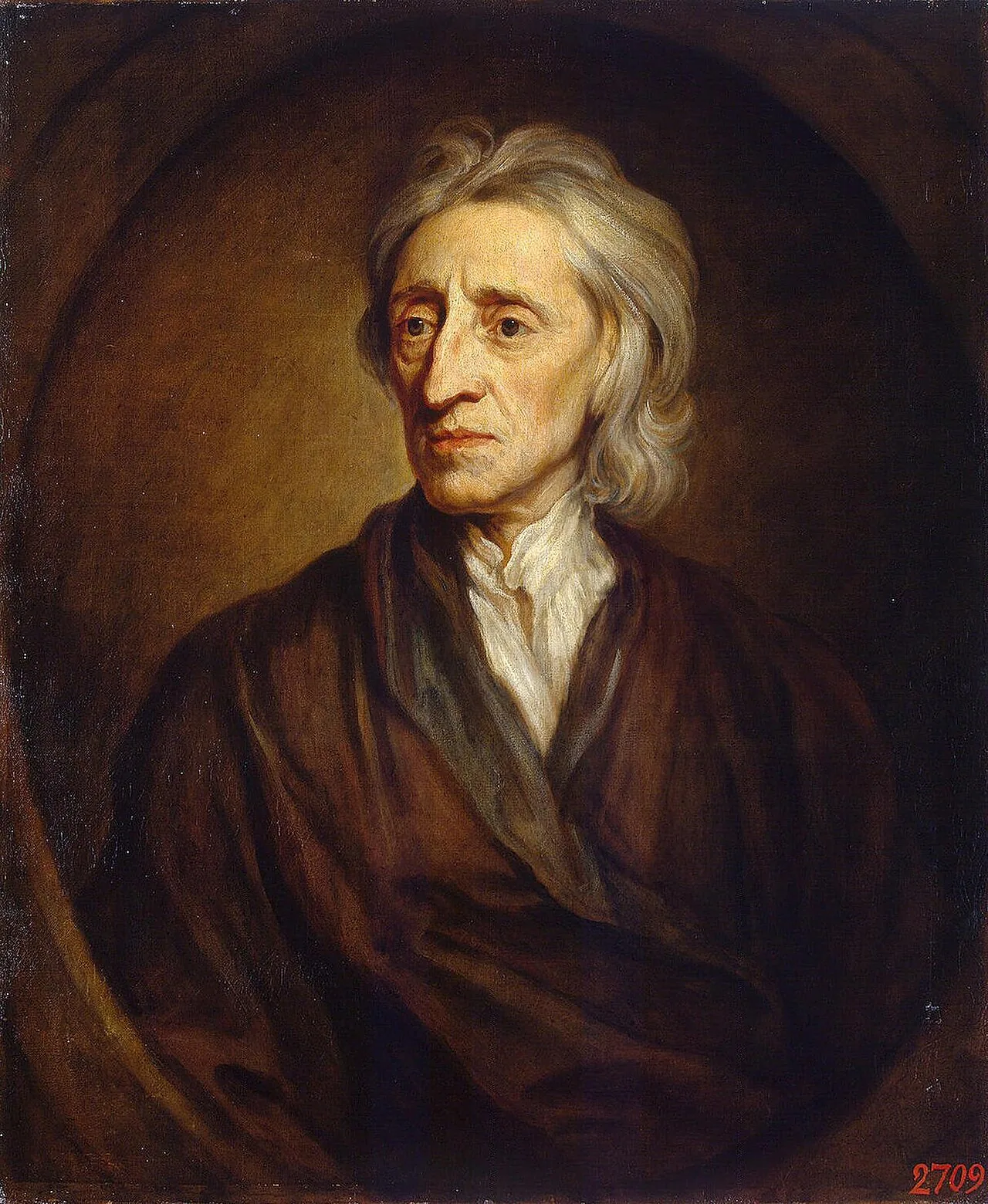
The state of nature has a law of nature to govern it, which obliges every one: and reason, which is that law, teaches all mankind, who will but consult it, that being all equal and independent, no one ought to harm another in his life, health, liberty, or possessions: for men being all the workmanship of one omnipotent, and infinitely wise maker; all the servants of one sovereign master, sent into the world by his order, and about his business; they are his property, whose workmanship they are, made to last during his, not one another’s pleasure: and being furnished with like faculties, sharing all in one community of nature, there cannot be supposed any such subordination among us, that may authorize us to destroy one another, as if we were made for one another’s uses, as the inferior ranks of creatures are for our’s.
Source: John Locke, Second Treatise of Government, 1689, chapter 2, section 6; Project Gutenberg.
*Subordination: a ranking of some creatures below others.
Commentary. Locke wrote the Second Treatise to defend the removal of King James II in 1688-1689 and to argue that government depends on the consent of the governed. This passage presents the idea of natural equality: no human is made by nature to be the subject of another. Locke also accepted slavery in practice and invested in the Royal African Company, which is a reminder that Enlightenment ideas were applied unequally. American colonists read Locke closely.
Document 2 – The social contract
Man is born free; and everywhere he is in chains. One thinks himself the master of others, and still remains a greater slave than they. How did this change come about? I do not know. What can make it legitimate? That question I think I can answer.
Source: Jean-Jacques Rousseau, The Social Contract, 1762, book 1, chapter 1; translated by G. D. H. Cole (1913); Project Gutenberg.
*Legitimate: lawful, justified.
Commentary. Rousseau begins The Social Contract with a famous paradox: people are born free but live under constraint. The question that he sets himself is what could make such constraint legitimate. His answer, in the rest of the book, is that only laws made by the people themselves can be legitimate. Revolutionaries in France drew on the idea, and later critics, notably Edmund Burke, blamed such abstract ideas for the Terror. The text is a work of political philosophy written in Geneva and published in Amsterdam, not a call to arms.
Ideas alone did not make revolutions. By the mid-1700s the old order was under strain. States that had fought expensive wars, especially the Seven Years’ War (1756-1763), were deep in debt and looked for new taxes. Growing merchant and professional classes wanted political influence that the old nobility and Church hierarchy denied them. Peasants and urban workers suffered when prices rose. And in the colonies, settlers resented rules made far away.
2. The American Revolution
After winning the Seven Years’ War, Britain needed money and tried to raise it from its American colonies. Parliament passed the Stamp Act (1765), the Townshend duties (1767), and the Tea Act (1773). Colonists objected that a parliament in which they had no representatives taxed them, and they boycotted British goods. In December 1773 colonists dumped tea into Boston harbor; Parliament responded with punishing laws that colonists called the Intolerable Acts. The First Continental Congress met in 1774.
In April 1775 fighting began at Lexington and Concord. On July 4, 1776 the Second Continental Congress adopted the Declaration of Independence, drafted mainly by Thomas Jefferson. It used Locke’s language about natural rights to justify separation. The war lasted until 1783. The American victory at Saratoga (1777) brought a French alliance (1778), and the British surrender at Yorktown in October 1781 effectively ended the fighting. In the Treaty of Paris (1783) Britain recognized the independence of the United States.
Document 3 – The Declaration of Independence
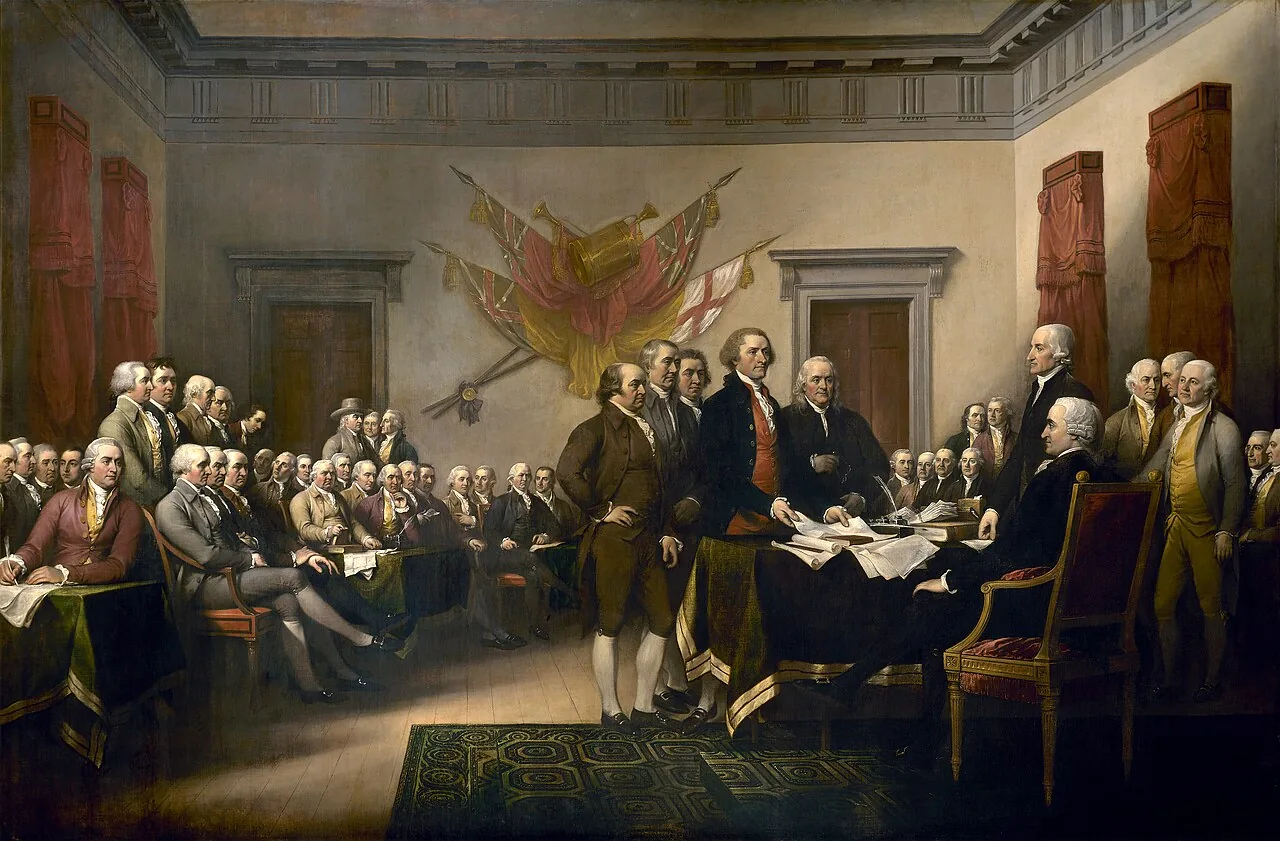
We hold these truths to be self-evident: That all men are created equal; that they are endowed by their Creator with certain unalienable rights; that among these are life, liberty, and the pursuit of happiness; that, to secure these rights, governments are instituted among men, deriving their just powers from the consent of the governed; that whenever any form of government becomes destructive of these ends, it is the right of the people to alter or to abolish it, and to institute new government, laying its foundation on such principles, and organizing its powers in such form, as to them shall seem most likely to effect their safety and happiness.
Source: Declaration of Independence, July 4, 1776, second paragraph; Avalon Project, Yale Law School.
*Endowed: provided; *Creator: God.
Commentary. The second paragraph of the Declaration states the principles on which the colonists claimed the right to break from Britain. They were equality, natural rights, government by consent, and the right to alter a government that violates them. The rest of the document lists complaints against King George III. The words “all men are created equal” did not apply to enslaved people, to Native Americans, or to women. Jefferson himself held enslaved people. The text nonetheless became an inspiration to many later movements, including those of enslaved people and women. People read it in many languages.
The new nation adopted the Articles of Confederation (1781) and then the Constitution (1787). It created a federal republic with a division of powers among executive, legislative, and judicial branches. The Bill of Rights followed in 1791. Yet the republic preserved slavery, limited voting to a minority of white men in most states, and continued to take Native American land. Americans, in short, created a government that put the people’s consent at the center, but the “people” did not yet include everyone.
3. The French Revolution and Napoleon
France in 1789 was the most populous state in western Europe and was nearly bankrupt after helping the Americans and fighting earlier wars. Society had three orders or estates: the clergy (First Estate), the nobility (Second Estate), and everyone else (Third Estate). The Third Estate ranged from wealthy lawyers and merchants to the poor, who paid most of the taxes. After poor harvests in 1788 bread was dear.
The king, Louis XVI, called the Estates-General, an assembly that had not met since 1614, to approve new taxes. In May 1789 the Third Estate demanded that voting be by head rather than by estate, which would give it a majority. On June 17, it declared itself the National Assembly. Locked out of its meeting hall on June 20, its members met at a nearby indoor tennis court. There they swore not to separate until France had a constitution. On July 14 the Bastille fell.
Definition: Estates
the three orders of French society before 1789: the First Estate (clergy), the Second Estate (nobility), and the Third Estate (everyone else, from wealthy bourgeois to peasants). The first two held privileges, including exemption from most taxes.
Document 4 – What is the Third Estate?
Who then shall dare to say that the Third Estate has not within itself all that is necessary for the formation of a complete nation? It is the strong and robust man who has one arm still shackled. If the privileged order should be abolished, the nation would be nothing less, but something more. Therefore, what is the Third Estate? Everything; but an everything shackled and oppressed. What would it be without the privileged order? Everything, but an everything free and flourishing.
Source: Emmanuel Joseph Sieyes, What Is the Third Estate?, pamphlet, January 1789; Fordham Modern History Sourcebook.
*Privileged order: the nobility and clergy, who had special rights and tax exemptions.
Commentary. Emmanuel Joseph Sieyes, a priest who became a political leader, published this pamphlet in January 1789, when the Estates-General was about to meet. It was widely read. It argues that the Third Estate, which did most of the productive work of the nation, was the nation. The pamphlet also argues that the privileged orders were an unnecessary burden. Sieyes wrote as a member of the educated elite and a clergyman, not as a peasant. His argument shows the strategy of the revolutionaries: to redefine the nation as the people and to remove the claims of birth.
In August 1789 the Assembly abolished feudal privileges and adopted the Declaration of the Rights of Man and of the Citizen, which declared liberty, equality before the law, and popular sovereignty. Women did not receive political rights. In 1791 Olympe de Gouges published a Declaration of the Rights of Woman, and revolutionary courts guillotined her in 1793. The Assembly confiscated Church lands and made the clergy state employees, which divided the country. In 1791 the royal family tried to flee, but townspeople caught them at Varennes, which undermined trust in the king. In 1792 France went to war with Austria and Prussia. The Convention abolished the monarchy in September 1792 and executed Louis XVI in January 1793.
Document 5 – The rights of man
Men are born and remain free and equal in rights. Social distinctions may be founded only upon the general good. 2. The aim of all political association is the preservation of the natural and imprescriptible rights of man. These rights are liberty, property, security, and resistance to oppression. 3. The principle of all sovereignty resides essentially in the nation. No body nor individual may exercise any authority which does not proceed directly from the nation. 4. Liberty consists in the freedom to do everything which injures no one else; hence the exercise of the natural rights of each man has no limits except those which assure to the other members of the society the enjoyment of the same rights.
Source: Declaration of the Rights of Man and of the Citizen, adopted by the French National Assembly, August 26, 1789, articles 1 to 6; English text from the Avalon Project, Yale Law School.
*Social distinctions: differences of rank; *general will: Rousseau’s term for the will of the community.
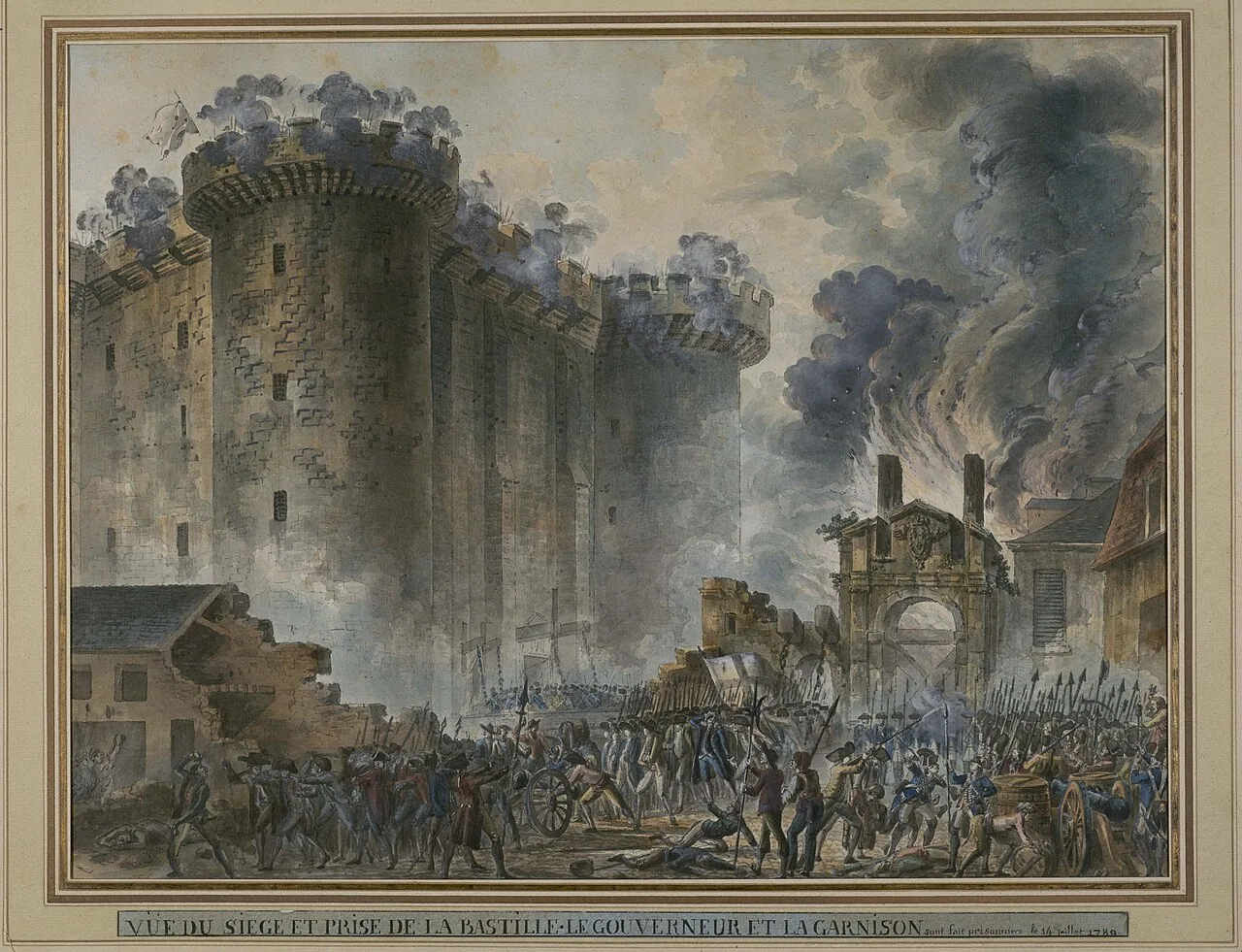
Commentary. The Declaration of the Rights of Man was adopted on August 26, 1789, six weeks after the fall of the Bastille. It owed ideas to Locke, Rousseau, and the American Declaration, and also to the French situation. Its first article attacks the system of social orders. It speaks of “man” and “citizen” and left women and enslaved people in the colonies outside its guarantees. The print of the Bastille shows how contemporaries visualized the event as a victory of the people against tyranny. An artist who may not have been present made it.
The Terror and Napoleon
From 1793 to 1794, during the Reign of Terror, the Committee of Public Safety, led by Maximilien Robespierre, tried to defend the republic against foreign armies and internal enemies by emergency measures. These included a draft of the whole population for the army, price controls, and revolutionary courts that sent thousands of people to the guillotine. Many more died in prisons and in civil war in the Vendee. His opponents overthrew and executed Robespierre himself in July 1794.
In 1799 a young general, Napoleon Bonaparte, seized power. He restored order, issued the Napoleonic Code (1804), which confirmed equality before the law and property rights but limited women’s rights. He also crowned himself emperor in 1804. His armies spread revolutionary reforms across Europe, and also aroused nationalist resistance. The British and Prussians finally defeated him at Waterloo in 1815, and the Congress of Vienna restored many monarchs.
4. The Haitian Revolution
Saint-Domingue, the French colony on the western part of Hispaniola, was in the 1780s the richest colony in the world. It produced much of the sugar and coffee consumed in Europe. Its population consisted of a small number of white planters and officials, a group of free people of color, some of whom were wealthy landowners. The largest group was several hundred thousand enslaved people, the great majority of the population. News of the French Revolution gave each group hope and caused conflict. White planters wanted self-rule, free people of color demanded the equality promised by the Declaration, and the enslaved heard of liberty. In August 1791 a large uprising of the enslaved began in the north.
From uprising to independence
The French government sent commissioners who, in 1793, proclaimed freedom for the enslaved in the colony to win their support against Spain and Britain. In February 1794 the National Convention in Paris abolished slavery in all French colonies.
Toussaint Louverture, a formerly enslaved man who had become a leader of the insurgents, joined the French side, defeated Spanish and British forces, and became governor. A constitution of 1801 abolished slavery forever and kept the colony under French sovereignty. Napoleon, who wished to restore the colony’s plantation economy and slavery, sent an army in 1802. The French arrested Toussaint and took him to France, where he died in prison in 1803.
His lieutenant Jean-Jacques Dessalines led the revolt to victory, helped by yellow fever, which devastated the French troops. On January 1, 1804, Dessalines proclaimed the independence of the new state, Haiti, the first state in the Americas founded by formerly enslaved people, and the second independent nation in the hemisphere. France recognized Haiti in 1825 only in exchange for a large indemnity. The United States, with slavery still legal, did not recognize it until 1862.
Document 6 – Haiti’s constitution of 1801
Art. 3. There cannot exist slaves on this territory, servitude is therein forever abolished. All men are born, live and die free and French. Art. 4. All men, regardless of color, are eligible to all employment. Art. 5. There shall exist no distinction other than those based on virtue and talent, and other superiority afforded by law in the exercise of a public function. The law is the same for all whether in punishment or in protection.
Source: Constitution of the French Colony of Saint-Domingue, July 1801, title II, articles 3 to 5; English translation by Charmant Theodore, published by the Louverture Project; Wikisource.
*Servitude: slavery; *public function: government office.
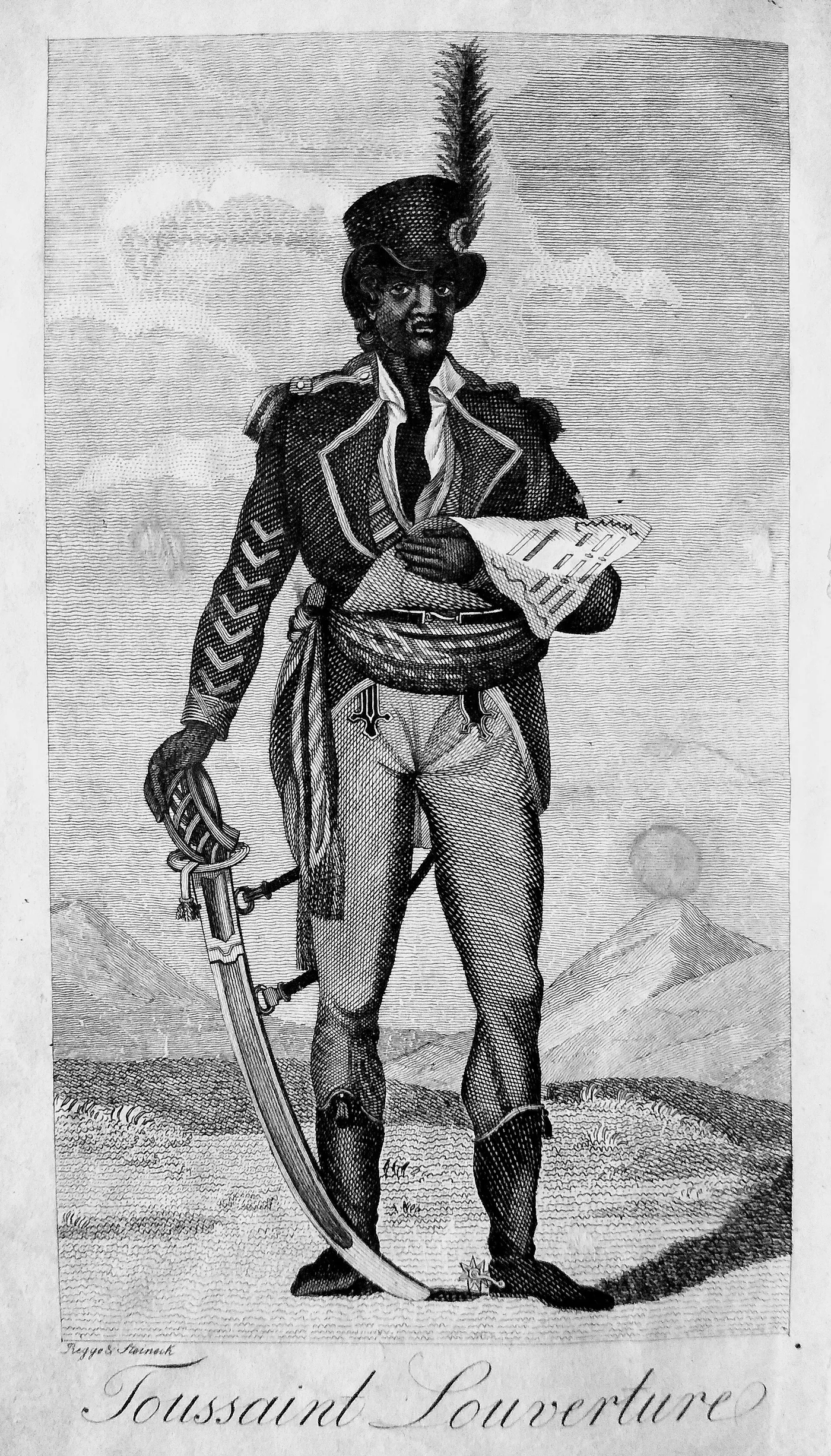
Commentary. This constitution was written under Toussaint Louverture’s direction. It abolishes slavery forever, declares all men free and French, and allows distinctions only by virtue and talent. This is a direct echo of the Declaration of the Rights of Man, applied for the first time to people who had been enslaved. Toussaint became governor for life under it. It also declared Catholicism the only public religion, which shows that the revolution did not follow every French principle. It was drafted by an assembly of men chosen by Toussaint, and the English translation was published in modern times.
5. Latin American independence
In Spanish America, society split between peninsulares from Spain, who held the highest offices, and creoles, American-born people of Spanish descent, who owned much land but were excluded from top positions. Creoles read Enlightenment writers and admired the American and French examples, but they feared uprisings by Native Americans, Africans, and people of mixed ancestry.
The crisis came in 1808, when Napoleon invaded Spain and deposed the king. Local councils in the colonies claimed to rule in the name of the king, and soon moved toward independence. In Mexico, a priest named Miguel Hidalgo called for revolt on September 16, 1810 (the Grito de Dolores), at the head of a mass uprising of peasants. Spanish forces executed him in 1811, but Mexico achieved independence in 1821, under conservative leaders.
In South America, the Venezuelan creole Simon Bolivar led armies in the north. After defeats, he wrote the Jamaica Letter in 1815, predicting the independence of the Americas.
Bolivar and San Martin
In 1819 he crossed the Andes and won at Boyaca, which freed New Granada and created Gran Colombia. Victories at Carabobo (1821) and Pichincha (1822, won by his general Sucre) followed. In the south, Jose de San Martin led an army across the Andes into Chile in 1817 and took Lima in 1821. Patriot forces secured independence at Ayacucho in 1824.
Argentina declared independence in 1816. Brazil, whose Portuguese royal family had moved to Rio de Janeiro in 1807, became an independent empire under Prince Pedro in 1822 without a long war. The new states mostly ended slavery slowly and left creole elites in power; Native Americans and the poor gained little. Gran Colombia broke up in 1830, and Bolivar died that year disillusioned.
Definition: Creole
in Spanish America, a person of Spanish descent born in the Americas. Creoles were often wealthy but ranked below peninsulares (people born in Spain) in the colonial system, and they led most independence movements.
6. Nationalism and the legacy of revolution
The revolutions also spread nationalism, the belief that a people who share a language, history, or culture should form a state. Napoleon’s invasions provoked it in Germany, Spain, and Russia. After 1815 conservative rulers tried to restore the old order, but they could not stop it. Revolutions swept Europe in 1830 (the July Revolution in Paris, commemorated by Delacroix’s painting) and in 1848.
The Greeks won independence from the Ottoman Empire in the 1820s. The kingdom of Piedmont-Sardinia unified Italy in 1861. Prussia led the unification of Germany in 1871 with the proclamation of the empire at Versailles. In many places the movements for national unity and for liberal reform pulled in different directions. Authoritarian states could also use nationalism.
The pattern across revolutions
Comparing the revolutions helps to see the pattern. All four of the Atlantic revolutions drew on Enlightenment ideas of rights and popular sovereignty. All began in a crisis of state finance or imperial control. The American and Latin American revolutions were largely led by colonial elites, kept slavery for decades, and left social hierarchies in place. The French Revolution changed society more deeply, but ended in military rule.
The Haitian Revolution was the only one to abolish slavery and to be led by formerly enslaved people, and it shook slaveholders across the hemisphere. For the AP exam, strong comparisons choose a precise aspect. For example, they compare the causes (taxes in America, bankruptcy in France, news of France in Haiti), the leaders (elites or former slaves), or the outcomes (new constitutions, new inequalities).
- 1689 Locke publishes the Second Treatise (dated 1690)
- 1776 Declaration of Independence
- 1783 Treaty of Paris: Britain recognizes the United States
- 1789 Estates-General; Bastille; Declaration of the Rights of Man
- 1791 Slave uprising in Saint-Domingue
- 1793-1794 Reign of Terror
- 1804 Haiti independent; Napoleon crowned emperor
- 1810-1824 Spanish American wars of independence
- 1871 German empire proclaimed
Key takeaways
- Enlightenment thinkers such as Locke, Montesquieu, Rousseau, and Wollstonecraft argued for natural rights, separation of powers, and popular sovereignty. Debt, taxation, and social tension created crises.
- The American Revolution (1775-1783) used Locke’s language in the Declaration of Independence; the French Revolution (1789) produced the Declaration of the Rights of Man, the Terror, and Napoleon.
- The Haitian Revolution (1791-1804) was the only successful uprising of enslaved people to create an independent state. Creole leaders such as Bolivar and San Martin won Latin American independence between 1810 and 1824.
- The revolutions promised equality but often excluded women, enslaved people, and the poor. They also spread nationalism.
- AP skill: compare revolutions by causes, leaders, and results, and read declarations with attention to who was included and who was left out.

Quick review: flashcards
Tap a card to see the answer.