


This AP US History lesson covers APUSH Period 2: 1607-1754, part of the unit “APUSH periods.” First, read the full lesson with its primary sources, maps and key terms. Then practice with the worksheet, check yourself with the quiz and get ready with the test.
In May 1607 a few small ships anchored off a low, swampy island on a river the English named the James. By 1754 the colonies those first settlers began had grown to more than a million people. They had their own assemblies, courts, newspapers, colleges, and churches. Period 2 of the APUSH course (1607-1754) covers a century and a half. In those years, Europeans, Native peoples, and enslaved Africans built new societies along the Atlantic coast. The period asks you to compare regions and to link economic choices to political and social outcomes. It also asks you to explain how conflicts over land, labor, and religion shaped colonial life.
Guiding question: Why did the English colonies develop into distinct regions, and how did slavery, religion, and trade shape a colonial society that governed itself more than its mother country realized?
The unit aligns with Key Concepts 2.1 (Europeans and Native Americans compete for control of North America) and 2.2 (the English colonies in comparison). It also covers 2.3 (the Atlantic economy, slavery, and colonial culture). Themes: Politics and Power (PCE), Work, Exchange, and Technology (WXT), and Migration and Settlement (MIG). Two more themes are American and Regional Culture (ARC) and Social Structures (SOC).
1. Four English regions, 1607-1732
The Chesapeake: tobacco and servants
Jamestown, founded by the Virginia Company in 1607, nearly failed. Colonists were dying of disease and hunger, and the winter of 1609-1610, the “Starving Time,” killed most of them. The colony survived because it found a product that sold. John Rolfe began growing a sweet variety of tobacco around 1612. By the 1620s tobacco was the colony’s lifeblood. Planters needed land and workers. Under the headright system, introduced in 1618, anyone who paid for the passage of a servant received fifty acres of land.
Most laborers were indentured servants. They were young English men and a smaller number of women. They agreed to work for four to seven years in exchange for the voyage. The Virginia Company allowed the colonists to elect a representative assembly, the House of Burgesses, which first met in 1619. That same year a Dutch or English ship brought about twenty captive Africans to Point Comfort. After the company went bankrupt, King James I made Virginia a royal colony in 1624.
Conflict and the turn to slavery
Relations with the Powhatan were unstable. The English took land as the tobacco economy expanded, and wars broke out in 1622 and 1644. Maryland, founded in 1634 by the Calvert family as a refuge for English Catholics, also grew tobacco. In 1676 a frontier planter, Nathaniel Bacon, led an uprising against Governor William Berkeley. Bacon accused him of protecting Native peoples and favoring wealthy friends.
Bacon’s Rebellion showed that poor and landless whites, black and white servants among them, could be dangerous to the elite. In the decades that followed, planters gradually turned from white indentured servants to enslaved Africans, whom they could hold for life. As a result, leaders encouraged white colonists of all ranks to see themselves as united by race.
Definition: Indentured servant
a person who signed a contract to work for a master for a fixed term, usually four to seven years, in exchange for passage to America. Servants were not free to leave, but they could hope for land or freedom dues at the end of the contract.
New England: religion and community
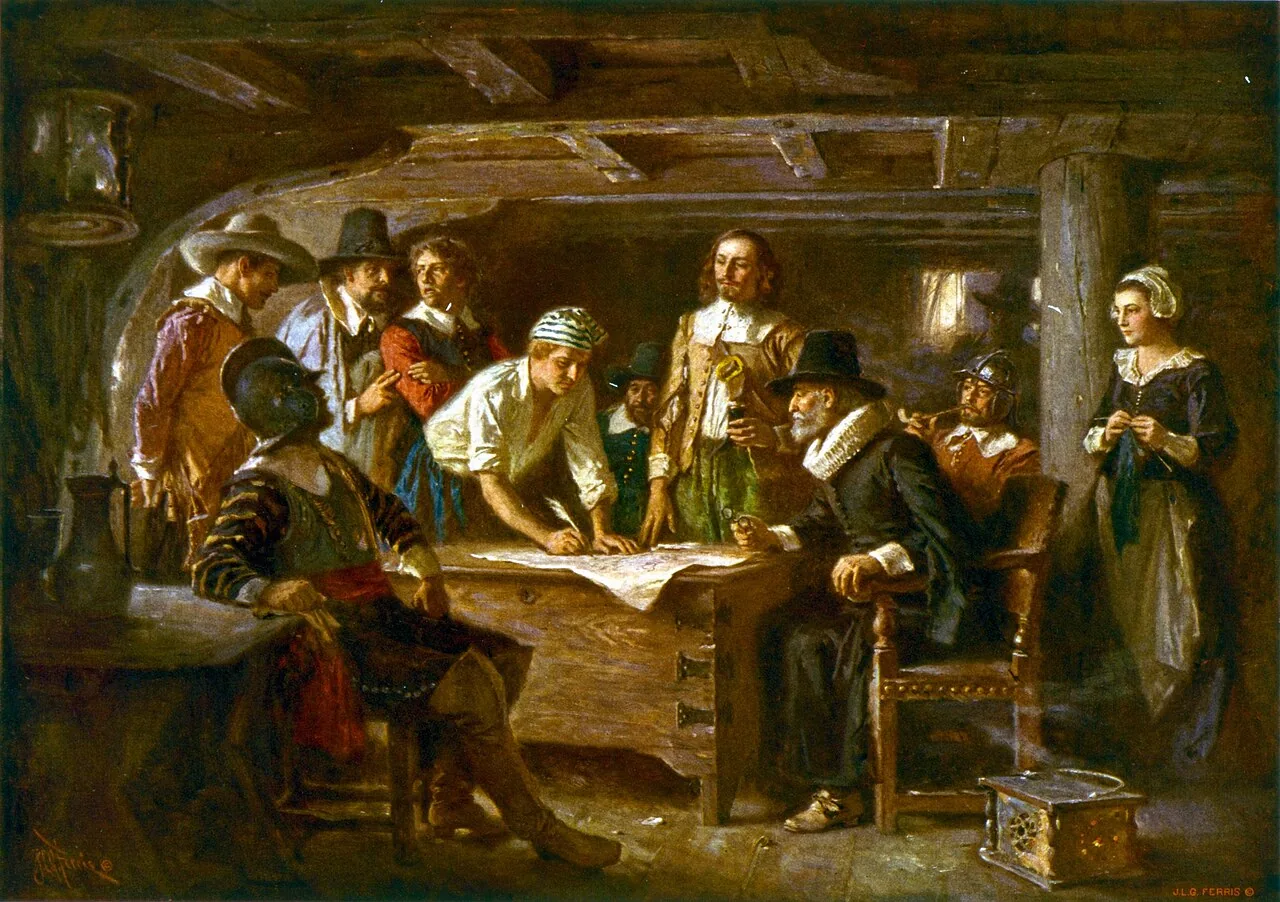
New England was settled for religious reasons, though the colonists were no less interested in land and trade. In 1620 the Separatists, who had broken completely with the Church of England, reached Cape Cod on the Mayflower. This was outside the boundaries of their charter. Before landing they signed the Mayflower Compact. The Puritans wanted to purify the Church of England, and they were more numerous.
They founded the Massachusetts Bay Colony in 1630 under John Winthrop. Between 1630 and 1640, in what is called the Great Migration, thousands of Puritans arrived in whole families. They wanted to build a model Christian society, a “city upon a hill,” and they organized towns around a meetinghouse and a common pasture. Only men who were full church members could vote in Massachusetts Bay.
Document 1 – A promise to govern ourselves, 1620
We, whose names are underwritten, the Loyal Subjects of our dread Sovereign Lord King James, […] Having undertaken for the Glory of God, and Advancement of the Christian Faith, and the Honour of our King and Country, a Voyage to plant the first Colony in the northern Parts of Virginia; Do by these Presents, solemnly and mutually, in the Presence of God and one another, covenant and combine ourselves together into a civil Body Politick, for our better Ordering and Preservation, and Furtherance of the Ends aforesaid: And by Virtue hereof do enact, constitute, and frame, such just and equal Laws, Ordinances, Acts, Constitutions, and Officers, from time to time, as shall be thought most meet and convenient for the general Good of the Colony; unto which we promise all due Submission and Obedience.
Source: The Mayflower Compact, signed at Cape Cod, November 11, 1620 (Old Style); the Avalon Project, Yale Law School.
*Covenant and combine: join together by a solemn promise. *Meet: fitting.
Commentary. The signers were “Loyal Subjects” of King James, so this is not a declaration of independence. But the Compact is an early example of self-government by agreement, in which settlers create a political body, make laws, and promise obedience to them. It reflected English traditions of consent and the Separatists’ church covenants.
Document 2 – A city upon a hill, 1630
For this end, wee must be knitt together, in this worke, as one man. Wee must entertaine each other in brotherly affection. Wee must be willing to abridge ourselves of our superfluities, for the supply of other’s necessities. Wee must uphold a familiar commerce together in all meekeness, gentlenes, patience and liberality. Wee must delight in eache other; make other’s conditions our oune; rejoice together, mourne together, labour and suffer together, allwayes haueving before our eyes our commission and community in the worke, as members of the same body. […] For wee must consider that wee shall be as a citty upon a hill. The eies of all people are uppon us.
Source: John Winthrop, A Modell of Christian Charity, a lay sermon written in 1630 aboard the Arbella (spelling of the original); Hanover Historical Texts Project.
*Entertaine: treat. *Superfluities: extra goods. *Commerce: dealings, relations.
Commentary. Winthrop spoke to Puritan colonists on the voyage. He stresses community duties more than individual rights. His phrase “a citty upon a hill” meant that the colonists would be watched by the world, and that failure would be a public disgrace. Later Americans would adapt the phrase to speak of the nation’s example.
Dissent, war, and witchcraft
Puritan communities did not tolerate disagreement. Massachusetts banished Roger Williams in 1635. He was a minister who argued for the separation of church and state and who defended Native land rights. He founded Providence, Rhode Island, as a refuge. The colony also banished Anne Hutchinson in 1637-1638. She held religious meetings in her home and argued that individuals could reach God directly. Thomas Hooker led settlers to the Connecticut River valley. The Fundamental Orders of Connecticut (1639) established a government based on an agreement among the free men of the towns.
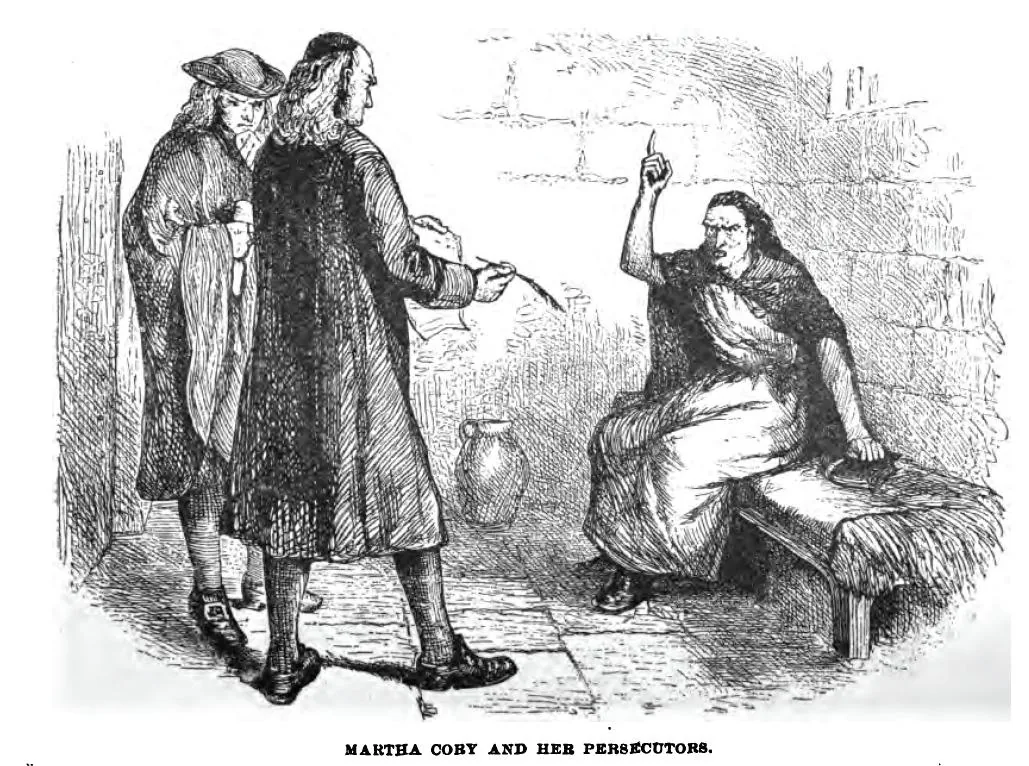
Conflict with Native peoples reached a peak in King Philip’s War (1675-1676). In it, the Wampanoag leader Metacom, called King Philip by the English, and his allies attacked dozens of New England towns. The war was among the bloodiest conflicts in American history in proportion to the population. It ended with the defeat of the Native coalition. In 1692 a panic in Salem Village led to the arrest of about two hundred people for witchcraft. The authorities hanged nineteen of them. The episode reflected anxiety over war, religion, and community conflict.
Definition: Puritans
English Protestants who wanted to “purify” the Church of England of what they considered Catholic practices. In Massachusetts Bay they built a society organized around church membership, covenant, and a godly community.
The Middle Colonies: diversity and tolerance
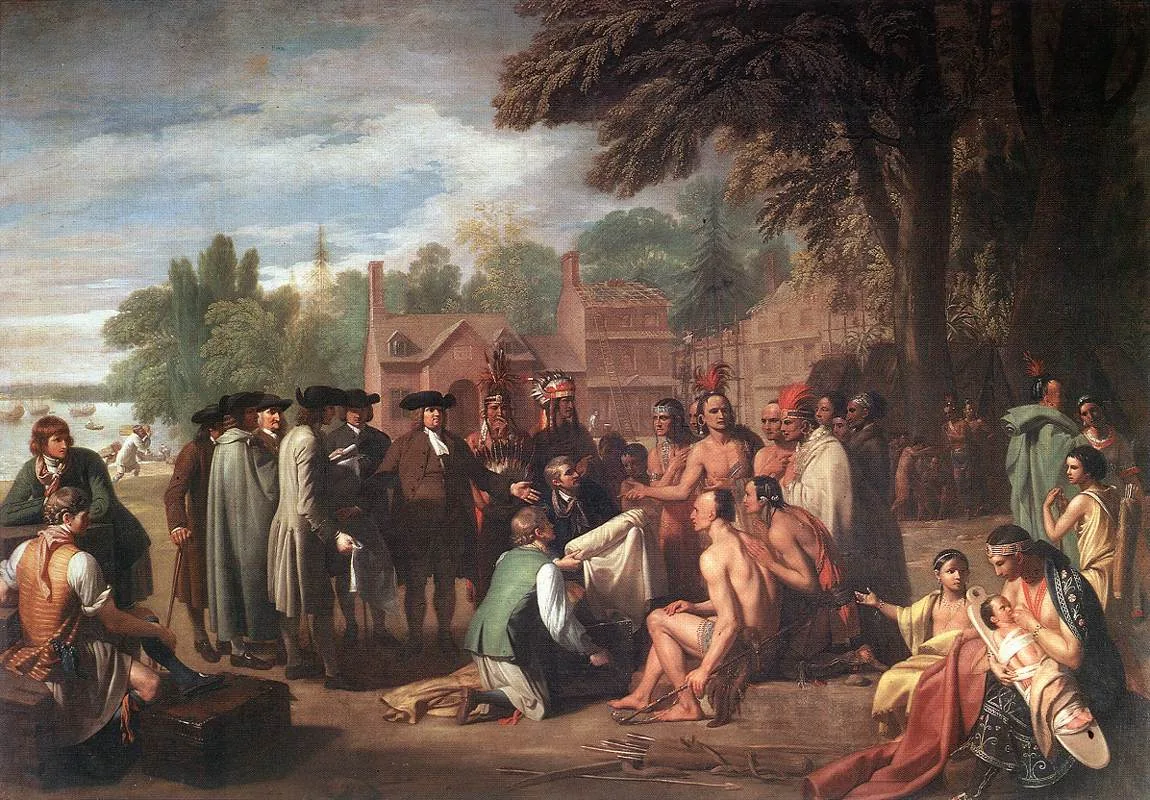
The Dutch West India Company founded New Netherland in 1624. The colony soon had a diverse trading port at New Amsterdam, with settlers from many parts of Europe and enslaved Africans. England seized the colony in 1664 and renamed it New York. In 1681 King Charles II granted William Penn, a Quaker, a charter for Pennsylvania as payment of a royal debt. Quakers rejected formal clergy and believed in the equality of souls and the “inner light”. They refused to swear oaths or bear arms.
As a result, authorities persecuted them in England and in Massachusetts. Penn promised religious freedom, a representative assembly, and fair dealings with the Lenape. His “Holy Experiment” attracted Germans, Scots-Irish, Welsh, and others, and Philadelphia became one of the largest cities in British America. The Middle Colonies produced wheat and other grains in bulk. Also, their mix of peoples and religions made them more diverse than New England or the South.
Document 3 – Liberty of conscience, 1701
BECAUSE no People can be truly happy, though under the greatest Enjoyment of Civil Liberties, if abridged of the Freedom of their Consciences, as to their Religious Profession and Worship: […] I do hereby grant and declare, That no Person or Persons, inhabiting in this Province or Territories, who shall confess and acknowledge One almighty God, the Creator, Upholder and Ruler of the World; and profess him or themselves obliged to live quietly under the Civil Government, shall be in any Case molested or prejudiced, in his or their Person or Estate, because of his or their conscientious Persuasion or Practice, nor be compelled to frequent or maintain any religious Worship, Place or Ministry, contrary to his or their Mind, or to do or super any other Act or Thing, contrary to their religious Persuasion.
Source: William Penn, Charter of Privileges Granted by William Penn to the Inhabitants of Pennsylvania and Territories, October 28, 1701; the Avalon Project, Yale Law School.
*Abridged: reduced. *Province and Territories: Pennsylvania and the three lower counties (later Delaware).
Commentary. Penn gave settlers who believed in “One almighty God” protection from religious compulsion. Note the limits: officeholders had to profess belief in Jesus Christ, and the guarantee did not cover non-Christians, atheists, or enslaved people. Still, the Charter was far more tolerant than the laws of Massachusetts Bay.
The Lower South: rice, indigo, and Georgia
Carolina was chartered in 1663. Settlers who brought experience of sugar plantations and slavery in Barbados founded Charles Town in 1670. The colony developed rice plantations, worked by enslaved Africans. Many of them came from rice-growing regions of West Africa and brought skills that planters exploited. By the mid-1700s indigo had become a second export crop. In 1739 South Carolina’s enslaved majority produced the Stono Rebellion, an armed uprising near Charles Town. Authorities crushed it and passed harsher laws. Georgia, founded in 1732 by James Oglethorpe as a buffer against Spanish Florida and as a refuge for the poor, at first banned slavery. However, the colony lifted the ban in 1751.
2. Other empires and Native resistance
The English were not alone. France founded Quebec in 1608 and built a trading empire based on the fur trade. It worked with Jesuit missionaries and made alliances with the Huron and other Algonquian peoples. Marquette and Joliet descended the Mississippi in 1673, and La Salle claimed Louisiana for France in 1682. The French founded New Orleans in 1718. French settlers were few, but their relationships with Native peoples were often closer than those of the English.
Spain founded Santa Fe in 1610 and ruled New Mexico with missions and the encomienda. In 1680 the Pueblo peoples, led by Popé, drove the Spanish out in the Pueblo Revolt, the most successful Native uprising in North America; Spain returned only in 1692. Spanish Florida, the target of English raids, offered freedom to enslaved people from the English colonies who reached its territory and accepted Catholicism. In 1738 it settled free Black soldiers at Fort Mose. The Dutch traded for furs along the Hudson until England took their colony in 1664.
3. Slavery and the Atlantic economy
Mercantilism and the Navigation Acts
England’s government treated the colonies as part of a mercantilist system. The colonies would supply raw materials, buy English manufactures, and carry goods in English ships. A series of laws, the Navigation Acts (1651, 1660, 1663, and later), set strict rules. Colonial trade had to travel in English or colonial ships. Certain “enumerated” goods such as tobacco and sugar could go only to England.
Most European goods bound for the colonies had to pass through English ports. The system helped English shipping and gave colonists a protected market. Enforcement was uneven. Throughout the early 1700s the Crown and Parliament paid little attention to the details of colonial affairs, a policy later called “salutary neglect.” As a result, colonial assemblies took on powers of taxation and lawmaking that they would defend later.
Definition: Salutary neglect
the loose enforcement of British trade laws and the limited interference in colonial governments during the first half of the 1700s. It allowed colonial assemblies to build habits of self-rule.
The growth of slavery
Slavery grew in the English colonies slowly, then quickly. In the 1600s the legal status of Africans was unsettled, and some gained freedom. But colonial laws increasingly defined slavery as permanent, hereditary, and based on race. In 1662 Virginia declared that children would take the status of their mothers. In 1705 Virginia gathered its laws into a slave code that denied enslaved people nearly all rights.
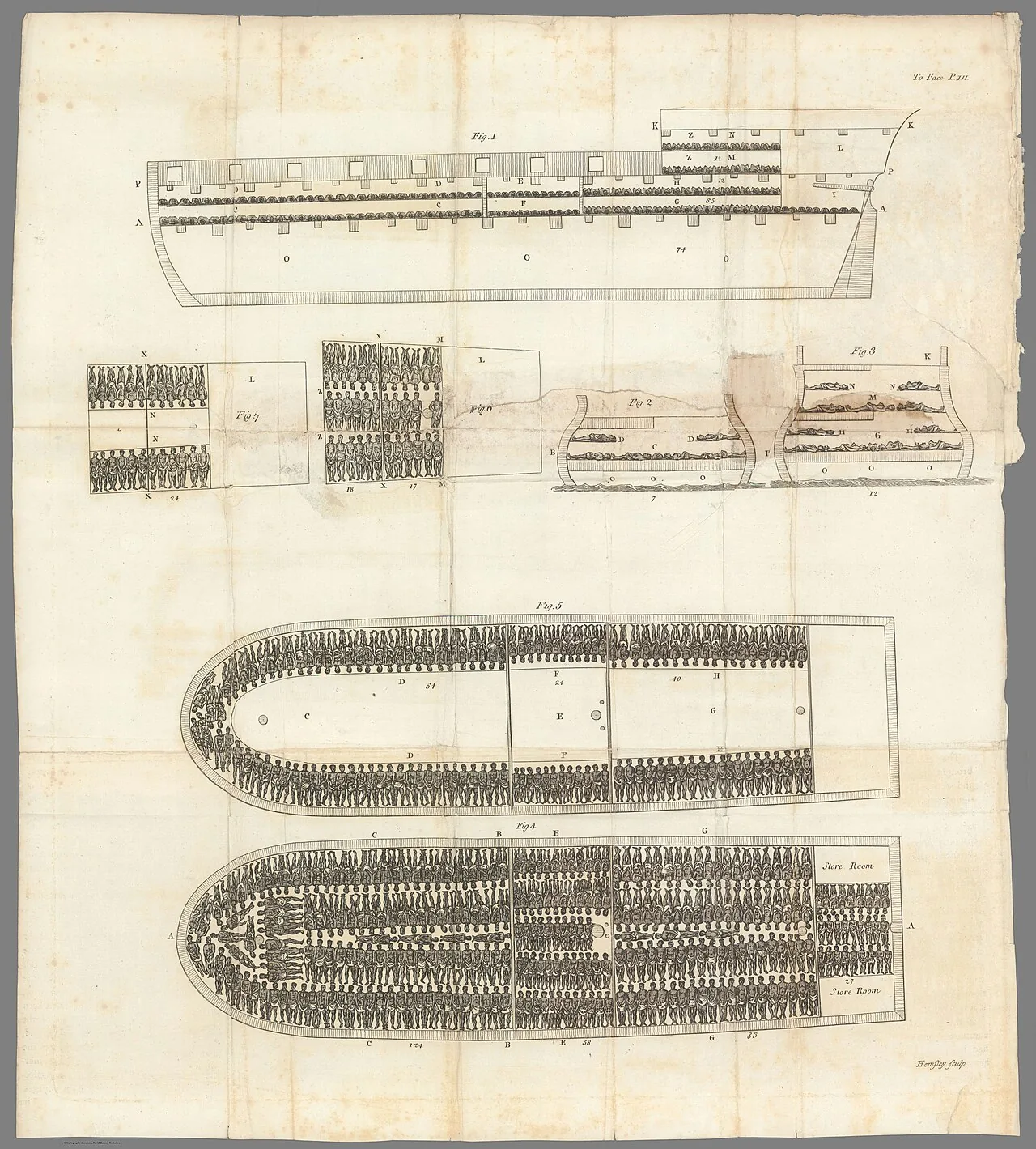
The Atlantic slave trade brought millions of Africans to the Americas, and many died on the Middle Passage. Enslaved people created communities, families, and religious traditions. They also resisted in many ways, from breaking tools to running away to armed revolt, as at Stono. Slavery existed in every colony, including those of the North, but the plantation economies of the Chesapeake and the Lower South depended on it most.
Document 4 – The Middle Passage, 1789
The closeness of the place, and the heat of the climate, added to the number in the ship, which was so crowded that each had scarcely room to turn himself, almost suffocated us. This produced copious perspirations, so that the air soon became unfit for respiration, from a variety of loathsome smells, and brought on a sickness among the slaves, of which many died, thus falling victims to the improvident avarice, as I may call it, of their purchasers. This wretched situation was again aggravated by the galling of the chains, now become insupportable; and the filth of the necessary tubs, into which the children often fell, and were almost suffocated. The shrieks of the women, and the groans of the dying, rendered the whole a scene of horror almost inconceivable.
Source: Olaudah Equiano, The Interesting Narrative of the Life of Olaudah Equiano, 1789, chapter 2 (the Middle Passage); Project Gutenberg.
*Respiration: breathing. *Improvident: careless of the future.
Commentary. Equiano, who said he was born in the Igbo region of West Africa, was kidnapped as a child and sold to British traders. He later bought his freedom and published this account in 1789, when the abolition movement was growing. The text is a rare first-person description by a survivor, but historians note that its author wrote with an audience of British readers in mind.
- 1607 Jamestown founded
- 1619 House of Burgesses meets; first Africans arrive in Virginia
- 1620 Mayflower Compact; Plymouth founded
- 1630 Massachusetts Bay colony founded
- 1636 Roger Williams founds Providence
- 1651-1663 First Navigation Acts
- 1675-1676 King Philip’s War
- 1676 Bacon’s Rebellion in Virginia
- 1680 Pueblo Revolt in New Mexico
- 1692 Salem witch trials
- 1732 Georgia founded
- 1739 Stono Rebellion
- 1754 Albany Congress
4. Colonial society, ideas, and the road to 1754
Self-government
Each colony had a governor, often appointed by the Crown, and an elected assembly, in which property-owning white men voted. Assemblies controlled taxes and, through the “power of the purse,” the governor’s salary. English tradition, from Magna Carta to the Glorious Revolution of 1688-1689, gave colonists a belief in the rights of Englishmen and in representation. In 1686 James II combined the New England colonies into the Dominion of New England under Edmund Andros, which colonists resented. The colonists overthrew Andros after the Glorious Revolution. In 1735 a New York jury acquitted the printer John Peter Zenger of seditious libel for criticizing the governor. The episode became a symbol of freedom of the press.
Revival and reason
The first half of the 1700s brought two movements that changed colonial thought. The Great Awakening, a wave of revivals in the 1730s and 1740s, was led by preachers such as Jonathan Edwards of Massachusetts, famous for his sermon “Sinners in the Hands of an Angry God” (1741). The English evangelist George Whitefield also led the movement and drew huge crowds in outdoor meetings.
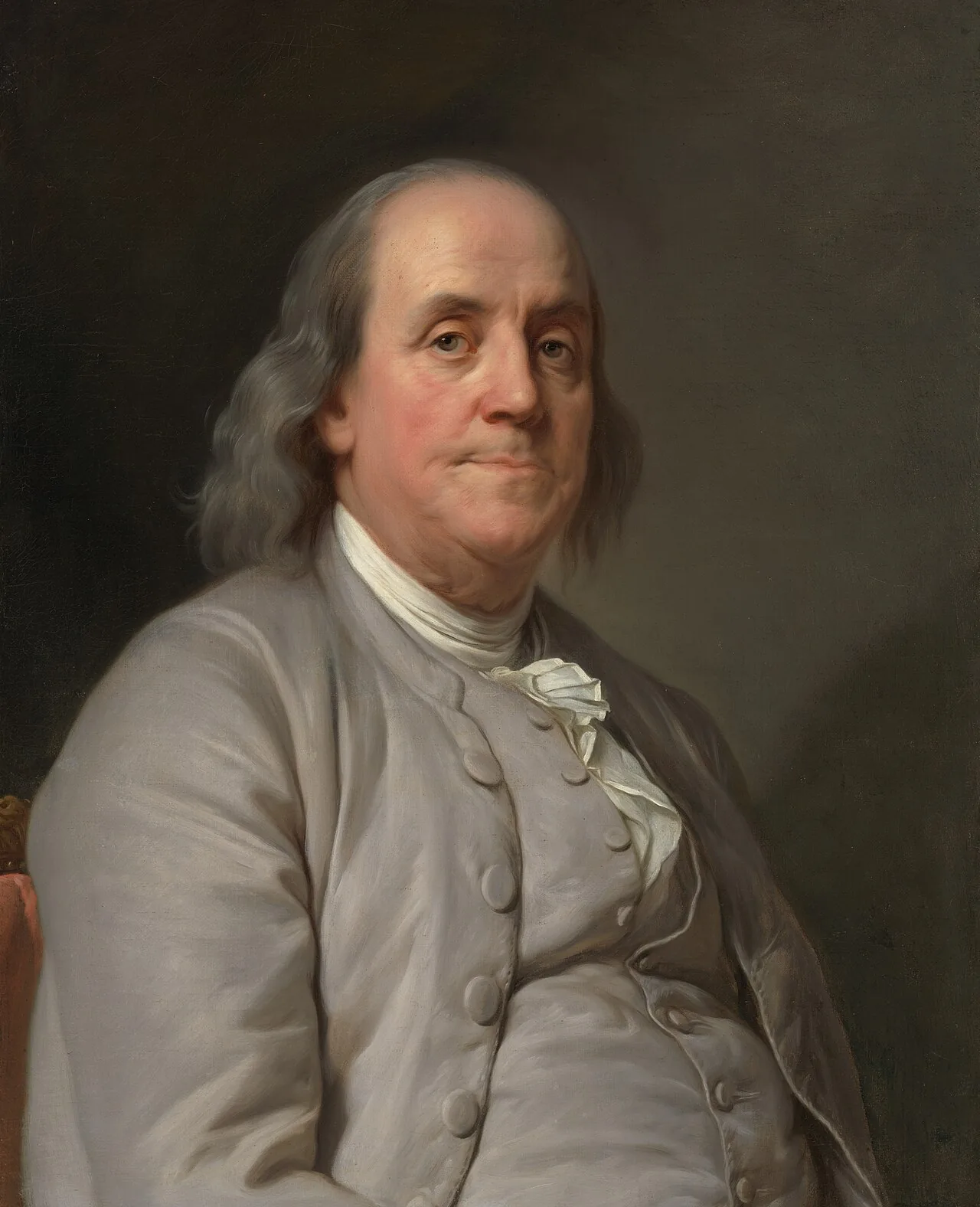
The revival emphasized personal conversion over church ritual and split congregations into “New Lights” and “Old Lights.” It also founded new colleges and gave ordinary colonists the habit of challenging established authorities. At the same time, the Enlightenment reached educated colonists through the ideas of John Locke and Isaac Newton. They stressed reason, natural rights, and the conviction that government rests on consent. Benjamin Franklin, who rose from a poor Boston printer’s apprentice to a wealthy Philadelphia businessman and scientist, personified the Enlightenment’s practical side.
Document 5 – A young man arrives, 1723
Then I asked for a three-penny loaf, and was told they had none such. So not considering or knowing the difference of money, and the greater cheapness nor the names of his bread, I made him give me three-penny worth of any sort. He gave me, accordingly, three great puffy rolls. […] I was surpriz’d at the quantity, but took it, and, having no room in my pockets, walk’d off with a roll under each arm, and eating the other. Thus I went up Market-street as far as Fourth-street, passing by the door of Mr. Read, my future wife’s father; when she, standing at the door, saw me, and thought I made, as I certainly did, a most awkward, ridiculous appearance.
Source: Benjamin Franklin, Autobiography, written 1771-1790, on his arrival in Philadelphia in October 1723; Project Gutenberg.
*Surpriz’d: surprised.
Commentary. Franklin, writing in old age, shows his own rise from poverty with humor. The scene reflects real features of colonial society: opportunity for a young white man with skills and ambition, and a city where a stranger could find work. It also reveals how Franklin wanted to be remembered.
By 1754 the colonial population had grown rapidly, from about a quarter of a million around 1700 to more than one million by 1750. The Census Bureau estimate for 1750 is 1,170,760. Immigrants from Germany and Ulster joined English settlers; the number of enslaved Africans rose steeply. Rivalry with France in the Ohio Valley was growing, and in 1754 delegates from several colonies met at Albany. Franklin proposed a Plan of Union, which the colonial assemblies rejected. However, his cartoon of a snake cut in pieces, with the message “Join, or Die,” showed a new idea: that the colonies might have common interests.
5. Skills: comparing the regions on the exam
Comparison questions about the colonies are the most common type of Period 2 question. Build a chart. For each region, record who came and why (profit, religion, refuge). Note what the economy depended on (tobacco, fish and shipbuilding, grain, rice) and what labor system dominated. Finally, record what political and social features resulted (town meetings, church-based government, religious diversity, plantation society). Then practice making the comparison itself, not just describing: “New England and the Chesapeake both formed representative assemblies, but New England’s society was organized around religious communities of families, whereas the Chesapeake’s was built on tobacco plantations dependent on servants and slaves.” Always give a similarity and a difference, and then explain why the difference exists.
Key takeaways
- English colonies differed by region: the Chesapeake (tobacco, servants, then slaves), New England (religion, towns, trade), the Middle Colonies (diversity, grain), and the Lower South (rice, indigo, slavery).
- Colonial assemblies, the House of Burgesses, the Mayflower Compact, and the Fundamental Orders established habits of self-government.
- Mercantilism and the Navigation Acts shaped trade, but salutary neglect gave colonists much freedom.
- Slavery became hereditary and racial in the law; it existed in all colonies and was central in the South.
- The Great Awakening and the Enlightenment challenged authority and encouraged new ideas of rights and reason.
- Native peoples resisted English expansion (King Philip’s War, Pueblo Revolt), and imperial rivalry with France and Spain increased by 1754.

Quick review: flashcards
Tap a card to see the answer.