


This worksheet on APUSH Period 6: 1865-1898 belongs to the AP US History course. Its questions use primary sources, maps and timelines, and they move from basic recall to short writing tasks. Before you start, review the lesson; afterward, try the true or false quiz.
Exercise 1 : Vocabulary of the Gilded Age
Match each term with its definition. Then use two of the terms in a sentence about the period.
- Vertical integration
- Horizontal integration
- Social Darwinism
- Nativism
- Populism
- Jim Crow
- Assimilation
- Political machine
(a) a movement of Southern and Western farmers that attacked banks and railroads; (b) the policy of making Native Americans adopt white customs; (c) buying competitors to control an industry; (d) hostility to immigrants in the name of native-born Americans; (e) laws and customs that segregated the races in the South; (f) a boss-led organization that traded jobs and services for votes; (g) the idea that society, like nature, rewards the fittest; (h) controlling every stage of production from raw material to sale.
Exercise 2 : Riis and the tenements
Document 1 – Jacob Riis, 1890
Long ago it was said that “one half of the world does not know how the other half lives.” That was true then. It did not know because it did not care. The half that was on top cared little for the struggles, and less for the fate of those who were underneath, so long as it was able to hold them there and keep its own seat. There came a time when the discomfort and crowding below were so great, and the consequent upheavals so violent, that it was no longer an easy thing to do, and then the upper half fell to inquiring what was the matter. Information on the subject has been accumulating rapidly since, and the whole world has had its hands full answering for its old ignorance.
Source: Jacob A. Riis, How the Other Half Lives: Studies Among the Tenements of New York, 1890, chapter 1; Project Gutenberg.
- Present the document (nature, author, date, context).
- According to Riis, why did the “upper half” not know how the other half lived?
- What changed, in his account, and what forced the change?
- Riis wrote for a middle-class audience. Explain how his purpose and audience might shape his choice of words.
- Name one other reform effort in the 1880s-1890s that responded to urban poverty.
Think about who bought books and read newspapers in New York in 1890.
Exercise 3 : The Omaha Platform
Document 2 – The Populist preamble, 1892
Corruption dominates the ballot-box, the Legislatures, the Congress, and touches even the ermine of the bench. The people are demoralized; most of the States have been compelled to isolate the voters at the polling places to prevent universal intimidation and bribery. The newspapers are largely subsidized or muzzled, public opinion silenced, business prostrated, homes covered with mortgages, labor impoverished, and the land concentrating in the hands of capitalists. The urban workmen are denied the right to organize for self-protection, imported pauperized labor beats down their wages, a hireling standing army, unrecognized by our laws, is established to shoot them down, and they are rapidly degenerating into European conditions. […] The fruits of the toil of millions are boldly stolen to build up colossal fortunes for a few, unprecedented in the history of mankind; and the possessors of those, in turn, despise the republic and endanger liberty.
Source: Preamble of the platform of the People’s (Populist) Party, adopted at Omaha, Nebraska, July 4, 1892; text from Wikisource.
*hireling standing army: private armed guards. *prostrated: ruined.
- Present the document (nature, author, date, context).
- List three complaints the Populists make.
- Which events of the 1880s-1890s might the phrase “hireling standing army” refer to?
- Identify one claim in the text that you could test with evidence and describe the evidence you would need.
Exercise 4 : Two judges, two Constitutions
Document 3 – The majority in Plessy, 1896
If this be so, it is not by reason of anything found in the act, but solely because the colored race chooses to put that construction upon it. The argument necessarily assumes that if, as has been more than once the case, and is not unlikely to be so again, the colored race should become the dominant power in the state legislature, and should enact a law in precisely similar terms, it would thereby relegate the white race to an inferior position.
Source: Justice Henry Billings Brown, opinion of the Court, Plessy v. Ferguson, 163 U.S. 537 (1896); Legal Information Institute, Cornell Law School.
*relegate: assign to a lower position.
Document 4 – Harlan’s dissent, 1896
But in view of the constitution, in the eye of the law, there is in this country no superior, dominant, ruling class of citizens. There is no caste here. Our constitution is color-blind, and neither knows nor tolerates classes among citizens. In respect of civil rights, all citizens are equal before the law. The humblest is the peer of the most powerful.
Source: Justice John Marshall Harlan, dissenting opinion, Plessy v. Ferguson, 163 U.S. 537 (1896); Legal Information Institute, Cornell Law School.
*caste: a rigid class system.
- Present each document (author, date, case).
- How does Justice Brown explain the idea that segregation is not an insult?
- What does Justice Harlan say about the Constitution and about classes of citizens?
- Compare the two opinions: where do they disagree about the meaning of the Fourteenth Amendment?
- Explain how Brown v. Board of Education (1954) changed the law that is described in Document 3.
Exercise 5 : Washington speaks in Atlanta
Document 5 – Booker T. Washington, 1895
To those of my race who depend on bettering their condition in a foreign land or who underestimate the importance of cultivating friendly relations with the Southern white man, who is their next-door neighbor, I would say: “Cast down your bucket where you are” — cast it down in making friends in every manly way of the people of all races by whom we are surrounded. […] In all things that are purely social, we can be as separate as the fingers, yet one as the hand in all things essential to mutual progress.
Source: Booker T. Washington, address at the Cotton States and International Exposition, Atlanta, September 18, 1895 (later called the Atlanta Compromise); text from Wikisource.
*cast down your bucket: use what is at hand.
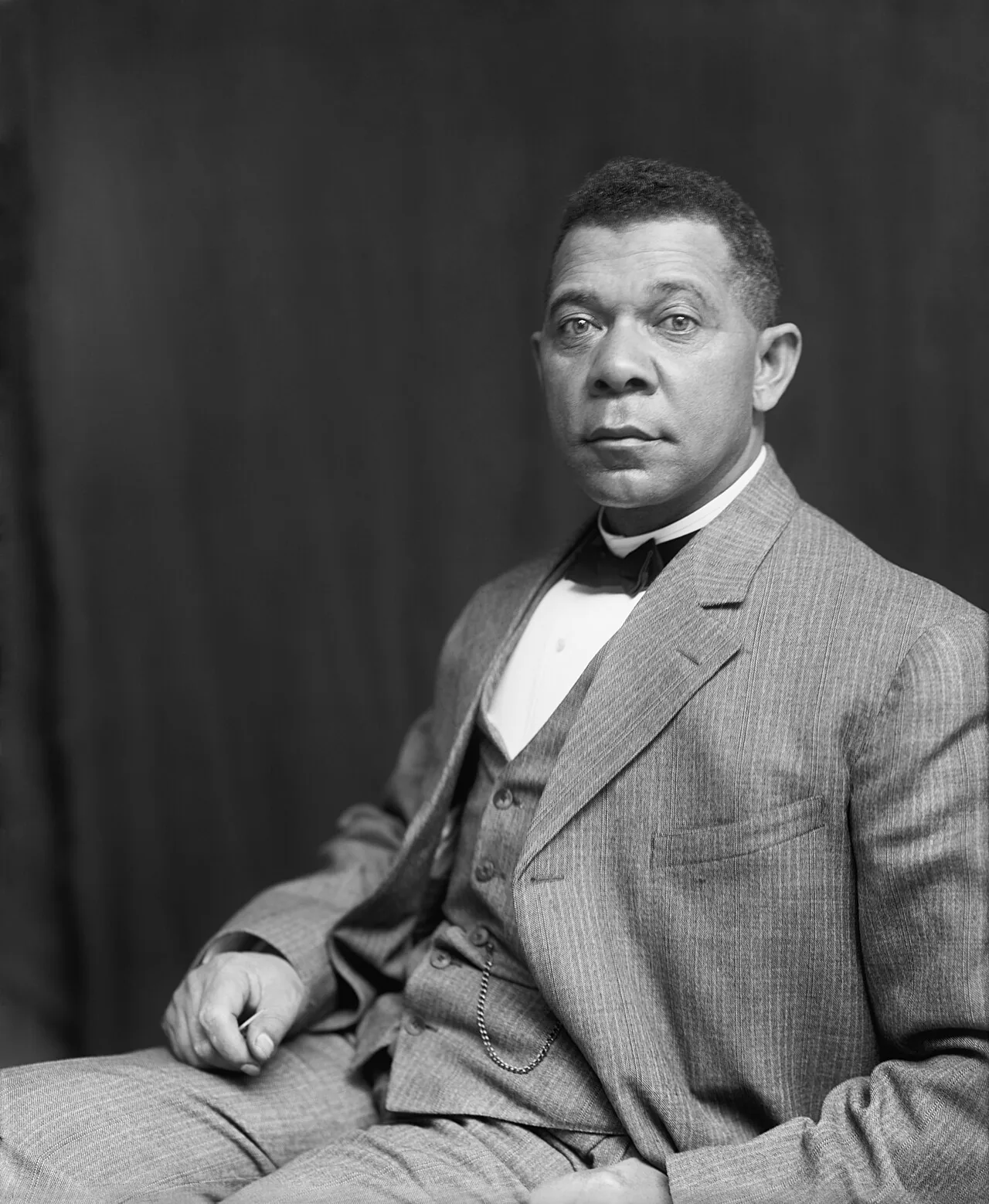
- Present the document (nature, author, date, context).
- Who was the audience, and what is Washington telling them in the first paragraph?
- What does the image of the fingers and the hand mean?
- Explain how a critic such as W. E. B. Du Bois or Ida B. Wells would respond.
- Why might Washington have chosen this approach in 1895? Use evidence about the South in the 1890s.
Exercise 6 : The Dawes Act
Document 6 – The General Allotment Act, 1887
That in all cases where any tribe or band of Indians has been, or shall hereafter be, located upon any reservation created for their use, either by treaty stipulation or by virtue of an act of Congress or executive order setting apart the same for their use, the President of the United States be, and he hereby is, authorized, whenever in his opinion any reservation or any part thereof of such Indians is advantageous for agricultural and grazing purposes, to cause said reservation, or any part thereof, to be surveyed, or resurveyed if necessary, and to allot the lands in said reservation in severalty to any Indian located thereon in quantities as follows: To each head of a family, one-quarter of a section; To each single person over eighteen years of age, one-eighth of a section;
Source: General Allotment Act (Dawes Act), February 8, 1887, section 1; text from Wikisource.
*in severalty: to individuals. *section: 640 acres.
- Present the document (nature, author, date, context).
- What does the act authorize the President to do?
- How much land does a family head receive?
- Explain two causes of the act: one from the lesson about the West and one from reformers’ beliefs about Native Americans.
- Explain two effects of the act on Native peoples.
Exercise 7 : Excluding the Chinese
Document 7 – The Chinese Exclusion Act, 1882
Whereas, in the opinion of the Government of the United States the coming of Chinese laborers to this country endangers the good order of certain localities within the territory thereof: Therefore, Be it enacted by the Senate and House of Representatives of the United States of America in Congress assembled, That from and after the expiration of ninety days next after the passage of this act, and until the expiration of ten years next after the passage of this act, the coming of Chinese laborers to the United States be, and the same is hereby, suspended; and during such suspension it shall not be lawful for any Chinese laborer to come, or, having so come after the expiration of said ninety days, to remain within the United States.
Source: Chinese Exclusion Act, May 6, 1882, 22 Stat. 58, section 1; text from Wikisource.
*laborers: workers.
Document 8 – Thomas Nast, 1880
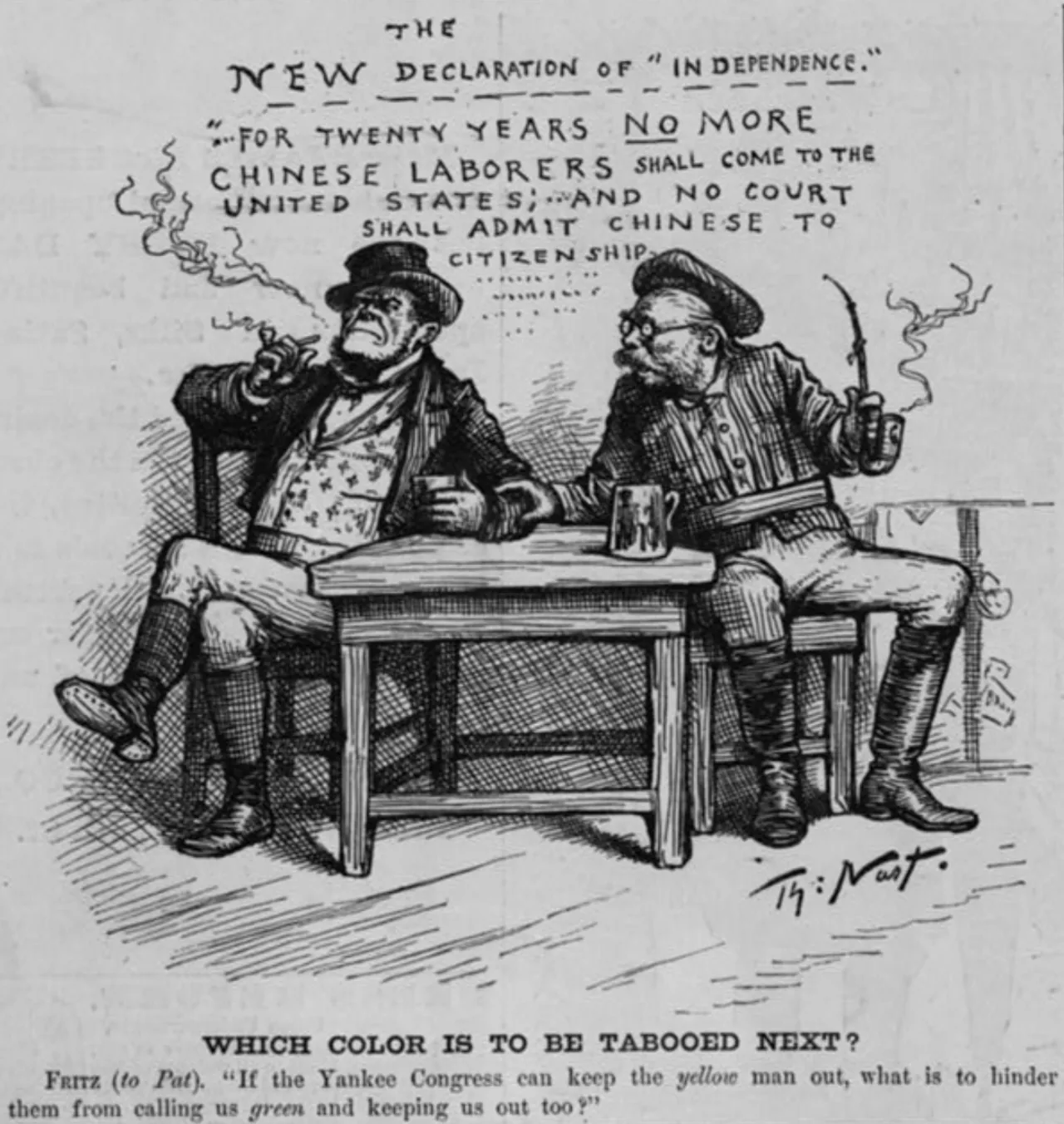
Source: Thomas Nast, Harper’s Weekly, 1880, Library of Congress.
- Present each document (nature, author or artist, date).
- What reason does the law give for limiting Chinese immigration?
- What is the cartoonist’s point in asking “Which color is to be tabooed next?”
- Compare the two documents: how do they differ in their view of immigrants?
- Explain why the Chinese Exclusion Act is considered a turning point in American immigration policy.
Exercise 8 : The frontier thesis
Document 9 – Frederick Jackson Turner, 1893
Up to our own day American history has been in a large degree the history of the colonization of the Great West. The existence of an area of free land, its continuous recession, and the advance of American settlement westward, explain American development. […] And now, four centuries from the discovery of America, at the end of a hundred years of life under the Constitution, the frontier has gone, and with its going has closed the first period of American history.
Source: Frederick Jackson Turner, “The Significance of the Frontier in American History,” paper read to the American Historical Association, Chicago, July 12, 1893; Wikisource.
- Present the document (nature, author, date, context).
- What does Turner say explains American development?
- What event does he describe as the end of the first period of American history?
- Identify two groups of people whom Turner leaves out of his picture of the frontier.
- Explain one way that the idea of an “end of the frontier” could influence American foreign policy in the 1890s.
Exercise 9 : Two views of the immigrant
Document 10 – Emma Lazarus, 1883
Not like the brazen giant of Greek fame, With conquering limbs astride from land to land; Here at our sea-washed, sunset gates shall stand A mighty woman with a torch, whose flame Is the imprisoned lightning, and her name Mother of Exiles. From her beacon-hand Glows world-wide welcome; her mild eyes command The air-bridged harbor that twin cities frame. “Keep, ancient lands, your storied pomp!” cries she With silent lips. “Give me your tired, your poor, Your huddled masses yearning to breathe free, The wretched refuse of your teeming shore. Send these, the homeless, tempest-tost to me, I lift my lamp beside the golden door!
Source: Emma Lazarus, “The New Colossus,” sonnet written in 1883 for a fund-raising auction for the Statue of Liberty pedestal; Wikisource.
*tempest-tost: thrown about by storms.
Document 11 – The Chinese Exclusion Act, 1882
Whereas, in the opinion of the Government of the United States the coming of Chinese laborers to this country endangers the good order of certain localities within the territory thereof: Therefore, Be it enacted by the Senate and House of Representatives of the United States of America in Congress assembled, That from and after the expiration of ninety days next after the passage of this act, and until the expiration of ten years next after the passage of this act, the coming of Chinese laborers to the United States be, and the same is hereby, suspended; and during such suspension it shall not be lawful for any Chinese laborer to come, or, having so come after the expiration of said ninety days, to remain within the United States.
Source: Chinese Exclusion Act, May 6, 1882, 22 Stat. 58, section 1; text from Wikisource.
- Present each document.
- How does each document describe immigrants, directly or indirectly?
- Both documents date from 1882-1883. How can the same country produce two such different messages?
- Write a two-sentence thesis that uses both documents to describe American attitudes to immigration in the Gilded Age.
Exercise 10 : The Sherman Act (SAQ)
Source – The Sherman Antitrust Act, 1890
Every contract, combination in the form of trust or otherwise, or conspiracy, in restraint of trade or commerce among the several States, or with foreign nations, is hereby declared to be illegal. […] Every person who shall monopolize, or attempt to monopolize, or combine or conspire with any other person or persons, to monopolize any part of the trade or commerce among the several States, or with foreign nations, shall be deemed guilty of a misdemeanor
Source: Sherman Antitrust Act, July 2, 1890, sections 1 and 2; text from Wikisource.
*monopolize: take control of a market.
Answer parts (a), (b), and (c) in complete sentences.
- (a) Identify ONE economic development of the Gilded Age that led Congress to pass this law.
- (b) Explain ONE way the law was limited in practice in the 1890s.
- (c) Explain ONE way that the Sherman Act was similar to or different from the Interstate Commerce Act of 1887.
Exercise 11 : Bandits' Roost
Document 12 – Photograph by Jacob Riis, 1888
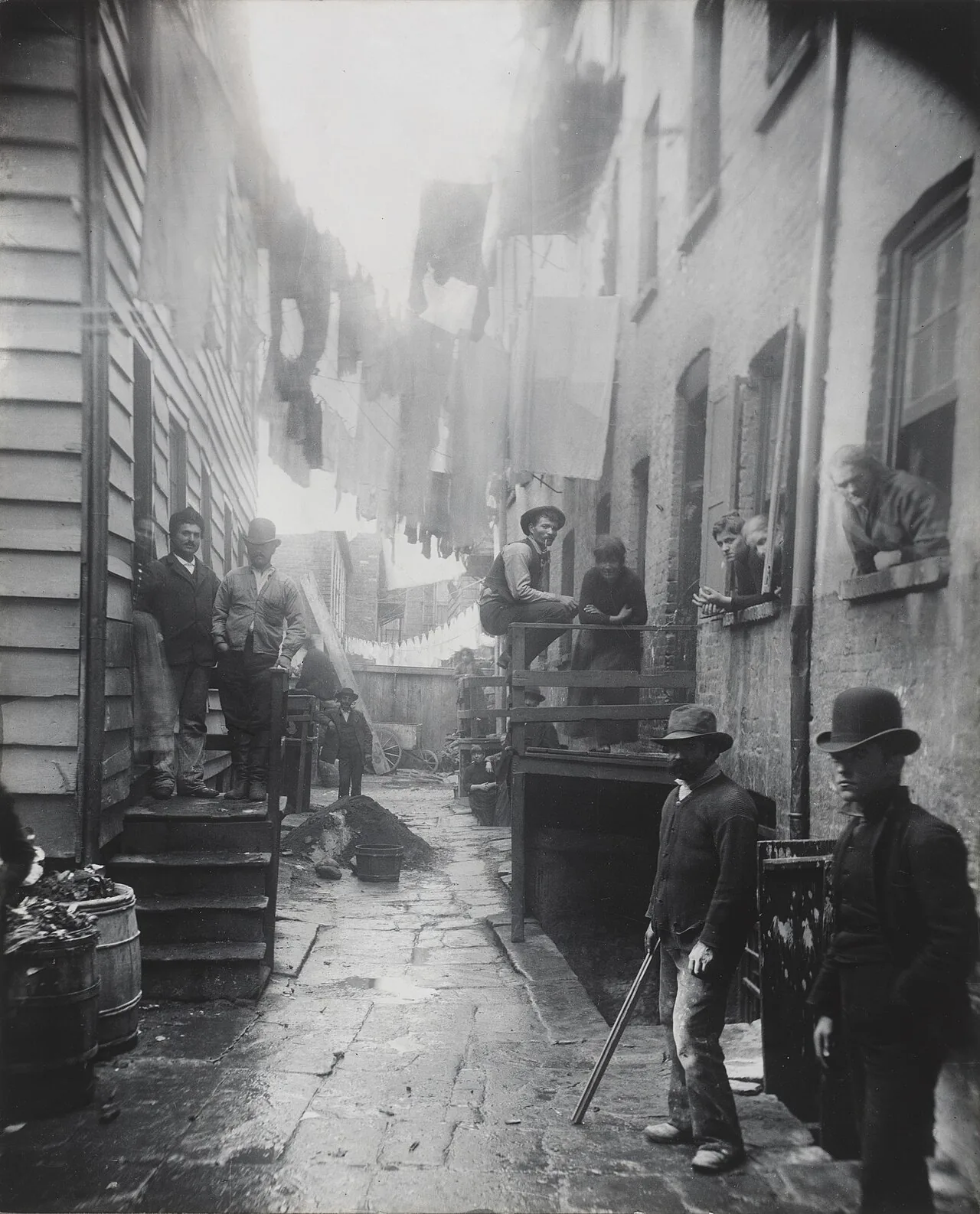
Source: Jacob A. Riis, 1888, Museum of the City of New York.
- Present the document (nature, photographer, date, place).
- Describe what you see: the buildings, the people, the alley.
- Riis used flash powder at night. How might this affect the way people look in the picture?
- Explain how this image could support a reform movement and one limit of its value as evidence.
Exercise 12 : Homestead, 1892
Document 13 – Harper’s Weekly cover, 1892
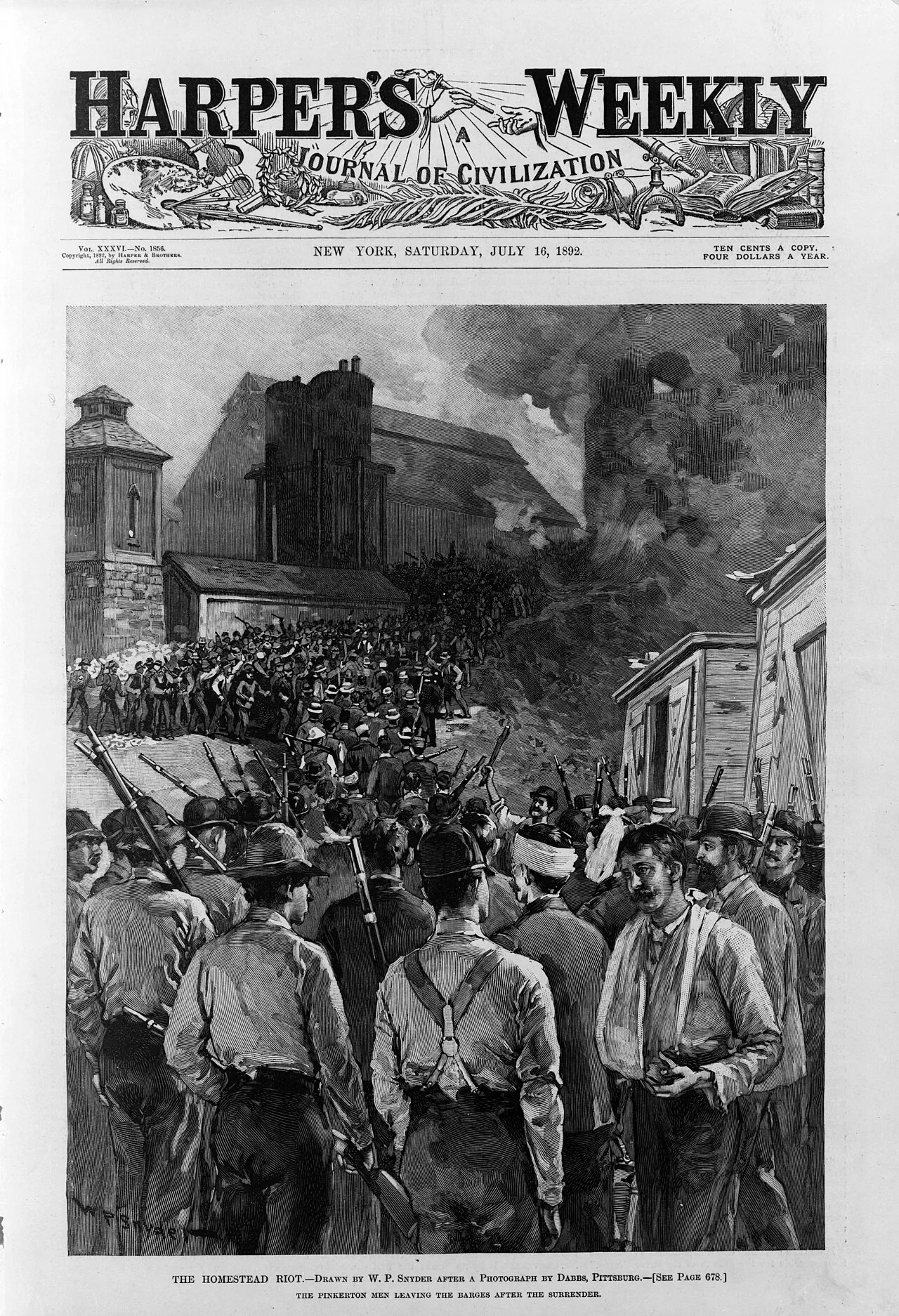
Source: Harper’s Weekly, July 16, 1892, Library of Congress.
- Present the document (nature, publication, date, place).
- Describe the people and the setting.
- Explain the context: what led to the confrontation at Homestead?
- Compare the picture’s message with Carnegie’s statement that the rich have a duty to give away their fortunes. Is there a contradiction?
Exercise 13 : Wounded Knee
Document 14 – Burial of the dead, 1891
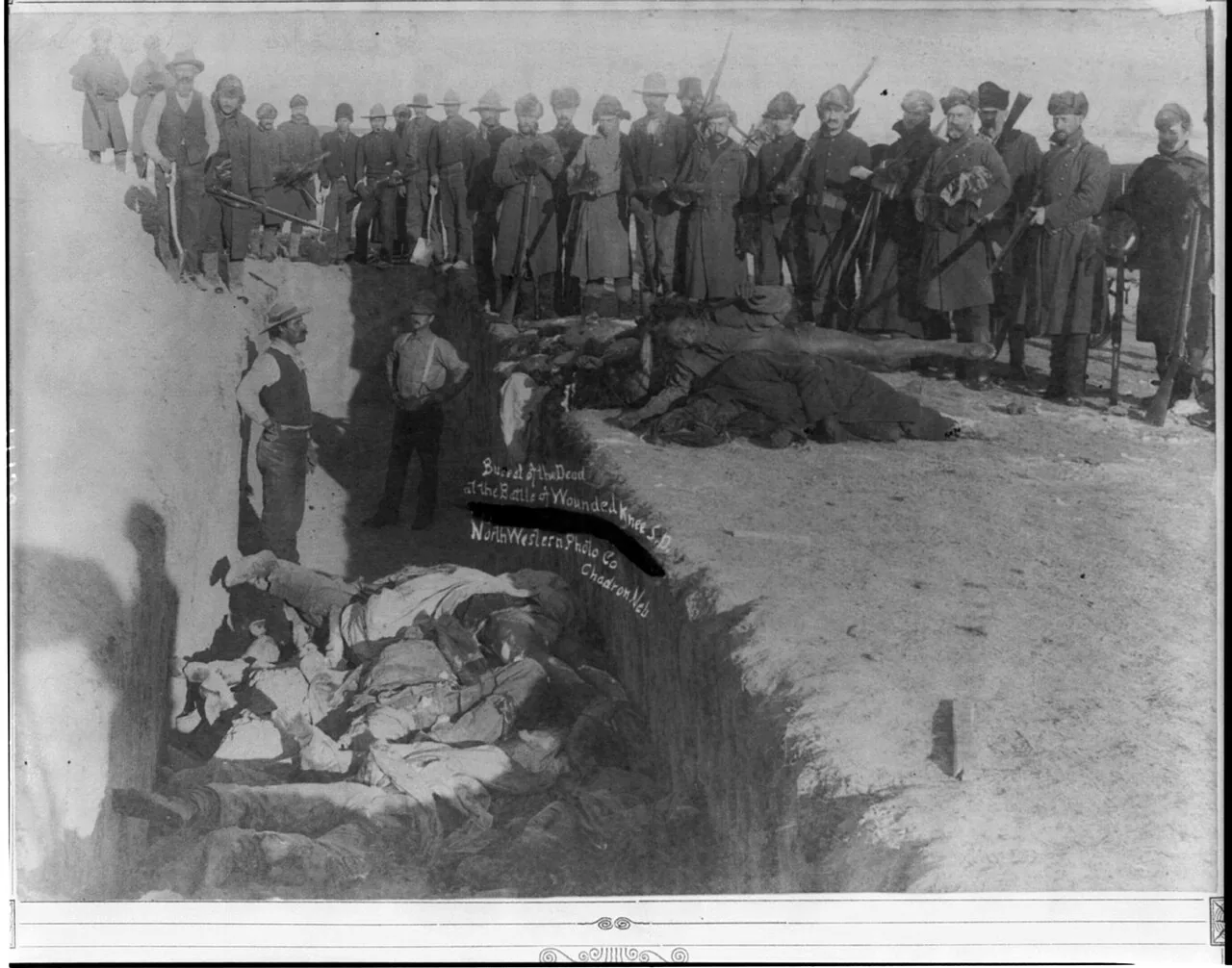
Source: photograph, January 1891, Library of Congress.
- Present the document (nature, date, place).
- Describe what the photograph shows.
- Who probably took the photograph, and for what audience? What does the picture not tell us?
- Use the lesson to explain why historians call the event a massacre.
Exercise 14 : Arrival at Ellis Island
Document 15 – Immigrants at Ellis Island
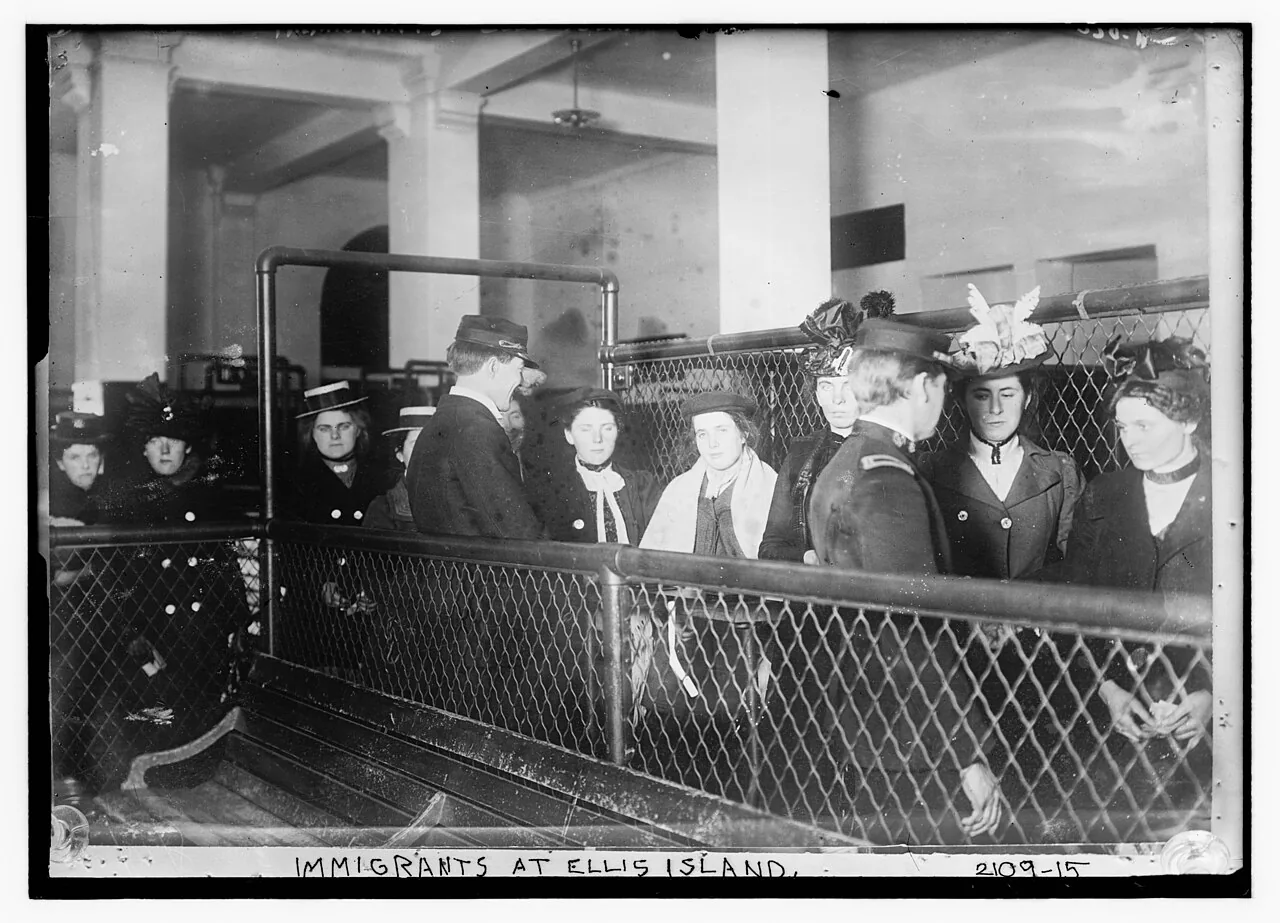
Source: Bain News Service, about 1900-1910, Library of Congress.
- Present the document (nature, source, date, place).
- Describe the room and the people in it.
- What does the picture suggest about how the government treated immigrants?
- Use the picture and the lesson to explain why immigration was both a source of labor and a source of conflict.
Exercise 15 : A home of sod
Document 16 – A sod house in Nebraska
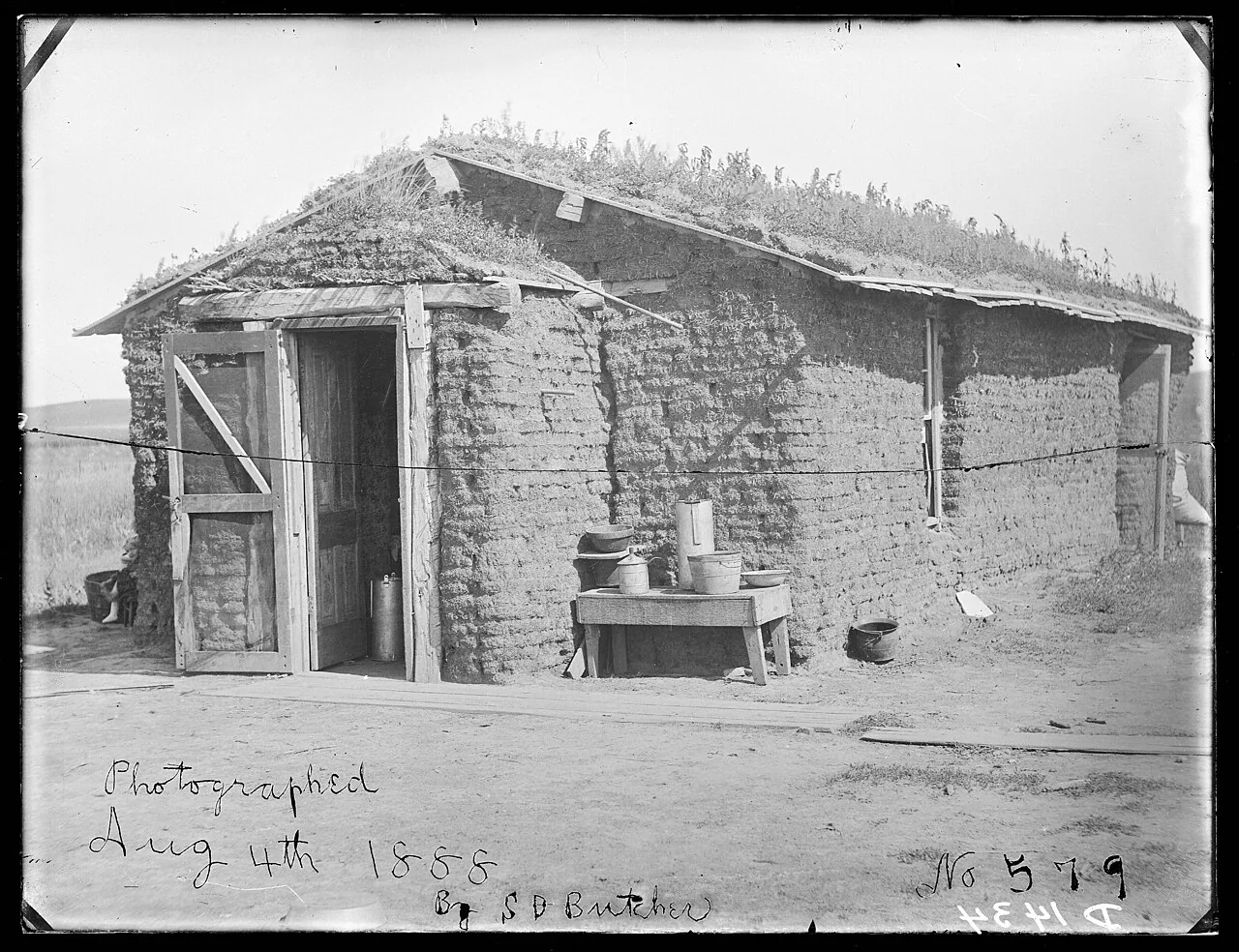
Source: Solomon D. Butcher, 1880s, Library of Congress.
- Present the document (nature, photographer, date, place).
- Describe the house and its surroundings.
- What does the house suggest about the resources of the Great Plains and the technology of settlers?
- Explain one way railroads and federal land policy helped bring this family to the Plains.
Exercise 16 : Bryan and the cross of gold
Document 17 – A Republican cartoon, 1896
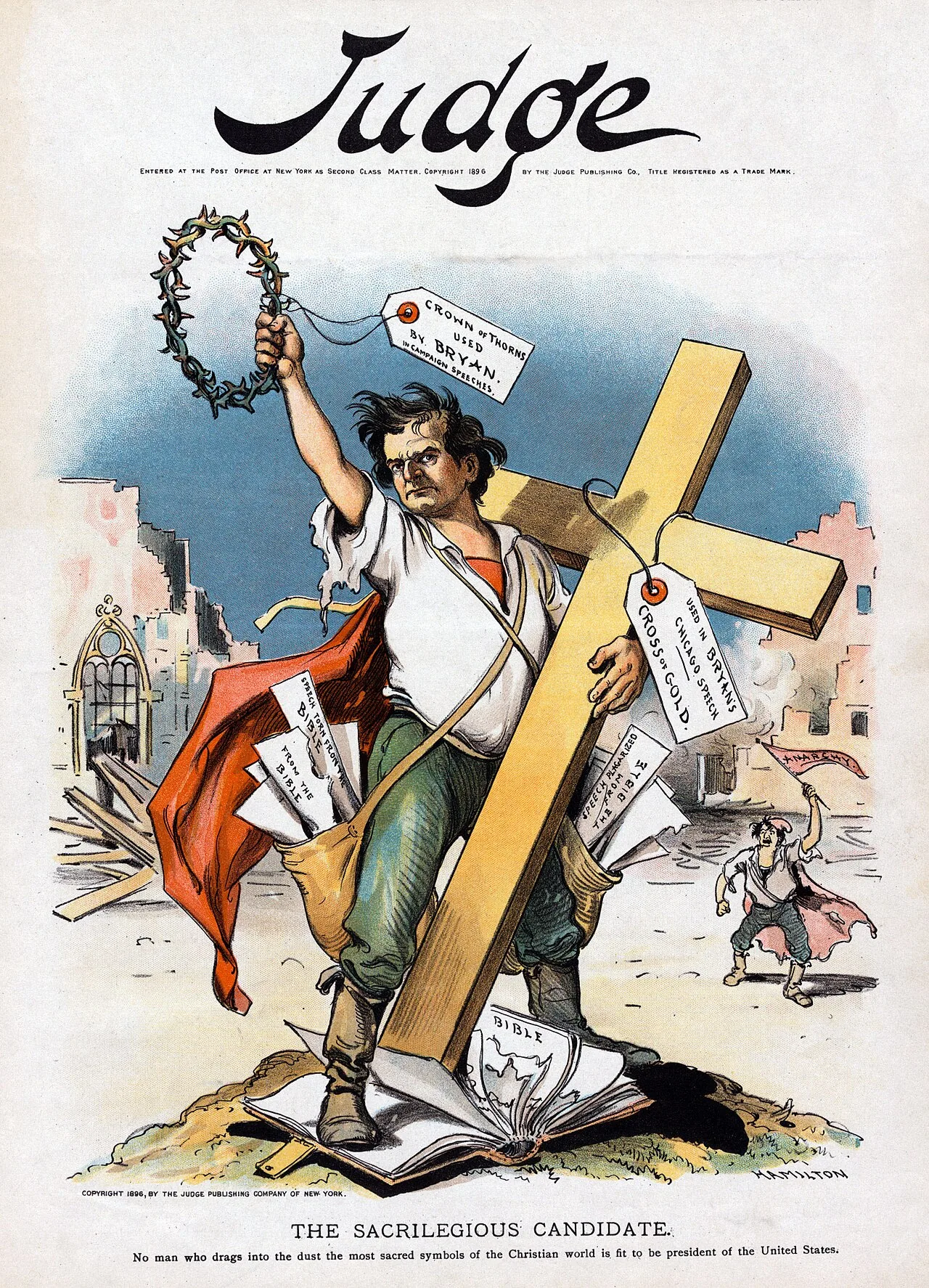
Source: Judge, 1896, Library of Congress.
- Present the document (nature, publication, date).
- Describe how the artist shows Bryan.
- What does the cartoon say about the Republican view of Bryan’s campaign?
- Explain the role of the silver question in the campaign of 1896.
Exercise 17 : Reading the population table
Document 18 – Population of the United States
| Year | Population |
|---|---|
| 1860 | 31,443,321 |
| 1870 | 38,558,371 |
| 1880 | 50,189,209 |
| 1890 | 62,979,766 |
| 1900 | 76,212,168 |
Source: U.S. Census Bureau, decennial census, 1860-1900.
- By about how many millions did the population grow between 1860 and 1900?
- In which decade was the increase largest (in millions)?
- Explain two causes of the growth.
- Choose one consequence of the growth (for cities, for farms, or for politics) and explain it.
Exercise 18 : Reading Map 1: railroads and trails
- Which two companies met at point 1, and in what year?
- Name two cities on the Union Pacific route.
- Which trail carried cattle north from Texas, and what was it for?
- Explain how a railroad route could decide the future of a town on the Plains.
Use the legend and the lesson text.
Exercise 19 : Reading Map 3: the Plains wars
- Name the two battle sites in the legend that are in present-day South Dakota or Montana.
- Which event occurred last, 1 or 2?
- What did the Nez Perce attempt in 1877, and how did it end?
- Explain why gold in the Black Hills led to conflict with the Lakota.
Exercise 20 : Sequencing the Gilded Age
Put the following events in order and group them under the headings Economy, West, Politics, and World.
- Dawes Act
- Panic of 1893
- Haymarket bombing
- Compromise of 1877
- Chinese Exclusion Act
- Plessy v. Ferguson
- Spanish-American War
- Transcontinental railroad completed
Exercise 21 : Duration and turning points
- How many years passed between the completion of the transcontinental railroad and the Spanish-American War?
- The Sherman Antitrust Act was passed 8 years after the Chinese Exclusion Act. In what year?
- Between Plessy (1896) and Brown (1954) how many years?
- Choose the single event of the period that you consider the most important turning point and defend your choice in two sentences.
Exercise 22 : Guided research: a Gilded Age tycoon
Mini-inquiry: was Andrew Carnegie a “robber baron” or a “captain of industry”?
- Search with the keywords Andrew Carnegie Gospel of Wealth and Homestead strike 1892.
- Use reliable sites: the Library of Congress (loc.gov), the National Archives (archives.gov), the Carnegie Library of Pittsburgh, and Wikipedia (checking the sources at the bottom of the page).
- Fill in a card: dates and birthplace; business methods; two acts of philanthropy; role in the Homestead strike; two historians’ opinions.
- Write four sentences giving your own verdict with evidence.
Exercise 23 : Stimulus-based multiple choice
Source – Justice Harlan dissenting, 1896
But in view of the constitution, in the eye of the law, there is in this country no superior, dominant, ruling class of citizens. There is no caste here. Our constitution is color-blind, and neither knows nor tolerates classes among citizens. In respect of civil rights, all citizens are equal before the law. The humblest is the peer of the most powerful.
Source: Justice John Marshall Harlan, dissenting opinion, Plessy v. Ferguson, 163 U.S. 537 (1896); Legal Information Institute, Cornell Law School.
Choose the best answer for each question.
- The excerpt is most directly a response to which development?
(A) The Compromise of 1877
(B) The spread of segregation laws in the South
(C) The growth of Populism
(D) The Chinese Exclusion Act - Harlan’s statement that the Constitution is “color-blind” is most similar to which later argument?
(A) The plaintiffs in Brown v. Board of Education
(B) The Southern Manifesto
(C) The Atlanta Compromise
(D) The Dawes Act - Which statement best describes the immediate effect of the Court’s decision in this case?
(A) It ended segregation in railroads
(B) It allowed states to require separate facilities if they were said to be equal
(C) It protected the right to vote
(D) It required integration of public schools
Exercise 24 : DBQ practice: workers, farmers, and the city
Prompt: Evaluate the extent to which industrialization changed the lives of ordinary Americans between 1865 and 1898.
Document A – Jacob Riis, 1890
Long ago it was said that “one half of the world does not know how the other half lives.” That was true then. It did not know because it did not care. The half that was on top cared little for the struggles, and less for the fate of those who were underneath, so long as it was able to hold them there and keep its own seat. There came a time when the discomfort and crowding below were so great, and the consequent upheavals so violent, that it was no longer an easy thing to do, and then the upper half fell to inquiring what was the matter. Information on the subject has been accumulating rapidly since, and the whole world has had its hands full answering for its old ignorance.
Source: Jacob A. Riis, How the Other Half Lives: Studies Among the Tenements of New York, 1890, chapter 1; Project Gutenberg.
Document B – Homestead, 1892
Source: Harper’s Weekly, July 16, 1892.
Document C – The Omaha Platform, 1892
Corruption dominates the ballot-box, the Legislatures, the Congress, and touches even the ermine of the bench. The people are demoralized; most of the States have been compelled to isolate the voters at the polling places to prevent universal intimidation and bribery. The newspapers are largely subsidized or muzzled, public opinion silenced, business prostrated, homes covered with mortgages, labor impoverished, and the land concentrating in the hands of capitalists. The urban workmen are denied the right to organize for self-protection, imported pauperized labor beats down their wages, a hireling standing army, unrecognized by our laws, is established to shoot them down, and they are rapidly degenerating into European conditions. […] The fruits of the toil of millions are boldly stolen to build up colossal fortunes for a few, unprecedented in the history of mankind; and the possessors of those, in turn, despise the republic and endanger liberty.
Source: Preamble of the platform of the People’s (Populist) Party, adopted at Omaha, Nebraska, July 4, 1892; text from Wikisource.
- For each document, write one sentence of sourcing: the point of view or purpose, and how it affects the document’s usefulness.
- Write a thesis (one or two sentences) that answers the prompt with a claim and a line of reasoning.
- Give one piece of outside evidence not in the documents.
- Write a contextualization sentence on the period before 1865.
Exercise 25 : LEQ practice: the West and Native Americans
Prompt: Evaluate the extent to which federal policies were responsible for the transformation of the Great Plains between 1865 and 1898.
- Write a thesis.
- List three pieces of evidence, each with a specific fact (a law, an event, or a policy).
- Explain how you would use the evidence to show causation.
- Write a sentence that shows complexity (for example, a counterargument or comparison).
Think of the Homestead Act, railroad subsidies, the Army, the Dawes Act, and also of private factors such as technology and the market.
Exercise 26 : Who is who? People of the Gilded Age
Identify each person and give one fact about the role he or she played.
- Andrew Carnegie
- John D. Rockefeller
- Samuel Gompers
- Eugene V. Debs
- Jane Addams
- William Jennings Bryan
- Booker T. Washington
- Ida B. Wells
Exercise 27 : True or false? Justify
Decide whether each statement is true or false and correct the false ones.
- The Sherman Antitrust Act was used effectively to break up all major trusts in the 1890s.
- The Dawes Act aimed to preserve tribal ownership of land.
- Chinese Exclusion was the first federal law to restrict immigration by nationality.
- The Populists were mainly urban industrial workers.
- Plessy v. Ferguson allowed segregation if facilities were “separate but equal.”
- The United States gained the Philippines in the Treaty of Paris of 1898.


Quick review: flashcards
Tap a card to see the answer.