


This worksheet on APUSH Period 7: 1890-1945 belongs to the AP US History course. Its questions use primary sources, maps and timelines, and they move from basic recall to short writing tasks. Before you start, review the lesson; afterward, try the true or false quiz.
Exercise 1 : Vocabulary of Period 7
Match each term with its meaning. Then use two of the terms in a sentence.
- Muckraker
- Progressivism
- Roosevelt Corollary
- Selective Service
- Red Scare
- New Deal
- Lend-Lease
- Internment
(a) the draft law of 1917; (b) a journalist who exposed corruption and abuse; (c) 1930s programs for relief, recovery, and reform; (d) the confinement of people without trial because of their ancestry or origin; (e) the policy of providing arms to the Allies without immediate payment, 1941; (f) a reform movement that wanted government to fix the problems of industrial society; (g) a fear of radicals and immigrants in 1919-1920; (h) Roosevelt’s 1904 claim of a right to act as an international police power in the Western Hemisphere.
Exercise 2 : A novel about the meatpackers
Document 1 – Upton Sinclair, The Jungle, 1906
There was never the least attention paid to what was cut up for sausage; there would come all the way back from Europe old sausage that had been rejected, and that was moldy and white—it would be dosed with borax and glycerine, and dumped into the hoppers, and made over again for home consumption. […] There would be meat stored in great piles in rooms; and the water from leaky roofs would drip over it, and thousands of rats would race about on it.
Source: Upton Sinclair, The Jungle, 1906, chapter 14 (novel); Project Gutenberg.
*borax and glycerine: chemical preservatives. *hoppers: funnel-shaped containers.
- Present the document (nature, author, date, context).
- List three practices described in the passage.
- The Jungle is a novel. Explain how this affects its reliability as a source and how historians could check it.
- Explain what the passage led Congress to do in 1906.
Exercise 3 : The duties of government, 1913
Document 2 – Wilson’s first inaugural address, 1913
Nor have we studied and perfected the means by which government may be put at the service of humanity, in safeguarding the health of the Nation, the health of its men and its women and its children, as well as their rights in the struggle for existence. This is no sentimental duty. The firm basis of government is justice, not pity. These are matters of justice. […] There can be no equality or opportunity, the first essential of justice in the body politic, if men and women and children be not shielded in their lives, their very vitality, from the consequences of great industrial and social processes which they can not alter, control, or singly cope with.
Source: Woodrow Wilson, First Inaugural Address, March 4, 1913; text from the Avalon Project, Yale Law School.
*constituent parts: members of society. *singly: alone.
- Present the document (nature, author, date, context).
- Which things does Wilson say the nation has failed to study?
- What is the “firm basis of government” in his view?
- Find one claim that a laissez-faire supporter would reject, and explain why.
- Name two Wilson administration laws that put these ideas into practice.
Exercise 4 : Words and a photograph on child labor
Document 3 – The Jungle (1906)
There was never the least attention paid to what was cut up for sausage; there would come all the way back from Europe old sausage that had been rejected, and that was moldy and white—it would be dosed with borax and glycerine, and dumped into the hoppers, and made over again for home consumption. […] There would be meat stored in great piles in rooms; and the water from leaky roofs would drip over it, and thousands of rats would race about on it.
Source: Upton Sinclair, The Jungle, 1906, chapter 14 (novel); Project Gutenberg.
Document 4 – Lewis Hine (1909)
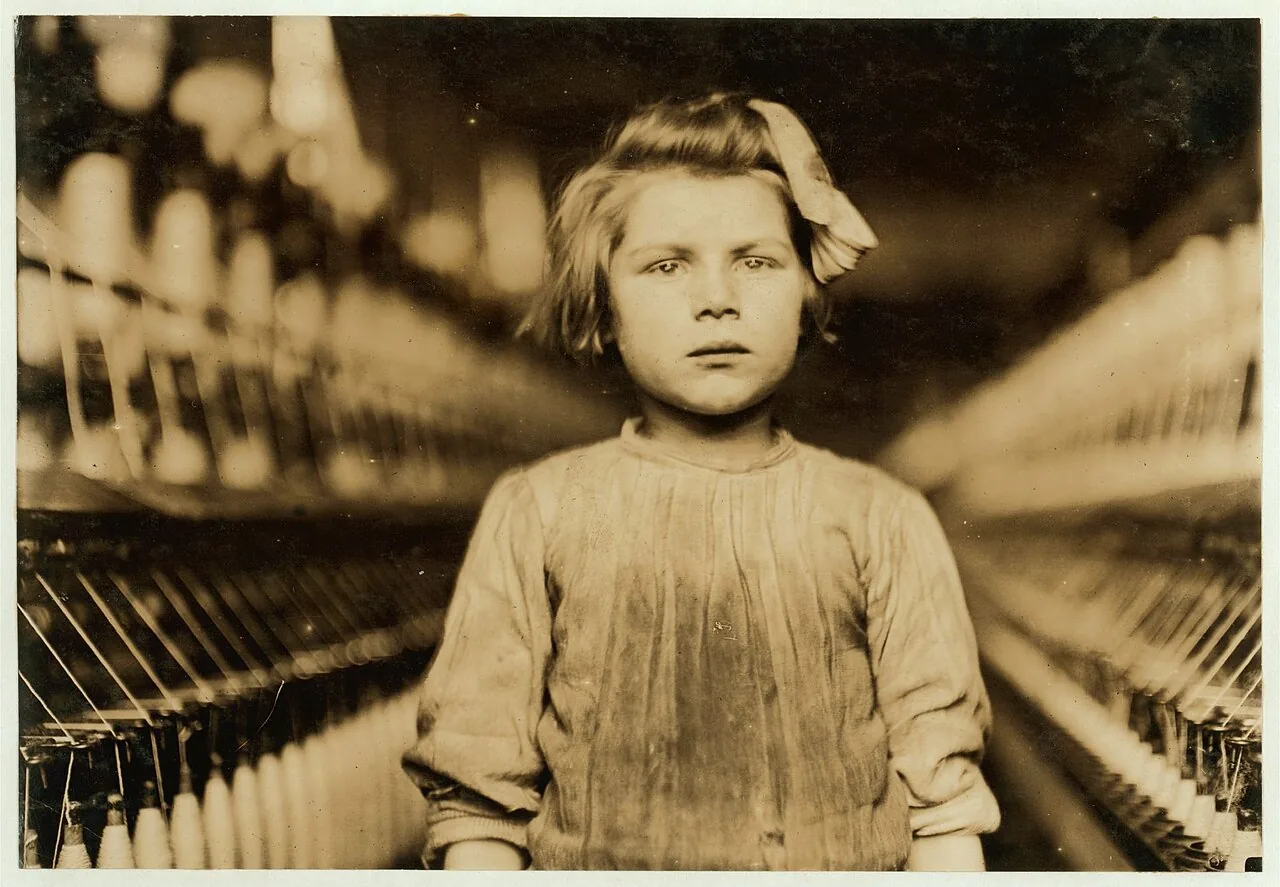
Source: Lewis W. Hine, 1909, Library of Congress.
- Present each document (nature, author, date).
- Which problem of industrial society does each reveal?
- Compare how a novel and a photograph try to persuade the public.
- Explain why reformers used both kinds of evidence in the same years.
Exercise 5 : Roosevelt and the Caribbean
Document 5 – The Roosevelt Corollary, 1904
All that this country desires is to see the neighboring countries stable, orderly, and prosperous. Any country whose people conduct themselves well can count upon our hearty friendship. If a nation shows that it knows how to act with reasonable efficiency and decency in social and political matters, if it keeps order and pays its obligations, it need fear no interference from the United States. Chronic wrongdoing, or an impotence which results in a general loosening of the ties of civilized society, may in America, as elsewhere, ultimately require intervention by some civilized nation, and in the Western Hemisphere the adherence of the United States to the Monroe Doctrine may force the United States, however reluctantly, in flagrant cases of such wrongdoing or impotence, to the exercise of an international police power.
Source: Theodore Roosevelt, annual message to Congress, December 6, 1904 (the Roosevelt Corollary to the Monroe Doctrine); text from Wikisource.
*impotence: weakness.
- Present the document (nature, author, date, context).
- Under what conditions does Roosevelt say that the United States will not interfere?
- Under what conditions might it intervene?
- Explain how the Roosevelt Corollary changed the meaning of the Monroe Doctrine.
- How might a Latin American government have read this passage?
Exercise 6 : Wilson's Fourteen Points
Document 6 – The Fourteen Points, 1918
I. Open covenants of peace, openly arrived at, after which there shall be no private international understandings of any kind but diplomacy shall proceed always frankly and in the public view. […] XIV. A general association of nations must be formed under specific covenants for the purpose of affording mutual guarantees of political independence and territorial integrity to great and small states alike.
Source: Woodrow Wilson, address to Congress on the Fourteen Points, January 8, 1918; text from the Avalon Project, Yale Law School.
*covenants: formal agreements. *territorial integrity: the right of a state to keep its borders.
- Present the document (nature, author, date, context).
- What does Wilson mean by “open covenants of peace, openly arrived at”?
- What does point XIV propose?
- Explain why many Senators opposed this proposal in 1919.
Exercise 7 : Free speech in wartime
Document 7 – Schenck v. United States, 1919
The question in every case is whether the words used are used in such circumstances and are of such a nature as to create a clear and present danger that they will bring about the substantive evils that Congress has a right to prevent. It is a question of proximity and degree. […] When a nation is at war many things that might be said in time of peace are such a hindrance to its effort that their utterance will not be endured so long as men fight and that no Court could regard them as protected by any constitutional right.
Source: Justice Oliver Wendell Holmes Jr., opinion of the Court, Schenck v. United States, 249 U.S. 47 (1919); Legal Information Institute, Cornell Law School.
*substantive evils: harms that Congress may prevent. *utterance: speech.
- Present the document (nature, author, date, context).
- State in your own words the test that Holmes proposes.
- Why does Holmes say that wartime changes what may be said?
- Explain why civil libertarians have criticized the decision.
- Identify one earlier or later example of limits on speech in wartime.
Exercise 8 : Democracy abroad, dissent at home
Document 8 – The Fourteen Points (1918)
I. Open covenants of peace, openly arrived at, after which there shall be no private international understandings of any kind but diplomacy shall proceed always frankly and in the public view. […] XIV. A general association of nations must be formed under specific covenants for the purpose of affording mutual guarantees of political independence and territorial integrity to great and small states alike.
Source: Woodrow Wilson, address to Congress on the Fourteen Points, January 8, 1918; text from the Avalon Project, Yale Law School.
Document 9 – Schenck v. United States (1919)
The question in every case is whether the words used are used in such circumstances and are of such a nature as to create a clear and present danger that they will bring about the substantive evils that Congress has a right to prevent. It is a question of proximity and degree. […] When a nation is at war many things that might be said in time of peace are such a hindrance to its effort that their utterance will not be endured so long as men fight and that no Court could regard them as protected by any constitutional right.
Source: Justice Oliver Wendell Holmes Jr., opinion of the Court, Schenck v. United States, 249 U.S. 47 (1919); Legal Information Institute, Cornell Law School.
- Present each document.
- Which values does Wilson put forward for the world after the war?
- What does Holmes say about speech during the war?
- Compare the two documents: do they reflect the same view of freedom? Explain the tension.
Exercise 9 : Roosevelt's first inaugural address
Document 10 – Franklin D. Roosevelt, 1933
So, first of all, let me assert my firm belief that the only thing we have to fear is fear itself–nameless, unreasoning, unjustified terror which paralyzes needed efforts to convert retreat into advance. […] Our greatest primary task is to put people to work. This is no unsolvable problem if we face it wisely and courageously. It can be accomplished in part by direct recruiting by the Government itself, treating the task as we would treat the emergency of a war, but at the same time, through this employment, accomplishing greatly needed projects to stimulate and reorganize the use of our natural resources.
Source: Franklin D. Roosevelt, First Inaugural Address, March 4, 1933; text from the Avalon Project, Yale Law School.
*unreasoning: without reason. *paralyzes: makes unable to move.
- Present the document (nature, author, date, context).
- What does Roosevelt say the country must not fear?
- What does he say is the “greatest primary task”?
- Why does he compare the effort to a war?
- Name three New Deal programs that put this task into practice.
Exercise 10 : An order and a photograph
Document 11 – Executive Order 9066, 1942
Now, Therefore, by virtue of the authority vested in me as President of the United States, and Commander in Chief of the Army and Navy, l hereby authorized and direct the Secretary of War, and the Military Commanders whom he may from time to time designate, whenever he or any designated Commander deem such action necessary or desirable to prescribe military areas in such places and of such extent as he or the appropriate Military Commander may determine, from which any or all persons may be excluded, and with respect to which, the right of any person to enter, remain in, or leave shall be subject to whatever restriction the Secretary of War or the appropriate Military Commander may impose in his discretion.
Source: Executive Order 9066, signed by President Franklin D. Roosevelt, February 19, 1942; text from Wikisource.
*military areas: zones designated by the Army.
Document 12 – Hayward, California, 1942
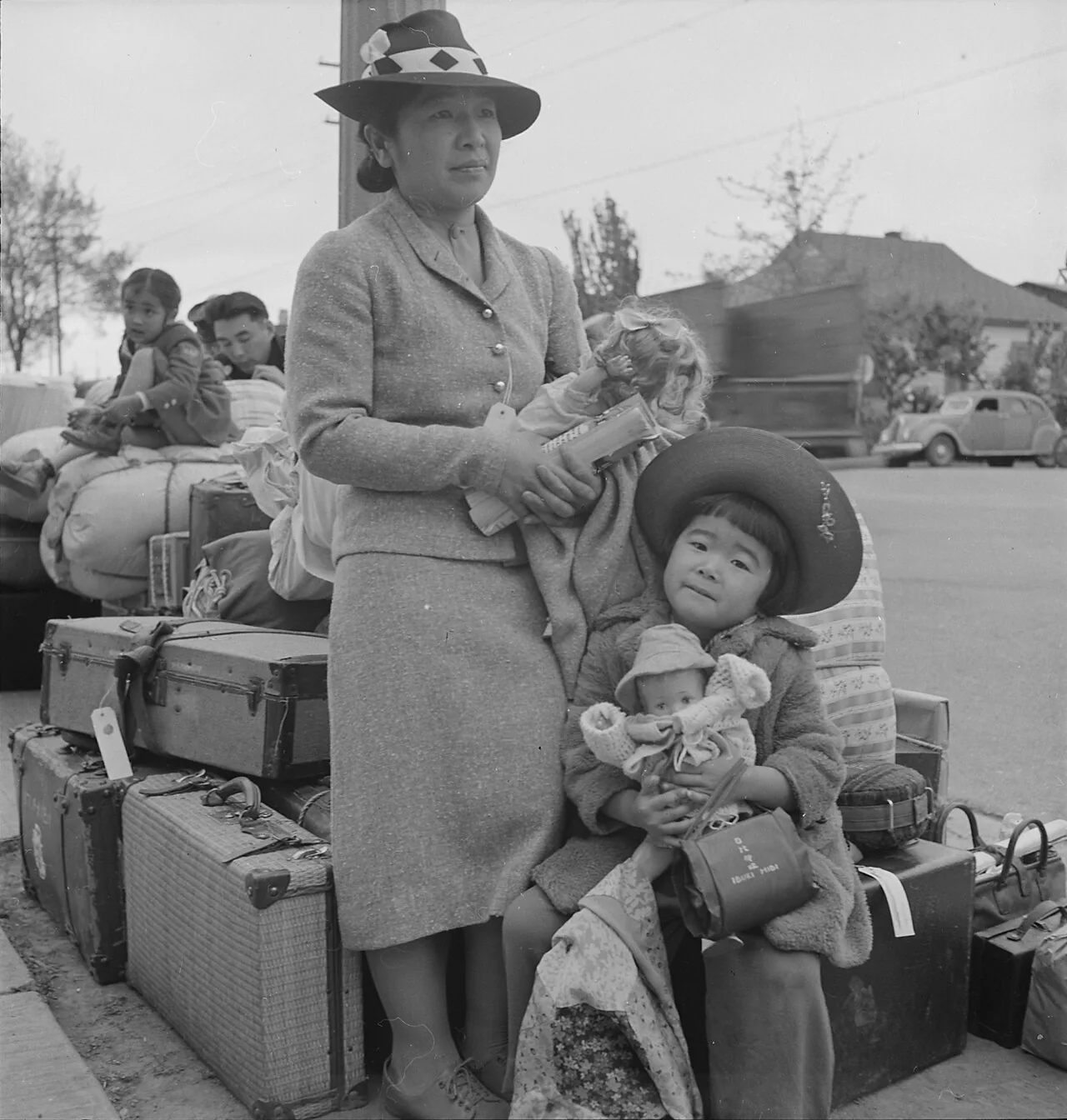
Source: photograph for the War Relocation Authority, May 1942, National Archives.
- Present each document.
- Does the order name any group? How does the text of the order differ from how it was used?
- Describe the photograph.
- Explain two reasons the government gave, and one that historians give, for the removal.
Exercise 11 : Korematsu: the majority and the dissent
Document 13 – Justice Black for the Court, 1944
Compulsory exclusion of large groups of citizens from their homes, except under circumstances of direst emergency and peril, is inconsistent with our basic governmental institutions. But when under conditions of modern warfare our shores are threatened by hostile forces, the power to protect must be commensurate with the threatened danger.
Source: Justice Hugo Black, opinion of the Court, Korematsu v. United States, 323 U.S. 214 (1944); Legal Information Institute, Cornell Law School.
*commensurate: equal in size or degree.
Document 14 – Justice Murphy, dissenting, 1944
I dissent, therefore, from this legalization of racism. Racial discrimination in any form and in any degree has no justifiable part whatever in our democratic way of life. It is unattractive in any setting but it is utterly revolting among a free people who have embraced the principles set forth in the Constitution of the United States.
Source: Justice Frank Murphy, dissenting opinion, Korematsu v. United States, 323 U.S. 214 (1944); Legal Information Institute, Cornell Law School.
*kin: related.
- Present each document.
- What condition does Justice Black set for excluding citizens, and why does he think that it was met?
- What does Justice Murphy mean by “legalization of racism”?
- Compare the reasoning of both justices.
- Explain what happened to the memory of the decision in later years.
Exercise 12 : A child in the mill
Document 15 – Lewis Hine, 1909
Source: Lewis W. Hine, 1909, Library of Congress.
- Present the document (nature, photographer, date, place).
- Describe the girl, her clothing, and the setting.
- Explain Hine’s purpose and how it may have influenced the photograph.
- Name one federal or state result of the campaign against child labor.
Exercise 13 : The Triangle fire
Document 16 – The Asch Building, March 25, 1911
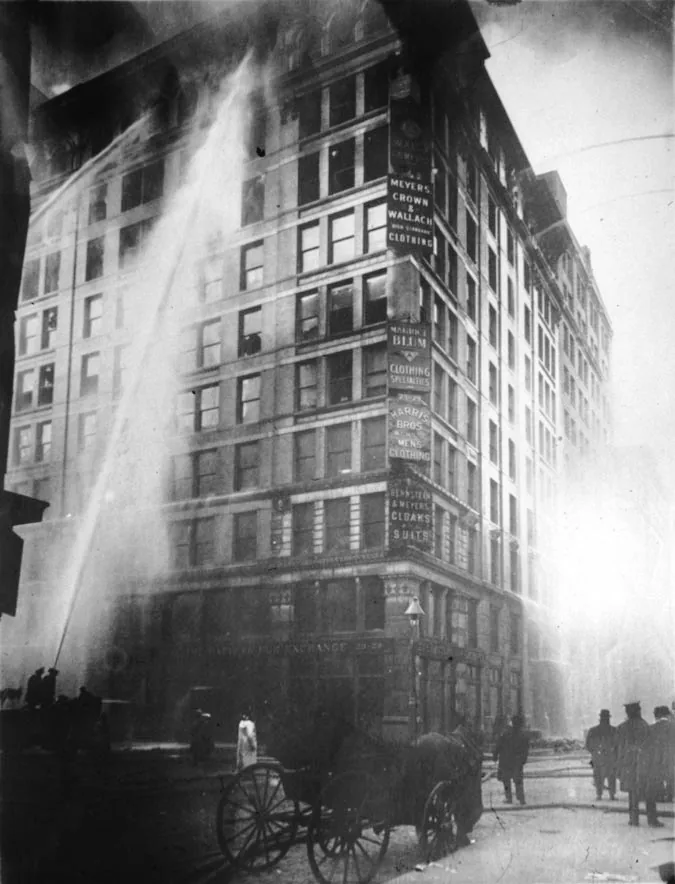
Source: photograph, New York, March 25, 1911.
- Present the document (nature, date, place).
- Describe what you see.
- Explain why so many workers died.
- Explain one legal or political consequence.
Exercise 14 : Wilson asks for war
Document 17 – April 2, 1917
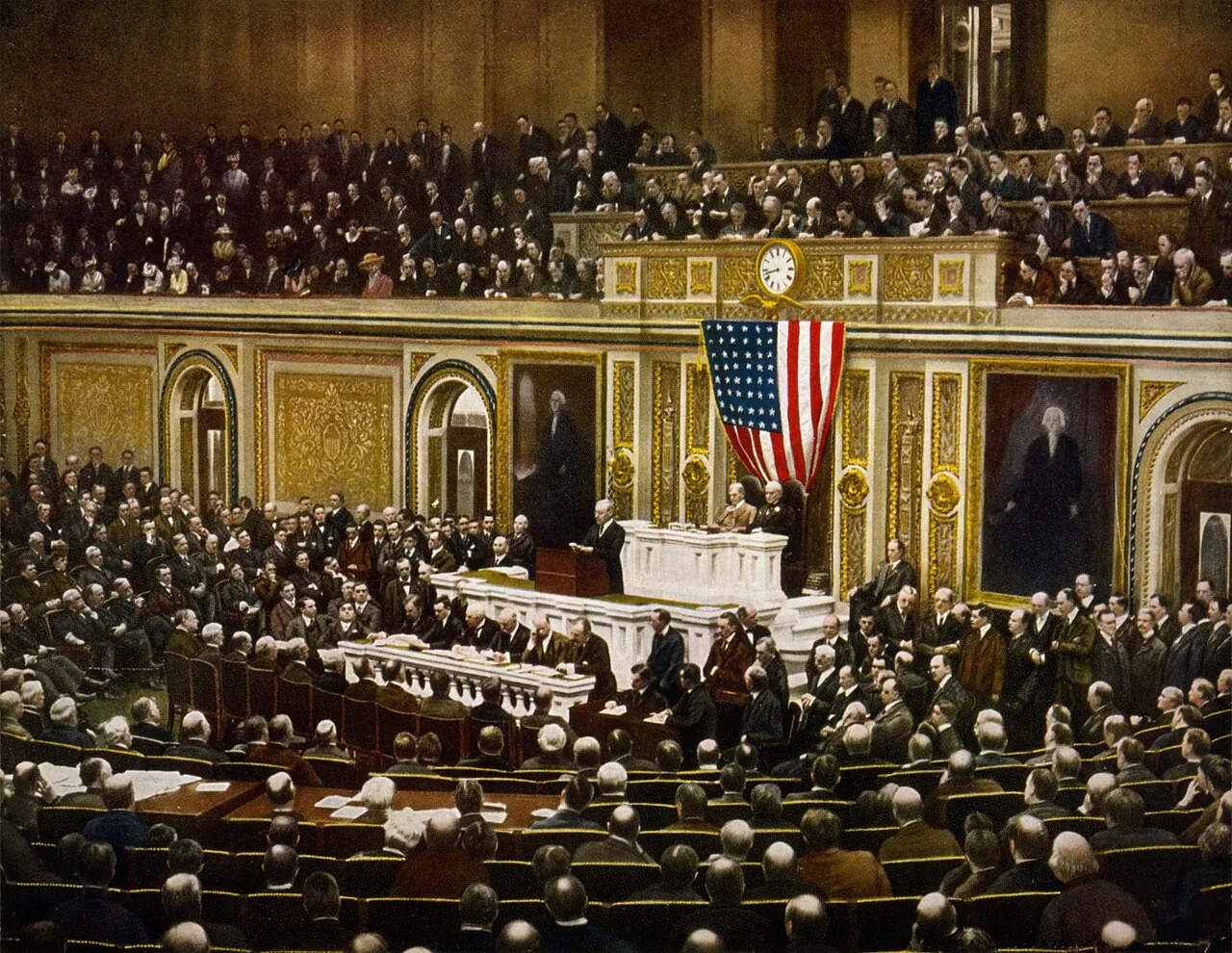
Source: Library of Congress image (colorized), April 2, 1917.
- Present the document (nature, date, place).
- Describe the setting and the people.
- Explain the events that led Wilson to make this request.
- Why did Wilson present the war as a fight for democracy?
Exercise 15 : “Migrant Mother”
Document 18 – Dorothea Lange, 1936
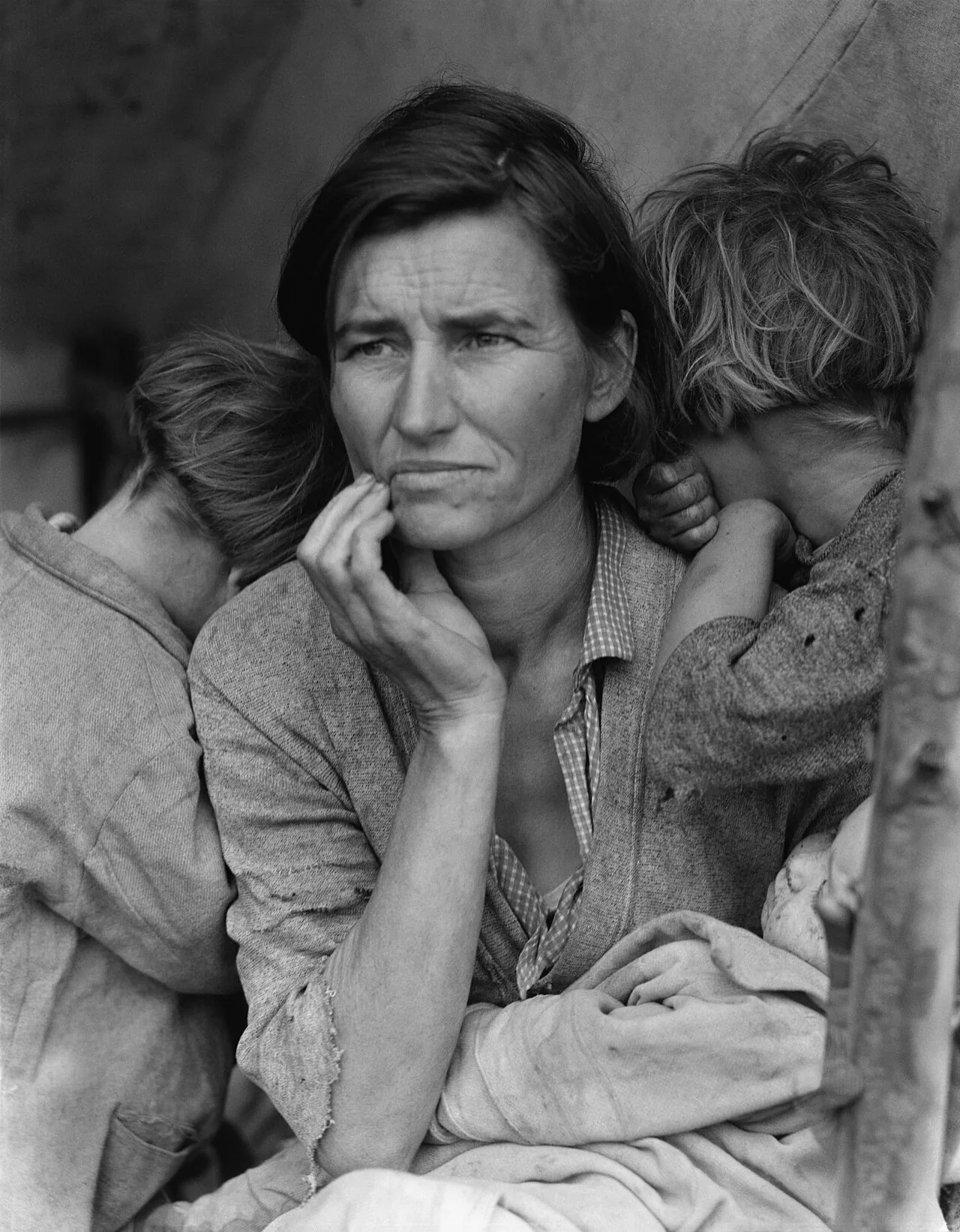
Source: Dorothea Lange, March 1936, Library of Congress.
- Present the document (nature, photographer, date, place).
- Describe the woman and the children and their expressions.
- Explain why the Farm Security Administration hired photographers.
- What does the photograph not tell us?
Exercise 16 : The Dust Bowl
Document 19 – Arthur Rothstein, 1936
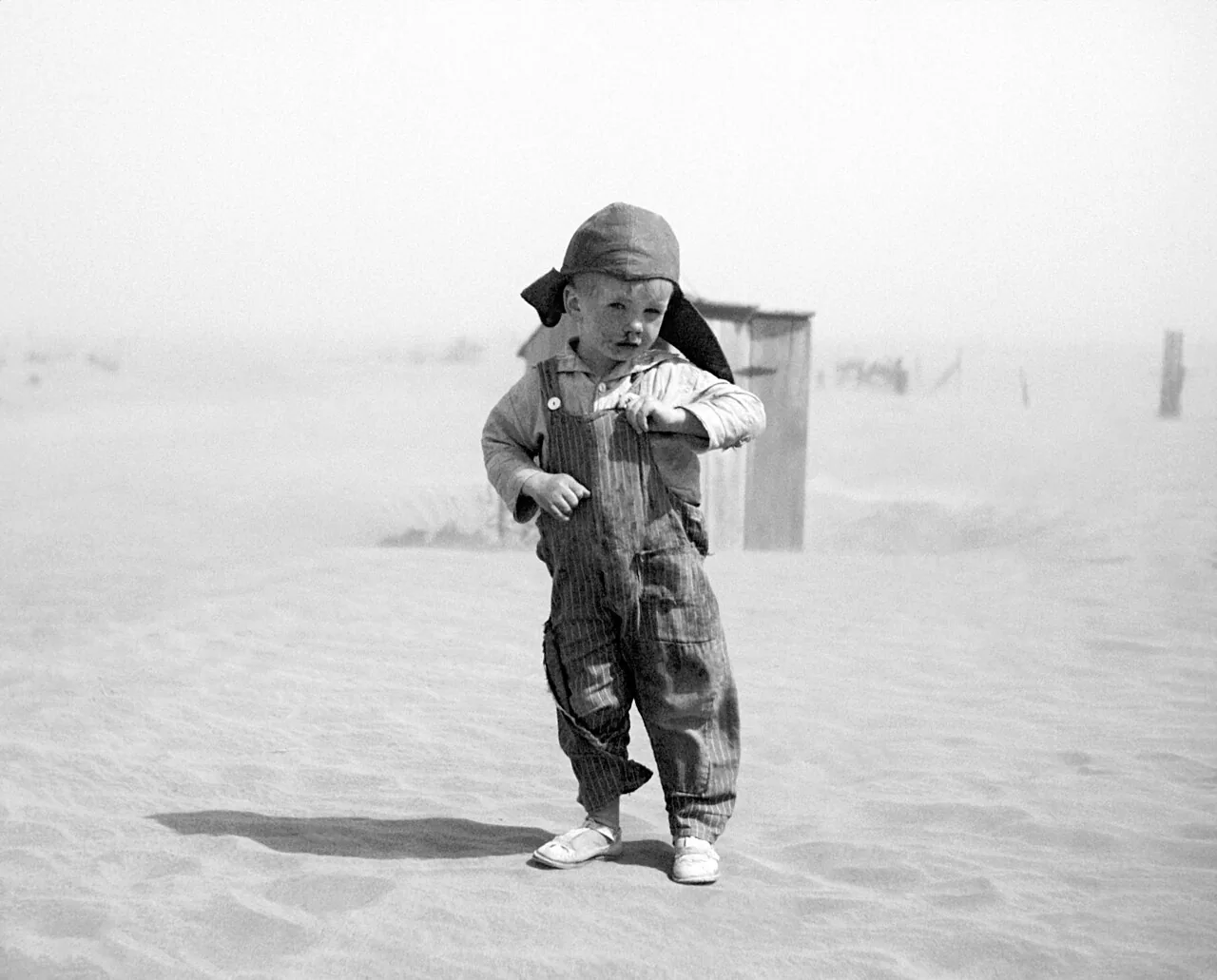
Source: Arthur Rothstein, April 1936, Library of Congress.
- Present the document (nature, photographer, date, place).
- Describe the landscape and the child.
- Explain two causes of the Dust Bowl.
- Explain one effect of the Dust Bowl on population and one government response.
Exercise 17 : Women and the war economy
Document 20 – “We Can Do It!” 1943
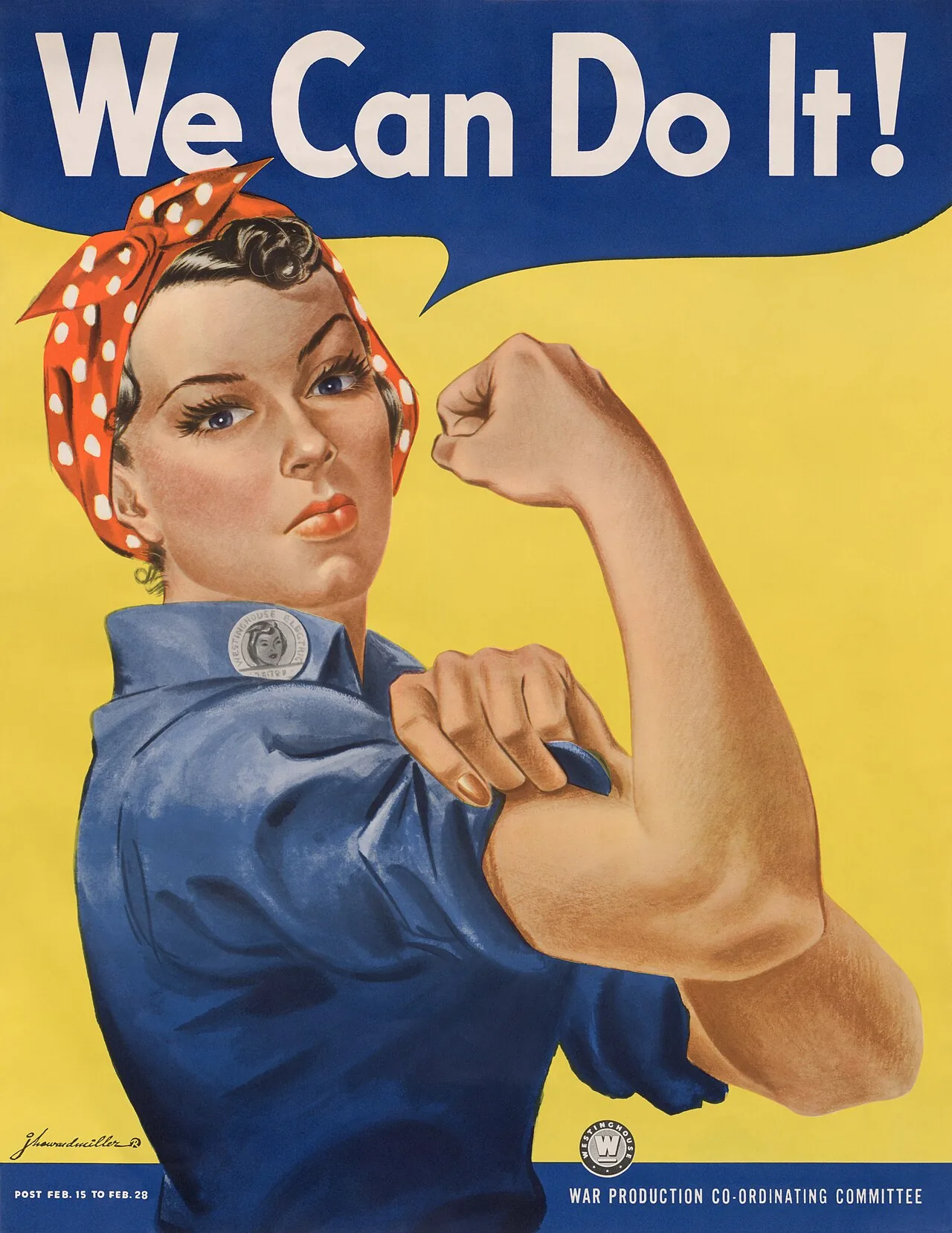
Source: J. Howard Miller, 1943, National Archives.
- Present the document (nature, artist, date, purpose).
- Describe the figure, her clothes, and the slogan.
- What image of working women does the poster promote?
- Explain how World War II changed and did not change the lives of women.
Exercise 18 : Pearl Harbor
Document 21 – The attack, December 7, 1941
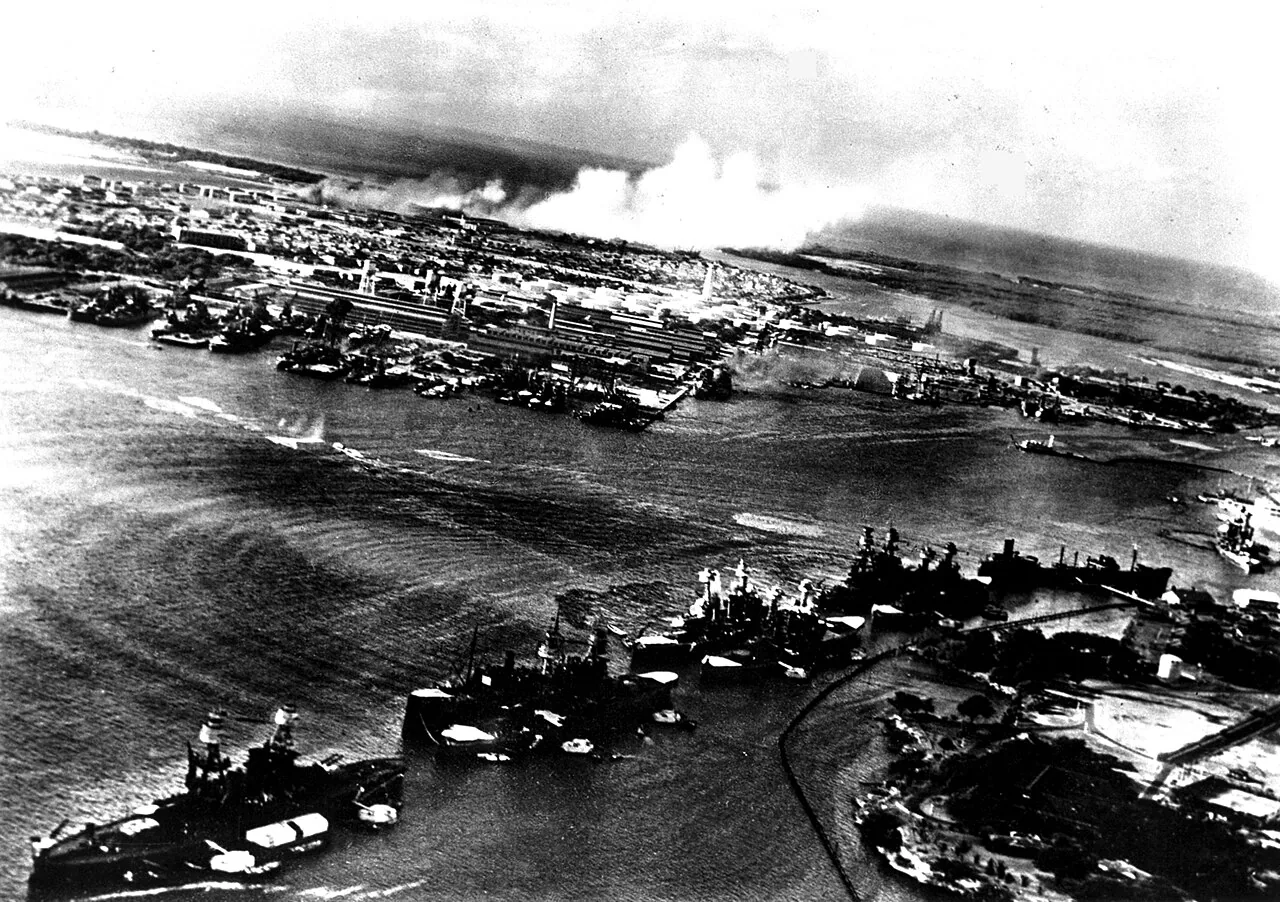
Source: U.S. government photograph, December 7, 1941.
- Present the document (nature, date, place).
- Describe what you see.
- Explain how relations between the United States and Japan worsened between 1937 and 1941.
- What happened in the days after the attack?
Exercise 19 : Reading the population table
Document 22 – Population of the United States
| Year | Population |
|---|---|
| 1900 | 76,212,168 |
| 1910 | 92,228,496 |
| 1920 | 106,021,537 |
| 1930 | 123,202,624 |
| 1940 | 132,164,569 |
Source: U.S. Census Bureau, decennial census counts.
- Calculate the increase in each decade, in millions.
- Which decade shows the smallest increase?
- Give two reasons for it.
- Use the table of key figures in the lesson (1933: 25% unemployment) to explain how the Depression may have affected family decisions.
Exercise 20 : Reading Map 1: U.S. power in the Caribbean
- Which dot marks the Panama Canal, and in what year did the canal open?
- Name two countries that the United States occupied between 1912 and 1934.
- Which territory on the map became a U.S. possession in 1898?
- Explain how the canal made the Caribbean strategically important.
Exercise 21 : Reading Map 3: the war in Europe
- Put the Allied landings numbered 1-4 in chronological order and give each year.
- Which dot marks the largest amphibious invasion of the war?
- What does dot 6 commemorate?
- Explain why Roosevelt and Churchill chose to attack in North Africa and Italy before France.
Exercise 22 : Sequencing Period 7
Put the events in chronological order and then group them in three eras: Progressive Era, 1920s and 1930s, World War II.
- Lend-Lease Act
- Triangle Shirtwaist fire
- Stock market crash
- Selective Service Act
- Social Security Act
- Nineteenth Amendment
- Executive Order 9066
- Meat Inspection Act
Exercise 23 : Durations and turning points
- How many months passed between the sinking of the Lusitania (May 1915) and the declaration of war (April 1917)?
- How many years were there between the stock market crash (1929) and Pearl Harbor (1941)?
- Between the Nineteenth Amendment (1920) and the 1988 apology to Japanese American internees, how many years?
- Which date do you consider the beginning of the modern federal welfare state? Explain in two sentences.
Exercise 24 : Guided research: Dorothea Lange and the FSA
Mini-inquiry: how did the government use photography in the Depression?
- Search with the keywords Farm Security Administration photographs and Dorothea Lange Library of Congress.
- Use reliable sites: the Library of Congress (loc.gov), the National Archives (archives.gov), and the Smithsonian; use Wikipedia only to find sources.
- Fill in a card: the agency, the years, three photographers, three subjects, and the caption of one photograph.
- Write four sentences on the strengths and limits of photographs as evidence.
Exercise 25 : Short answer: the New Deal (SAQ)
Source – Roosevelt’s first inaugural address, 1933
So, first of all, let me assert my firm belief that the only thing we have to fear is fear itself–nameless, unreasoning, unjustified terror which paralyzes needed efforts to convert retreat into advance. […] Our greatest primary task is to put people to work. This is no unsolvable problem if we face it wisely and courageously. It can be accomplished in part by direct recruiting by the Government itself, treating the task as we would treat the emergency of a war, but at the same time, through this employment, accomplishing greatly needed projects to stimulate and reorganize the use of our natural resources.
Source: Franklin D. Roosevelt, First Inaugural Address, March 4, 1933; text from the Avalon Project, Yale Law School.
Answer parts (a), (b), and (c) in complete sentences.
- (a) Identify ONE cause of the Great Depression.
- (b) Explain ONE way in which the New Deal changed the role of the federal government.
- (c) Explain ONE criticism of the New Deal from the 1930s.
Exercise 26 : Stimulus-based multiple choice
Source – Justice Murphy dissenting, 1944
I dissent, therefore, from this legalization of racism. Racial discrimination in any form and in any degree has no justifiable part whatever in our democratic way of life. It is unattractive in any setting but it is utterly revolting among a free people who have embraced the principles set forth in the Constitution of the United States.
Source: Justice Frank Murphy, dissenting opinion, Korematsu v. United States, 323 U.S. 214 (1944); Legal Information Institute, Cornell Law School.
Choose the best answer for each question.
- The excerpt was written in response to
(A) the Court’s approval of the removal of Japanese Americans from the West Coast
(B) the Court’s approval of segregated schools
(C) the Sedition Act
(D) the Palmer raids - Murphy’s argument is most similar to which later development?
(A) the 1988 apology and reparations to Japanese American internees
(B) the passage of the Social Security Act
(C) the passage of the Immigration Act of 1924
(D) the creation of the League of Nations - Which statement best expresses the continuity between this case and Schenck v. United States (1919)?
(A) In both, the Court deferred to claims of national security during war
(B) In both, the Court overturned a federal law
(C) In both, the Court protected the freedom of the press
(D) In both, a state law was at issue
Exercise 27 : DBQ practice: the New Deal and the American people
Prompt: Evaluate the extent to which the New Deal changed the relationship between the federal government and the American people between 1933 and 1941.
Document A – Roosevelt, 1933
So, first of all, let me assert my firm belief that the only thing we have to fear is fear itself–nameless, unreasoning, unjustified terror which paralyzes needed efforts to convert retreat into advance. […] Our greatest primary task is to put people to work. This is no unsolvable problem if we face it wisely and courageously. It can be accomplished in part by direct recruiting by the Government itself, treating the task as we would treat the emergency of a war, but at the same time, through this employment, accomplishing greatly needed projects to stimulate and reorganize the use of our natural resources.
Source: Franklin D. Roosevelt, First Inaugural Address, March 4, 1933; text from the Avalon Project, Yale Law School.
Document B – Migrant Mother, 1936
Source: Dorothea Lange, 1936, Library of Congress.
Document C – Key figures
| Indicator | Figure |
|---|---|
| Unemployment rate, 1933 | about 25% |
| Unemployment rate, 1940 | about 15% |
| Banks failed by 1933 | 9,000 of 25,000 |
Source: as summarized at https://en.wikipedia.org/wiki/Great_Depression.
- For each document, write one sentence of sourcing (purpose or point of view and its effect on usefulness).
- Write a thesis with a line of reasoning.
- Give two pieces of outside evidence.
- Write one sentence of complexity (a counterargument or a limit).
Exercise 28 : LEQ practice: World War I and the federal government
Prompt: Evaluate the extent to which World War I changed the role of the federal government in American life.
- Write a thesis.
- List three pieces of evidence, each a specific fact.
- Explain how each piece supports your thesis.
- Add one sentence that shows continuity or a limit to the change.
Exercise 29 : Who is who? People of Period 7
Identify each person and give one fact about the role he or she played.
- Theodore Roosevelt
- Upton Sinclair
- Woodrow Wilson
- Henry Cabot Lodge
- Franklin D. Roosevelt
- Dorothea Lange
- A. Philip Randolph
- Harry S. Truman
Exercise 30 : True or false? Justify
Decide whether each statement is true or false and correct the false ones.
- The Senate ratified the Treaty of Versailles in 1919.
- The Sixteenth Amendment allowed a federal income tax.
- The Social Security Act was part of the First Hundred Days of 1933.
- Executive Order 9066 applied only to non-citizens.
- The Supreme Court upheld the exclusion of Japanese Americans in Korematsu v. United States.
- In World War II the United States declared war on Germany before Japan attacked Pearl Harbor.


Quick review: flashcards
Tap a card to see the answer.