


This Grade 8 US History to 1877 lesson covers The Age of Jackson and Westward Expansion, part of the unit “A growing nation.” First, read the full lesson with its primary sources, maps and key terms. Then practice with the worksheet, check yourself with the quiz and get ready with the test.
On a cold morning in the winter of 1838, soldiers entered the homes of Cherokee families in Georgia, Tennessee, North Carolina, and Alabama. They had orders to bring people to stockades, with little warning and often with only the clothes they wore. Many families had farms, churches, schools, and a written constitution. Within a year, about 16,000 Cherokee men, women, and children were marched or shipped to the West. About 4,000 of them died on the way or in the camps. This tragedy, called the Trail of Tears, happened in the same years that the United States was celebrating its democracy as never before. It followed laws signed by the president who was the hero of the common man.
Guiding question: How could the United States become more democratic for many white men in the age of Jackson, while Native nations were forced from their homelands and the nation pushed its borders to the Pacific?
1. The age of Jackson (1829-1837)
The election of 1828
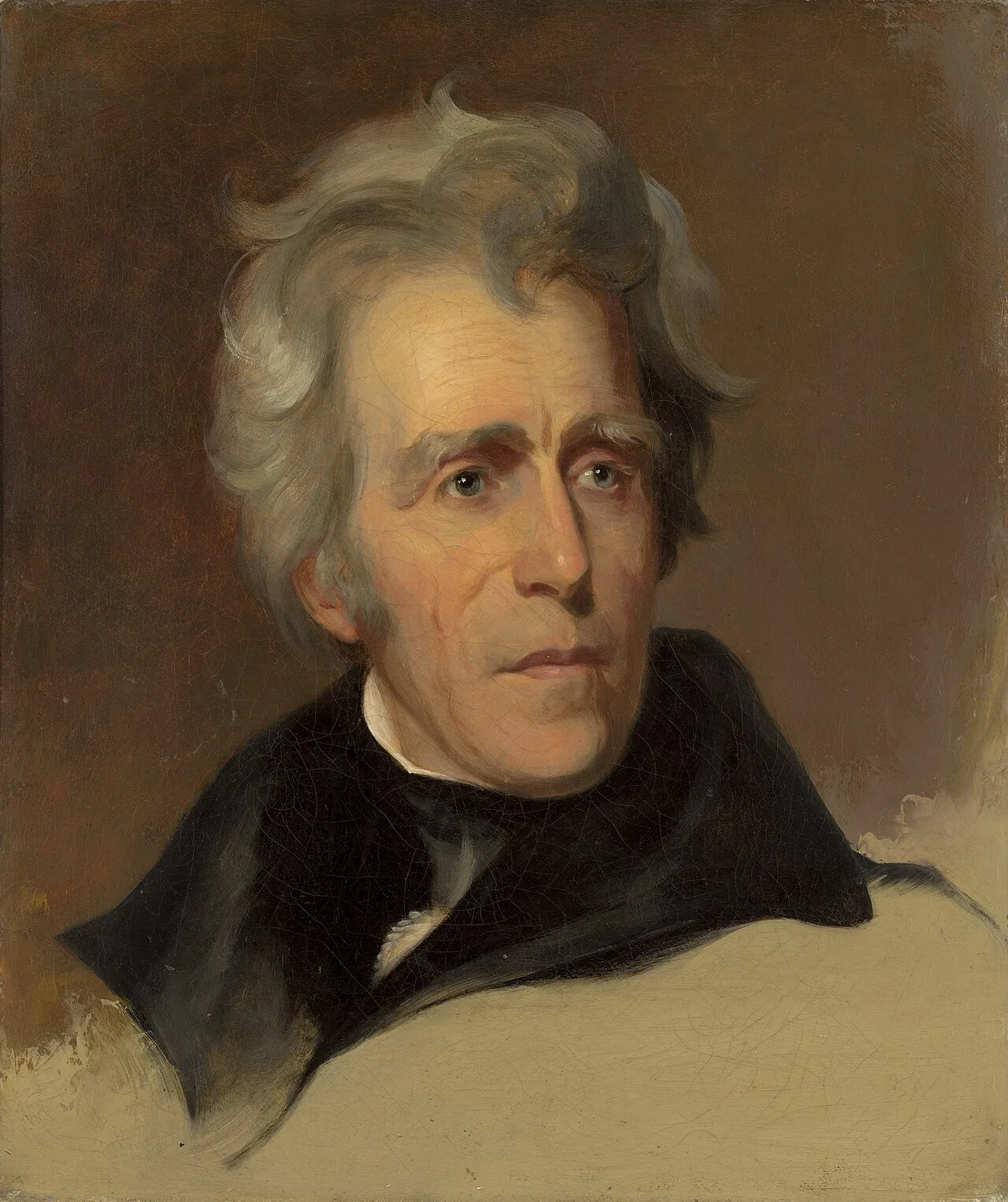
Andrew Jackson was born in the Carolina backcountry in 1767. A lawyer, planter, and general, he became a national hero when his troops defeated the British at New Orleans in January 1815. In the election of 1824 he won the most popular and electoral votes. However, no candidate had a majority. As a result, the House of Representatives chose John Quincy Adams.
Jackson’s supporters said that a “corrupt bargain” had cheated him, and they spent four years organizing the Democratic Party. In 1828 Jackson defeated Adams easily. The vote showed a change. During the 1820s, most states dropped the rule that a man had to own property to vote. As a result, the number of voters increased sharply, from about 360,000 in 1824 to about 1.1 million in 1828.
Definition: Jacksonian democracy
the expansion of political participation for white men, and the idea that ordinary citizens, not just wealthy and educated elites, should take part in government. It did not include women, enslaved people, most free Black men, or Native Americans.
It is important to be exact about what this democracy meant. White men gained power, but other people lost ground. In several states, free Black men who had been able to vote lost that right in these years. Women could not vote, hold office, or, in most states, control property after marriage. Enslaved people, about two million of them by 1830, had no political rights at all. Jackson called himself the champion of the common people, and his supporters celebrated the first president from the West. Yet he was also a wealthy slaveholder who owned the Hermitage plantation in Tennessee.
The president in office
Jackson held that the president, as the only official elected by all the voters, spoke for the people. He used the veto more than all earlier presidents together. He also rewarded his supporters with government jobs, a practice his opponents called the spoils system, after the saying “to the victor belong the spoils.” Jackson defended it as rotation in office, a way to keep government close to the people.
Two crises showed the limits of his power. The first was the nullification crisis. In 1828 Congress had passed a high tariff on imported goods, which Southerners called the “Tariff of Abominations.” Vice President John C. Calhoun of South Carolina argued that a state could declare a federal law null and void within its borders. In November 1832 South Carolina voted to nullify the tariffs of 1828 and 1832. Jackson, who loved the Union, replied with a proclamation that nullification was treason in effect. He also asked Congress for a Force Bill that allowed him to use the army. Henry Clay then arranged a compromise tariff in 1833 that lowered rates over time, and South Carolina backed down.
The Bank War
The second crisis was the Bank War. Jackson distrusted the Second Bank of the United States. He saw it as a privileged institution that served wealthy bankers and merchants. In July 1832 he vetoed the bill to renew its charter, four years before it was due to expire. He won re-election that fall against Clay. Then he moved federal funds from the Bank to state banks, which his enemies called “pet banks.” The Bank closed as a national institution when its charter ended in 1836. Without it, the country had no central control over lending. Many historians believe that this helped to cause the Panic of 1837, a severe depression that struck just after Jackson left office.
Document 1 – Jackson vetoes the Bank
It is to be regretted that the rich and powerful too often bend the acts of government to their selfish purposes. Distinctions in society will always exist under every just government. Equality of talents, of education, or of wealth can not be produced by human institutions. In the full enjoyment of the gifts of Heaven and the fruits of superior industry, economy, and virtue, every man is equally entitled to protection by law; but when the laws undertake to add to these natural and just advantages artificial distinctions, to grant titles, gratuities, and exclusive privileges, to make the rich richer and the potent more powerful, the humble members of society-the farmers, mechanics, and laborers-who have neither the time nor the means of securing like favors to themselves, have a right to complain of the injustice of their Government.
Source: President Andrew Jackson, veto message regarding the Bank of the United States, July 10, 1832; text from the Avalon Project, Yale Law School.
*potent: powerful. *gratuities: gifts. *mechanics: skilled workers.
Commentary. The veto message shows Jackson at his most popular. He addresses the “humble members of society” (farmers, mechanics, and laborers). He says that government should give equal protection to everyone, like rain falling on all alike. His opponents said that he was abusing the veto and misreading the Constitution. After all, the Supreme Court had already held the Bank constitutional in McCulloch v. Maryland (1819). The message was also a campaign document, written to appeal to voters just before an election.
Document 2 – The president
Source: National Gallery of Art, Washington, D.C. (image on Wikimedia Commons).
2. Indian Removal
Definition: Indian removal
the policy of the United States government, begun in the 1820s and carried out under Jackson and his successors, of moving Native nations from lands in the East to land west of the Mississippi River. It often relied on treaties signed under pressure, and sometimes on force.
The Cherokee and the Southeast
In the early 1800s five large Native nations lived in the Southeast: the Cherokee, Choctaw, Chickasaw, Creek, and Seminole. White Americans of the time called them the “Five Civilized Tribes.” This name reflected the settlers’ own idea that these nations had adopted farming, written laws, and Christianity. In fact all of them had developed their own governments and economies long before. The Cherokee are the best-known example.
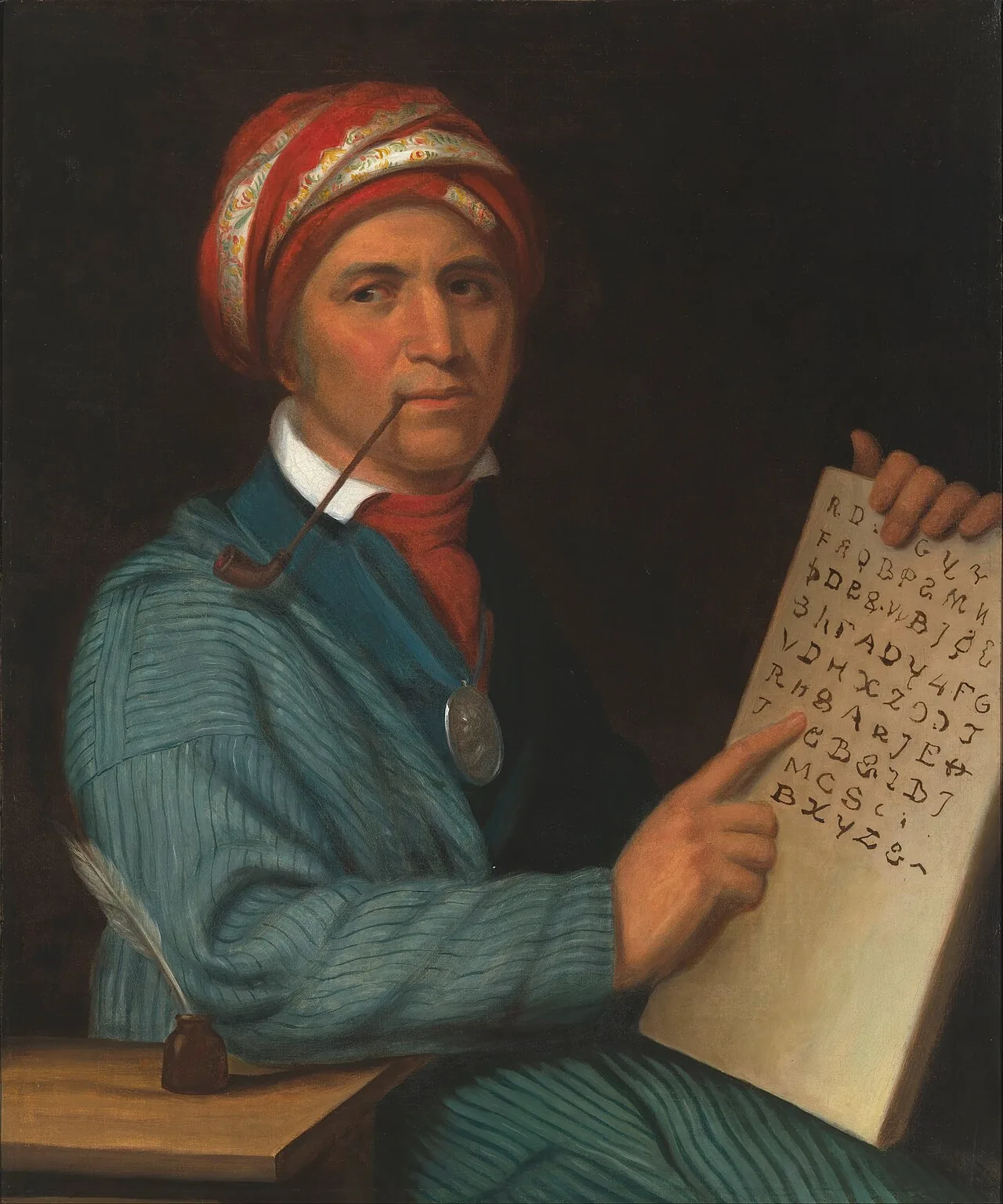
A silversmith named Sequoyah, who could not read English, created a writing system for Cherokee in the 1820s, with 85 symbols for syllables. Within a few years, thousands of Cherokee could read and write in their own language. In 1827 the Cherokee wrote a constitution, with a capital at New Echota in Georgia. Then, in 1828, they began a newspaper, the Cherokee Phoenix, in both Cherokee and English.
Document 3 – A nation reads its own language
Source: Smithsonian American Art Museum (image on Wikimedia Commons).
Settlers and state governments wanted the land. Georgia claimed that the Cherokee lands in the northwest of the state belonged to it. In 1828-1829 it passed laws that declared Cherokee laws void and forbade Cherokee to testify against white people in court. Gold was found in Cherokee territory in 1829, and thousands of miners and farmers moved in. The Cherokee refused to leave and appealed to Congress and to the courts.
The Removal Act and the courts
Jackson sided with the states. In his first annual message he proposed that the nations of the Southeast be moved west of the Mississippi River. Congress passed the Indian Removal Act, which Jackson signed on May 28, 1830, by a close vote in the House (102 to 97). The law did not order removal. It gave the president the power to exchange land in the West for Native lands in the East, with nations that agreed to move. In practice, however, the pressure on the nations to sign treaties was enormous.
Document 4 – The president defends removal
Humanity has often wept over the fate of the aborigines of this country, and Philanthropy has been long busily employed in devising means to avert it, but its progress has never for a moment been arrested, and one by one have many powerful tribes disappeared from the earth. To follow to the tomb the last of his race and to tread on the graves of extinct nations excite melancholy reflections. But true philanthropy reconciles the mind to these vicissitudes as it does to the extinction of one generation to make room for another.
Source: President Andrew Jackson, Second Annual Message to Congress (second State of the Union address), December 6, 1830; text from Wikisource.
*aborigines: original inhabitants. *vicissitudes: changes of fortune. *philanthropy: concern for others.
Document 5 – The Cherokee reply
But now the scene has changed. The strength of the red man has become weakness. As his neighbors increased in numbers, his power became less and less, and now, of the many powerful tribes who once covered these United States, only a few are to be seen—a few whom a sweeping pestilence has left. The Northern tribes, who were once so numerous and powerful, are now nearly extinct. Thus it has happened to the red man of America. Shall we, who are remnants, share the same fate?
Source: Memorial of the Cherokees to the Senate and House of Representatives of the United States, 1829 (English text), National Archives, Records of the U.S. House of Representatives; text from Wikisource.
*pestilence: epidemic disease. *remnants: what is left.
Commentary. The two documents were written within a year of each other and show opposite points of view. Jackson speaks of removal as the sad but natural result of progress. He uses the language of kindness (“true philanthropy”) to justify the policy. The Cherokee memorial reminds Congress of the early friendship between the colonists and the Native nations. It also asks a question that the government never answered: whether the Cherokee, who had been kind to the newcomers, will now share the fate of the nations of the North. Neither document tells the whole story, because both were written to persuade. Still, together they show how the Cherokee argued for their rights in the language of treaties and law.
The Cherokee in court
The Cherokee went to court. In Worcester v. Georgia (1832), the Supreme Court, with Chief Justice Marshall writing, held that the Cherokee nation was a distinct political community. The laws of Georgia had no force there. But Georgia ignored the ruling, and Jackson did not enforce it. Some Cherokee leaders, including Major Ridge and Elias Boudinot, decided that resistance was hopeless and that a treaty was the only way to protect their people.
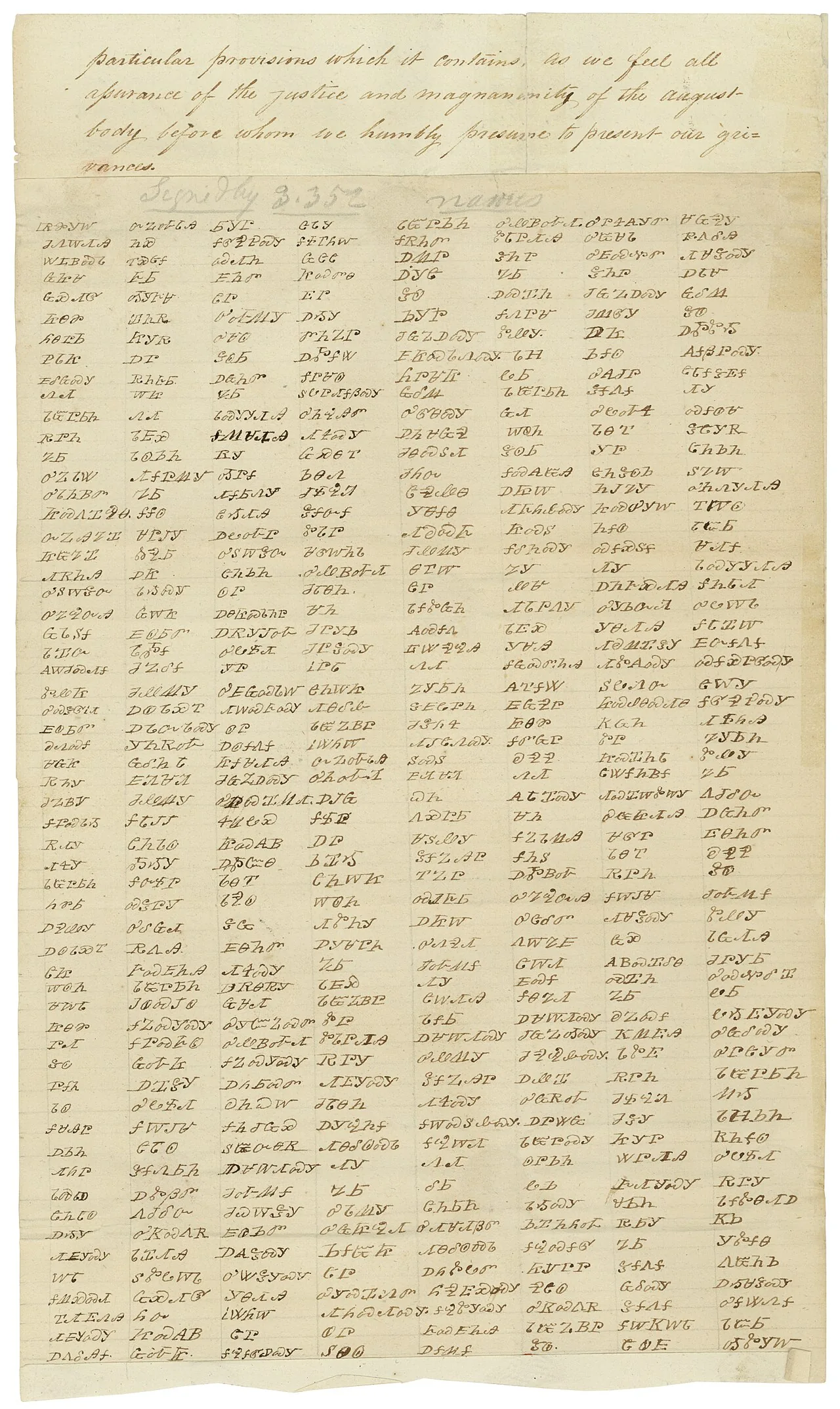
In December 1835, they and a small group signed the Treaty of New Echota. In it the Cherokee gave up their lands in the East for $5 million and new land in the West. The principal chief, John Ross, and the great majority of Cherokee rejected the treaty and sent a petition with some 16,000 signatures to Congress. The Senate ratified the treaty by a single vote in 1836.
Document 6 – A protest with 16,000 names
Source: National Archives and Records Administration, via Wikimedia Commons.
The Trail of Tears
The other nations had already been moved. The Choctaw signed the Treaty of Dancing Rabbit Creek in 1830 and were removed in 1831-1833. The Creek, after a treaty in 1832 and a short war in 1836, were removed in 1836-1837. The Chickasaw followed in 1837-1838. The Seminole in Florida, led by Osceola among others, fought the Second Seminole War (1835-1842), and many remained in the Everglades. By 1838, the Cherokee were the largest nation left in the Southeast. The Cherokee had not left by the deadline of May 1838. Therefore, President Martin Van Buren sent General Winfield Scott and about 7,000 soldiers to carry out the treaty.
Document 7 – The general and the council
The President of the United States has sent me with a powerful army to cause you, in obedience to the treaty of 1835, to join that part of your people who are already established on the other side of the Mississippi. Unhappily the two years which were allowed for the purpose you have suffered to pass away without following, and without making any preparation to follow; and now, or by the time that this solemn address shall reach your distant settlements, the emigration must be commenced in haste, but I hope without disorder. I have no power, by granting a further delay, to correct the error that you have committed. The full-moon of May is already on the wane, and before another shall have passed away every Cherokee man, woman, and child in those States must be in motion to join their brethren in the West.
Source: General Winfield Scott, proclamation “To the Cherokee people remaining in North Carolina, Georgia, Tennessee, and Alabama,” May 1838, as quoted in Helen Hunt Jackson, A Century of Dishonor (1881), chapter 8; text from Wikisource.
*emigration: here, removal to the West. *brethren: brothers.
Commentary. Scott’s proclamation is polite in tone, but its message is clear: resistance is useless, and the Cherokee must go. Helen Hunt Jackson, a writer who in 1881 published a book protesting the treatment of Native Americans, preserved it, together with the Cherokee council’s reply. Remember that this text comes from the side of the army, even when it speaks kindly.
The soldiers gathered the Cherokee in camps, where thousands got sick. Then they set out in groups of about a thousand. Some went by river on steamboats. Most, however, walked about 800 miles, through Tennessee, Kentucky, southern Illinois, and Missouri, to the Indian Territory, in what is now Oklahoma. They crossed the Mississippi in winter. Hunger, cold, and diseases such as dysentery killed about 4,000, which is about one in four. The Cherokee called the journey Nunna daul Isunyi, “the trail where they cried,” and the English name Trail of Tears came from it.
3. Expansion to the Pacific
Manifest Destiny
By the 1840s many Americans believed that the United States was meant to spread across the continent. In 1845 a New York journalist, John L. O’Sullivan, gave the idea a name in an article about Texas.
Document 8 – Where the phrase came from
the manner in which other nations have undertaken to intrude themselves into it, between us and the proper parties to the case, in a spirit of hostile interference against us, for the avowed object of thwarting our policy and hampering our power, limiting our greatness and checking the fulfilment of our manifest destiny to overspread the continent allotted by Providence for the free development of our yearly multiplying millions.
Source: John L. O’Sullivan, “Annexation,” United States Magazine and Democratic Review, July-August 1845; text from Wikisource.
*intrude: force oneself in. *Providence: God or fate.
Commentary. O’Sullivan’s phrase, Manifest Destiny, stated that Americans had a God-given right to spread across the continent. He used it to argue against British and French interference in the question of Texas. Supporters used it to justify annexation, war, and settlement. Critics, including many Whigs and abolitionists, said that it was an excuse for taking land from Mexico and Native nations and for extending slavery. Note the word “allotted”: the argument claims that the land was already assigned to Americans.
Definition: annexation
the act of adding a territory or a state to a country. Texas, an independent republic from 1836, was annexed by the United States in 1845.
Texas, Oregon, and war with Mexico
In the 1820s Mexico, newly independent from Spain, invited American settlers to Texas, which was then part of Mexico. Stephen F. Austin brought the first group in 1821-1822. By the 1830s, thousands of Anglo-American settlers, many of them bringing enslaved people, lived in Texas. Mexico, however, had abolished slavery in 1829 and tried to limit immigration. Tensions grew, and in 1835 war broke out. Texans declared independence on March 2, 1836.
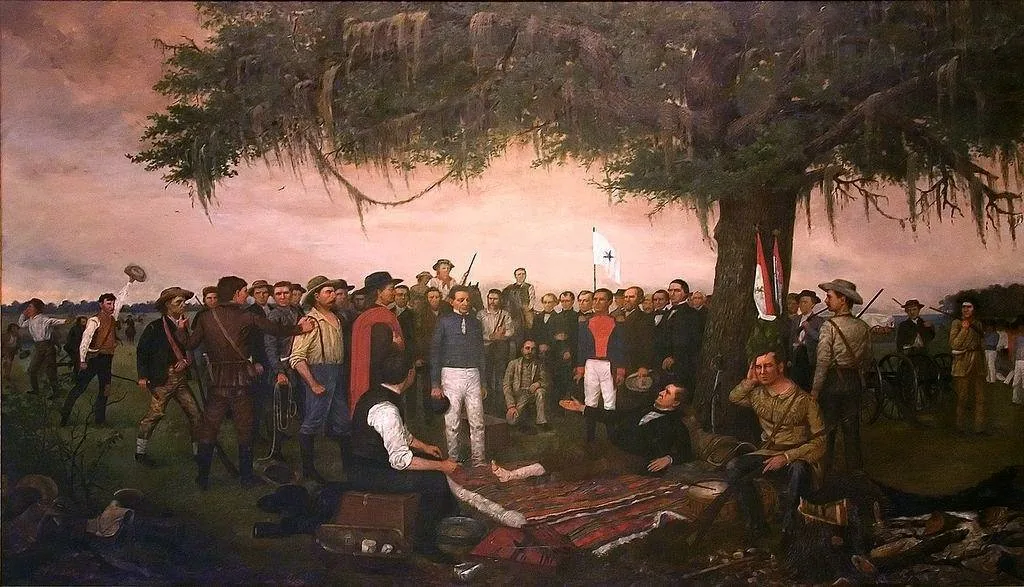
A Mexican army under General Antonio Lopez de Santa Anna took the Alamo mission on March 6 and killed its defenders, among them Davy Crockett and James Bowie. Six weeks later, on April 21, the Texans under Sam Houston defeated and captured Santa Anna at San Jacinto. Texas became an independent republic. Texans wanted to join the United States, but the question of slavery delayed annexation until 1845.
Document 9 – The victory at San Jacinto
Source: Texas State Capitol (image on Wikimedia Commons).
Polk and the Oregon Country
President James K. Polk, elected in 1844 on a promise of expansion, completed the process. Texas entered the Union in December 1845. In the north, Britain and the United States had shared the Oregon Country since 1818. Polk compromised, and the Oregon Treaty of 1846 set the border at the 49th parallel. Families in covered wagons were already traveling the Oregon Trail, about 2,000 miles from Missouri to the Willamette Valley in Oregon. Mormon pioneers led by Brigham Young reached the Great Salt Lake in 1847, seeking religious freedom.
The Mexican-American War
Mexico had never recognized Texas independence. The two countries also disagreed about the southern border of Texas: the United States claimed the Rio Grande, Mexico said it was the Nueces River, farther north. In 1846 Polk sent troops into the disputed ground. After a clash with Mexican cavalry, Congress declared war in May 1846. The Mexican-American War lasted until 1848. American forces took New Mexico and California and, under General Winfield Scott, captured Mexico City in September 1847. Some Americans, including a young congressman named Abraham Lincoln and the author Henry David Thoreau, opposed the war as an unjust attack on a weaker neighbor.
By the Treaty of Guadalupe Hidalgo, signed on February 2, 1848, Mexico gave up its claims to Texas north of the Rio Grande. It also ceded California and the Southwest, the Mexican Cession, an area of more than half a million square miles. The United States paid Mexico $15 million. A few years later, in 1853, the Gadsden Purchase added a strip of land in the south of present-day Arizona and New Mexico. It cost $10 million. Gold was discovered at Sutter’s Mill in California in January 1848, just before the treaty was signed. Then the Gold Rush of 1849 brought some 80,000 people to California in a single year.
Document 10 – The treaty and the people
Mexicans now established in territories previously belonging to Mexico, and which remain for the future within the limits of the United States, as defined by the present treaty, shall be free to continue where they now reside, or to remove at any time to the Mexican Republic, retaining the property which they possess […] Those who shall prefer to remain in the said territories may either retain the title and rights of Mexican citizens, or acquire those of citizens of the United States.
Source: Treaty of Guadalupe Hidalgo, Article VIII, February 2, 1848; text from the Avalon Project, Yale Law School.
*remove: move away.
Commentary. The treaty promised that the Mexican people who lived in the ceded land could stay and become American citizens, with their property protected. In practice, many lost their land through lawsuits, taxes, and violence. Native nations in the area were not parties to the treaty at all. The expansion also brought the question of slavery in the new territory to the center of national politics, as the next chapter shows.
4. Why this period matters
The years from 1828 to 1853 are a mixture of promise and injustice. Voting and politics opened to more white men, while rights shrank for others. The Constitution was tested by nullification and in the courts, and the Union held. The country spread from the Atlantic to the Pacific, and the new land would bring the nation closer to a crisis over slavery. The Native nations of the East were removed from their homelands. The Cherokee, who had organized a state in the same form as the American one, are the clearest example of how law could be set aside. To judge this period well, a historian must hold both parts of the story together.
- 1828 Jackson elected; Tariff of Abominations; Cherokee Phoenix begins
- 1830 Indian Removal Act
- 1832 Bank veto; Worcester v. Georgia; nullification crisis begins
- 1835 Treaty of New Echota; Texas war begins
- 1836 Alamo; San Jacinto; Texas independence
- 1838-1839 Trail of Tears
- 1845 Texas annexed; “Manifest Destiny” named
- 1846 Oregon Treaty; war with Mexico begins
- 1848 Treaty of Guadalupe Hidalgo; gold found in California
- 1853 Gadsden Purchase
Key takeaways
- Jacksonian democracy widened the vote for white men but excluded women, enslaved people, most free Black men, and Native Americans.
- Jackson vetoed the Bank in 1832, and faced the nullification crisis, which ended in a compromise.
- The Indian Removal Act (1830) led to the removal of the Choctaw, Creek, Chickasaw, Cherokee, and others; the Cherokee Trail of Tears (1838-1839) killed about 4,000.
- The Supreme Court held in Worcester v. Georgia (1832) that Georgia could not rule the Cherokee, but the ruling was not enforced.
- Manifest Destiny was the belief that Americans were meant to spread across the continent; it was used to justify expansion.
- Between 1845 and 1848 the United States annexed Texas, divided Oregon with Britain, and gained the Mexican Cession, reaching the Pacific.

Quick review: flashcards
Tap a card to see the answer.