


This Grade 7 Medieval and Early Modern World lesson covers The Americas: Maya, Aztec and Inca, part of the unit “A new age.” First, read the full lesson with its primary sources, maps and key terms. Then practice with the worksheet, check yourself with the quiz and get ready with the test.
When the Spanish soldier Bernal Díaz first saw the Valley of Mexico in November 1519, he thought he was dreaming. Before him lay a lake dotted with cities, long straight roads across the water, and white temples rising out of the lake. A few years later, other Spaniards climbed into the Andes and found a road system, stone fortresses, and storehouses stretching over thousands of miles. Long before Columbus, the peoples of the Americas had built cities, calendars, writing systems, and empires. This chapter follows three of the best known: the Maya, the Aztec, and the Inca.
Guiding question: How did the Maya, the Aztec, and the Inca build complex societies in the Americas, and why did the Aztec and Inca empires fall to a handful of Spaniards?
1. The Maya: city-states of the rainforest
Cities and kings
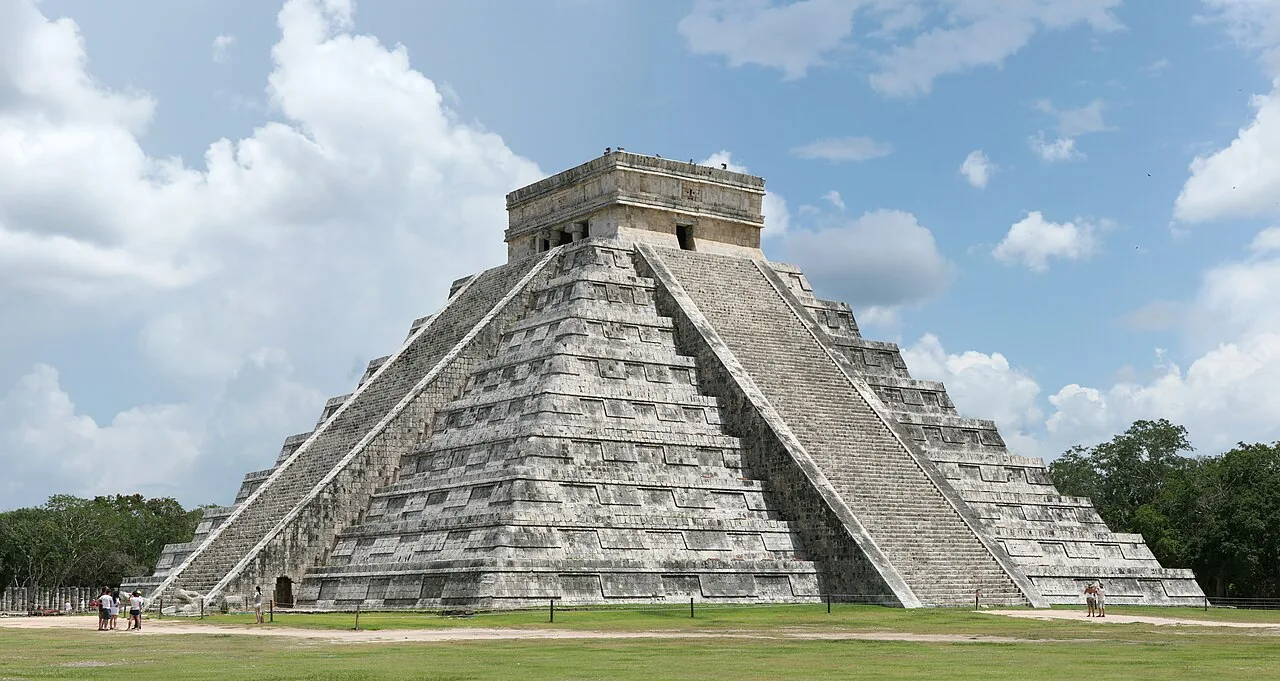
The Maya lived in what is now southern Mexico, Guatemala, Belize, and parts of Honduras and El Salvador. Their civilization began to build large stone cities by about 250 CE, the start of what historians call the Classic period. The Maya never formed one empire. They lived in independent city-states such as Tikal, Palenque, Copan, and Calakmul, each ruled by a king who claimed to be descended from the gods. Kings fought wars, took prisoners, and made alliances through marriage. Tikal grew to perhaps 50,000 or more people, with great pyramids, plazas, and a ball court.
Definition: City-state
A city and the farmland around it that has its own government and is not part of a larger state. The Maya, like the ancient Greeks, were divided into many city-states.
Maya farmers grew maize, beans, and squash on fields in the forest. In dry places they dug reservoirs; in wet places they raised fields. Maize was so important that the Maya told in their sacred book, the Popol Vuh, how the gods made people from maize.
Writing, numbers, and the calendar
The Maya were the only people of the Americas to develop a complete writing system, in which carved signs stand for words and syllables. They carved texts on stone monuments and painted books of bark paper, called codices, though the Spanish destroyed most of them. Maya scholars used a number system based on twenty, with a sign for zero, and tracked the movements of the Sun, the Moon, and Venus. They kept a 365-day calendar and a 260-day ritual calendar. Maya astronomers could predict eclipses.
In the 800s and 900s the cities of the southern lowlands were abandoned one after another. Historians point to a mix of causes: long droughts, overuse of the land, and constant war among the city-states. The Maya did not disappear. Millions of Maya people still live in the region, and in the north, cities such as Chichen Itza and later Mayapan flourished until the Spanish arrived.
2. The Aztec: an empire built on tribute
The island city
The Aztec, who called themselves the Mexica, were a people from the north who came into the Valley of Mexico in the 1200s. According to their own tradition, a god told them to settle where they saw an eagle perched on a cactus. They saw it on a marshy island in Lake Texcoco, and about 1325 they founded Tenochtitlan there. The Mexica built causeways to the shore, drained marsh, and made small, rich farming plots called chinampas, or floating gardens, by piling mud and plants into the shallows of the lake. Chinampas gave several harvests a year and fed a huge city.
Definition: Chinampa
A small, man-made garden plot built in a shallow lake by layering mud and plant matter, then planting crops in it. Chinampas were very productive and fed Tenochtitlan.
Document 1 – The founding of Tenochtitlan
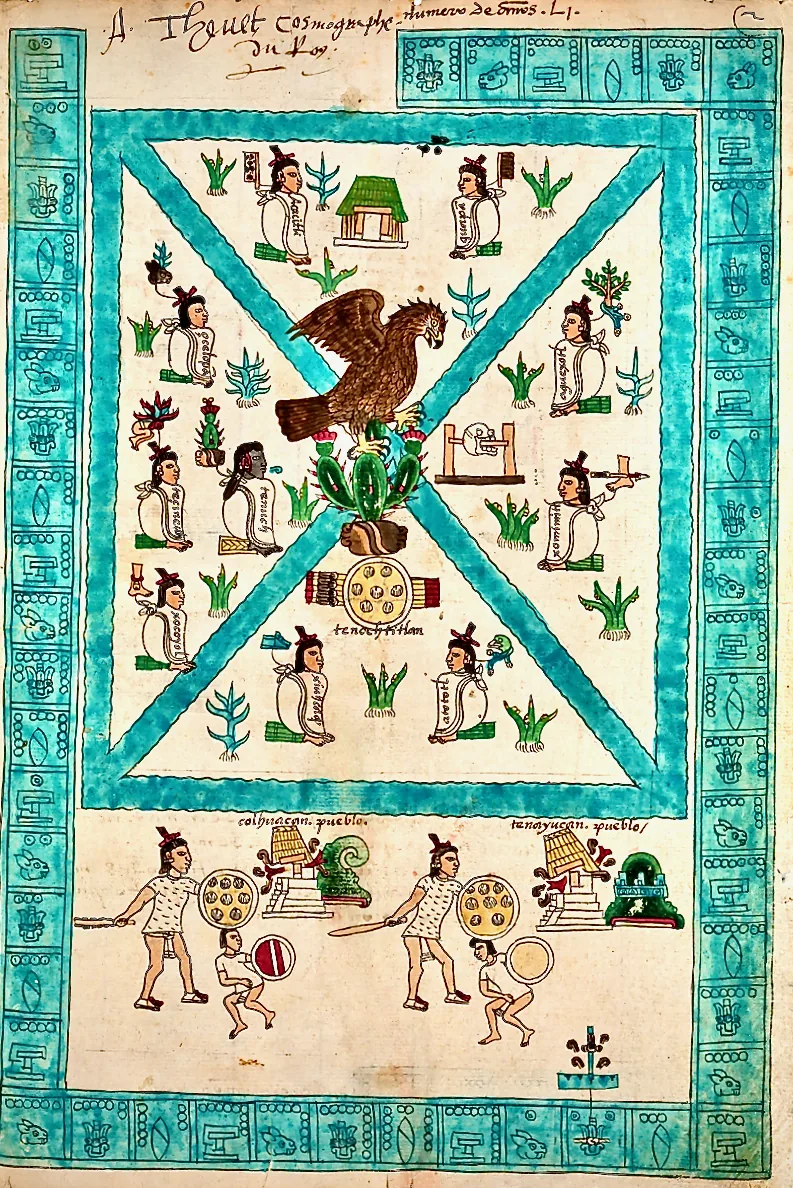
Commentary. This page is the first of the Codex Mendoza, a book made about 1541 by Aztec painters, working for the Spanish viceroy, who wanted a record of the Aztec state to send to King Charles V. At the center, an eagle sits on a cactus growing from a rock, the sign of the city. The blue cross divides the island into four quarters. Ten men sit around it as the city’s founders. Below, two warriors burn temples to show early Aztec conquests. Because Spaniards ordered and annotated the book, historians use it with care, but the pictures are in the Aztec style and come from Aztec memory.
The Triple Alliance
In 1428 Tenochtitlan joined with Texcoco and Tlacopan in a Triple Alliance, which defeated the powerful neighbor Azcapotzalco and then conquered much of central and southern Mexico. By 1519 the empire covered roughly the area shown in orange on the map and included millions of people. The Aztec did not rule these people directly. Most conquered towns kept their own rulers but had to pay tribute in maize, cotton cloth, cacao beans, feathers, and gold, and to send soldiers when asked. Resentment of the heavy demands was one reason many peoples later joined the Spaniards.
Definition: Tribute
Goods, labor, or money that a conquered people must pay to a ruler. The Aztec Empire was held together by tribute rather than by a large occupying army.
At its height Tenochtitlan had perhaps 200,000 people, which made it larger than any city in Spain. At its center stood the sacred precinct with the Templo Mayor, a double pyramid dedicated to Huitzilopochtli, the god of war and the sun, and Tlaloc, the god of rain. The Aztec believed that the sun needed human blood to keep moving across the sky, and priests sacrificed thousands of captives at ceremonies, many of them prisoners of war. Aztec children went to school: nobles to the calmecac, commoners to the telpochcalli. Markets, such as the great market of Tlatelolco, were ruled by judges and officials who checked weights and measures.
Cortés and the fall of Tenochtitlan
In 1519 a Spanish captain, Hernán Cortés, landed on the coast with about 500 men, sixteen horses, and a few cannon. He found a translator, a Nahua woman known to the Spaniards as Doña Marina (Malintzin), who helped him talk to Mesoamerican leaders. He allied with the people of Tlaxcala, long enemies of the Aztec, and marched to Tenochtitlan, where the emperor Moctezuma II received him.
The Spaniards seized the emperor. In June 1520 the people of the city rose against them and drove them out with heavy losses, in the battle the Spaniards called the Noche Triste. That year smallpox, brought from Europe, killed a large share of the people of the valley, including Moctezuma’s successor. Cortés came back with thousands of native allies, laid siege to the city, and took it on August 13, 1521.
Document 1 – Arriving at Tenochtitlan
The next day, in the morning, we arrived at a broad Causeway, and continued our march towards Iztapalapa, and when we saw so many cities and villages built in the water and other great towns on dry land and that straight and level causeway going towards Mexico, we were amazed and said that it was like the enchantments they tell of in the legend of Amadis, on account of the great towers and cues and buildings rising from the water, and all built of masonry.
Source: Bernal Díaz del Castillo, The True History of the Conquest of New Spain, written about 1568 by a soldier of Cortés, describing the entry into the Valley of Mexico in November 1519; translated by A. P. Maudslay (Hakluyt Society, 1908-1916), vol. 2.
*cues: temples. *Amadis: a hero of a Spanish medieval romance of chivalry.
Commentary. Bernal Díaz was a common soldier. He wrote the book in old age, about 1568, to correct what he saw as unfair praise of Cortés alone. His memory of the sight of the lake cities is vivid, but he wrote more than forty years after the events, and he wanted to give his own comrades credit. Historians read the book carefully and compare it with Cortés own letters, with Aztec accounts recorded later, and with archaeology.
3. The Inca: an empire of roads
From Cusco to Tawantinsuyu
The Inca began as one small people in the valley of Cusco in the Andes of Peru. About 1438 their ruler Pachacuti began a series of conquests, and within a hundred years his family ruled an empire from what is now Ecuador to central Chile. They called it Tawantinsuyu, “the four parts together.” The ruler, called the Sapa Inca, was worshiped as a descendant of the Sun. The empire held perhaps ten million people who spoke dozens of languages, though the government used Quechua.
Roads, records, and labor
The Inca had no writing, no wheel, and no draft animals except the llama, which carries only light loads. Yet they ran the largest state in the Americas. A network of roads, more than 18,000 miles long in all, climbed mountains on stone stairs and crossed canyons on rope bridges. Runners called chasqui carried messages from post to post, and storehouses along the road held food, cloth, and weapons for armies. To keep records the Inca used the quipu, cords of different colors with knots tied in them to stand for numbers and, possibly, other information.
Definition: Quipu
A set of knotted cords used by the Inca to record numbers, such as counts of people, llamas, and stored goods. Specially trained officials made and read them.
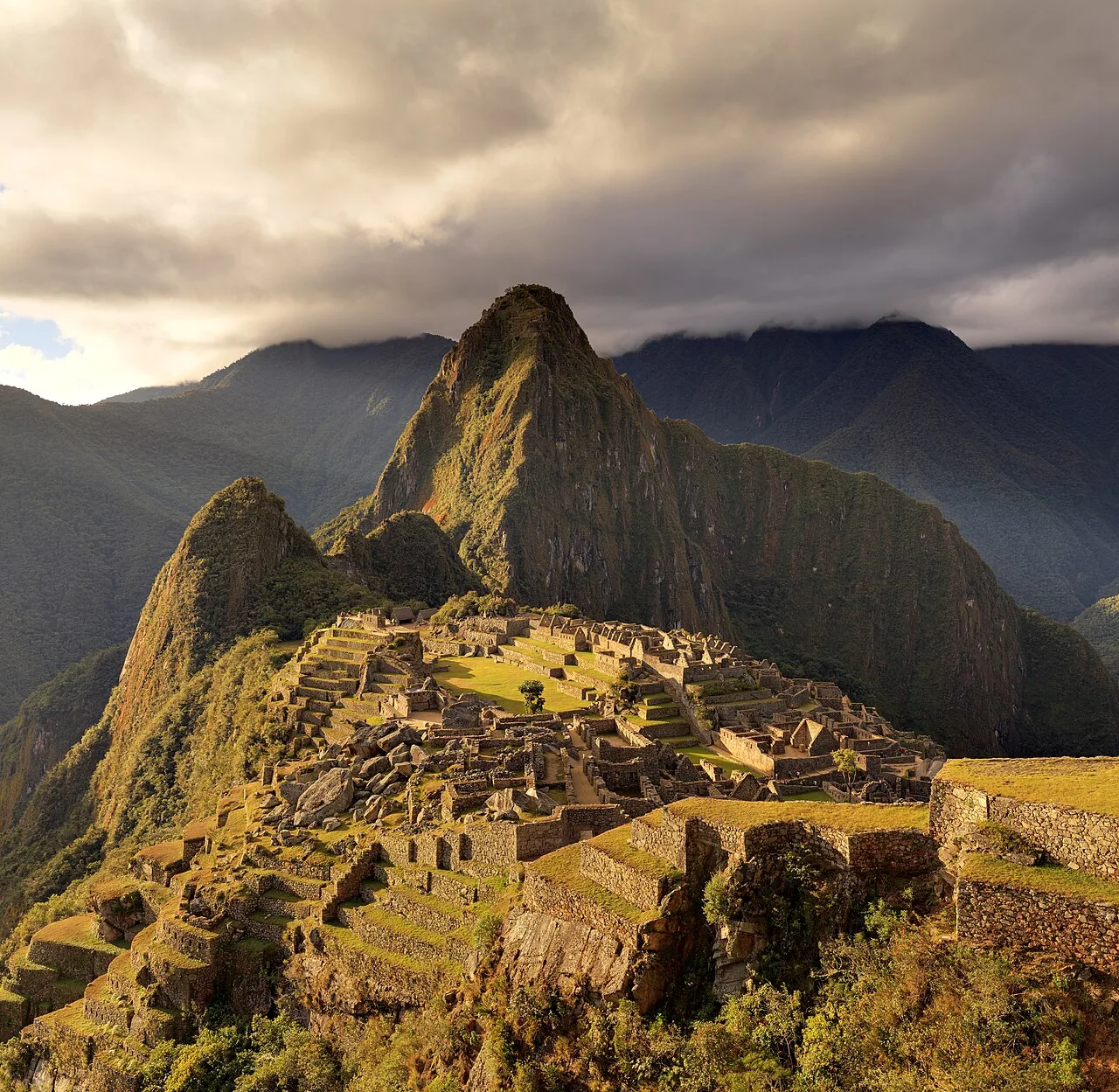
Instead of money, the Inca collected labor. Every household owed the state a share of work, called the mit’a: building roads and terraces, farming state land, or serving in the army. In return the state fed and clothed workers while they served, and it kept food in reserve for hard years. Farmers built stone terraces on steep slopes and grew potatoes, maize, and quinoa at many different heights, and they dried potatoes by freezing them to make food that could be stored for years. Workers cut stones so exactly that walls at Cusco and Machu Picchu fit without mortar.
Definition: Conquistador
A Spanish soldier-adventurer who conquered land in the Americas for the Spanish crown in the 1500s, such as Hernán Cortés and Francisco Pizarro.
Pizarro and the end of the Inca Empire
About 1527 the Sapa Inca Huayna Capac died, probably of an epidemic that had spread from the Spanish colonies, and his sons Huascar and Atahualpa fought a civil war for the throne. In 1532 Francisco Pizarro landed with fewer than 200 men. On November 16, 1532, he invited Atahualpa to the town of Cajamarca and ambushed him there, killing thousands of unarmed attendants. Atahualpa offered a room full of gold and two of silver for his freedom. The Spaniards took the treasure and executed him in July 1533. Cusco fell that year, but Inca resistance went on in the mountains until 1572.
4. Why did the empires fall?
Historians point to several causes that worked together. Spanish steel swords, armor, guns, and horses gave real advantages in battle, though the Spaniards were always greatly outnumbered. Disease was probably the most important cause: smallpox and other European diseases killed huge numbers of people who had no immunity, and they also killed leaders and broke up families. Both empires were weakened by division: Cortés won the help of Aztec enemies, and Pizarro arrived in the middle of the Inca civil war. Finally, tribute and forced labor had made many conquered peoples resentful of their rulers. After the conquest, Spain governed both regions as colonies, and the ruling classes of New Spain and Peru were Spanish.
- c. 250 Beginning of the Classic Maya period
- c. 800-900 Collapse of many Maya cities in the southern lowlands
- c. 1325 The Mexica found Tenochtitlan
- 1428 Triple Alliance formed
- c. 1438 Pachacuti begins Inca expansion
- 1519 Cortés lands in Mexico
- 1521 Fall of Tenochtitlan
- 1532 Pizarro captures Atahualpa at Cajamarca
- 1533 Atahualpa executed; Cusco falls
Key takeaways
- The Maya built independent city-states with writing, math, and astronomy; the Aztec and Inca built large empires.
- The Aztec ruled from Tenochtitlan, a city on an island, and collected tribute; the Inca ruled from Cusco and collected labor, using roads and quipus.
- The Spanish conquered the Aztec Empire (1519-1521) and the Inca Empire (1532-1533) with the help of native allies, disease, and the weakness of divided states.
- These conquests began three centuries of Spanish rule in Mexico and Peru.

Quick review: flashcards
Tap a card to see the answer.