


This Grade 6 Ancient Civilizations lesson covers The Neolithic Revolution and Early Farming, part of the unit “Early humans.” First, read the full lesson with its primary sources, maps and key terms. Then practice with the worksheet, check yourself with the quiz and get ready with the test.
Picture a small band of hunter-gatherers about 12,000 years ago, walking back each year to a valley where wild wheat grows thick. One year, someone decides to scatter seeds and wait. Over many generations, the habit of planting changed everything: where people lived, what they ate, how many children survived, and how society was organized. Historians call this change the Neolithic Revolution. It is one of the most important turning points in human history, because the farmers’ villages grew into the first cities.
Guiding question: How did the move from hunting and gathering to farming change the way people lived?
1. The world after the Ice Age
The Paleolithic lasted millions of years. Around 11,700 years ago, the last Ice Age ended and the climate became warmer and wetter. Forests and grasslands spread, and many big animals, such as the woolly mammoth, died out. In southwest Asia, wild grasses with edible seeds, the ancestors of wheat and barley, grew naturally in the hills of a region shaped like an arc. Early in the twentieth century, the American historian James Henry Breasted named it the Fertile Crescent, and the name stuck. It stretches from the eastern Mediterranean coast through southeastern Turkey and northern Syria down the Tigris and Euphrates rivers toward the Persian Gulf.
Definition: Fertile Crescent
A crescent-shaped region of southwest Asia, from the Mediterranean coast to the Persian Gulf, with rich soil and wild plants and animals. Many of the earliest farming villages appeared here.
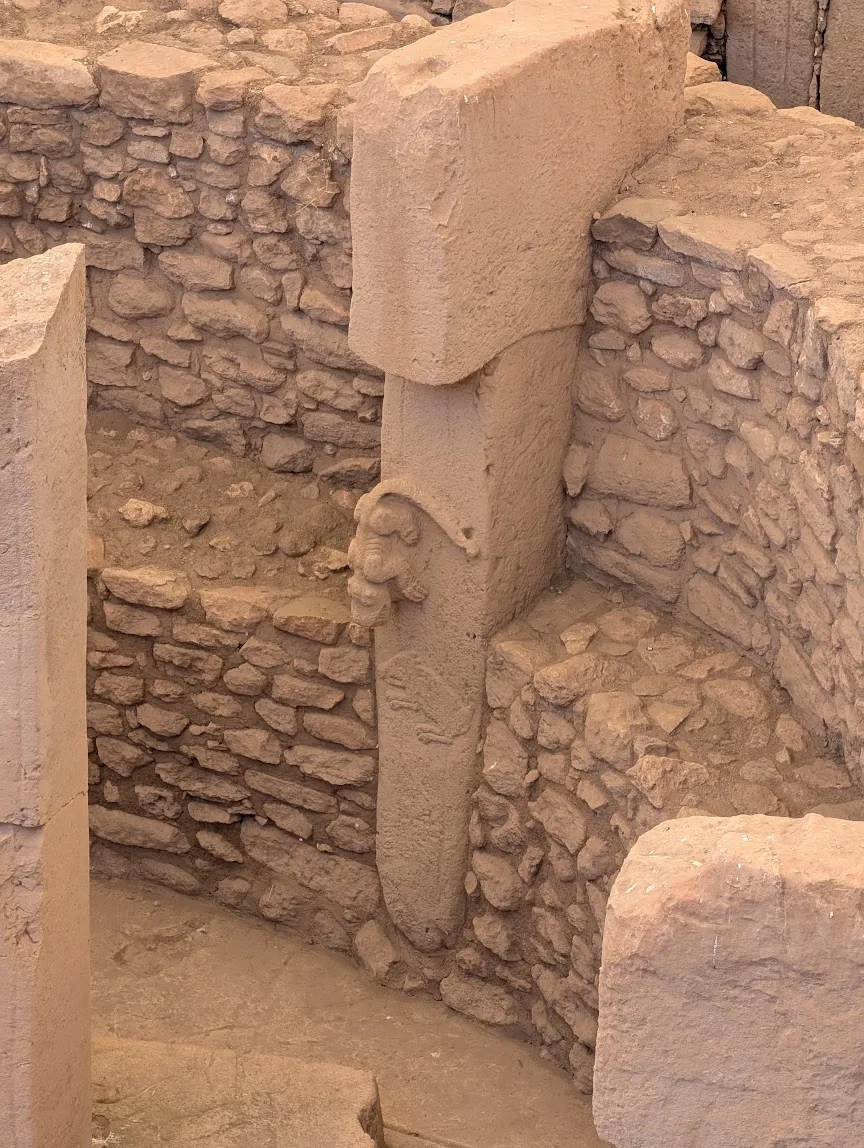
Some groups there, such as the Natufians, lived in the area of present-day Israel, Lebanon, and Jordan between about 15,000 and 11,500 years ago. They harvested wild grains with flint sickles, ground them with stones, and stayed in one place for much of the year. This shows that settling down sometimes came before farming. The best-known example of a large stone monument built by hunter-gatherers is Göbekli Tepe in southeastern Turkey, with huge T-shaped pillars decorated with animals, built about 9500 BCE, before farming was common in the region. The monument reminds us that people with no farms could still organize large work projects.
2. The Neolithic Revolution
Definition: Neolithic Revolution
The change from hunting and gathering to farming and herding that began in southwest Asia about 12,000 years ago. “Neolithic” means “New Stone Age.”
From wild plants to crops
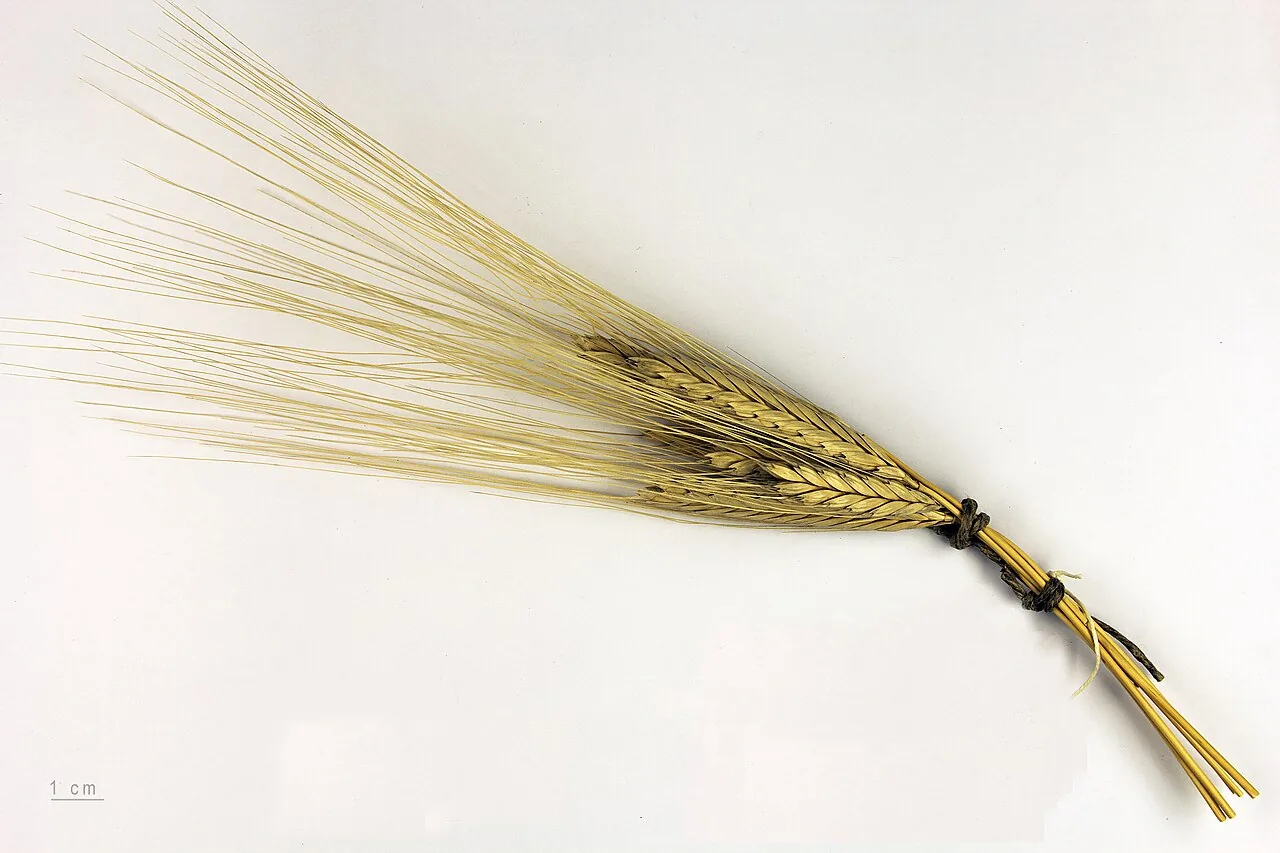
Over many generations, people noticed that seeds could be saved and planted. They chose the plants with the biggest seeds and the ones that did not scatter their grain before harvest. After a long time, those plants changed so much that they could no longer survive without people. This process is called domestication. The first important crops in the Fertile Crescent were emmer wheat, einkorn wheat, barley, lentils, peas, chickpeas, and flax, which people farmed by about 9000 BCE. Archaeologists find the evidence in burned seeds, sickle blades, and grinding stones.
Definition: domestication
Changing wild plants or animals, by choosing and breeding them over many generations, so that they depend on humans and are useful to people.
Animals were domesticated, too. The dog was the first, long before farming, as a hunting partner. Then people herded sheep and goats, and later cattle and pigs, from about 10,000 years ago onward. These animals provided meat, milk, wool, leather, and later muscle power for pulling plows and carts. For shepherds and farmers, animals were a store of wealth that walked.
The Fertile Crescent was not the only place where farming began. Rice and millet were grown in China, maize, beans, and squash in Mesoamerica, potatoes in the Andes, taro in New Guinea, and sorghum in Africa’s Sahel region, at different times. This tells us that farming was invented several times, independently, by people who had no contact with one another. Scientists still debate the exact dates.
Why did people start farming?
Historians do not know one single cause. A warming climate made wild grains plentiful and made planting more reliable. Growing populations may have needed more food than wild resources gave. Staying in one place next to a good supply of food, as the Natufians did, made storing and planting grain natural. Most historians think that farming spread slowly, over thousands of years, and was not an overnight “revolution.” The word means a deep change, not a quick one.
Ancient people sometimes reflected on how farming began. The Roman poet Lucretius, writing about 55 BCE, imagined that people learned to plant by watching nature.
Document 1 – A Roman poet imagines how planting began
But Nature herself,
Mother of things, was the first seed-sower
And primal grafter; since the berries and acorns,
Dropping from off the trees, would there beneath
Put forth in season swarms of little shoots;
Hence too men’s fondness for ingrafting slips
Upon the boughs and setting out in holes
The young shrubs o’er the fields. Then would they try
Ever new modes of tilling their loved crofts,
And mark they would how earth improved the taste
Of the wild fruits by fond and fostering care.
Source: Lucretius, On the Nature of Things, Book V, about 55 BCE (verse translation by William Ellery Leonard, 1916).
*graft: to attach a cutting from one plant to another plant. *croft: a small field. *tilling: preparing and working the soil.
Commentary. Lucretius suggests that the first farmers copied nature: seeds and acorns fall from trees and grow into new plants, so people started to plant and graft on purpose, then slowly pushed forests back to make room for fields. He lived roughly 9,000 years after the first farms, with no archaeology to help him, so his poem tells us how a Roman thought farming began. It is a helpful reminder that people have always tried to explain their own past.
3. Life in the first farming villages
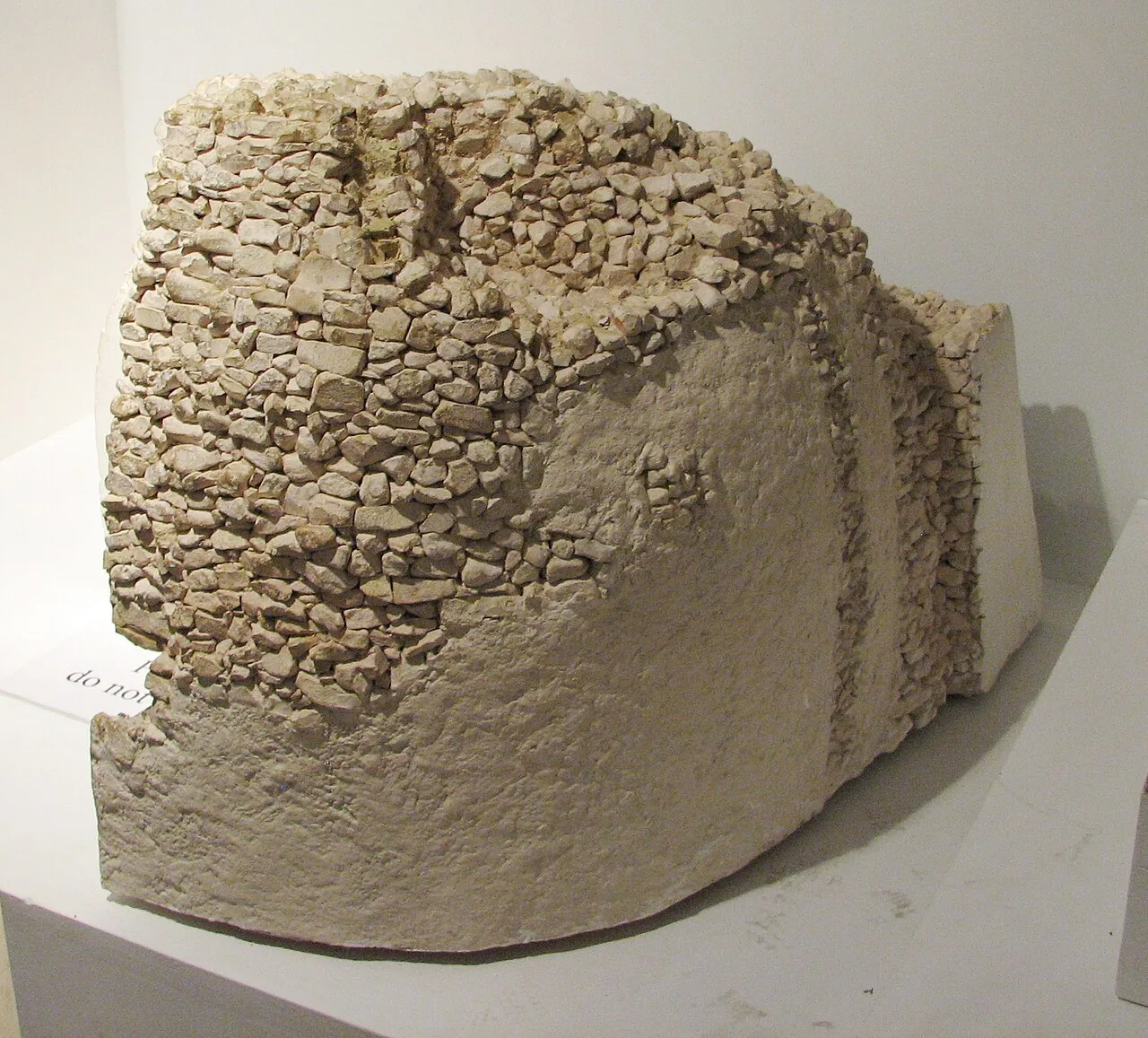
Farmers had to stay near their fields, so they built permanent villages. At first the houses were round and made of mudbrick or stone. Near the Jordan River, the people of Jericho built a wall and a round stone tower about 8000 BCE. They are among the oldest large stone constructions in the world. At Çatalhöyük in what is today Turkey, founded about 7400 BCE, thousands of people lived in a dense cluster of mudbrick houses, which people entered from the roof by ladder.
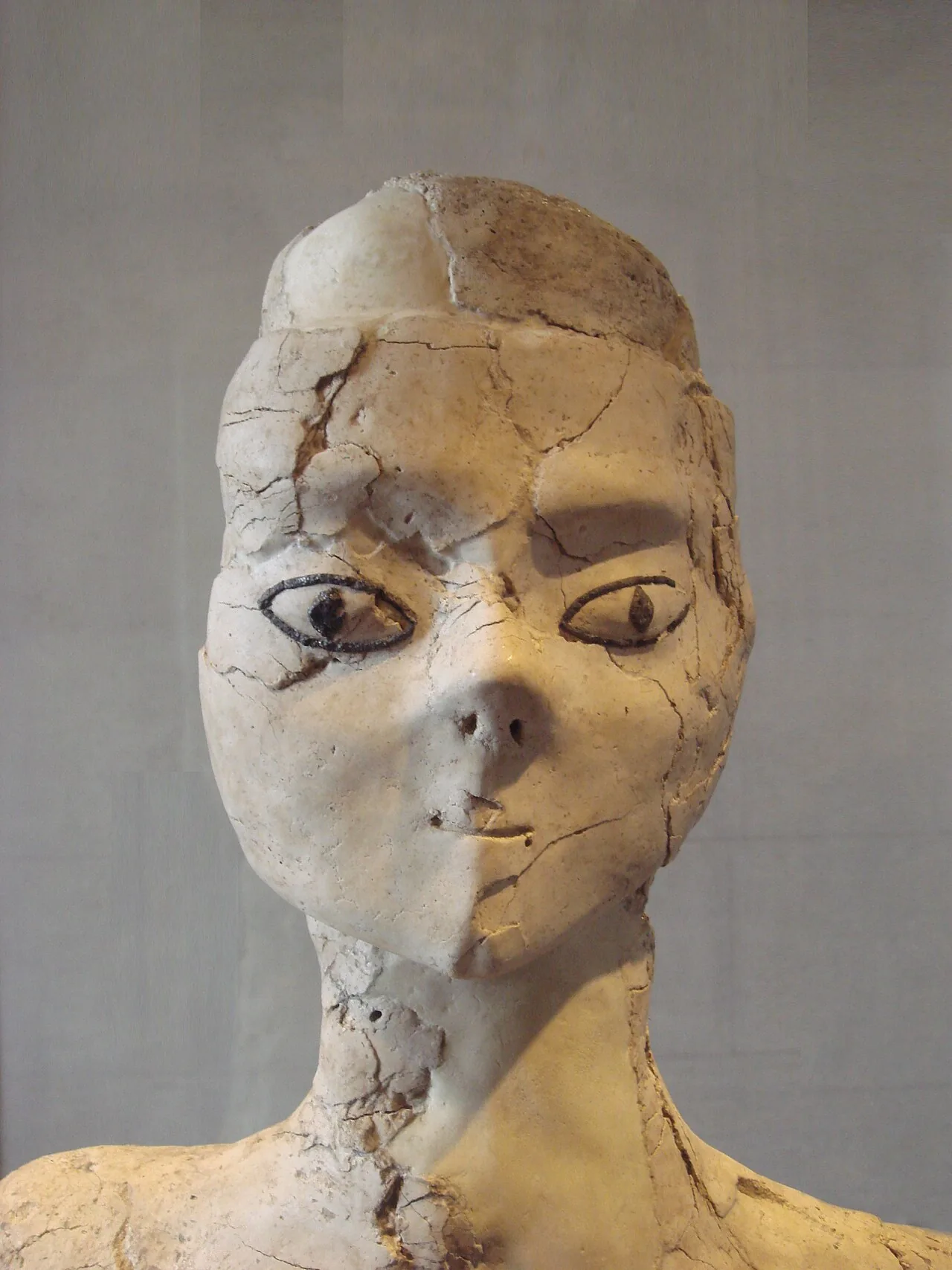
Statues made of plaster, like those from Ain Ghazal in Jordan, show that villagers had ideas about ancestors and religion, though we cannot read their beliefs.
Tools and daily life
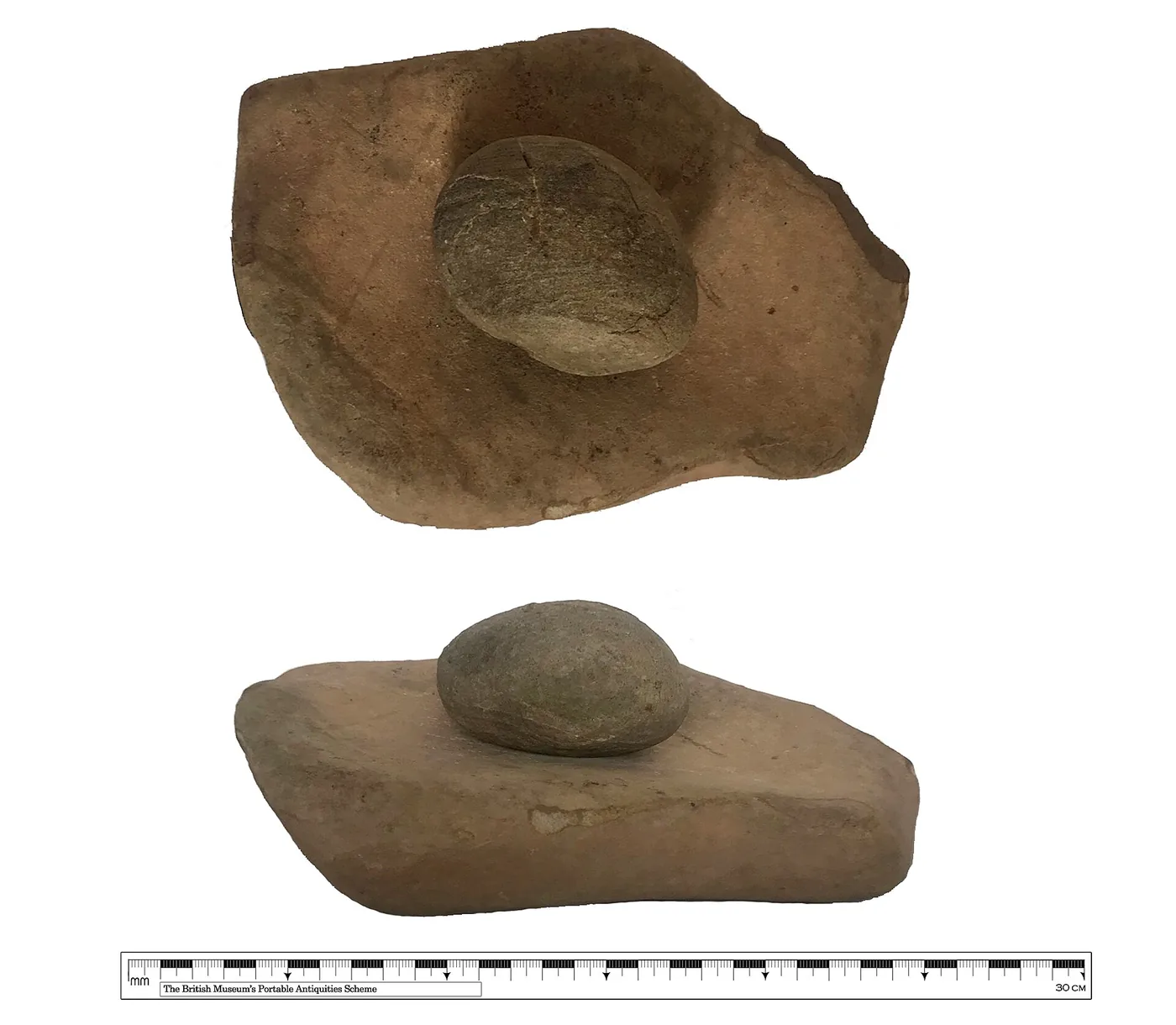
New tools appeared. Farmers made sickles from flint blades set in wood or bone handles. They also made saddle querns for grinding grain into flour and polished stone axes for clearing land. In addition, they learned to make pottery to store grain, water, and oil, and to weave cloth from flax and, later, wool.
Definition: surplus
More of something, especially food, than people need right away. A food surplus can be stored, traded, or used to feed people who do not farm.
Farming was hard work. Skeletons from early farming villages often show that people were shorter than their hunter-gatherer ancestors and had more tooth decay and signs of disease. People lived close together and with their animals, which helped diseases to spread. Yet farming fed many more people from the same land. Farming could support larger populations. As a result, villages grew, and after the first farmers settled, the number of people in the world rose steadily.
4. Consequences: a changing society
The biggest result of farming was the surplus. When farmers grew more food than they needed, some people could do other jobs, such as making pottery, weaving, building, trading, or serving as priests and leaders. We call this specialization. Over time, people stored grain in granaries. Someone had to guard it and decide how it was shared, so differences in wealth and power appeared. People began to own land, animals, and tools, which could be handed down in families.
Farmers also needed to plan. The calendar mattered: when to sow, when to harvest. Many later societies tied that calendar to the stars. The Greek poet Hesiod, writing about 700 BCE, gave advice to farmers.
Document 2 – Farming advice by the stars
When the Pleiades, daughters of Atlas, are rising, begin your harvest, and your ploughing when they are going to set. Forty nights and days they are hidden and appear again as the year moves round, when first you sharpen your sickle. […] strip to sow and strip to plough and strip to reap, if you wish to get in all Demeter’s fruits in due season, and that each kind may grow in its season.
Source: Hesiod, Works and Days, about 700 BCE, lines 383-392 (translation by Hugh G. Evelyn-White, 1914).
*Pleiades: a cluster of stars, whose rising and setting in the sky Greek farmers used as a calendar. *Demeter: the Greek goddess of grain.
Commentary. Hesiod tells his brother Perses to begin the harvest when the Pleiades rise and to plow when they set. For him, farming is a calendar and a duty: work in the right season or go hungry. This is farming thousands of years after the first farmers, and it shows how deeply the farming year shaped daily life.
Irrigation, water, and land also created conflicts and rules. For example, the laws of Hammurabi of Babylon, written about 1754 BCE, contain rules about dams, ditches, and wages for farm laborers. Those laws belong to a much later and larger society, but they show how farming communities needed rules to share water and protect crops.
Document 3 – Rules for farming in Babylon
53. If any one be too lazy to keep his dam in proper condition, and does not so keep it; if then the dam break and all the fields be flooded, then shall he in whose dam the break occurred be sold for money, and the money shall replace the corn which he has caused to be ruined.
54. If he be not able to replace the corn, then he and his possessions shall be divided among the farmers whose corn he has flooded.
55. If any one open his ditches to water his crop, but is careless, and the water flood the field of his neighbor, then he shall pay his neighbor corn for his loss.
Source: Code of Hammurabi, laws 53-55, Babylon, about 1754 BCE (translation by L. W. King, 1910).
*corn: here, grain such as barley or wheat. *dam: a bank of earth that holds water in a canal or field.
Commentary. The government of a powerful city wrote these three laws some 8,000 years after the first Neolithic villages. They show that farmers depended on canals and dams, that carelessness could ruin a neighbor’s harvest, and that society punished it. As farming grew, rules and government grew with it.
Farming also changed how people saw their world. The Hebrew Bible, a collection written down over many centuries, remembers farming as heavy labor and the shepherd and the farmer as two different ways of life. Historians treat such texts as sources about what ancient people believed and remembered, not as scientific records of Neolithic times. Over thousands of years, farming villages grew into towns and cities. The next unit follows that story to Mesopotamia, where the first cities and states appeared.
- About 15,000-11,500 years ago Natufians harvest wild grain in the eastern Mediterranean region.
- About 11,700 years ago The last Ice Age ends; the climate warms.
- About 9500 BCE Göbekli Tepe is built by hunter-gatherers in southeastern Turkey.
- By about 9000 BCE Wheat and barley are farmed in the Fertile Crescent.
- About 8000 BCE A stone wall and tower are built at Jericho.
- About 7400 BCE Çatalhöyük is founded in Turkey.
- About 7000 BCE Farming is under way in China and Mesoamerica (dates vary).
- About 1754 BCE Hammurabi of Babylon issues laws about farming and irrigation.
Key takeaways
- The Neolithic Revolution was the change from hunting and gathering to farming and herding, beginning about 12,000 years ago in the Fertile Crescent.
- People domesticated plants (wheat, barley, lentils) and animals (sheep, goats, cattle, pigs). Farming also began independently in China, the Americas, Africa, and New Guinea.
- Farmers built permanent villages such as Jericho and Çatalhöyük and invented new tools, pottery, and weaving.
- A food surplus led to larger populations, specialization, trade, property, inequality, and rules, which prepared the way for cities and governments.
- Farming had costs as well as benefits, including hard work, disease, and conflict over land and water.

Quick review: flashcards
Tap a card to see the answer.